China Medical Imaging AI White Paper Released on March 26: Insights from 2,135 Hospitals and a Six-Dimensional Analysis of Industry Development
In recent years, with the rapid development of related technologies, the application of artificial intelligence in the medical field has been rapidly promoted, including many scenarios such as medical imaging, clinical decision support, and case analysis. With the expansion of medical datasets, the improvement of hardware equipment, and the continuous optimization and improvement of AI algorithms,AI's technological accumulation in medical scenarios is becoming increasingly mature, with a growing number of AI research initiatives being implemented in the healthcare sector.
In the "Development Plan for New Generation Artificial Intelligence" released by the State Council in July 2017, guiding principles, strategic objectives, key tasks, and safeguard measures for China's new generation of AI development toward 2030 were proposed, with intelligent healthcare identified as one of the key tasks.With policy support, intelligent healthcare can achieve more robust development.
“AI+” has become the future strategic direction for traditional healthcare giants and internet technology companies.Medical equipment manufacturers such as Siemens Healthineers, GE Healthcare, Philips Healthcare, United Imaging Healthcare, and Neusoft Medical have successively established intelligent healthcare divisions. Meanwhile, companies including Google, Alibaba, Tencent, and Fosun Pharma have all announced that they will prioritize the healthcare sector as a key focus for their AI initiatives, making it an integral component of their future corporate strategies.
The application of AI in medical imaging has flourished in recent years, with continuous academic and commercial achievements; however, significant bubbles and irregularities have also emerged. In response, the China Medical Imaging AI Industry-Academia-Research-Application Innovation Alliance has convenedRadiology experts and research specialists from China’s Grade A tertiary hospitals, along with leading AI medical companiesCo-authored this professional white paper. Analyzed medical imaging AI in15 Major Clinical Applicationsthe developmental value it holds, helping stakeholders gain deep insights into the patterns of industry development and emerging opportunities, andOf 40+ Representative Medical Imaging AI Companiesan introduction was provided, offering enterprises a comprehensive development strategy and direction. Furthermore, in response toCurrent PoliciesIt provides an in-depth analysis of the challenges and opportunities facing AI in medical imaging, offering constructive recommendations to help industry stakeholders analyze policy trends and identify appropriate development strategies.
This is the most authoritative report and serves as a strategic blueprint for the development of medical imaging AI enterprises. The "White Paper on Medical Imaging AI in China" conducts in-depth research across six key areas: applications of artificial intelligence in healthcare, latest advancements in medical imaging AI algorithms, demand surveys for medical imaging AI, current status and prospects of clinical applications, policies, challenges, and recommendations.
At the same time, answers are provided to the following six major questions:
1. Beyond medical imaging, how is artificial intelligence applied across seven major healthcare domains, including vital sign monitoring, genomics and proteomics, clinical data, and medical video?
2. Open AI computing platforms have enabled the cloud-based collaborative sharing of high-quality medical resources; what qualitative leaps have algorithms for medical imaging achieved?
3. What issues exist with structured data in medical imaging AI across academic research, product development, and regulatory registration?
4. What are the needs of physician teams and research institutions, as revealed by over 5,000 survey responses on medical imaging AI collected from 2,135 hospitals across 31 regions in China?
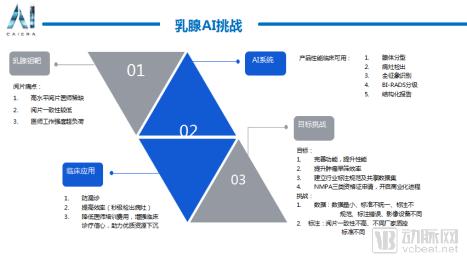
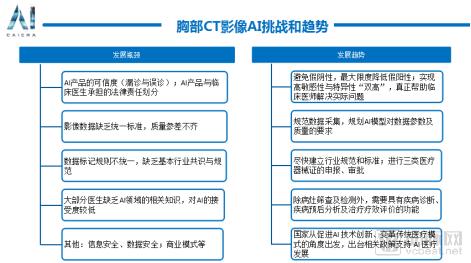
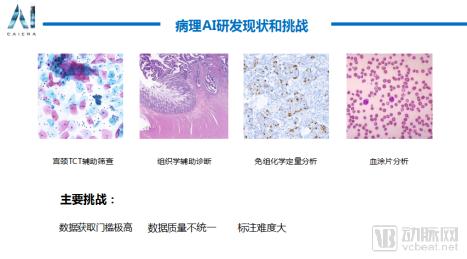
5. What opportunities and challenges does AI in medical imaging face across 15 major clinical applications, including musculoskeletal disorders, cardiovascular diseases, neurological imaging, and ultrasound?
6. Within the constraints of entrenched traditional healthcare infrastructure and regulatory frameworks, how can China’s AI medical imaging sector leverage policy to break through bottlenecks?
Smart Manufacturing Paves the Way for AI.In May 2015, intelligent manufacturing was mentioned for the first time in “Made in China 2025.” In January 2016, the State Council issued the “13th Five-Year Plan for National Science and Technology Innovation,” listing intelligent manufacturing and robotics as one of the major projects under the “Science and Technology Innovation 2030 Program.”
“Internet+” Acceleration.In May 2016, the National Development and Reform Commission, the Ministry of Science and Technology, the Ministry of Industry and Information Technology, and the Office of the Central Cyberspace Affairs Commission jointly issued the “Three-Year Action Plan for ‘Internet Plus’ Artificial Intelligence,” which explicitly set a target to establish a domestic AI market application scale worth hundreds of billions of yuan by 2018. The plan outlined support for AI development across six key areas: funding, system standardization, intellectual property protection, human resource development, international cooperation, and implementation arrangements.
AI Integrated into National Strategic Planning.In March 2017, “artificial intelligence” was included in the Government Work Report for the first time during the Fifth Session of the 12th National People’s Congress. Premier Li Keqiang mentioned in the report the comprehensive implementation of the development plan for strategic emerging industries, accelerating the research, development, and commercialization of technologies such as AI, and strengthening and expanding industrial clusters.
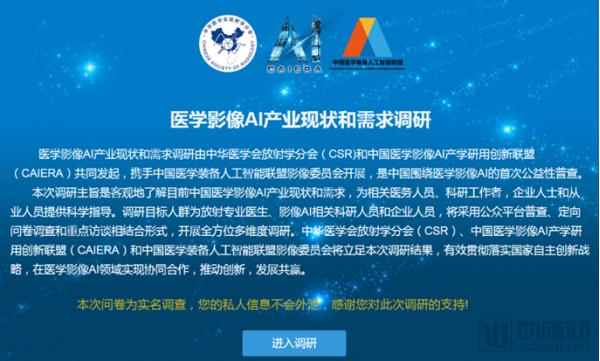
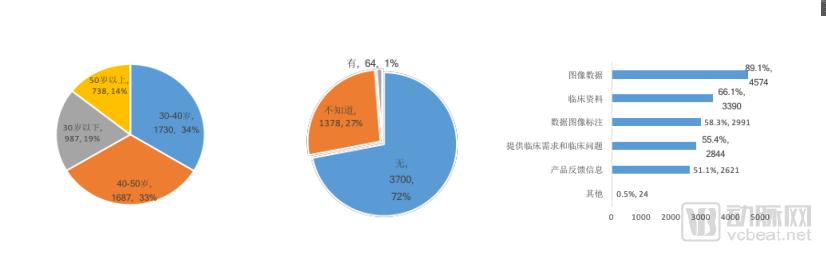
This questionnaire survey was jointly initiated by the Chinese Society of Radiology (CSR) and the China Medical Imaging AI Industry-Academia-Research-Application Innovation Alliance (CAIERA), and conducted in collaboration with the Imaging Committee of the China Medical Equipment AI Alliance. A total of 120 researchers participated in the study, which covered 2,135 hospitals and 5,142 physicians (59% from tertiary hospitals, 38% from secondary hospitals, and 3% from other institutions).
Findings from the Physician Team Study:
"Mid-career physicians, senior physicians, and radiology administrators are generally more concerned about AI technology."
Most hospitals lack dedicated AI research institutes or technology transfer departments; only 1% of surveyed hospitals have established an AI research department.
88% of AI Products for Medical Imaging Focus on Pulmonary Nodules
…………
Research Findings from Scientific Research Institutions and Universities:
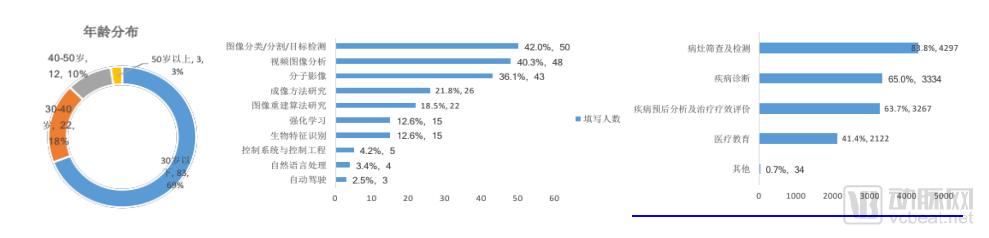
Young students constitute the majority of those involved in AI research, accounting for 69%.
Most researchers focus on image classification, segmentation, and object detection.
More than 30% of research institutions have not obtained medical imaging data from hospitals. Among those that have acquired such data, most are limited to only a few hundred or a few thousand cases.
…………
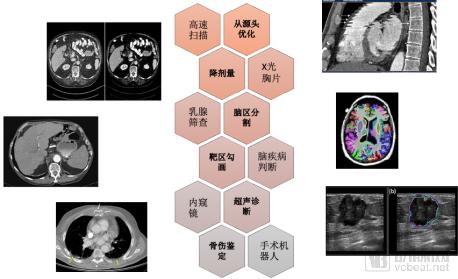
Driven by both technology and policy, the “AI + Healthcare” market continues to heat up, demonstrating significant application value and market potential. This is particularly evident in the field of medical imaging, which has become highly competitive with a proliferation of players. In this landscape, what is the relative importance of AI across various medical imaging applications?
…………
(The above is an excerpt from the "White Paper on AI in Chinese Medical Imaging")
The full version of the “White Paper on AI in Chinese Medical Imaging” will be officially released at the White Paper Launch Event. The event will take place on March 26 at LSPACE, 813 Creative Industry Park, Beijing.
Address by the Alliance Leadership
Liu Shiyuan, Chairman of the China Medical Imaging AI Industry-Academia-Research-Application Alliance, will deliver a speech at the press conference;

Jointly Released by the Top Ten AI Companies
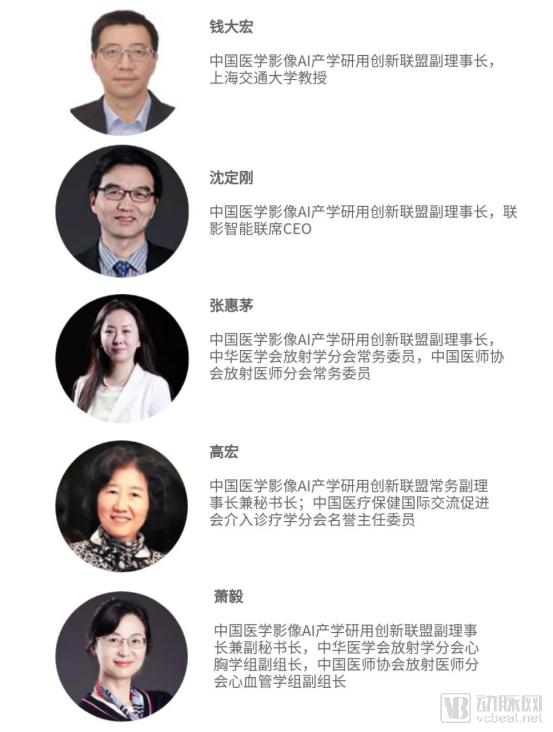
Members of the White Paper Editorial Committee, including Qian Dahong, Shen Dinggang, Zhang Huimao, Gao Hong, and Xiao Yi, along with CEOs from dozens of leading artificial intelligence enterprises, will participate in the white paper release ceremony.
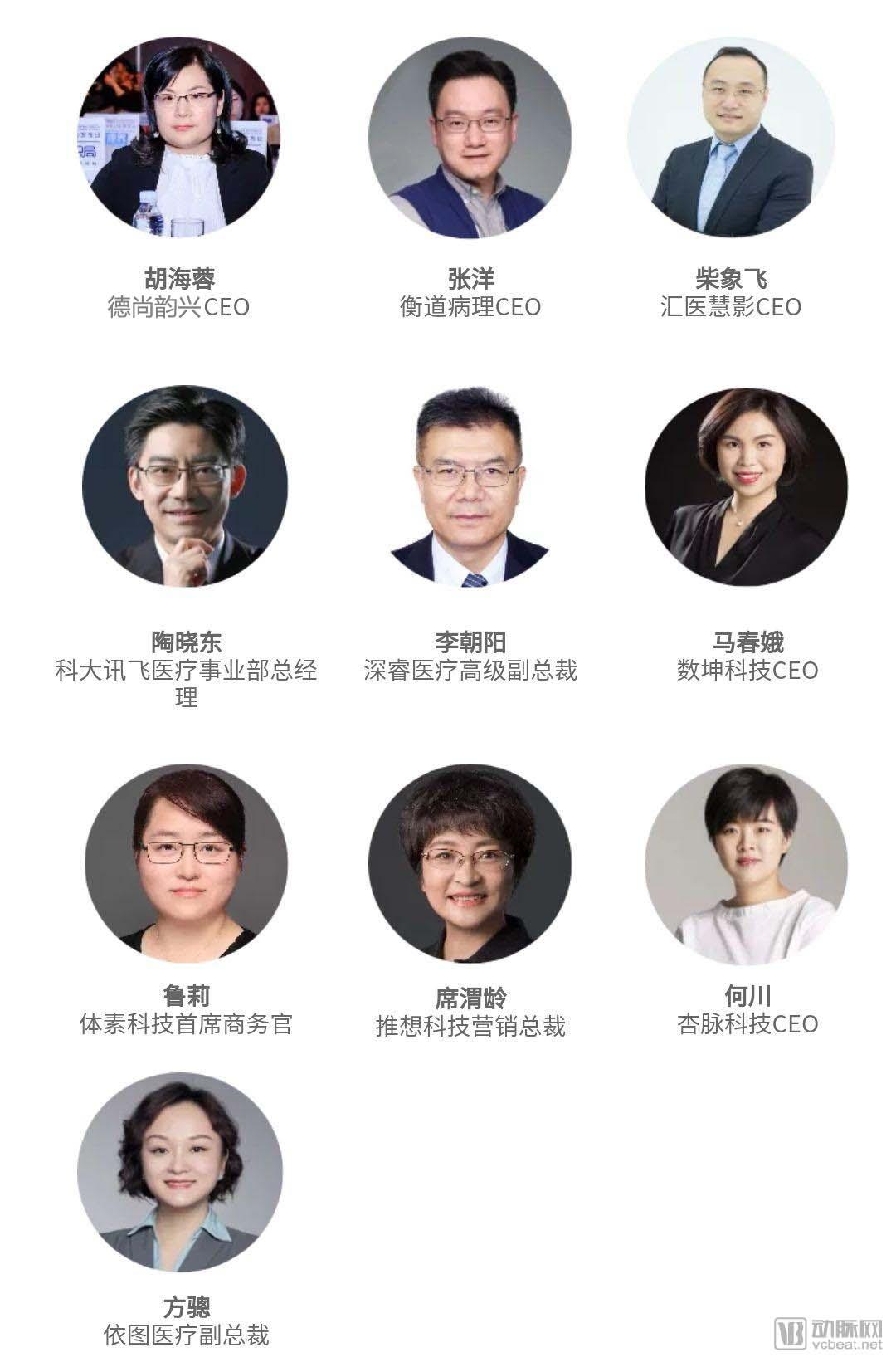
(*Sorted alphabetically by company name)
AI Companies Unveil New Products
Yitu: Intelligent Cloud Platform for Children's Health
From the establishment of Yitu Technology in 2012 to the present-day Yitu Healthcare, Yitu has adopted a full-stack development approach in the medical field. It not only applies medical artificial intelligence technology to the diagnosis of various diseases but also constructs knowledge graphs using highly localized data. By leveraging algorithms and big data to analyze medical cases and literature, Yitu maximizes the value derived from these resources.
Now that Yitu, the top fundraiser in the AI healthcare sector this year with $300 million secured, is set to unlock which application scenario?
Yitu Healthcare has invested in pediatric research and development since its inception. At the VB100 launch event on March 26, Yitu will unveil its Intelligent Cloud Platform for Child Health, which innovatively integrates world-class AI technologies in text, imaging, and speech to achieve comprehensive coverage of all scenarios—from child health assessment to pediatric diagnosis and treatment services, spanning pre-consultation, during-consultation, and post-consultation phases. This marks a significant breakthrough in the AI healthcare industry, shifting from success in single tasks or individual diseases/anatomical sites to a patient-centered approach focused on children.
Inference:InferScholarTMCenter AI Scholar Research Platform
Last year, Infervision announced the establishment of the “iCR-InferVision Global Clinical Collaboration Research Institute” and invited Dr. Shen Yun, a top expert in the medical imaging community, to join Infervision as the Dean of the Institute and Chief Clinical Research Collaboration Scientist. This move launched Infervision’s global research strategy, strengthening its focus on clinical research in AI-powered medical imaging and further advancing the development of clinical disciplines in medical AI.
On March 26, at the VB100 launch event, Infervision will officially release InferScholar.TMCenter AI Scholar Research Platform: With leading AI infrastructure, robust research support capabilities, worry-free data security, and full-process visualized operations, InferScholar becomes a capable and exclusive research assistant for physicians.
During the same period, we will also host the full-series launch event for BMJ 2019, the new product launch of Yitu’s Intelligent Cloud Platform for Children’s Health, and the new product launch of Infervision’s InferScholar™ Center. For more exciting content, please visit the official website on VB100 Launch Day:https://vcbeat.top/vb100-voice 。
Next Stop: April 16, Shanghai, VB100 Medical Device Theme Launch Day
We will bring together the most-watched listed companies, unicorn enterprises, and leading innovative firms in niche segments of the medical device industry. By centrally releasing major announcements—including new products/projects, financing updates, partnership news, data reports, and strategic plans—we aim to create a clustering effect that generates significant impact within the industry, jointly crafting the most anticipated launch event in the 2019 medical device sector. Meanwhile, VB100 Launch Day will invite dozens of traditional media outlets as well as media specializing in healthcare, technology, and finance to ensure in-depth dissemination and precise reach to target audiences.