

Chongqing Runze Medical Breaks Foreign Monopoly with Proprietary Multi-Level Porous Tantalum Technology, Files IPO Prospectus
Upon entering Chongqing Runze Pharmaceutical Company Limited, the first thing that catches the eye is the pair of patent walls in the lobby, adorned with nearly 1,200 patent certificates. While patent walls are not uncommon, it is rare to find one like Runze Pharmaceutical’s, where two tall walls are completely covered with patent certificates.
These two patent walls embody the dedication of Runze, which has focused on the research and development of structural functional materials for over a decade. Since entering the field of porous tantalum materials in 2007, Runze has spent more than ten years breaking foreign monopolies and developing the world’s first multi-level porous tantalum material.
In early 2019, CHONGQING RUNZE PHARMACEUTICAL COMPANY LIMITED’s “porous tantalum bone graft substitute” received marketing approval from the National Medical Products Administration. This product is the first metallic bone graft material approved for filling cavitary cancellous bone defects in non-weight-bearing areas of the extremities.
Ye Lei, Chairman and Chief Executive Officer of CHONGQING RUNZE PHARMACEUTICAL COMPANY LIMITED, is a Leading Talent under the “National Special Support Program for High-Level Personnel” jointly administered by the Organization Department of the Central Committee of the Communist Party of China and the Ministry of Human Resources and Social Security, as well as a First-Prize Winner of the National Science and Technology Progress Award. He is also known as the “Father of Porous Tantalum in China.”
What benefits will the disruptive innovation of multi-level porous tantalum materials bring to the orthopedic repair materials industry? How has Chongqing Runze Pharmaceutical Company Limited paved the way for industrialization? From product development to clinical application, what strategies will the company adopt? With these questions in mind, VCBeat (WeChat ID: vcbeat) interviewed Ye Lei, Chairman and CEO of Chongqing Runze Pharmaceutical, and Cai Yunhong, General Manager of the Medical Devices Division.
Chongqing Runze Pharmaceutical Company Limited was established in 2007. Prior to entering the field of porous tantalum bone fillers, the company’s predecessor team was primarily engaged in the agency sales of medical consumables. As early as 2006, the original team at Runze Pharmaceutical had already been considering a strategic transformation, aiming to shift from agency sales to upstream manufacturing and production.
The medical device sector comprises numerous subfields, making the choice of entry track critical. Cai Yunhong told VCBeat that Runze initially aimed to enter a segment where domestic capabilities were relatively weak, preparing to manufacture certain medical-grade titanium alloy products.
“By chance, we learned that there is another type of tantalum metal that must be made porous to be beneficial to the human body. In fact, this was an uncharted territory for us, but Mr. Ye decided at the time not to follow the beaten path, but to embark on a journey of innovation,” said Cai Yunhong.
Along this trajectory, Chongqing Runze Pharmaceutical Company Limited has opened up new markets in uncharted territories, filling a domestic gap. This market is substantial, with annual demand from over 1 million patients in China alone. As early as 2016, the global market size for bone grafts and substitutes had already reached $2.4 billion, and market demand is expected to continue growing amid population aging.
In fact, the optimal bone substitute material is the patient’s own autograft. Autografts possess biocompatibility, osteoconductivity, and osteoinductivity, and carry no risk of immune rejection. However, the availability of autografts is limited, and their harvest entails additional trauma.
For allografts, as well as xenografts derived from donors or animal tissues, there are additional risks of immune rejection and disease transmission. In addition to these biological materials, metal implants, along with ceramics, polymers, and composites, have also been developed as implant materials.
Among these requirements, the metal must be capable of withstanding the dynamic forces exerted on the bone. In short, the metal must integrate with the bone without eliciting rejection and even promote new bone formation. These properties depend not only on the type of metal selected but, most importantly, on its ability to mimic the porous three-dimensional geometry of bone.
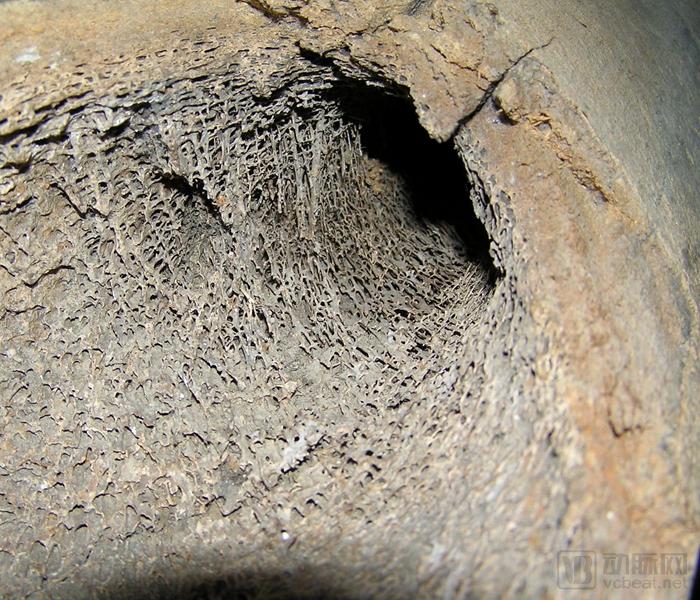
Human Trabecular Bone Structure. Image source: Wikipedia
Porous tantalum bone graft substitutes are fabricated using a sponge impregnation and high-temperature, high-vacuum sintering method. By optimizing the heating and cooling profiles during sintering, the mechanical properties of the material are enhanced. The resulting stepped porosity in the microstructure yields a low elastic modulus comparable to that of native bone tissue, thereby facilitating microcirculation of body fluids within the implanted device.
Cai Yunhong, who has a medical background, vividly described these two criteria to VCBeat: “High-quality metallic bone implants must not only provide adequate mechanical support but also promote bone regeneration and osseointegration. The market demand is substantial; in 2018 alone, the global market for orthopedic implant materials reached RMB 50 billion.”
Currently, orthopedic giant Zimmer Biomet has also launched similar products in the market. Zimmer Biomet utilizes its OsseoTi® 3D printing technology to manufacture ankle implants. OsseoTi® porous metal combines human CT data with 3D printing technology to create implants that directly mimic the trabecular structure of human bone. The material strength between cancellous and cortical bone facilitates biological fixation and load-bearing by the surrounding bone.
“Fundamentally, our product’s solution differs from existing ones. Current products on the market primarily provide structural support; by analogy, they guide bone to grow a thin layer of ‘moss’ onto the implant, allowing bone to adhere to it and meeting the needs for fixation and support. In contrast, our product aims to endow the implant with both supportive and regenerative functions, enabling complete bone ingrowth,” explained Ye Lei to VCBeat.
After a decade of enduring hardships and forging ahead, Ye Lei led the R&D team to develop multi-level porous tantalum material, which not only fills the domestic gap in this field but also differs from existing single-level porous tantalum materials.
In the interview, Ye Lei stated, “Our achievements do not belong solely to our company; rather, they represent the culmination of the dedicated efforts of numerous scientific researchers.”
During the development of multi-level porous tantalum materials, Runze did not work in isolation; instead, it collaborated with multiple research institutions, hospitals, and upstream and downstream enterprises to establish an industry-academia-research translation platform. Partnering institutions included the Institute of Metal Research of the Chinese Academy of Sciences, Southwest Hospital of Army Medical University, Xijing Hospital of Air Force Medical University, the First Affiliated Hospital of Chongqing Medical University, and Southwest Jiaotong University.
When discussing the rationale for establishing an industry-academia-research-medicine-application platform, Cai Yunhong stated, “There are still many areas in basic research that require breakthroughs. We have integrated previously isolated basic research on porous materials, medical basic research, biomechanics research, and clinical application research. This enables all stakeholders to focus collectively on a single clinical issue, bridging the former divide between medicine, engineering, and other disciplines, thereby facilitating more efficient translation of scientific achievements into practical applications.”
However, this platform is by no means an ivory tower. In the journey from basic research to industrialization and then to clinical application, Chongqing Runze Pharmaceutical Company Limited has injected substantial capital and bridged long time cycles; yet these are merely necessary conditions. What is even more indispensable is the original commitment to being patient-centric, targeting major clinical needs, and focusing on overcoming core technological challenges.
Cai Yunhong disclosed to VCBeat that, in the future, Chongqing Runze Pharmaceutical Company Limited aims to provide comprehensive solutions beyond mere materials. By acquiring patient imaging data through CT and MRI scans and comparing it with orthopedic health data, the company will generate 3D images via software after formulating effective treatment strategies, thereby delivering personalized solutions for patients.
In the interview, Ye Lei and Cai Yunhong both spontaneously told VCBeat: “Our objective was clear from the outset: to improve people’s quality of life, enabling older adults to hike and run, so that physical activity can remain a lifelong companion.”