

SFA Therapeutics Secures U.S. Patent for Microbiome-Derived Small Molecule Therapies Targeting Liver Diseases
SFA Therapeutics
A Biopharmaceutical Startup
VCBeat (WeChat Official Account: vcbeat) learned from foreign media that on March 19, U.S. local time, SFA Therapeutics, a biopharmaceutical company headquartered in Pennsylvania, announced it had been granted a new patent (USPTO #10,231,941). This patent stems from the company’s research on liver diseases, primarily focusing on the use of microbe-derived metabolite small molecules as therapeutics for various liver conditions.
Notably, this marks the second time SFA Therapeutics has secured patents related to the treatment of liver disease. Previously, the company obtained a patent for cancer prevention in liver disease (USPTO #10,143,669 B2). In addition to these two liver disease-related patents, SFA Therapeutics holds six provisional patents and a comprehensive portfolio of patents covering more than 60 chronic inflammatory indications. The six provisional patents are: “Treatment of Psoriasis and Related Dermatological Conditions,” “Combination Therapy for Psoriasis/Dermatological Diseases,” “Oral Medication for the Treatment of Uveitis,” “Prevention of Autoimmune Diseases in Newborns Delivered via Cesarean Section,” “Adjunctive Immunotherapy (CAR-T Cytokine Release Syndrome),” and “Prevention of Leukemia Relapse.”
SFA Therapeutics, founded in 2017, is a biopharmaceutical startup focused on researching microbe-derived metabolites and developing them as therapeutics for chronic inflammation and other diseases. Led by CEO Dr. Ira Spector, who holds a Ph.D. from the New Jersey Medical School (part of Rutgers Biomedical and Health Sciences, formerly UMDNJ) and an MBA from Drexel University, the company benefits from his extensive experience. Dr. Spector has contributed to drug development at major biotechnology firms such as Pfizer, Wyeth, and Allergan, co-founded three biotech startups, and participated in the R&D of 33 New Drug Applications (NDAs) and 12 medical devices.
SFA Therapeutics leverages microbe-derived small-molecule metabolites as therapeutics, representing a novel approach to drug discovery. Drugs derived from human bacterial metabolites are non-genotoxic, enabling faster clinical development and safer treatment. According to SFA Therapeutics, natural microbe-derived drugs can treat 85 chronic inflammatory conditions that currently afflict patients, offering a safer alternative to existing therapies.
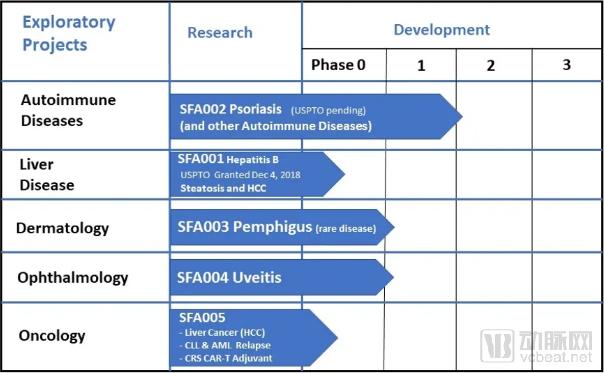
SFA Therapeutics R&D Pipeline
Currently, SFA Therapeutics has incorporated a range of diseases into its R&D pipeline, including psoriasis, liver cancer, hepatitis B, and uveitis. The company’s investigational drug SFA001, which has recently been granted a patent, can be used to treat various liver conditions such as hepatitis B, liver fibrosis, hepatocellular carcinoma (HCC), and non-alcoholic steatohepatitis (NASH). In addition, the company’s other investigational drug, SFA002, has demonstrated remarkable efficacy in curing psoriasis in clinical trials and has received FDA approval to enter Phase II clinical trials (with IND status pending).
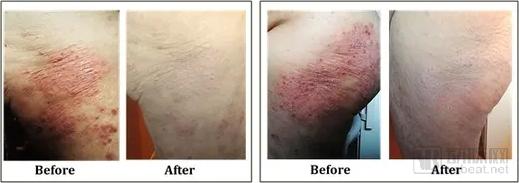
Before-and-After Comparison of SFA002 in the Treatment of Psoriasis (Images from Official Website)
In commenting on the achievements of SFA Therapeutics, Dr. Temple Feitelson, a biology professor at Temple University, stated: “HCC has become one of the five most prevalent cancers, often occurring in patients with long-term hepatitis and liver tissue damage, and has emerged as the second leading cause of cancer-related deaths. With approximately 600,000 new cases of liver cancer diagnosed annually, there is an urgent need to develop new therapies for the prevention and treatment of HCC.”
SFA Therapeutics has developed compounds with anti-inflammatory and antitumor activities from gut bacteria, which alleviated the onset of hepatocellular carcinoma (HCC) in 50% of subjects in clinical trials and inhibited tumor growth. SFA Therapeutics is a “game-changer,” shifting away from the development of antiviral compounds for liver disease treatment toward discovering natural compounds from the human microbiome. These compounds are non-toxic, stable, and relatively low-cost, potentially benefiting a broader population of patients.
(Compiled by Wang Chan)