

5G and Policy Drive Together: Will a RMB 30 Billion Medical IoT Market Be Unleashed?
The once-calm medical IoT market has finally begun to stir. The catalyst for this change is the recent surge in policy directives on smart hospitals, frequently highlighted by the National Health Commission. “If the electronic medical record (EMR) grading system drove the growth of EMR vendors, then the introduction of evaluation standards for smart hospitals will soon usher in a golden age for medical IoT enterprises,” remarked an industry practitioner specializing in indoor hospital navigation, with a hint of excitement.
The scope of smart hospitals defined by the National Health Commission mainly includes three major areas:
1. "Smart Healthcare" for Medical Professionals.
2. "Smart Services" for Patients.
3. “Smart Management” for Hospital Administration.
Levels 0–8 of the Electronic Medical Record (EMR) Grading Evaluation correspond to “Smart Healthcare,” while Levels 0–5 of the recently released Hospital Smart Service Grading Assessment Standard System (Trial) correspond to “Smart Services.” At an official interpretation meeting held by the National Health Commission, a preview was given of the rating standards for “Smart Management,” with experts indicating that these standards were expected to be issued in 2019.
"Smart management" typically encompasses the management of hospital supplies such as pharmaceuticals, consumables, laboratory reagents, medical waste, and patient linens, and even extends to utility management (water, electricity, and gas) for hospital facilities. Numerous application scenarios involving medical IoT enterprises can also be found in the recently released Graded Evaluation Standard System for Smart Hospital Services (Trial).
Target, Project, Market Size
First, clarify several questions:
Answer: In August 2018, the National Health Commission issued a document to promote the development of electronic medical records (EMR), requiring that tertiary hospitals achieve a level of 4 or higher in the graded evaluation by 2020. Similar to EMR grading, the “Smart Service” rating also applies to secondary hospitals and above. (Therefore, primary hospitals are largely excluded from this requirement.)
A: The newly released Hospital Smart Service Grading Evaluation Standards cover five categories comprising a total of 17 evaluation items, including pre-consultation, during-consultation, post-consultation, end-to-end services, and infrastructure and safety. Centered on patients, the standards aim to enhance medical services for patients and optimize healthcare processes.
Among these business initiatives, we believe that medical IoT enterprises can deeply engage in the following areas: emergency care coordination, identification and navigation, information push services, medication dispensing and delivery, health education, and telemedicine, as detailed below:
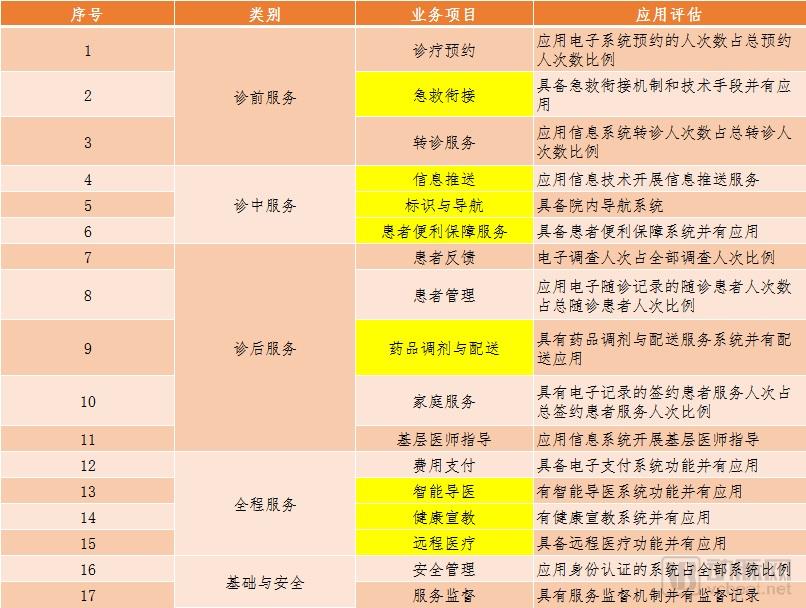
Source: "Graded Evaluation Standard System for Smart Hospital Services (Trial)"
This conclusion can also be drawn to some extent from the product lines of mainstream domestic medical IoT enterprises.
Taking Lachesis as an example, the company is engaged in the innovative R&D, production, and sales of intelligent hardware and software products based on in-hospital IoT, and is committed to creating comprehensive solutions for smart wards. The company has long established a clear definition of smart hospitals: leveraging the hospital as a platform and applying advanced technologies (such as IoT, big data, and artificial intelligence) to ensure medical safety, enhance medical quality and operational efficiency, improve patients’ healthcare experience, and provide medical staff with a better professional environment.
Based on a profound understanding of hospital IoT, the scenario-based services provided by Lachesis align closely with the Hospital Smart Service Grading Evaluation Standards:
① Smart Ward Interaction Platform: Designed for patient safety management, this platform serves as the central hub for smart ward information, enabling real-time interconnectivity of patient data within the ward. A single system integrates over ten subsystems and covers six clinical scenarios, facilitating timely notifications, real-time monitoring, and on-demand queries to prevent patient safety incidents caused by delayed or incomplete information and poor communication. Nurses can view real-time updates on ward status, patient information, nursing plans, surgical management, infusion monitoring, vital signs monitoring, medication management, and equipment management directly on the large screen at the nurses’ station. The ward features centralized monitoring with unified display and alert notifications.
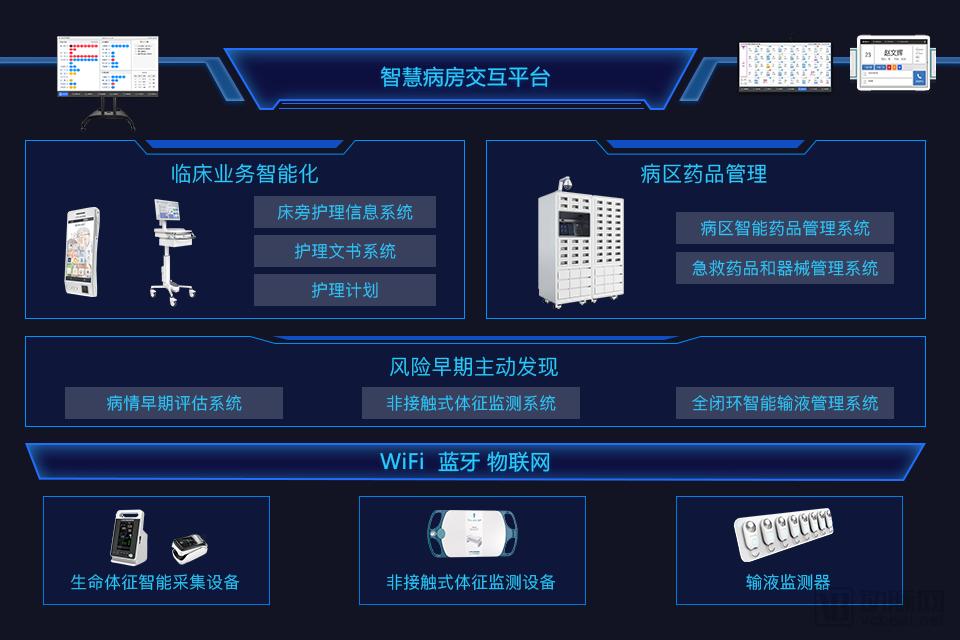
② Bedside Information Interaction: Display basic patient information at the bedside, alert for critical values, and provide a one-touch call function for patients' families to contact medical staff.
③Intelligent Diabetes Management: Provides personalized reminders, medication guidance, and lifestyle coaching for patients. Based on recorded blood glucose data, the system automatically alerts patients to key metrics of concern and supports in-app patient inquiries and communication features.
④ Health Education Services: Nurses can use Lachesis's mobile nursing workstation to provide health education to patients at the bedside.
⑤ In the early proactive detection of patient risks, Shenzhen Lachesis Mhealth Co., Ltd. leverages its hospital-based Bluetooth IoT hub (Blue Bridge) and WiFi infrastructure to measure patients’ vital signs through medical-grade wearable devices. The early condition assessment system automatically analyzes patients’ Modified Early Warning Score (MEWS), promptly identifying those with “potential critical illnesses” to enable timely, efficient, and rational therapeutic interventions.
⑥In ward medication management, Lachesis integrates intelligent medication cabinets, medication delivery robots, infusion monitors, and clinical mobile terminals (NDAs) into a unified system. This enables full-process traceability of information from physician order entry and medication administration to completion, establishing a secure closed-loop medication management system to enhance medication safety. By utilizing Lachesis intelligent medication cabinets, hospitals can manage medications on a per-unit basis, preventing errors such as over-dispensing, under-dispensing, or incorrect dispensing. The system also manages medication expiration dates and batch numbers, intelligently identifying near-expiry items and providing timely alerts for medications approaching expiration at different intervals. Furthermore, through big data analytics, the system optimizes pharmaceutical logistics management and intelligently recommends restocking plans.
⑦In-Hospital Navigation: Provides patients with indoor map query services, offers location and navigation within the hospital related to individual diagnosis and treatment activities, plans optimal clinical pathways for patients, and provides prompts and guidance to facilitate their medical visits.
To roughly estimate the market size of the Medical Internet of Things (IoMT) over the next 3–5 years, it is necessary to understand the current expenditure levels of tier-2 and tier-3 hospitals in this area.
Hospitals typically categorize medical IoT expenditures as part of their informatization construction costs. During the informatization process, the initial investment is often the largest, with one-time outlays exceeding tens of millions of yuan being common; therefore, such cases are temporarily excluded from consideration.
Given the long-term continuity of hospital informatization construction, hospitals continue to allocate a certain proportion of their budget annually after the initial large-scale system procurement. According to Shu Qiang, Party Secretary of the Children's Hospital of Zhejiang University School of Medicine, tertiary hospitals invest approximately 10% of their annual budget in informatization. Based on this, VCBeat estimates that secondary hospitals allocate around 5%.
As another expert added, the current proportion of investment in tertiary medical IoT within hospital informatization stands at approximately 20%, while that for secondary hospitals is slightly lower, at around 10%. Data from the China Health and Family Planning Statistical Yearbook 2016 shows that the average annual total expenditure for tertiary hospitals is RMB 686.247 million, compared with RMB 102.893 million for secondary hospitals.
Based on the above information, we estimate that the annual cost of medical IoT construction is approximately RMB 13.72 million for tertiary hospitals and RMB 510,000 for secondary hospitals.
Based on data from the Statistical Information Center of the National Health Commission, there are approximately 2,400 tertiary hospitals and 8,300 secondary hospitals in China. Therefore, the market size for the Medical Internet of Things (MIoT) over the next three to five years is estimated to be around RMB 37.2 billion.
Of course, the above is merely the author’s own estimation method, which may be slightly conservative. However, VCBeat has obtained an alternative approach to estimating market size from a company, provided here for your reference:
According to the 2017 Statistical Bulletin on Health and Family Planning, there were approximately 37,000 hospitals nationwide in China in 2017, including 2,340 tertiary hospitals.
According to current statistics on medical IoT-related infrastructure projects undertaken by the company in collaboration with hospitals, the average investment per hospital amounts to approximately RMB 50 million. This figure covers only the costs associated with hospital-wide management systems for consumables, pharmaceuticals, and supplies developed through enterprise-hospital partnerships. Based on this, the company estimates that the market potential for medical IoT infrastructure in tertiary hospitals alone across China exceeds RMB 100 billion. When including secondary hospitals and even primary care institutions, the total market size for medical IoT infrastructure is projected to surpass RMB 200 billion.
The Wave of Precision Management Is Here: How Should Medical IoT Companies Respond?
As previously mentioned, the National Health Commission’s rating standards for “Smart Management” were expected to be released in 2019. VCBeat believes that these standards are of critical importance to medical IoT enterprises. This is because the management of hospital supplies covered under “Smart Management”—including pharmaceuticals, high- and low-value consumables, and medical waste—can effectively help hospitals achieve refined management, which happens to be a core strength of medical IoT companies.
Due to the large number of procurement batches and the wide variety of supplies, most hospitals in China still rely on basic inventory management systems. Without scientific inventory management methods, it is impossible to monitor the real-time usage status of all stocked materials. Therefore, hospitals aim to establish comprehensive management processes and implement hospital-wide material management systems. Specifically, this includes departmental requisition, procurement management, order management, warehouse management, departmental requests, consumption management, and statistical analysis. The key objective is to improve the efficiency of hospital material management and achieve cost savings and revenue enhancement.
According to hospital experts, medical IoT products play a key role in supply management. First, hospitals can implement barcode-based management for supplies, standardize supply management processes, and achieve automated end-to-end tracking and management of both low-value and high-value consumables.
Leveraging IoT technology, it is also possible to pinpoint the exact location of medical supplies, monitor their usage status, analyze and compile inventory data, and provide functionalities such as supply planning and safety stock alert management. These capabilities help reduce hospitals’ administrative costs in supply chain management, minimize idle inventory and waste, and enhance the overall level of hospital supply management.
Hospital Material Management as Closed-Loop ManagementHospital material management can also be viewed as closed-loop management. In fact, within the seven-stage evaluation framework of the international HIMSS standards, closed-loop management is a critical component, alongside clinical decision support and paperless operations. Achieving traceability through a closed loop across the entire medical process—including medications, laboratory testing, diagnostic imaging, breast milk handling, blood transfusion, and surgical procedures—constitutes HIMSS’s comprehensive closed-loop management.
In response to hospitals’ material management needs, domestic medical IoT enterprises have successively launched a number of highly innovative solutions.
Ruihua Kangyuan is a leading domestic provider of Hospital Intelligent Internet of Things (HIoT) solutions. Its smart hospital initiatives primarily focus on consumables, pharmaceuticals, linens, operating room behavior management, and intelligent logistics transportation.
Taking the company’s core intelligent consumables management solution as an example, it primarily encompasses the following aspects:
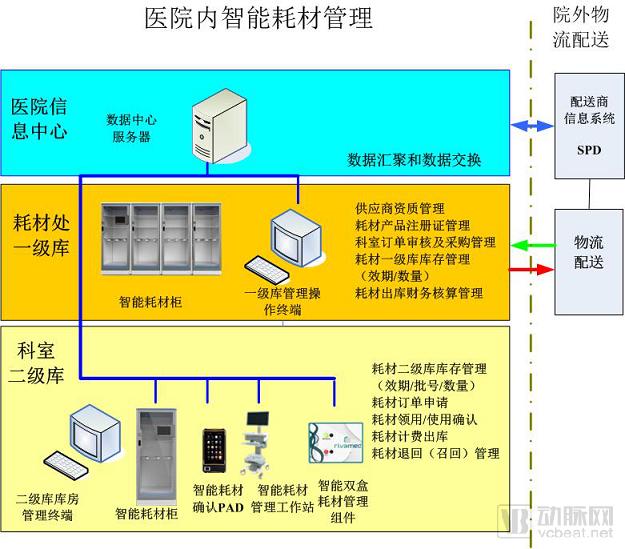
Source: Rivamed
① Intelligent RFID Management of High-Value Consumables
By leveraging the implementation model of the Medical Internet of Things (IoMT) combined with intelligent hardware terminals, smartRFIDHigh-Value Consumables Cabinet, Intelligent Consumables Management Workstation, and Intelligent Consumables VerificationPADAs intelligent terminal devices, they extend to the primary consumables warehouse of the hospital and the secondary warehouses in clinical departments, achieving unified integration of "logistics flow," "information flow," and "capital flow" between consumables-using departments and other relevant departments within the hospital. Externally, a logistics platform connected with suppliers is established to extend the logistics from "supply" to internal "usage" within the hospital, ultimately covering requisition, procurement,Closed-loop management has been fully implemented across all processes, including distribution, usage, return and damage handling, and traceability.
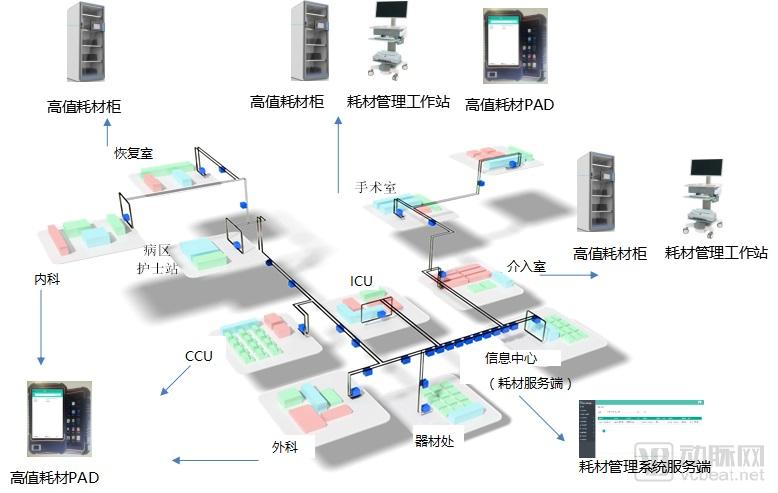
Source: Rivamed
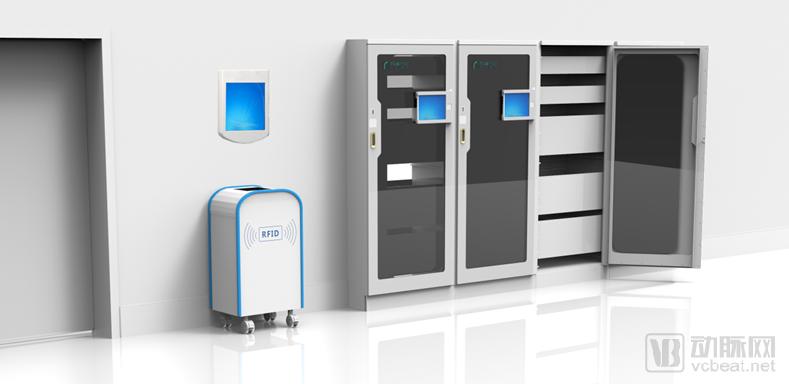
② Intelligent RFID Management of Low-Value Consumables
The system via the Medical Internet of Things+Implementation Forms of Intelligent Hardware Terminals, Integrating Smart ConsumablesRFIDFixed-quantity card return terminal,RFIDSmart terminal devices, such as consumables acceptance terminals and intelligent consumables shelves, extend to hospital central supply rooms and departmental secondary storage units, while leveraging the Internet of Things (IoT)RFIDTechnology Combined with Consumables DistributionSPD, leveraging big data platforms to enhance in-hospital consumables management and strengthen logistics data analytics can effectively improve the logistics efficiency and inventory turnover of pharmaceutical distribution enterprises, elevate hospital management standards, and liberate frontline medical staff.
Source: Rivamed
Logistics Robot SystemThe logistics robot system primarily consists of a system server, under-riding robots, delivery robots, workstations, and other peripheral devices. It is capable of automatically transporting various material carts within the operating room suite, mainly addressing planned and ad-hoc material transport tasks. These include the preparation of preoperative instruments, dressings, medications, consumables, and other supplies, as well as the postoperative collection of contaminated waste from individual operating rooms.
Multiple Transport Modes:
① Operating Room - Preoperative Supply Model
Preoperative Supply Preparation Robots operate within the clean corridors of the operating room, delivering required surgical supplies to individual operating suites.
② Drug/Consumable Circulating Delivery Model
The circulating robot is stocked with a base inventory of commonly used medications and consumables. When a medication shortage occurs in an operating room, the OR nurse selects the required items in the system, and the robot automatically delivers them to the operating room. The nurse accesses the supplies by swiping a card to open the cabinet door. The robot can automatically monitor its own inventory levels; when stock is insufficient to fulfill orders or when the quantity of a specific medication falls below the predefined threshold, the robot automatically sends a restocking request to the pharmacy management system and returns to the pharmacy to perform restocking.
③ Operating Room - Postoperative Contaminated Waste Retrieval Model
Post-operative Waste Retrieval Robot
④ Ward - Supply of Medications and Sterile Items
At scheduled times, logistics robots transport sterile items required by ward units—including long-term physician orders, intravenous medications, and linens—from the supply department to the nursing stations of each ward.
Shi Danjie, President of Rivamed, stated: “By leveraging our IoT platform, we can integrate hospital-wide personnel data, supply data, and corresponding workflows. This integration not only enhances management efficiency and safety but also continuously optimizes operational processes. By seizing this opportunity to address the needs of healthcare institutions, we have collaborated with top-tier medical centers in China—including Peking Union Medical College Hospital, Beijing Fuwai Hospital, Peking University Cancer Hospital, and Ruijin Hospital affiliated with Shanghai Jiao Tong University School of Medicine—to develop intelligent management solutions for hospital-wide pharmaceuticals, consumables, and supplies.”
As a long-established leader in China’s medical Internet of Things (IoT) sector, Yihui Technology Co., Ltd. boasts a highly comprehensive portfolio of medical IoT products. Zhang LiZhong, Chairman of Yihui Technology Co., Ltd., stated, “I believe that large-scale business systems have ceased to be the mainstream in recent years. The future industry trend lies in leveraging IoT platforms and artificial intelligence to develop micro-applications that address challenges through scenario-based, process-oriented, and object-focused approaches, rather than relying on traditional system-, department-, or institution-centric models. For instance, our solutions for linen management, high-value consumables management, and fixed asset management demonstrate how subdividing specific scenarios enables more refined hospital management. In the future, medical IoT will be ubiquitous—present wherever there are clinical or operational scenarios within hospitals.”
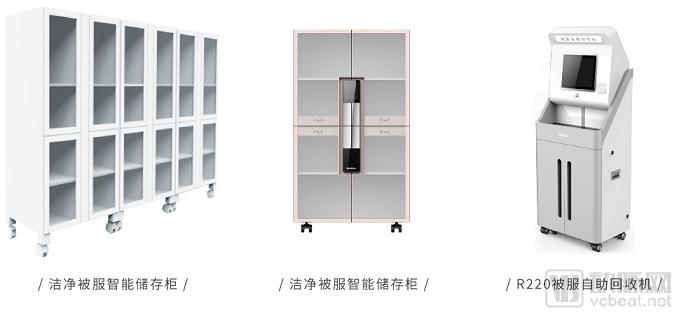
① Hospital Smart Linen System
Hospital linens bear the critical responsibility of having “intimate contact” with doctors, nurses, and patients; their hygiene status directly impacts the health of these three groups and the overall image of the hospital. The prevention and control of infection risks associated with medical linens is a global challenge. Currently, most hospitals lack effective management tools for linen hygiene, relying primarily on manual intervention and handwritten records. This approach results in a lack of traceability for laundering quality, high daily loss rates, significant labor waste during handover and inventory checks, and non-compliance with healthcare-associated infection (HAI) control standards. Cross-infections caused by poor linen management can lead to severe consequences.
Yihui Smart Linen products, based on a comprehensive IoT solution, achieve all-around, multi-dimensional management featuring automated counting and handover of clean linens, intelligent collection of soiled linens, and closed-loop traceability of laundering quality.
Source: Yihui Technology
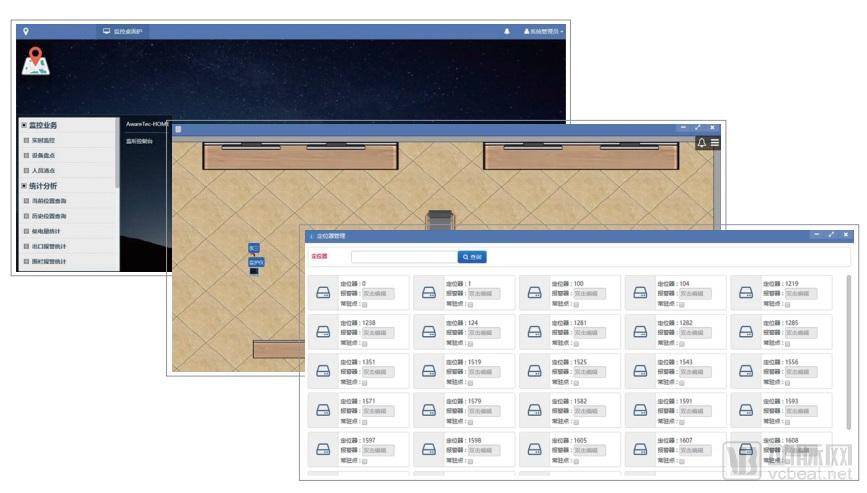
② Personnel and Asset Positioning Management System
This system represents a typical application of IoT RFID technology in the healthcare industry. It not only enables real-time location tracking and activity monitoring of managed entities, such as patients, medical staff, and critical assets, but also supports various functionalities including circulation path tracking and inquiry, emergency call and alert management for personnel, equipment usage tracing, and statistical analysis of ward activities. Consequently, it helps reduce the workload of medical staff, improve operational efficiency, and enhance the utilization rate of medical equipment.
Source: Ewell Medical Information
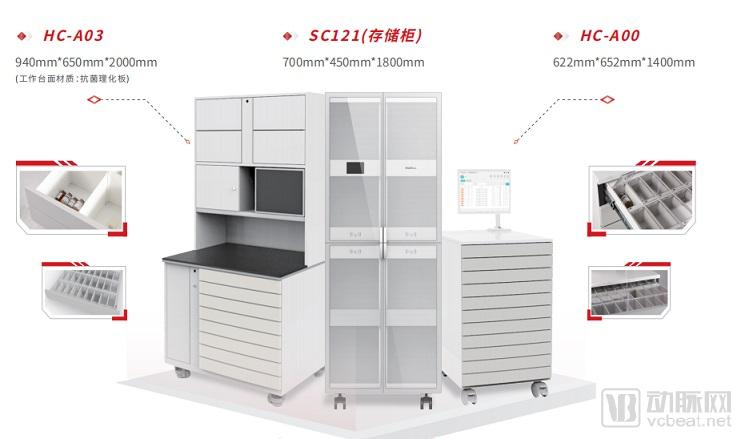
③ Smart Medication Cabinet Management System
In terms of drug management, Yihui Technology Co., Ltd. has also launched an intelligent management system for drugs and consumables.
Source: Ewell
It is reported that this system is an intelligent closed-loop management system designed to standardize the management of clinical standby medications, controlled substances, and high-value medical consumables in hospitals, focusing on processes such as usage, distribution, and accounting. By leveraging technologies including cloud platforms, the Internet of Things (IoT), and intelligent identification, the system enables digital and intelligent management of pharmaceuticals and medical consumables, thereby achieving real-time, dynamic monitoring and full traceability from warehousing to final patient use.
The system adopts a dual-person, dual-lock, and dual-access mode. It offers advantages such as medication administration based on medical orders, automatic generation of red prescriptions for emergency drug retrieval, remote mobile authorization and authentication, fingerprint recognition, and temperature and humidity monitoring with image capture. Furthermore, by establishing a verifiable, controllable, and traceable drug management system between clinical departments (operating rooms, ICU wards, emergency rooms, and general wards) and the pharmacy department, it achieves lean management of clinical medication use.
Policy and Technology: Key Drivers for the Takeoff of the Medical Internet of Things
From the perspective of the domestic landscape, multiple factors influence the widespread adoption of medical IoT products in secondary and tertiary hospitals. The most critical factor lies at the policy level. The healthcare industry not only lacks policy guidance for IoT products but also lacks standardized pricing regulations for these products.
Zhang Lizhong has deep personal insight into this matter. He recalls that during the 11th Five-Year Plan period, the state issued the Outline for the Development of the Internet of Things (IoT), which mentioned the application of IoT in healthcare. However, no national-level documents on IoT were released during the 12th and 13th Five-Year Plan periods. At the industry standard level, from the 11th to the 12th Five-Year Plan period, the National Health Commission successively formulated a number of IoT industry standards. These standards provided a relatively clear definition of application scenarios in the medical IoT field. Nevertheless, due to the excessive variety and complexity of technical standards involved in IoT, it has been difficult to achieve standardization across products from different enterprises.
On January 13, 2018, the National Engineering Laboratory for Internet Medical Systems and Applications, Huawei Wireless XLabs, the First Affiliated Hospital of Zhengzhou University, the China Academy of Information and Communications Technology, and China Mobile Communications Group Co., Ltd. jointly authored and released the “White Paper on Wireless Healthcare,” which outlined three major categories of application scenarios for 5G in healthcare:
Category 1: Medical monitoring and nursing applications based on wireless data acquisition from medical devices, such as wireless monitoring, wireless infusion, mobile nursing, and real-time patient location acquisition and monitoring.
Category II: Medical diagnosis and guidance applications based on video and image interaction, such as mobile ward rounds with real-time access to patients’ imaging diagnostic information, remote ward rounds using medical service robots, remote real-time consultations, emergency rescue guidance, wireless surgical demonstrations, and wireless specialty diagnostics.
Category III: Remote teleoperation applications based on video and haptic feedback, such as remote robotic ultrasound examination, remote robotic endoscopy, and remote robotic surgery.
With the rise of 5G technology, prominent domestic hospitals—including the First Affiliated Hospital of Zhengzhou University, Guangdong Provincial People’s Hospital, Tianjin Medical University General Hospital, and Shanghai Yueyang Hospital—have actively embarked on explorations of 5G applications. Consequently, medical Internet of Things (IoT) enterprises closely associated with 5G have naturally emerged as beneficiaries.
However, product immaturity is a significant factor hindering the current development of the Internet of Medical Things (IoMT). From the perspective of the current market, the IoMT is still in its developmental stage, and 5G technology has only just begun to be deployed. Consequently, the industry lacks mature products that can truly address clinical pain points. Most enterprises’ products require a prolonged period of validation and transition when introduced into clinical settings, allowing healthcare professionals to become familiar with and accept them.
Compared to the industrial Internet of Things, which is in a period of booming growth, the development of the medical Internet of Things is significantly lagging.
As traditional healthcare institutions expand in scale and diversify their services, there is a growing need for more scientific and effective technical approaches to operations and maintenance. This aligns with the National Health Commission’s explicit objective in promoting the development of smart hospitals. For medical Internet of Things (IoT) enterprises, it is essential not only to gain an in-depth understanding of hospital needs but also to deploy professional teams to apply IoT technologies within clinical environments. Furthermore, these enterprises should actively support the national advancement of medical IoT technology and contribute to the formulation of relevant policies and standards.
Under the guidance of the National Health Commission’s Smart Hospital standards, the integration of the Internet of Things (IoT) with healthcare is expected to deepen continuously. Medical IoT enterprises are poised to usher in a new wave of development.