

AxiaMed Files IPO Amid Triple-Digit Annual Growth, Targeting the $100B U.S. Healthcare Payments Market

AxiaMed
Medical Payment Enterprises
In February this year, the “2019 HIMSS Global Conference & Exhibition (HIMSS19)” was held in Orlando, Florida, USA. As a healthcare payment technology company, AxiaMed received significant media attention during the event.
Why Are People So Interested in a Startup That Has Been Around for Only Five Years? This Must Be Discussed in the Context of the Current U.S. Healthcare Payment Market.
Healthcare is one of the most important industries in the United States, with U.S. healthcare expenditure accounting for approximately 18% of GDP, significantly higher than that of other developed countries. Research indicates that patient out-of-pocket payments constitute 35% of the revenue of U.S. healthcare service providers, second only to Medicare and Medicaid. In 2018, the market size of U.S. healthcare payments was approximately $80 billion, and it is projected to reach the hundred-billion-dollar level by 2020. Such a vast market size is undoubtedly an attractive “prize.”
The market is highly lucrative, attracting numerous competitors. Every company entering the medical payment space has developed its own unique “competitive strategy”: PatientPay, founded in 2008, primarily provides end-to-end payment solutions for healthcare providers in the nursing care sector; CareCloud focuses mainly on EHR (Electronic Health Records) and practice management platforms; Simplee integrates cost estimation, billing, and financial management into a unified payment framework; SwervePay has developed and optimized a one-click medical payment system; while Cedar specializes deeply in the niche area of medical payment data analytics...
Unlike other healthcare finance companies that focus on transforming payment management, AxiaMed has chosen to expand its business by prioritizing payment security. The decision to deeply cultivate the field of medical payment security stems from AxiaMed’s discovery that incompatibilities among payment systems across healthcare institutions often subject users to cumbersome procedures when transacting between different providers. This significantly increases both time and communication costs during the medical care process. The core reason behind this issue is the lack of highly reliable security encryption technologies in the market.
To this end, AxiaMed developed a PCI-certified point-to-point encryption technology and applied it to healthcare payments. This technology has rapidly earned the company favor among healthcare service providers, allowing it to gain a firm foothold in the medical payment sector. According to AxiaMed’s official website, its annual revenue growth rate has reached triple digits.
How Did AxiaMed Achieve Such Remarkable Results in Just Five Years? What Is Its Unique Methodology? Before answering this question, it is essential to gain a deeper understanding of the company’s development history.
AxiaMed is a healthcare fintech company focused on payment security. Founded in 2015, it has completed two rounds of financing, raising a total of over $15 million. The company partners with independent software vendors (ISVs) to provide secure patient payment solutions within their healthcare applications. By expanding the payment options available to patients, this solution simplifies administrative workflows, reduces bad debt, and effectively improves the financial performance of healthcare providers, making patient payments more convenient.
Prior to founding AxiaMed, Randal Clark, a graduate of DePaul University, was passionate about investing in creative ventures, philanthropy, and technological innovations. According to public records, Randal Clark is an entrepreneur with diverse interests and a strong spirit of adventure and innovation. He founded and manages a private Christian college-preparatory school, has long provided funding for orphanages in South Africa, and holds a key position on the board of directors of Hardwired Global.
In the eyes of Dan Berger, General Manager of Sales at AxiaMed, Randal Clark is a true challenger: “Once he sets his sights on a goal, he goes all out.”

Randal Clark, Founder and CEO of AxiaMed (Image source: AxiaMed official website)
Since 2010, healthcare costs in the United States have continued to rise, with a growing share of financial responsibility shifting from payers to patients. Industry analysts predict that patient out-of-pocket spending will exceed 30% of total healthcare expenditures in 2019 and rise to nearly 50% within five years.
Faced with such high out-of-pocket costs for patients, healthcare providers have failed to adapt to this shift. Beyond collecting copayments at the point of service, these institutions lack appropriate processes or systems to directly manage consumer billing. Compounded by the complexity of healthcare payment systems, this results in cumbersome payment procedures. These factors make it difficult for healthcare providers to ensure payment security and compliance.
To address this market pain point, Randal Clark decided to venture into the space to drive change. He partnered with former colleagues to co-found AxiaMed, serving as its Chief Executive Officer, President, Chief Strategist, and Architect.
Interestingly, Randal Clark is not only bold and enterprising but also remarkably attentive to detail. In Greek, the word “Axia” means value. This reflects Randal Clark’s hope that AxiaMed can deliver valuable services to the healthcare industry. From this perspective, he believes that the most valuable priority in the medical payments sector is not improving transaction efficiency, but rather ensuring the security of user transactions.
Based on this, AxiaMed has been committed to providing healthcare institutions with a more secure payment experience since its inception.
Prioritizing security, AxiaMed has opted to address the current challenges in the payment sector—such as cumbersome processes and limited transaction types—through technological solutions.
According to the AxiaMed website, AxiaMed’s payment integration technology platform enables full integration of payment card functionality into electronic health record (EHR) systems, practice management systems (PMS), revenue cycle management (RCM) solutions, and patient engagement applications.
Payment integration can be embedded into existing healthcare workflows to accelerate patient payments and streamline administrative processes by ensuring accurate, timely updates to accounting systems and ledgers.
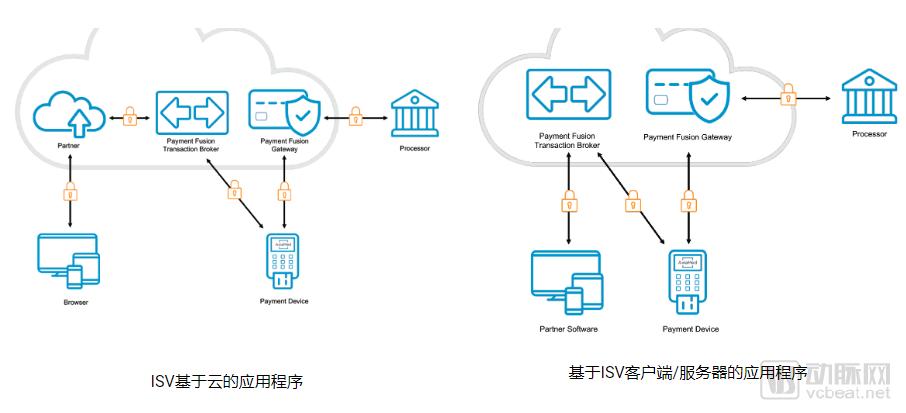
AxiaMed Secure Encryption Process (Image source: AxiaMed official website)
By implementing secure and convenient credit card processing integrated into existing business management software, providers can benefit from eliminating double entry and automating transaction reconciliation. Randal Clark refers to this approach as an “all-in-one” healthcare payment solution.
The security of this healthcare payment solution is primarily reflected in five aspects:
1. Validated P2PE
Payment Fusion was listed as a validated point-to-point encryption (vP2PE) solution in September 2017. Its unique network architecture and customized software for Ingenico payment terminals support secure transaction processing using vP2PE.
As a PCI P2PE solution, Payment Fusion provides state-of-the-art security for instant payment card transactions, supported by best practices that protect the integrity of key management and eliminate opportunities for device tampering within the supply chain. Payment Fusion’s Control Center helps large end-users easily maintain ongoing vP2PE compliance by tracking and managing all payment terminals deployed across their organizations.
2. Symbolization
AxiaMed’s Secure Payment Vault provides partners and customers with a secure database for storing payment data in files, commonly referred to as “files on card.”
By replacing card numbers with “tokens” (e.g., random strings of digits and letters), AxiaMed substitutes sensitive card information with non-sensitive equivalents. These tokens are then used in software applications in place of actual credit card numbers to maximize the security of online and mobile payments and to support features such as recurring payments and payment plans.
3. PCI Compliance
For software vendors, AxiaMed’s cloud-based semi-integrated solution eliminates applications from PA-DSS scope. Its architecture enables customers to fully segregate transaction data from other network traffic, thereby reducing the cost and complexity of PCI audits.
4. HIPAA Compliance
AxiaMed complies with HIPAA security and privacy requirements for protecting Protected Health Information (PHI), conducting regular security risk assessments, vulnerability network scans, and application security audits.
5.EMV
Payment Fusion has been certified for use with AxiaMed’s Ingenico terminals for EMV. EMV is the global standard for payment cards embedded with computer chips, as well as the technology used to authenticate chip card transactions. EMV significantly reduces bank card fraud incidents resulting from counterfeit, lost, and stolen cards.
It is precisely based on such robust security encryption technology and collaboration systems that AxiaMed has established its own competitive barriers. In an interview with the media, Randal Clark stated, “This is a top-tier healthcare payment solution. In the future, the healthcare market will greatly benefit from this solution.”
After five years of development, AxiaMedd’s payment integration platform has become the healthcare industry’s preferred SaaS-based payment platform, adopted by hundreds of hospitals and thousands of mobile healthcare providers.
In 2018, AxiaMed became one of the first providers of point-to-point encryption (vP2PE) solutions certified by PCI and focused on the healthcare sector. Its healthcare payment solutions enable AxiaMed’s software partners and healthcare organizations to strengthen their security infrastructure, achieve PCI compliance, and reduce associated costs.
AxiaMed Security Encryption Promotional Image (Image Source: AxiaMed Official Website)
In recent years, new healthcare service models have gradually emerged, undoubtedly posing greater challenges to medical payment companies. One notable trend is that healthcare providers are beginning to unbundle their services rather than offering them as integrated packages to consumers. This shift is primarily driven by changes in consumer behavior: people are increasingly willing to pay for non-physical services.
For example, to attract millennials, some healthcare companies have adopted the slogan “just a 5-minute wait time,” providing users with access to primary care physicians for convenient diagnosis and treatment of illnesses. Users experiencing physical discomfort or having related questions can receive professional responses from their primary care physician within five minutes. Through these approaches, users can enjoy certain high-quality, focused services at minimal cost. For many users, it is highly cost-effective to have a “personal doctor” for an upfront fee of just tens of dollars (such as consultation services included in membership plans).
Beyond telemedicine services promising “just a 5-minute wait,” new healthcare offerings—such as virtual in-home physicians and novel urgent care centers—are continuously emerging to meet the growing demand for medical services. Consequently, companies in the healthcare payment sector must grapple with how to adapt to this shift.
“In recent years, we have witnessed continuous development in the healthcare industry, with new service models constantly emerging. As nascent innovations are often relatively ‘vulnerable,’ they have become primary targets for cyberattacks. Ensuring the security of payment data has therefore become a top priority for us. In the coming years, AxiaMed will devote greater human and material resources to key application areas such as payment systems, information sharing, data encryption, mobile payments, and one-time payments. We believe that, through the joint efforts of all our peers in the medical community, the future of healthcare will be even brighter,” said Randal Clark in an interview with the media.
Reference link:
https://www.crunchbase.com/organization/axiamed#section-overview