

GoFundMe IPO Prospectus Highlights Dominance in Medical Crowdfunding and Anti-Fraud Measures
In the United States, as high-deductible health insurance plans become increasingly prevalent, medical expenses have become a significant burden for many patients, prompting some to seek assistance on crowdfunding platforms. To date, such platforms have raised billions of dollars for Americans struggling to cover their medical costs.
As the largest medical crowdfunding platform, GoFundMe hosts approximately 250,000 medical crowdfunding campaigns annually, with total donations reaching $650 million. VCBeat (WeChat ID: vcbeat) has found that GoFundMe’s business extends beyond medical aid. As the world’s largest personal project crowdfunding platform, it has raised over $5 billion since its establishment in 2010 across 21 categories, including education, sports, and charity.
In 2008, Brad Damphousse and Andrew Ballester founded CreateAFund, the predecessor of GoFundMe. They were also the founders of Paygr, a real-name local trading platform. In May 2010, GoFundMe was officially established in Silicon Valley, USA, with the mission of enabling anyone to raise funds on its platform for any reason.
The GoFundMe platform is dedicated to creating conditions that enable individuals to raise funds for personal causes and life events. The most popular categories on the GoFundMe website include medical expenses, education, emergencies, memorials, and sports. “It is truly remarkable to see people transforming their lives in various ways through GoFundMe,” said Damphousse. “It is inspiring to witness the growing success of an increasing number of fundraising campaigns.”
In the fourth quarter of 2014, the GoFundMe platform raised over $156 million, bringing its total fundraising for the year to $470 million, a 268% increase. This marked GoFundMe’s surpassing of Kickstarter to become the world’s number-one crowdfunding platform.
In June 2015, Damphousse and Ballester sold a majority stake in GoFundMe to prominent venture capital firms Accel Partners and Technology Crossover Ventures, announcing their withdrawal from the company’s day-to-day management. The transaction valued GoFundMe at $600 million.
In 2016, GoFundMe’s average monthly fundraising exceeded $1 million, with a growth rate three times that of 2015; total crowdfunding reached $3 billion, and overall revenue surpassed $100 million.
Although GoFundMe entered the market later, it has experienced rapid growth. Since its establishment in 2010, it has set up branches in 18 countries, including Canada and the United Kingdom, raising over $5 billion in total and becoming the world’s largest crowdfunding platform for personal campaigns.
Currently, GoFundMe’s leadership team includes CEO Rob Solomon (former President and Chief Operating Officer of the U.S. group-buying website Groupon), COO and CFO Hoang Vuong, CMO Raquel Rozas, and CTO Chi-Chao Chang. Ballester remains a board member and holds equity in the company.
GoFundMe features a total of 21 categories, including media, volunteers, education, sports, family, and charity. The platform hosts over 2 million campaigns, with participation from 50 million contributors. Medical fundraising accounts for the largest share at approximately 17%, followed by tuition fundraising at 11%, and travel expense fundraising at 10%.
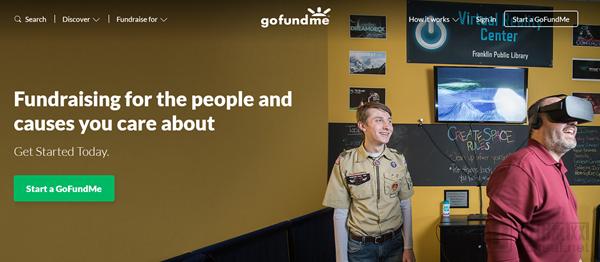
GoFundMe Website Screenshot
In response, Rob Solomon stated: “GoFundMe is not a healthcare company, nor do we have any intention of replacing health insurance. We simply aim to help people navigate complex issues and attempt to fill the gaps in the U.S. healthcare system.”
As the leading crowdfunding platform, GoFundMe’s success hinges on the following three key factors:
· Unlike traditional social crowdfunding models, GoFundMe is a public platform for launching fundraising campaigns to meet individual needs or goals. The projects posted are more personalized and life-oriented, aiming to help people raise funds for practical living expenses. Examples include raising money for a family member’s cancer treatment, seeking donations to cover university tuition, or collecting funds for overseas travel. Furthermore, unlike general crowdfunding platforms, campaigns on GoFundMe have no time limits or minimum funding requirements.
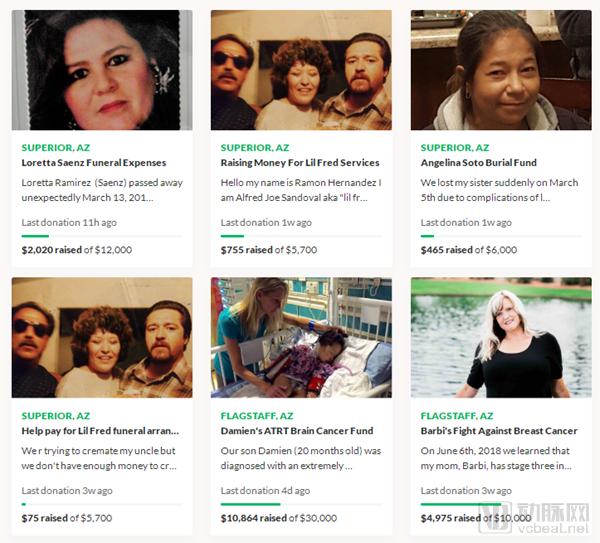
GoFundMe Fundraising Page
· If users wish to launch a fundraising campaign on GoFundMe, they should describe their reason for fundraising and the target amount on the application page, and upload photos or videos. Campaigns on GoFundMe can be shared via social networks such as Facebook, Twitter, and email; such sharing by friends or acquaintances can significantly enhance dissemination efficiency and credibility.
· While numerous campaigns on GoFundMe are charitable in nature, the platform itself is a for-profit company. Unlike equity crowdfunding or other reward-based crowdfunding models, GoFundMe’s previous business model involved charging a 5% “platform fee” on the total amount raised.
In November 2017, GoFundMe eliminated its “platform fee” for personal fundraising campaigns in the United States, Canada, and the United Kingdom, attempting to transition to a business model sustained by tips. Currently, its revenue streams consist of user tips, a 2.9% payment processing fee per transaction, and fees charged on institutional fundraising campaigns.
Since its inception, GoFundMe has completed one round of financing and two acquisitions.
In June 2015, prominent venture capital firms Accel Partners and TCV led the company’s Series A financing round at a $600 million valuation, with other investors including Greylock Partners, ICONIQ Capital, Meritech Capital Partners, and Stripes Group.
Due to GoFundMe’s unique business model, this round of financing demonstrates the company’s strong profitability. The platform operates largely on the principles of online social networks, relies on external payment providers, and incurs minimal overhead, resulting in a very high gross margin.
In January 2017, GoFundMe announced the acquisition of another crowdfunding platform, CrowdRise, without disclosing the specific transaction amount. Upon completion of the deal, the CrowdRise team joined GoFundMe, while CrowdRise maintained its brand independence.
CrowdRise, founded in 2009, is a fundraising platform for charities and other nonprofit organizations. It also facilitates fundraising for events such as the Boston Marathon, the New York City Marathon, and triathlons. CrowdRise collaborates with organizations including the American Cancer Society, the Red Cross, and UNICEF. The platform boasts over one million members and more than 20,000 charitable organizations, having raised over $500 million for nonprofit projects.
Following its acquisition of CrowdRise, GoFundMe can fully leverage CrowdRise’s expertise in raising charitable funds for events and corporate activities, providing appropriate fundraising channels for individuals and organizations.
In April 2018, GoFundMe announced the acquisition of the charitable crowdfunding platform YouCaring; transaction details were not disclosed. Through this merger, GoFundMe will have access to 60 million donors from 19 countries.
GoFundMe stated that fundraising campaigns currently running on YouCaring can either continue on the latter’s platform or be migrated to GoFundMe. Future fundraising initiatives will be launched exclusively on GoFundMe and will be backed by GoFundMe’s guarantee.
GoFundMe CEO Robert Solomon stated in a press release, “The acquisition is intended to further expand the platform and solidify its market leadership. GoFundMe and YouCaring share a common mission: to make it easier for people to help those in need.”
Crowdfunding abroad started early and developed rapidly, and has now gradually entered the stage of M&A adjustment. In addition to GoFundMe, well-known crowdfunding platforms also include Kickstarter and Indiegogo.
Kickstarter, founded in 2009 and headquartered in New York, USA, is dedicated to supporting and inspiring innovative, creative, and imaginative endeavors. By facilitating public crowdfunding through its online platform, Kickstarter enables creators to secure the funding they need.
Indiegogo, founded in 2008, is more flexible and open, with fewer restrictions on countries, regions, and identities. China has always been a market of great importance to Indiegogo. Currently, 23% of the crowdfunding campaigns on the platform are from Chinese companies, and over the past two years, Chinese products have raised more than $100 million on Indiegogo.
In China, crowdfunding started later and is currently in a phase of rapid development. According to industry insiders, crowdfunding first emerged in China in 2011, primarily taking the forms of equity-based crowdfunding, debt-based crowdfunding, reward-based (pre-purchase) crowdfunding, and donation-based crowdfunding. With the rise of online fundraising, fraudulent incidents on such crowdfunding platforms have become all too common both domestically and internationally.
For example, in November 2016, an article titled “Luo Yixiao, Stand Still!” went viral on WeChat Moments. The article stated that Luo Er, a writer, had a five-year-old daughter, Luo Yixiao, who was diagnosed with a severe illness, and the family struggled to afford the high medical costs. In his desperation, her father chose not to seek public charitable donations but instead opted to “monetize his writing,” promising that each additional share of the article would raise one yuan more for Xiaoxiao’s treatment.
Subsequently, some netizens alleged that the incident was a marketing stunt, claiming that Luo Yixiao’s medical expenses were not as exorbitant as stated in the article, and that Luo Er owned properties in both Dongguan and Shenzhen and had already raised the full amount of charitable funds needed. Later, the “appreciation” donations were refunded to the donors through the original payment channels, totaling RMB 2.52 million after verification.
To prevent fraud on crowdfunding platforms, GoFundMe has launched a website called GoFraudMe. The site posts suspected fraudulent GoFundMe campaigns, analyzes completed fraud cases, and educates users on how to identify and respond to scams. If fundraising has already been completed, GoFraudMe advises victims to report the incident to the police first and, after verification, refund the corresponding amounts to donors.
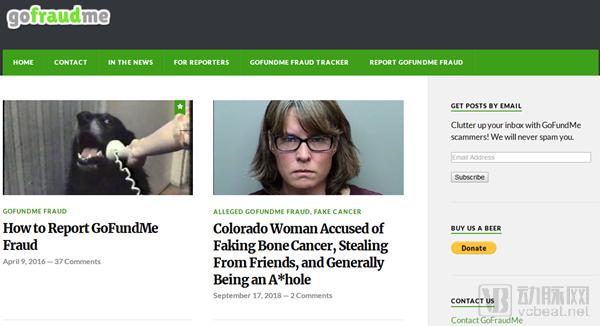
GoFundMe Website Screenshot
However, effectively preventing such incidents requires multi-party cooperation. For instance, if platforms like GoFundMe and Qingsongchou could establish data-sharing partnerships with public security, civil affairs, and healthcare systems to verify fundraisers’ authentic information from these sources, it would substantially reduce fraud cases at their root.
Liz Wald, International Marketing Director of Indiegogo, the second-largest crowdfunding platform in the United States, stated that maintaining project authenticity and building platform trust are crucial to the healthy development of crowdfunding platforms. Meanwhile, comprehensive platform service rules, dedicated teams responsible for user experience, and clear and transparent legal frameworks and policy regulations all contribute to the establishment of a culture of integrity.
References:
1. http://www.sohu.com/a/167399903_648461
2. https://36kr.com/p/5061873.html
3. https://en.wikipedia.org/wiki/GoFundMe
4. https://www.lieyunwang.com/archives/427186
5. http://www.i-quanta.com/201810181034MGBQSCSRHFZSYBPD.html