

Xiaomi Fitness Releases 2018 Sleep White Paper: Nearly 90% of Users Suffer from Bedtime Procrastination
Adequate sleep, a balanced diet, and appropriate exercise are the three health standards internationally recognized by the global community. Sleep is one of the most important means for the human body to restore mental energy and relieve fatigue. With the widespread use of smart wearable devices in recent years, new possibilities have emerged for people to understand and manage their sleep more scientifically.
On March 21 (World Sleep Day), Huami Technology (NYSE: HMI), a global leader in smart wearable devices, partnered with Yiling Pharmaceutical’s Wanbi’an to release the “2018 Xiaomi Sports Sleep White Paper” (hereinafter referred to as the “Sleep White Paper”). By analyzing users’ sleep patterns, the report presents and interprets sleep metrics from multiple dimensions, aiming to raise public awareness of sleep health.
This white paper is compiled from big sleep data of tens of millions of domestic users and over 280,000 valid user survey responses, providing a more precise depiction of the overall sleep landscape in China. This marks the second consecutive year that Huami Technology has released its Sleep White Paper, following its inaugural publication last year.
Late Nights and Late Mornings Become the Norm: Nearly 90% Suffer from Bedtime Procrastination
“The White Paper on Sleep” points out that, compared with 2017, the overall sleep quality and sleep habits of users changed in 2018, showing three core trends: going to bed later, getting up later, and shorter sleep duration.
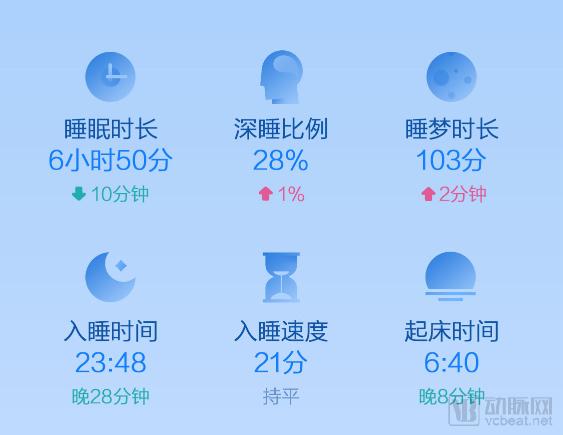
Data shows that in 2018, the average bedtime for all Mi Fit users was 11:48 PM, with an average wake-up time of 6:40 AM, resulting in an average sleep duration of 6 hours and 50 minutes—a decrease of 10 minutes compared to 2017. On average, users took 21 minutes to fall asleep. The average duration of REM sleep was 103 minutes, an increase of 2 minutes from 2017, while the proportion of deep sleep rose from 27% in 2017 to 28%. In fact, the U.S. National Sleep Foundation recommended in 2015 that adults should get 7–9 hours of sleep per night, and adults aged 65 and older should get 7–8 hours.
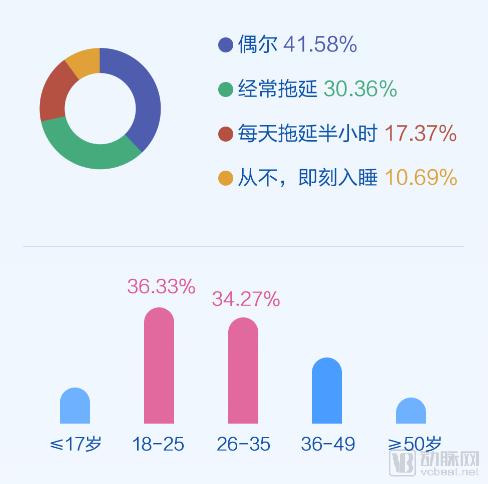
“The White Paper on Sleep” also reveals that nearly 90% of users engage in bedtime procrastination, with only about 10% never delaying sleep and falling asleep immediately. Over 40% of users occasionally procrastinate before bed, 30% do so frequently, and 17% delay going to sleep by half an hour every day. In terms of age distribution, bedtime procrastination is most severe among users aged 18 to 35, while it is rare among the elderly.
Meanwhile, the consequence of bedtime procrastination is reluctance to get up in the morning, leading to prolonged bed-staying. Among them, 66% of users require alarms to help them get out of bed, with some needing three or more alarms to fully wake up. Among those who tend to stay in bed, self-media practitioners have the longest bed-staying duration, while retirees have the shortest.
Over 70% of Users Experience Sleep Problems; Northeast China Has the Highest Insomnia Rate in the Country
Medical research indicates that occasional insomnia leads to fatigue and impaired motor coordination the following day, while chronic insomnia-induced poor-quality sleep can result in consequences such as inability to concentrate, memory impairment, and reduced work performance. Data from the "White Paper on Sleep" shows that nearly 60% of users experience varying degrees of insomnia, with most episodes lasting less than two hours. Thirty-six percent of users believe they are not getting enough sleep, 8% report that insomnia has become a daily occurrence, and 3.4% spend entire nights counting sheep. Additionally, 1% of users even require medication to aid sleep, a situation that is most prominent in first-tier cities such as Beijing, Shanghai, Guangzhou, and Shenzhen.
A city-level analysis reveals that cities in Northeast China account for 40% of the top 10 Chinese cities with the most severe insomnia problems, with Qiqihar ranking first, followed closely by Harbin and Jilin City. Sleep data also exhibits distinct regional characteristics: residents in Shigatse report frequent dreaming, while those in Lijiang enjoy the longest sleep duration; Wenzhou residents experience prolonged deep sleep, whereas those in Mudanjiang have light sleep; Meizhou residents fall asleep quickly, and Rizhao boasts the highest proportion of deep sleep.
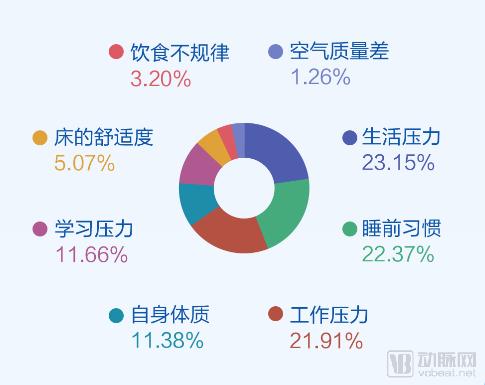
Regarding the causes of sleep disturbances, the Sleep White Paper analyzes and points out that nearly 60% of users’ sleep problems stem from life, work, and academic stress, while another 22% of users are primarily affected by their pre-sleep habits.
Wang Guangfa, Director of the Department of Respiratory Medicine at Peking University First Hospital, stated in an interview that sleep is not merely a physiological behavior but is also closely linked to psychological status; individuals under prolonged stress are prone to developing sleep disorders. To improve sleep quality, one should learn to properly regulate their mental state and alleviate emotional distress.
Who Is Stealing Your Sleep?
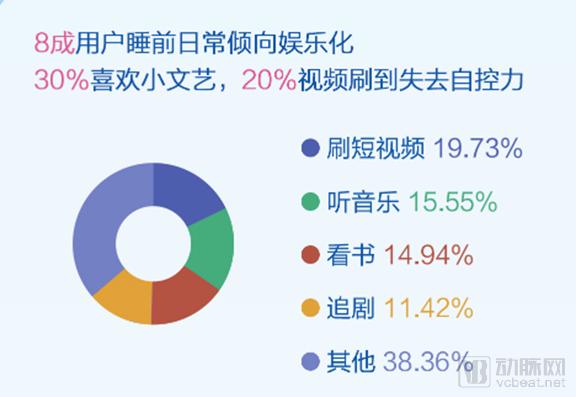
According to the White Paper on Sleep, which surveyed users’ pre-sleep habits, 80% of users currently tend to engage in entertainment activities before bed, 30% prefer light artistic or literary content, and 20% lose self-control while scrolling through videos. Among these groups, users aged 18–35 are particularly fond of short-form videos; those under 13 tend to read books before bed; users aged 14–17 prefer listening to music; and older adults focus more on news prior to sleep.
Happiness Requires “Striving”: Middle-Aged Adults’ Sleepless Nights Are Often Spent Working Overtime, Making Regular Sleep a Challenge. The “Sleep White Paper” reveals that men aged 36 to 49 have stayed up all night excitedly watching soccer matches or the Victoria’s Secret Fashion Show; on “Singles’ Day,” female users stay awake all night to shop and compete for deals; and for students, the nights before exams or holidays become frenzied—cramming intensely before tests or partying through the night once vacation begins.
Appropriate exercise helps you fall asleep quickly
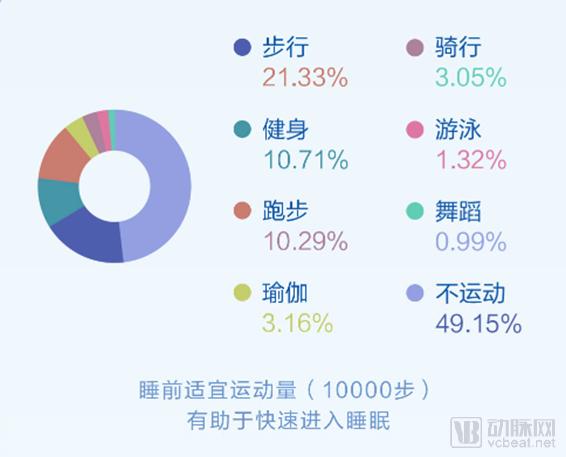
How Can Sleep Quality Be Improved? Data from the White Paper on Sleep reveals that 50% of users enjoy exercising before bedtime, with 28% having made pre-sleep exercise a habitual practice. Survey responses regarding preferences for types of pre-sleep physical activity indicate participation in walking, fitness training, running, yoga, cycling, swimming, and dancing. Specifically, retirees favor walking, students prefer running, professionals in the internet and financial sectors lean toward fitness training, while self-media practitioners and stay-at-home mothers tend to choose yoga before bed. In terms of motivations for pre-sleep exercise, men primarily aim to facilitate falling asleep or adhere to personal habits, whereas women are mainly motivated by weight loss goals.
The "Sleep White Paper" points out that "people can improve the quality of their sleep by increasing the proportion of deep sleep through reasonable exercise and other methods." In this regard, big data analysis by Huami Technology's Mi Motion reveals that walking 10,000 steps during the day is a simple and effective approach.
Director Wang Guangfa stated that a key approach to improving sleep lies in understanding the body’s intrinsic rhythms; these patterns often vary from person to person and require long-term monitoring and observation. With advances in modern science, technology, and artificial intelligence, smart wearable devices such as wristbands play a crucial role in helping individuals understand their basic physiological rhythms and better regulate their sleep and exercise habits.
Huami Technology was founded in 2013 and went public on the New York Stock Exchange (NYSE: HMI) in February 2018. It is currently a global leader in smart wearable devices. Its mission is to harness the power of technology to enable people worldwide to enjoy better sports, health, and medical services. In addition to the Sleep White Paper, Huami Technology annually releases sports reports, calling on people to pay greater attention to exercise and health.