

Wansheng Gene Secures RMB 5 Million Angel Funding from HeLi Investment to Advance Proprietary High-Throughput Single-Cell Sequencing Technology
Recently, VBNewMed (WeChat ID: biobeat1) learned that Wancheng Gene has completed a RMB 5 million angel financing round, with Heli Investment as the investor.
Wancheng Genomics is a newly established company dedicated to the development of high-throughput single-cell multi-omics sequencing technologies. It provides single-cell analysis solutions encompassing transcriptomics, genomics, epigenomics, Hi-C, and other omics layers for eukaryotic and prokaryotic cells to research institutions, clinical organizations, and commercial enterprises. In fact, high-throughput single-cell sequencing spans multiple disciplines, including molecular biology, next-generation sequencing (NGS), bioinformatics analysis, microfluidic chip technology, and cell separation techniques, presenting significant technical barriers that are difficult for non-specialists to comprehend. With numerous questions about this technology in mind, our reporter traveled to Shanghai to interview Dr. Shi Weiyang, Founder of Wancheng Genomics, and Mr. Wu Ziniu, Head of Marketing and Operations.
High-throughput sequencing technology is a familiar concept to most. As the industry leader, Illumina has developed mature platforms for whole-genome sequencing, targeted resequencing, and ChIP (chromatin immunoprecipitation) sequencing. In contrast, high-throughput single-cell sequencing remains relatively obscure; despite the addition of only three Chinese characters to the term, it represents an entirely new technology.
Single-cell sequencing technology was first applied to embryonic cell research in 2009 and was named “Method of the Year” by Nature in 2013. Its initial application was limited by high costs and technical barriers. As sequencing has become more cost-effective and bioinformatics analysis more reliable, the field of single-cell sequencing has experienced rapid growth since 2014.
Single-cell sequencing technology is widely applied across various fields of biomedicine. Taking cancer research as an example, studies have shown that no tumor arises from a single mutation; rather, it results from distinct mutations in different cells. However, most next-generation sequencing (NGS)-based tumor genetic tests perform genetic analysis at the macroscopic level on bulk cell populations. Consequently, they fail to identify subtle intercellular differences and struggle to pinpoint the most malignant cells. In fact, the nuanced heterogeneity among individual tumor cells is the reason why tumors are difficult to eradicate with targeted therapies and prone to recurrence. For instance, targeted cancer drugs often lose efficacy after eliminating cells harboring the specific target mutations, allowing cells with other mutations within the tumor to rapidly resurge.
Single-cell sequencing technology detects genetic material at the level of individual cells, thereby enabling observation of how mutations synergistically drive disease at a more granular resolution.
In China, the application of single-cell sequencing technology began in 2014, but it was largely confined to low-throughput domains, capable of processing only one cell at a time with a daily throughput of merely dozens of cells, resulting in high measurement costs. Current primary applications include preimplantation genetic diagnosis (PGD) and single-cell sequencing of circulating tumor cells (CTCs), indicating a narrow scope of application.
High-throughput single-cell sequencing enables the simultaneous measurement of omics data from tens of thousands of cells. This field is still in its infancy in China, but it is poised for explosive growth in the future. This trend is evident from the rapid development of 10X Genomics (hereinafter referred to as “10X”), a dark horse in the U.S. sequencing industry. As the global leader in high-throughput single-cell sequencing, 10X was founded in 2012 and has secured a total of $242 million in financing.
In early 2015, 10x Genomics launched its Chromium Controller, a high-throughput single-cell sequencing platform based on GemCode technology, at a price of $75,000 per unit. Subsequently, in 2016, the company secured $75 million in Series C financing and announced full-year revenue of $28 million. In 2017, 10x Genomics introduced its first high-throughput single-cell adaptive immune system analysis solution and disclosed in its annual report that it had achieved $71 million in revenue for the year. In 2018, the company raised $50 million in Series D financing. At the J.P. Morgan Healthcare Conference in January 2019, it announced that cumulative revenue had reached $100 million, with an annual revenue growth rate exceeding 150%. By 2019, 10x Genomics’ valuation had surpassed $1 billion, making it a newly minted unicorn in the sequencing field.
“A journey of a thousand miles begins with a single step; a mighty river is formed by the accumulation of countless small streams.” Before founding Wancheng Genomics, Shi Weiyang graduated from the Department of Biology at Tsinghua University and earned his Ph.D. from the University of Washington in the United States. For many years, he has been engaged in research on developmental biology. “Developmental biology is the scientific study of the laws governing an organism’s life cycle, from gametogenesis (the formation of sperm and eggs), fertilization, embryonic development, and growth, to aging and death. The direct, individual study of every single cell within an embryo is the ultimate goal that all developmental biologists aspire to achieve,” explained Shi Weiyang.
Since 2015, Dr. Shi Weiyang has led his team in shifting their research focus to the development of single-cell technologies. In 2018, they achieved a technological breakthrough by independently developing a high-throughput single-cell RNA sequencing platform and filing multiple patents domestically and internationally. Their research findings have been published in prestigious international journals such as *Nature Structural and Molecular Biology*, *Genes & Development*, *Development*, *Genome Research*, and *Genome Biology*. This enabled Wancheng Genomics to offer commercial single-cell technology services to the market, securing millions of dollars in research service orders in 2018.
Shi Weiyang has deep insights into this, stating, “It is precisely the accumulation of incremental research in developmental biology over many years that has enabled high-throughput single-cell sequencing technology to achieve breakthroughs within just a few years.”
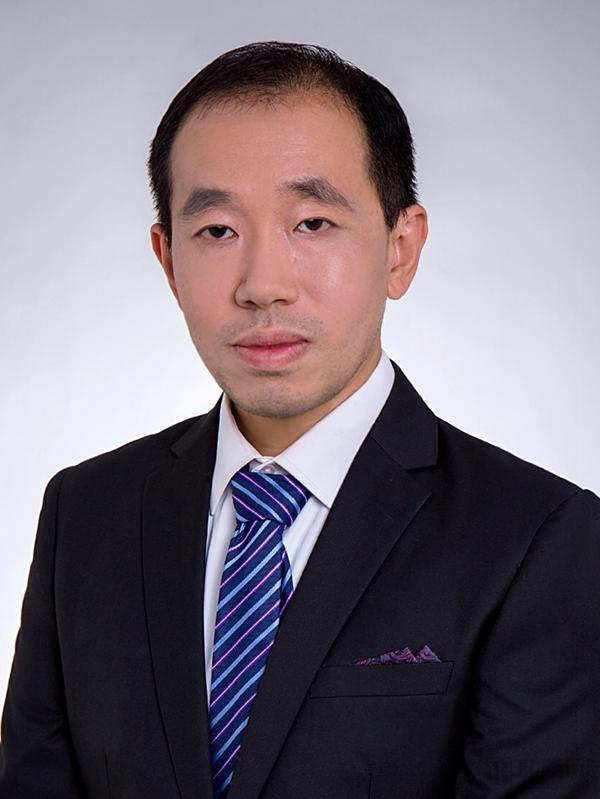
Dr. Shi Weiyang, Founder of Wancheng Genomics
Wu Ziniu, the company’s Head of Market Operations, graduated from the Department of Biology at Tsinghua University and has over twenty years of experience in marketing and sales management within the biomedicine industry. “We have identified significant prospects for the application of single-cell technology across various fields; single-cell technology is undoubtedly poised to revolutionize biology,” stated Wu Ziniu confidently.
Regarding other core members of the founding team, Li Qian, head of the technical team, graduated with a degree in Cytology from the University of Ulm in Germany and specializes in sample processing and molecular experiments. Dr. Yu Tianwei, head of the bioinformatics team, is a professor at the Rollins School of Public Health of Emory University and an internationally renowned expert in bioinformatics.
Wancheng Genomics’ high-throughput single-cell sequencing platform comprises microfluidic instruments, microfluidic chips, reagents, and analysis software, enabling the parallel analysis of 10,000 cells simultaneously—hence the company’s name “Wancheng” (literally meaning “ten thousand chariots”). The company’s independently developed single-cell transcriptome sequencing platform performs high-throughput sequencing of mRNA at the single-cell level. “The development of our high-throughput single-cell transcriptome sequencing platform has been completed. We will continue to develop high-throughput single-cell multi-omics sequencing platforms covering genomics, proteomics, and epigenomics. The second omics sequencing platform is expected to be ready by the second quarter of 2019,” said Dr. Shi Weiyang.
The company aims to provide comprehensive high-throughput single-cell sequencing services, including cell isolation, sample processing, library preparation and sequencing, and data analysis. Currently, Wancheng Genomics primarily focuses on the scientific research market, rapidly expanding its reach through commercial or research collaborations with scientific service platforms and enterprises. Additionally, the company offers customized services directly to Grade A tertiary hospitals through a direct sales model. This flexible service model allows users to choose from various options, such as library preparation only, library preparation plus sequencing, or library preparation, sequencing, and analysis. Notably, Wancheng Genomics also provides specialized sample preparation services, which represent the most distinctive feature of its scientific research offerings.
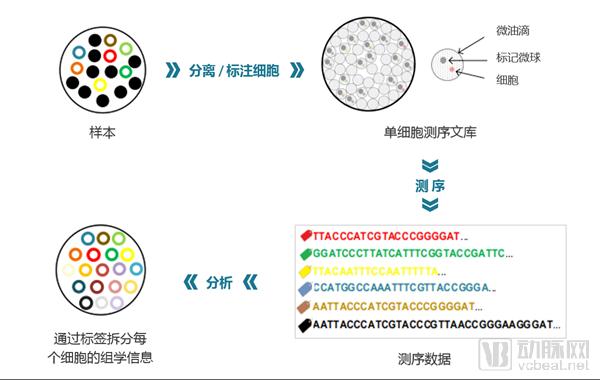
Wancheng Genomics High-Throughput Single-Cell Sequencing Platform Workflow
Currently, Wancheng Gene has established collaborations with Zhongshan Hospital of Fudan University, Peking University, Shanghai East Hospital, and Changhai Hospital, providing research services such as sample processing and library preparation.
“High-throughput single-cell sequencing technology has extensive applications. In essence, any experiment involving more than one cell as the subject of study can leverage this technology,” said Shi Weiyang. Currently, one of the most direct applications of high-throughput single-cell sequencing is in companion diagnostics and treatment guidance for tumor immunotherapy. However, the applications of this technology extend far beyond that. For instance, in the scientific research services market, it can be used in various fields such as developmental and stem cell research, neurobiology, immunobiology, tumor biology, and disease biology; in the pharmaceutical industry, it can be applied to drug and antibody screening; in the clinical market, it can be utilized for IVD kits and molecular pathology; and in environmental, industrial, and agricultural sectors, it can be employed for microbial detection, among other uses.
According to Dr. Shi Weiyang, this round of financing will be used to expand laboratory scale and production capacity, develop epigenomic, genomic, proteomic, and other omics products, and automate single-cell high-throughput sequencing equipment and kits, thereby lowering the barrier to entry for single-cell technology.
Heli Investment stated, “The core barriers to entry in high-throughput single-cell sequencing technology lie in the development of library preparation kits for different omics and the establishment of a complete set of standardized testing and analysis workflows, which are precisely the strengths of Wancheng Genomics. Wancheng Genomics is one of the few companies in China capable of directly benchmarking against or substituting 10x Genomics, and it has already surpassed 10x Genomics’ technology in certain aspects. Interestingly, the majority of Wancheng Genomics’ customers were previously clients of 10x Genomics. Their decision to switch from 10x Genomics was driven not solely by price factors, but more significantly by Wancheng Genomics’ ability to provide higher-quality scientific research services than the 10x platform. We believe that under the leadership of Professor Shi, the company will develop more advanced and superior high-throughput single-cell multi-omics technologies, thereby spearheading the initiative to replace imported products with Chinese-made alternatives.”