CAR-T Therapy Reimbursement Challenges in the U.S.: Hospitals Face Financial Losses Amid Insurance Payment Delays and Pricing Uncertainty
Vice President, Medical and Payer Relationship Management, VCU HealthPenny Trentham stated that her hospital had lost at least $1 million.
Approximately seven months ago, the Virginia Commonwealth University Massey Cancer Center in Richmond, the capital of Virginia, introduced the gene therapy CAR-T. As an innovative treatment that harnesses the body’s immune cells to combat cancer, CAR-T has been shown by clinical trial results to offer new hope for a cure to patients who have not responded to prior therapies.
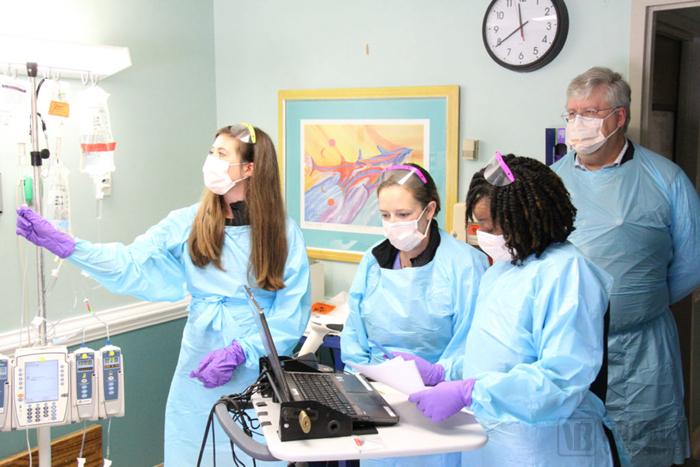
Doctors at the Mesothelioma Cancer Center are administering CAR-T therapy. Image from STAT
However, CAR-T therapy is extremely expensive, with the drug alone costing hundreds of thousands of dollars, while unpredictable hospitalization costs push the total expenditure even higher. More pressing than the high cost is the practical challenge that healthcare institutions and insurance companies have yet to reach a universal agreement on reimbursement for CAR-T therapy; both parties currently rely on unsustainable transitional arrangements to keep CAR-T therapy available.
In reality, the U.S. Centers for Medicare & Medicaid Services (CMS) announced in April 2018 that it would provide Medicare reimbursements of $400,000 and $500,000, respectively, for patients treated with Gilead’s Yescarta and Novartis’s Kymriah. On this basis, patients are responsible for only approximately 20% of the treatment costs. Ironically, Trentham stated that, to date, the Mayo Clinic Cancer Center has not received any Medicare reimbursement for any patient. She expressed concern that the fees charged to patients by the hospital are insufficient to offset the increased costs associated with providing CAR-T therapy. “We have not been reimbursed by insurers, and this situation has persisted for several months.”
Trentham’s role is to facilitate the establishment of insurance payment agreements between hospitals and insurers, thereby ensuring that therapeutic services are reimbursed. “I understand the complexities involved in negotiating insurance agreements, particularly for costly therapies like CAR-T, but the reality that hospitals often fail to receive reimbursements on time cannot be ignored.” The experience of the Mayo Clinic Cancer Center is not an isolated case; many hospitals across the United States were among the first to adopt CAR-T therapy and similarly face uncertainties regarding the timing of patient medical expense reimbursements.
CAR-T therapy has been on the market for over a year and a half, yet Medicare’s payment policy for treatment costs remains in the decision-making phase, with no specific implementation details provided. Medicare, also known as Red and Blue Card, is a federal health insurance program in the United States that provides coverage to individuals aged 65 and older or those with disabilities. It reimburses 90% of hospitalized patients’ medical expenses, while costs beyond Medicare’s coverage are typically reimbursed by private insurers through which patients are enrolled. However, private insurance companies in the U.S. are also developing one-time payment schemes for CAR-T therapy reimbursement.
However, whether through Medicare or private insurers, it will still take several months before final payment determinations are made. In the interim, whether healthcare institutions can secure sufficient funding to sustain CAR-T therapy programs remains an unresolved issue.
Delays in implementing the details of health insurance reimbursement policies will undoubtedly have a negative impact on the practical application of CAR-T therapy for patients. According to statistics from two pharmaceutical companies with FDA-approved CAR-T therapies on the market (Gilead and Novartis), approximately 130 medical institutions in the United States are currently capable of providing CAR-T therapy to patients, yet fewer than 2,000 patients in total have received this treatment.
The Challenge of Reimbursement Implementation: Difficulty in Determining Product Pricing
The Massey Cancer Center is one of only two healthcare institutions in the entire state of Virginia that offer FDA-approved CAR-T therapies.
“Healthcare institutions and insurance companies have not yet reached a broad consensus on the details of insurance reimbursement for CAR-T therapy, including how much hospitals will ultimately be reimbursed, whether it is necessary to offer discounts to insurers for certain specific costs, and how treatment services should be priced. Currently, insurance companies negotiate CAR-T coverage contracts on a case-by-case basis, a process that is inherently time-consuming.” This conclusion was drawn by Rena Conti, a professor at Boston University’s Questrom School of Business, after studying various payment models for expensive therapies such as CAR-T.
The inability to establish rational product pricing has become a bottleneck in the rollout of detailed insurance implementation policies. For healthcare institutions such as the Memorial Sloan Kettering Cancer Center, the only concrete data available for reference in pricing is the official list price of the drug. However, since CAR-T therapy requires administration via surgical infusion, with significant variability in the costs of surgical instruments and physician services, these institutions lack the historical data necessary to predict the average treatment cost that would serve as the basis for CAR-T therapy pricing.
“The current situation is truly difficult. Although everyone is striving to find answers, it is nearly impossible to reach definitive conclusions before sufficient clinical experience with CAR-T therapy has been accumulated. However, hospitals are unwilling to accept the prolonged payment delays associated with CAR-T therapy,” Trentham pointed out. “In theory, hundreds of clinical cases need to be completed before a product pricing conclusion can be drawn. Yet Memorial Sloan Kettering Cancer Center has only treated four cases.”
What makes average cost estimation even more difficult is that the Mayo Clinic Cancer Center has yet to receive insurance reimbursement for any of the four patients treated. “I don’t even know if those claims have been processed,” Trentham added.
The Pricing Dilemma: High Costs Hinder Sample Size Accumulation
The exorbitant cost of CAR-T therapy has previously drawn scrutiny from external observers. According to foreign media reports, when Novartis initially announced the pricing of Kymriah at $475,000, critics accused the company of setting an outrageously high price, alleging that Novartis was engaging in price gouging driven by greed.
However, the high cost of CAR-T therapy is an objective reality rooted in R&D expenses and manufacturing processes, a situation that is unlikely to change in the short term. This is because CAR-T therapies are customized; each dose requires transporting a cancer patient’s cells to a pharmaceutical company, where the product is manufactured over a period of two to three weeks. Currently, there are two FDA-approved CAR-T therapies on the market: Gilead’s Yescarta and Novartis’s Kymriah. Yescarta is indicated for the treatment of adult lymphoma, while Kymriah is used to treat adult lymphoma as well as pediatric leukemia. Both companies have declined to disclose the total number of CAR-T therapy doses they have produced.
Consequently, medical institutions must obtain certification from pharmaceutical manufacturers before introducing CAR-T therapy into clinical practice. These institutions are required to specify payment methods for treatment costs in the form of a business plan and devise strategies to address potential financial losses.
Shortly after Yescarta received approval in October 2017, Moffitt Cancer Center initiated the certification process. At Moffitt Cancer Center, the implementation of CAR-T therapy is overseen by the Cellular Immunotherapy and Transplant Program. Dr. John McCarty, Director of the program, stated that it took Moffitt Cancer Center 10 months to develop a business plan aimed at ensuring the sustainable delivery of CAR-T therapy within the institution. Subsequently, senior physicians and nurses conducted training for more than 500 hospital staff members involved in various aspects of care, equipping them with the knowledge necessary to administer CAR-T therapy correctly.
McCarty stated that he was uncertain about the amount the hospital had spent on conducting these training programs.
Furthermore, as part of the preparatory work, the hospital conducted a procedural rehearsal. On May 7, 2018, hospital staff placed a bag containing colored liquid into a medium-sized cooler for transport, thereby simulating the process of shipping patient cells to Gilead’s California facility for Yescarta production. Approximately two weeks later, the Mercy Cancer Center received a cryopreserved shipment of simulated CAR-T cells from Gilead, and the hospital thawed these placebo cells following the same protocols used for authentic CAR-T cells.
It is worth noting that a comprehensive business plan cannot address all issues. For instance, although hospitals can anticipate certain costs, such as those for routine examinations or specific procedures associated with CAR-T therapy, they cannot determine in advance whether patients will respond favorably to the treatment or whether some patients will require prolonged hospitalization due to severe adverse effects. These uncertainties make it difficult for hospitals to estimate the costs of CAR-T therapy.
“If the entire treatment process ultimately becomes complex, we only hope that the insurance reimbursement will not be less than the cost. Therefore, we need to accumulate more clinical experience so that hospitals can set accurate prices, but this takes time.” Trentham once again emphasized the importance of sample size.
In August 2018, physicians at the Mercy Cancer Center treated their first patient using Gilead’s Yescarta. Since then, they have subsequently treated three additional patients. McCarty stated that once a hospital reaches an insurance agreement with a payer for a specific patient, it becomes easier to collaborate with the same insurer for other patients in the future. “With each new patient approved by the insurer for CAR-T therapy, the process of formulating agreements and making decisions becomes somewhat faster,” McCarty added.
Private insurers have been struggling to cover CAR-T therapy. A hospital spokesperson stated that all insurers partnered with the Mercy Cancer Center have agreed to include CAR-T therapy in their reimbursable treatment plans. However, the ongoing tug-of-war between private insurers and hospitals over reimbursement details has become an issue that can no longer be ignored.
For example, Joanna Hiatt Kim, Vice President of Payment Policy and Analysis at the American Hospital Association (AHA), stated that many hospitals are developing new insurance payment models for CAR-T therapy, under which some insurers commit to covering the full cost of the drug. However, this does not mean that hospitals can be fully reimbursed for all costs associated with CAR-T treatment. For insurers, the decision to cover a patient’s total treatment costs and the determination of the actual amount paid to healthcare institutions are two separate decisions. Hospitals and insurers need to engage in repeated negotiations to establish reimbursement rates.
Compared with private insurers, Medicare beneficiaries face a more challenging situation. The fact that Medicare cannot pay hospitals enough to cover all costs associated with treatment may hinder hospitals from providing care. This situation would be even worse if Medicare did not choose to partner with large academic medical centers that have abundant financial resources.
In a speech on March 4, Seema Verma, Administrator of the Centers for Medicare & Medicaid Services (CMS), candidly acknowledged that Medicare’s payment system for CAR-T therapy is ineffective. “The story of CAR-T is a classic example of government programs failing to keep pace with technological innovation,” Verma stated. She warned that this failure threatens hospitals’ ability to provide treatment, as they are forced to incur substantial losses for each Medicare patient receiving such therapy.
“In each case, healthcare institutions lose between $250,000 and $500,000,” pointed out Dr. Henry Fung, who oversees the CAR-T program at Fox Chase Cancer Center in Philadelphia. “It is difficult for CAR-T therapy to be sustainable. It is foreseeable that nearly all community hospitals will not launch CAR-T programs.”
If payment issues remain unresolved, the financial losses incurred by healthcare institutions will continue to escalate over time. For many Medicare beneficiaries, commercially accessible CAR-T therapy remains an elusive option. The Centers for Medicare & Medicaid Services (CMS) projected that a cumulative total of 373 patients would have received or were scheduled to receive CAR-T products between October 2018 and September 2019. However, in reality, CAR-T therapies currently under research and development by pharmaceutical companies could benefit a broader population of patients with various types of cancer, provided that healthcare institutions are willing to bear the associated increases in treatment-related financial losses.
“Our primary concern is not the reimbursement issue for individual CAR-T therapy cases. If a hospital absorbs the financial loss for 10 patients per year, it is manageable; however, the substantial losses incurred from treating thousands of patients annually are, frankly, unsustainable for hospitals,” said Hiatt Kim.
Furthermore, private insurers often adjust their reimbursement strategies in alignment with Medicare’s policies; thus, any decision made by the government can trigger ripple effects throughout the entire healthcare system. Currently, the federal government is addressing two fundamental issues regarding insurance coverage for CAR-T therapy: first, determining under what circumstances Medicare will cover CAR-T therapy; and second, establishing the actual reimbursement levels that Medicare will provide to hospitals for treatment costs.
During this period, for patients receiving CAR-T therapy in hospitals, Medicare reimburses hospitals based on the average cost of care for similar cancer treatments; meanwhile, Medicare also covers up to $186,500 to offset drug costs. In addition, Medicare provides supplemental payments to hospitals.
However, it is evident that Medicare reimbursements fail to fully cover hospital costs. With CAR-T therapies starting at $373,000 per dose, the total cost of treatment—including administration and supportive care—is significantly higher. “If hospitals are required to absorb such losses for every Medicare beneficiary receiving CAR-T therapy, this model would be economically unsustainable,” Trentham pointed out.
A CMS spokesperson stated that Medicare is conducting research on payment models for CAR-T therapy within its statutory authority to ensure access to this medical service.
Whether Medicare will reimburse hospitals based on the average cost of CAR-T therapy remains an open question, as this would require creating a new billing code—a step Medicare has consistently refused to take.
Currently, the total amount Medicare pays to hospitals has not been made public. A CMS spokesperson stated that specific data will be released in spring 2019.
For patients receiving CAR-T therapy on an outpatient basis at infusion centers that offer other treatments such as chemotherapy, Medicare provides more generous reimbursement, fully covering the cost of the drug plus an additional 6%.
Dr. David Porter, Director of Cell Therapy and Transplantation at the University of Pennsylvania’s Abramson Cancer Center, stated that nearly all patients receiving Kymriah, Novartis’ CAR-T therapy for lymphoma, are treated on an outpatient basis. Dr. Porter helped develop Kymriah, endowing the Abramson Cancer Center with extensive experience in patient care—a distinct advantage that other medical institutions cannot replicate.
“Not many doctors, like us, administer CAR-T therapy to patients in an outpatient setting,” Porter also said.
Despite the significant challenges faced by hospitals and insurers, patients who received CAR-T therapy indeed reported a favorable experience.
Although the formulation of payment plans is highly complex, patients and their families are largely excluded from the iterative negotiations between healthcare institutions and insurance companies regarding the specific details of how their treatment will be covered. Major private insurers such as Aetna, Anthem, Cigna, and UnitedHealthcare have already extended coverage to CAR-T therapy, but they all refuse to disclose the specific payment arrangements.
For 32-year-old Californian Caitlin Buchanan, the process of receiving CAR-T therapy went smoothly. In January 2017, Buchanan was diagnosed with primary mediastinal diffuse large B-cell non-Hodgkin lymphoma, and doctors attempted to treat her with chemotherapy and other medications. “Chemotherapy largely had no effect,” Buchanan recalled. “The only option available to me was CAR-T therapy.”
Her insurer, Anthem, approved the treatment within two to three weeks, making Buchanan’s wait only slightly longer than the time it took to receive some imaging results. “It was almost unbelievable,” Buchanan said. “We thought it would take much longer.”
Buchanan stated that Anthem covers all expenses beyond the $4,500 deductible.
In Virginia, although the CAR-T program started relatively late, it has developed steadily. McCarty formulated a promotion plan for CAR-T therapy from scratch and trained hospital staff. He extensively promoted CAR-T therapy to other physicians across Virginia to facilitate patient referrals. However, McCarty felt conflicted; he did not wish to accept too many patients simultaneously. “We do not want to enroll five patients at the same time, as this would overload our workflow and result in therapeutic outcomes falling short of expectations.”
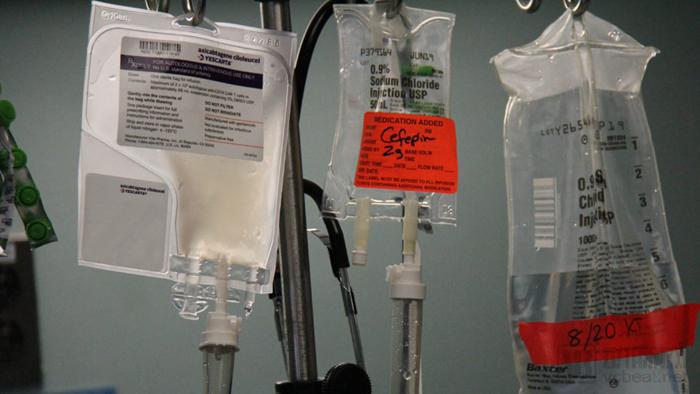
CAR-T Therapy Image from STAT
McCarty anticipates that the clinical application of CAR-T therapy will accelerate within the next year, “at which point Mass General Cancer Center will be able to treat one to two patients per month with CAR-T therapy.” Furthermore, he hopes that Mass General Cancer Center will soon obtain Novartis certification to provide Kymriah to patients. “It would be even better if Mass General Cancer Center could participate in clinical trials for other CAR-T therapies.”
Turning to the Chinese market, despite the ongoing disputes between U.S. hospitals and insurers over reimbursement, VCBeat’s New Medicine has found that CAR-T therapies—whether already listed overseas, such as Yescarta and Kymriah, or independently developed by domestic biotech firms—remain far from reaching patients.
Product Introduction
About Yescarta.In April 2017, Shanghai Fosun Pharmaceutical Group and U.S.-based Kite Pharma established a joint venture, Fosun Kite, in Shanghai, China. The latter holds the licensing rights for the research and development, manufacturing, and commercialization in China of Kite’s approved product Yescarta and two subsequent TCR-based products.
In May 2018, Fosun Kite submitted an Investigational New Drug (IND) application for FKC876 (i.e., Yescarta) to the Center for Drug Evaluation (CDE) of the China Food and Drug Administration. In August of the same year, the CDE formally approved the IND application for FKC876. The target population for Yescarta in China is patients aged 18–65 years with relapsed or refractory B-cell lymphoma.
In November 2018, Fosun Kite officially launched the open-label clinical trial of Yescarta.
About Kymriah.In September 2018, Novartis and Cytopeutics Biotech entered into a strategic partnership regarding Kymriah. Under the agreement, Cytopeutics Biotech was responsible for the manufacturing and supply of Kymriah in China, while Novartis held exclusive marketing rights for the product. As part of the deal, Novartis acquired a 9% equity stake in Cytopeutics Biotech for $40 million. In exchange, Cytopeutics granted Novartis global rights to use certain CAR-T-related technologies and took charge of the manufacturing process for Kymriah, whereas Novartis assumed responsibility for its distribution, product registration, and commercialization in China.
Independently Developed
Domestic biotechnology companies have maintained strong enthusiasm for CAR-T research and development. According to statistics from ClinicalTrials.gov, more than 200 CAR-T clinical trials (including investigator-initiated trials) are currently underway in China, surpassing the number of CAR-T clinical trials in the United States.
Nanjing Legend.In December 2017, Legend Biotech submitted an Investigational New Drug (IND) application for LCAR-B38M to the Center for Drug Evaluation (CDE), becoming the first CAR-T therapy in China to file an IND application. The selected indication for LCAR-B38M was multiple myeloma. In March 2018, the CDE approved the IND application for LCAR-B38M.
JW Therapeutics.In December 2017, JW Therapeutics submitted an Investigational New Drug (IND) application to the Center for Drug Evaluation (CDE) for its independently developed CAR-T product, JWCAR029. In June 2018, JWCAR029 received the first IND approval in China for a CD19-targeted CAR-T therapy. The indications for JWCAR029 include relapsed or refractory lymphoma and leukemia.
Hengrun Dasheng.In July 2018, Hengrundaisheng received two Investigational New Drug (IND) approvals for its anti-human CD19 T-cell injection, targeting lymphoma and leukemia, respectively. In December of the same year, the company obtained an IND approval for its anti-human BCMA T-cell injection, indicated for multiple myeloma. It is reported that clinical trials for the anti-human CD19 T-cell injection have been initiated, with the first patient enrolled.
Galaxy Bio.In October 2018, Galaxy Biopharma’s investigational new drug (IND) application for its anti-CD19 chimeric antigen receptor-modified autologous T lymphocyte injection was approved by the Center for Drug Evaluation (CDE).
Keji Biologics.In January 2019, CARsgen Therapeutics received Investigational New Drug (IND) approval for its GPC3-targeted CAR-T therapy for the treatment of solid tumors; in February of the same year, it obtained IND approval for its BCMA-targeted CAR-T therapy for the treatment of multiple myeloma; subsequently, in March, its IND application for a humanized CD19 autologous CAR-T cell injection was granted implicit approval by the Center for Drug Evaluation (CDE) for the treatment of relapsed/refractory non-Hodgkin lymphoma.
Chongqing Precision Biotech.In February 2019, Chongqing Precision Biotechnology’s pCAR-19B autologous cell infusion product received Investigational New Drug (IND) approval for the treatment of relapsed or refractory acute lymphoblastic leukemia in children and adults.
In addition, dozens of Investigational New Drug (IND) applications for CAR-T products have been accepted and are pending approval. Clinical trials of CAR-T products in China may enter a period of rapid expansion in 2019, which is why we are currently focusing on the market approval status of CAR-T products across the Pacific. We hope that manufacturers promoting the commercialization of CAR-T therapies in China will plan ahead, ensuring that CAR-T becomes a treatment that truly benefits more patients.
Original article link for this compilation: https://www.statnews.com/2019/03/12/hospitals-arent-getting-paid-for-car-t/