From a Landmark Science Publication to Clinical Translation: Yang Hui and Huidagene’s Journey in Gene Therapy

sherpa
Venture Capital Institution
In February 2019, a high-impact paper published in Science went viral on WeChat Moments. Led by the Primate Disease Model Research Group at the Institute of Neuroscience, Chinese Academy of Sciences (CAS), and conducted in collaboration with the CAS-Max Planck Partner Institute for Computational Biology and the Stanford Center for Genomics and Personalized Medicine, the study introduced a detection method called GOTI (Genome-wide Off-target analysis by Two-cell embryo Injection) to assess off-target effects associated with different gene-editing techniques. After analyzing three distinct gene-editing approaches—CRISPR-Cas9, BE3 (base editor 3), and ABE7.10 (adenine base editor 7.10)—using GOTI, the research team reached a conclusion that contradicted prevailing views: BE3 exhibited substantially higher off-target activity than the other two methods.
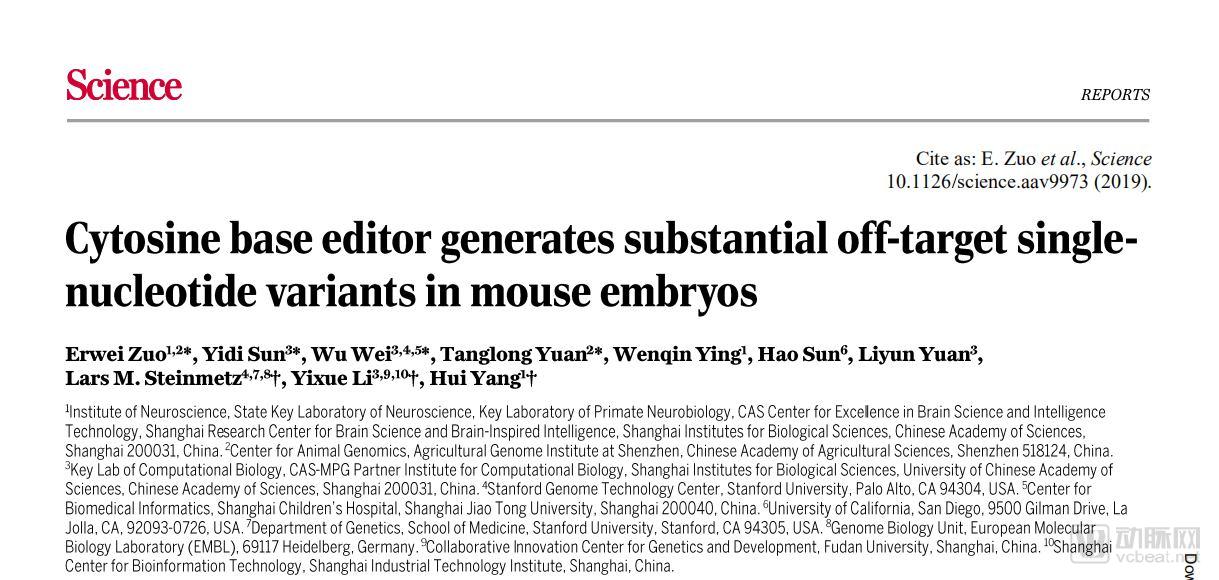
This finding has directly impacted the development of the gene therapy industry, sounding an alarm on treatment safety for all gene therapy companies. The team behind this ingenious detection protocol is led by Yang Hui at the Center for Excellence in Brain Science and Intelligence Technology (Neuroscience Institute), Chinese Academy of Sciences.
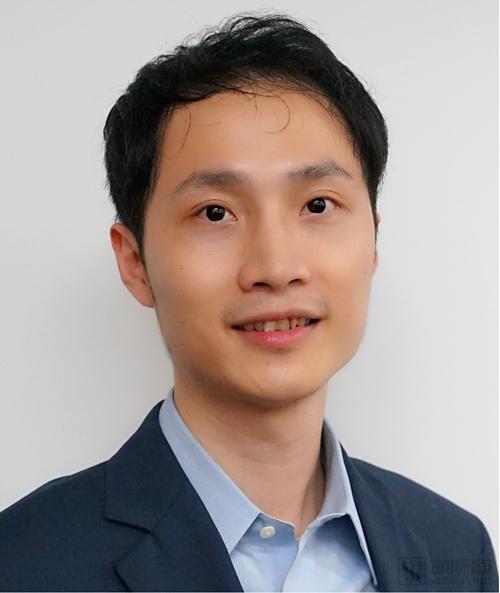
Researcher Yang Hui
Researcher Yang Hui studied at the School of Life Sciences, Shanghai Jiao Tong University, from 2003 to 2007, where he earned a Bachelor’s degree in Biotechnology. He subsequently joined Dr. Li Jinsong’s research group at the Institute of Biochemistry and Cell Biology, Chinese Academy of Sciences, to pursue his doctoral degree. Dr. Li’s team has long been engaged in research on embryonic development and induced pluripotent stem cells (iPSCs), achieving significant accomplishments in gene editing technologies. Under Dr. Li’s mentorship, Yang Hui gradually clarified his future research direction and delved deeper into the field of gene editing. During his five-year tenure at the Institute of Biochemistry and Cell Biology, he published eight high-impact academic papers, including one first-author article in Cell and another in Nature.
In 2012, Dr. Yang Hui, having laid a solid foundation under the supervision of Professor Li Jinsong, joined the Whitehead Institute at MIT (Massachusetts Institute of Technology) as a postdoctoral fellow. There, he worked under the mentorship of Rudolf Jaenisch to further advance his expertise in gene editing. Rudolf Jaenisch, a towering figure in academia, created the first transgenic mouse model and has made significant contributions to the fields of epigenetics, cloning, and stem cells over the course of his distinguished research career. Under Jaenisch’s guidance, Dr. Yang continued to devote himself to the study of gene-edited animal models, unaware that a revolution in gene editing technology was quietly unfolding.
Dr. Yang Hui had just arrived in the United States when the team led by Dr. Feng Zhang at the Broad Institute, located next to the Whitehead Institute, confirmed that the CRISPR/Cas system could be used for gene editing in eukaryotic cells. This breakthrough created a sensation at the time, and Dr. Zhang was named one of Nature’s Top 10 Scientific Figures of 2013. At that time, the CRISPR/Cas system was not as mature as it is today, and gene editing primarily relied on zinc-finger nucleases (ZFNs) and TALEN systems. However, Dr. Yang keenly recognized the future application potential of CRISPR/Cas. Together with his former lab mate, Dr. Wang Haoyi, who now works at the Institute of Zoology, Chinese Academy of Sciences, he rapidly initiated research on the application of CRISPR/Cas in mouse models. The research progressed very smoothly, and the two completed two studies within just a few months. Their findings were published in Cell in April 2013 and September 2013, respectively.
After returning to China from the United States, Dr. Yang Hui joined the Institute of Neuroscience, Chinese Academy of Sciences (CAS), as the head of the Primate Disease Model Research Group, where he continued his research on gene-edited animal models, particularly primate models. At just 28 years old, Dr. Yang was the youngest principal investigator at the CAS Institute of Neuroscience. Although he published papers in high-impact journals such as Nature Neuroscience, Cell Research, Genome Research, and Developmental Cell, he had yet to break into the most prestigious tier of journals. As a researcher who had previously published multiple times in top-tier journals, these achievements were clearly unsatisfactory to Dr. Yang. This latest paper published in Science not only completed Dr. Yang’s “grand slam” of publications in the three premier journals—Science, Nature, and Cell—but also marked his first article in a top-tier journal since his return to China.
“At the time, when we learned that our paper had been accepted by Science, everyone in the lab was thrilled,” recalled Dr. Yao Xuan, an associate researcher in Yang Hui’s team, though his voice betrayed little emotion. Scientific research is inherently a process of gradual accumulation leading to sudden breakthroughs; the acceptance of this paper in a top-tier journal merely marks the beginning of the returns on the five years of dedicated effort by Professor Yang Hui’s research group.
Speaking of this *Science* paper, our story dates back to 2017. A study published in *Nature Methods* in 2017 reported that the CRISPR/Cas9 system suffered from severe off-target effects. At that time, Dr. Yang Hui’s team primarily relied on the CRISPR/Cas9 system as their core technical approach, yet they had not encountered the large-scale off-target issues described in that article during years of application. After carefully scrutinizing the *Nature Methods* paper, they concluded that its experimental design was flawed and that the detected off-target events were attributable to background noise. Consequently, Dr. Yang immediately decided to refute the paper with rigorous experimental evidence and swiftly devised the ingenious GOTI method.
 Figure: GOTI Detection Method
In terms of animal model selection, GOTI utilized mouse embryos at the two-cell stage for its experiments. Compared to the primate models that Researcher Yang Hui has focused on since returning to China, mouse models offer a more refined gene-editing system, thereby better ensuring the smooth progress of experiments. The mouse embryonic cells inherently carry a red fluorescent protein gene regulated by a LoxP-STOP-LoxP cassette. One of the two blastomeres underwent gene editing via microinjection. In the edited cell, the gene-editing system cleaved the LoxP sites, rendering the STOP sequence ineffective; consequently, the progeny cells derived from this edited cell expressed red fluorescent protein. In contrast, the unedited blastomere and its descendant cells did not express the fluorescence. Flow cytometry was then employed to sort the gene-edited cells from the non-edited ones, enabling subsequent assessment of gene-editing efficiency and off-target effects.
The most ingenious aspect of the GOTI experimental design lies in the selection of two-cell-stage embryos for the study. Due to natural mutations occurring during cell division, monitoring off-target effects using conventional cell lines is prone to background interference caused by these spontaneous mutations. In contrast, the two cells of a two-cell-stage embryo originate from the same parent cell, and natural mutations arising from this single division are virtually negligible. Furthermore, embryonic stem cells are relatively large in volume, allowing for gene editing via microinjection techniques. This approach ensures consistent gene editing efficiency across all groups, thereby preventing inter-group variations attributable to differences in transfection efficiency. Such a comprehensive experimental design minimizes the impact of experimental background on the results.
At the time, Researcher Yang Hui simply aimed to use this approach to refute previous publications. After demonstrating the safety of the CRISPR/Cas9 system, he promptly compiled the experimental results and submitted a manuscript to Nature Methods, only to have it rejected. During their experiments, other research teams had already computationally disproven the findings of the earlier paper. Despite the rejection, Researcher Yang remained confident in the GOTI detection method developed by his team and decided to employ GOTI for further investigation of gene-editing systems.
BE3 (base editor 3), a single-base editing technology introduced in 2016, was a hot topic in the field of gene editing at that time, and the prevailing view in the academic community was that BE3 was safer than other types of gene editing technologies. Researcher Yang Hui’s initial experimental design aimed to compare the off-target effects of BE3 with those of the traditional CRISPR/Cas9 system, thereby further confirming the safety of BE3. However, contrary to expectations, the BE3 system caused substantial off-target effects during the gene editing process. Initially puzzled by these results, the team conducted further analysis. They subsequently discovered that the primary off-target effects occurred as C-to-T and G-to-A mutations, which are precisely the main base editing outcomes mediated by BE3.
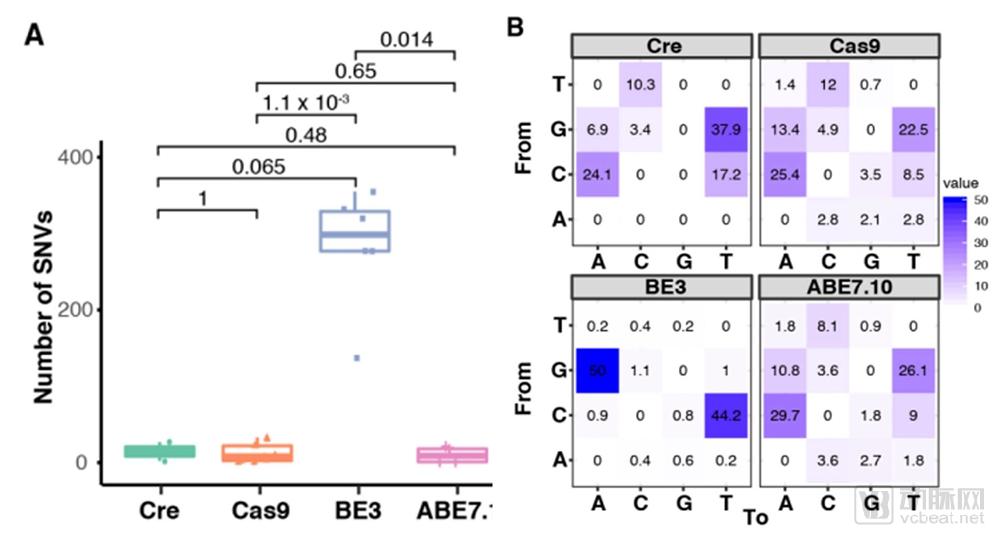
Figure: Off-target effects of different gene editing technologies
Such experimental results are undoubtedly sensational. At the time, BE3 was widely regarded as a relatively safe gene-editing technology, and many gene therapy companies were attempting to design their product pipelines based on BE3, with some even preparing to launch corresponding clinical trials. The findings by Yang Hui’s team effectively hit the brakes for these companies, forcing them to reevaluate and replan their product strategies. Moreover, the ingenious design of the GOTI detection method implies that it can be used to verify the safety of all future DNA-targeting gene-editing approaches, underscoring its significant importance to the gene-editing industry. “Only with more sensitive tools can we better optimize the technology,” stated Researcher Yang Hui.
“We have currently only tested embryos; future improvements may involve performing gene editing in somatic cells and then using the GOTI method for detection.” Discussing the future development of GOTI technology, Professor Yang Hui stated. Meanwhile, Professor Yang Hui’s team is also working to optimize the BE3 system to reduce its off-target effects, with the ultimate goal of establishing BE3 as a safe gene-editing technology.
With the market launch of two CAR-T products and other gene therapy products, the gene therapy industry has sparked a surge abroad in recent years. At the 2018 BIO International Convention, the FDA Commissioner stated that the FDA was expected to approve 40 gene therapies by 2022. In contrast, China’s gene therapy sector remains largely confined to basic research, with not even a single complete clinical trial conducted to date.
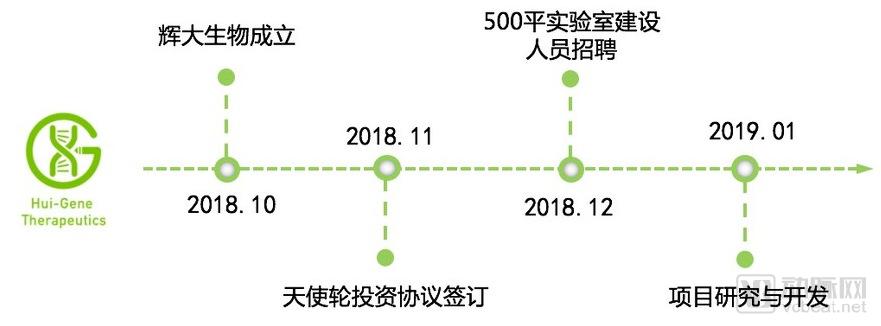
Figure: Development History of Hui-Gene Therapeutics
On October 31, 2018, Professor Yang Hui registered and established Hui-Gene Therapeutics in Shanghai, aiming to rapidly translate his years of scientific research accumulation into clinical applications. The company’s goal is to treat diseases using gene editing technologies. His student, Dr. Yao Xuan, also participated as a co-founder. Shortly after its establishment, Hui-Gene Therapeutics quickly secured tens of millions of RMB in angel-round funding from Sherpa Healthcare Partners.
Hui-Gene Therapeutics (Shanghai) Co., Ltd. (hereinafter referred to as “Hui-Gene”) is a translational biotechnology enterprise dedicated to the research and development of gene therapy drugs, focusing on novel therapeutic technologies and pharmaceuticals for rare human genetic diseases. Located in the International Medical Park in Zhoupu, Shanghai, Hui-Gene is currently developing innovative gene therapies primarily for spinal muscular atrophy (SMA) and ophthalmic diseases. Guided by the development strategy of “innovative collaboration,” Hui-Gene is committed to advancing gene editing technology as its foundation, with gene therapy R&D and manufacturing at its core. The company focuses on developing novel gene therapy drugs, aiming to become a leading R&D and production base for gene therapies in China and globally.
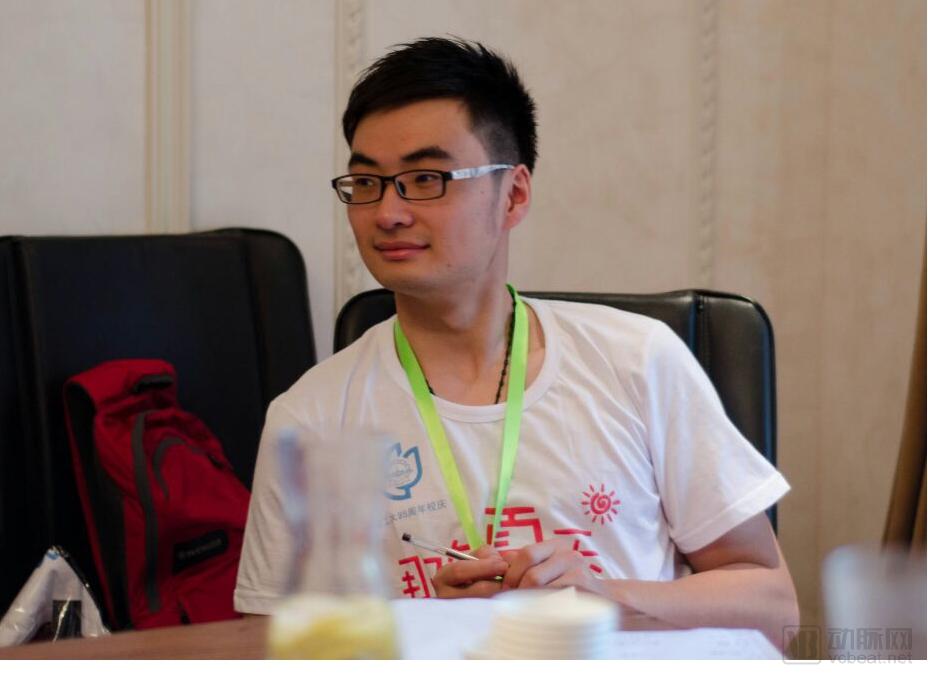
Dr. Xuan Yao
When it comes to balancing academia and industry, Dr. Yang Hui appears particularly at ease. He is primarily responsible for providing R&D guidance at the company, while all mundane operational matters are handled by his former student, Dr. Yao Xuan. This mentor-mentee collaboration enables both individuals to make their most valuable contributions to the company’s operations. Dr. Yao Xuan was the first student recruited by Principal Investigator Yang Hui after his return to China: “Dr. Yang is very open-minded, treats his students well, and takes academic research very seriously. During our first meeting, we had a half-hour conversation in his office that felt incredibly engaging, which led me to decide to join his team.” After graduation, Dr. Yao Xuan declined postdoctoral opportunities at MIT and Harvard, choosing instead to remain at the Institute of Neuroscience, Chinese Academy of Sciences, where she served as an Assistant Researcher and later as an Associate Researcher in Dr. Yang’s team.
Currently, Hui-Gene Therapeutics is primarily focused on exploring small-scale and pilot-scale processes, with experimental materials being predominantly research-grade. However, once process development matures, the company may begin establishing a clinical-grade platform within the next six to twelve months. Although some overseas companies are already engaged in gene therapy research, relatively few employ gene editing techniques; instead, most rely on overexpression approaches.
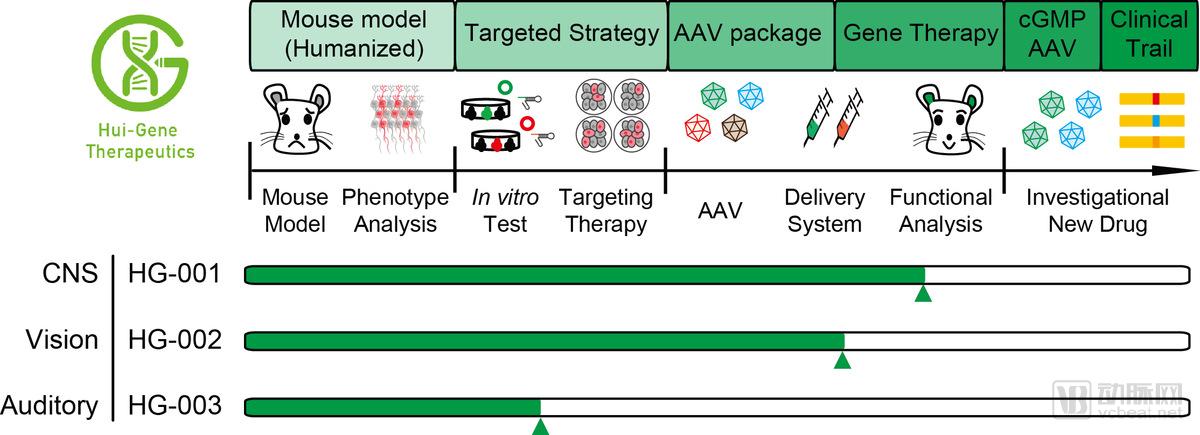 Figure: Hui-Gene Therapeutics’ Technology Roadmap
“Our greatest advantage lies in our strong scientific research foundation in this area. Ideally, future research outcomes should translate directly from the laboratory to clinical practice. What impressed me most was a professor at Stanford University specializing in cell therapy. He identified a technical improvement that enhanced conversion efficiency. After completing the basic research, he immediately leveraged Stanford’s own GMP platform to manufacture the product at clinical grade. He then independently recruited patients and rapidly applied the therapy in clinical settings,” said Researcher Yang Hui.
“We entered this industry late, while foreign players already have ten to twenty years of experience.” Faced with the extensive accumulation abroad, Researcher Yang Hui had to acknowledge the significant gap between China and other countries in the gene therapy sector. However, Dr. Yang’s years of dedication to the field of gene editing have endowed Hui-Gene Therapeutics with inherent advantages in DNA editing, RNA editing, and epigenetics. In addition to technical capabilities, Dr. Yang’s team excels in applying these technologies to animal models. This strong scientific foundation enables Hui-Gene Therapeutics to shorten the preclinical development process for gene therapy products to the minimum, thereby significantly narrowing the gap between the company and its foreign counterparts in the gene therapy industry.
Moreover, China’s large patient population for rare diseases constitutes a significant domestic advantage. In contrast, recruiting clinical trial participants for rare disease treatments can be challenging abroad, as the small number of cases often necessitates global volunteer recruitment. In China, however, the vast population base serves as a unique core advantage. Once a product pipeline enters clinical trials, patient recruitment is relatively easier domestically. Furthermore, for major rare diseases—particularly those lacking appropriate therapeutic options—the required sample size for clinical trials may be reduced, thereby accelerating the clinical development process.
Meanwhile, gene therapy has a higher safety profile compared to immunotherapy. The primary clinical risk associated with CAR-T therapy is the unavoidable cytokine release syndrome (cytokine storm). In contrast, gene therapy using adeno-associated virus (AAV) vectors carries relatively lower risks, and there are established international case studies that can be referenced to mitigate these risks.
Hui-Gene Therapeutics’ most pressing challenge currently lies in its industrial platform, a common bottleneck faced by China’s frontier healthcare sector in translating scientific research into clinical applications. While China has gradually caught up with international standards in basic scientific research, narrowing the gap to within five years, the industrialization disparity resulting from years of accumulated expertise in the gene therapy sector abroad remains difficult to bridge. When Hui-Gene Therapeutics was first established, Researcher Yang Hui actively sought suitable domestic GMP platforms but failed to find any that met the required standards, as they fell significantly short of existing international gene therapy benchmarks.
Researcher Yang Hui stated, “Given our background in basic scientific research, the materials and methods we have used are primarily research-grade. However, when applied to humans, the manufacturing processes and purification standards must differ. Our current bottleneck lies in establishing a robust GMP-compliant platform capable of bridging the gap between basic research and clinical application.” Many gene therapy companies abroad, particularly those acquired by large pharmaceutical firms, already possess mature industrial-scale platforms. Only once production technologies are fully matured will the disparities in researchers’ expertise become truly apparent.
“I chose to embark on this entrepreneurial journey without hesitation because I have interacted with many patients suffering from rare diseases in China. Unlike the patients depicted in the film *Dying to Survive*, who at least had access to life-saving medications, many individuals with rare diseases still have no therapeutic options available to date. Our ultimate goal is to benefit a broader segment of the population.” Such an endeavor may only be undertaken by a researcher ignited by humanistic ideals. With a solid technological foundation and a deep sense of responsibility toward society and country, Hui-Gene Therapeutics is poised to journey far into the future.
References:Erwei Zuo, Yidi Sun,et al.Cytosine base editor generates substantial off-target single-nucleotide variants in mouse embryos.Science.(2019)