

YanShu Medical Aesthetics Files IPO Prospectus: Building Reputation Through Dermatological Essentials and Attracting Super Users in the Light Aesthetic Market
The ongoing trend of consumerism continues to drive the transformation of healthcare. On the demand side, patients seek access to high-quality medical services, while on the supply side, institutions need to enhance the quality and accessibility of their services. This phenomenon is particularly pronounced in the field of non-surgical aesthetic medicine.
In the realm of light medical aesthetics, a number of benchmark chain enterprises have emerged in recent years, with Yan Shu being one of them. However, even in European and American countries, true medical aesthetic chain institutions are rare; most practitioners operate independently, with individual clinics dominating the market. What are the key elements for successful chaining? This question deserves continuous exploration.
In Europe and the United States, minimally invasive aesthetic procedures are dominated by botulinum toxin injections, with a significantly larger consumer base for wrinkle reduction, body contouring, and hair removal compared to China. In contrast, minimally invasive aesthetic institutions such as Yan Shu rely on an emotional aesthetics system rooted in Oriental aesthetics, dedicated to improving skin texture, skin tone, wrinkles, and facial contours.
Currently, the industry-recognized consensus is that the future of light medical aesthetics lies in a strong headquarters model and a technology-driven medical aesthetics model. This approach emphasizes leveraging standardized SOPs from a robust central headquarters to enhance customer stickiness and deliver optimal patient outcomes. As a representative enterprise, Yan Shu has already opened 10 standardized chain clinics in cities such as Hangzhou, Lishui, Ningbo, and Shanghai. What is the key to this institution’s success? To find out, VCBeat (WeChat ID: vcbeat) conducted an exclusive interview with Song Weimin, founder of Yan Shu.
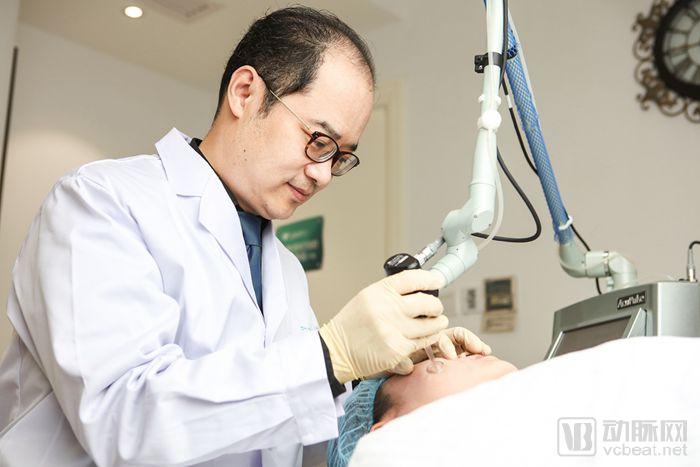
Song Weimin, founder of Yan Science, treating a patient
Chain: Four Major Systems Based on Service Standardization SOPs
The development of the light medical aesthetics industry is driven by multiple factors, which can be summarized as follows: First, there is growing acceptance and widespread popularity among beauty seekers. Second, capital investment has propelled the sector, with investors recognizing its growth potential; the medical aesthetics industry remains in a phase of rapid expansion, with projected growth space of 5–7 times in the future. Additionally, advancements in technology have led to the emergence of numerous non-invasive and minimally invasive devices, enabling medical professionals to leverage high-tech solutions for skin concerns, thereby providing a foundational support for the development of light medical aesthetics.
In first-tier cities such as Beijing, Shanghai, Guangzhou, and Shenzhen, certain regions are even experiencing overheating. However, at present, the non-surgical medical aesthetics clinic sector remains dominated by standalone practices, with a low rate of chain affiliation. Operating a single institution and building a chain brand involve fundamentally different models; chaining requires a comprehensive operational management system and standardized processes, encompassing the standardization of medical services, aesthetic treatment protocols, quality management, marketing and promotion, and management frameworks.
Song Weimin revealed that at the inception of Yan Shu, he recognized early on the necessity of applying technology to chain operations. Leveraging internet SaaS and AI technologies, the company promptly built a hospital management system (centered on the standardized integration of dermatological medical management), a customer service system, a non-invasive testing and evaluation system based on skin health management and diagnosis, and an aesthetic evaluation system based on minimally invasive cosmetic procedures.
Furthermore, reporters have learned that the core aesthetic aspiration among people of East Asian descent is for fair, smooth, and translucent skin. Consequently, the market for minimally invasive medical aesthetics—primarily driven by laser and photoelectric technologies for skin health management—not only features high consumption frequency and repeat purchases but also allows for relatively straightforward technical standardization. This makes it an industry well-suited for the implementation of standardized management and chain-based operations.
Currently, the medical aesthetic procedures with the highest average transaction value in the market are likely invasive treatments, primarily plastic surgeries. These involve substantial marketing costs, such as acquiring new customers through channel networks, and rely heavily on the individual technical expertise of physicians, making it challenging to scale this model into a chain operation.
In contrast, for light medical aesthetics chains to succeed, they must address two key challenges: first, the enterprise’s self-sustaining capability, namely its ability to cultivate talent, particularly physicians; second, the ability to establish standardized service SOPs that deliver proven efficacy and foster continuous innovation. The latter is especially critical for building a scalable chain ecosystem.
“Once the top-level standardized management system is refined, we can sequentially advance the four interconnected systems—Yansi Education, medical aesthetics chains, franchised light medical aesthetics chains and body contouring management centers, and industry-academia-research collaboration on efficacy-based skincare products featuring Oriental aesthetic dermatology—deepening our engagement step by step. Through years of operational experience across multiple clinics, Yan Shu has developed its distinctive model for small- and medium-sized clinics and business operations, establishing a preliminary yet comprehensive ecosystem.”
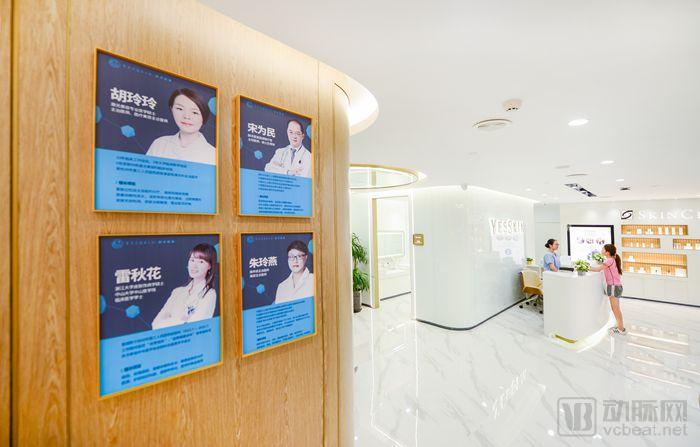
Yan Shu Clinic, a decor style brimming with technological sophistication
Currently, Yan Shu’s clinics operate independently while mutually supporting one another, fostering a strong sense of identity within the team. This structure encourages staff to learn from the high-profit models of top-performing clinics and drives continuous healthy competition. “The clinics maintain 70% standardization across the chain while retaining appropriate distinctive features to complement each other’s business needs,” Song Weimin told reporters, noting that Yan Shu has developed an optimal revenue data model.
Specialty: Disfiguring dermatoses, efficacy guaranteed
Currently, the overall trends in the light medical aesthetics market are characterized by a younger demographic of clients, increasingly technological and minimally invasive procedures, and lower pricing. Most light medical aesthetics institutions still primarily offer cosmetic treatments, such as skin booster injections, low-cost hyaluronic acid fillers, and masseter reduction. As these services are trending toward lower price points, the majority of beauty-focused light medical aesthetics providers struggle to achieve profitability. Of course, some institutions may adopt strategies involving customer acquisition through low prices followed by upselling or excessive consumption.
How to Solve the Challenge of Service Differentiation? Song Weimin believes that medical aesthetics should return to its medical roots, building market-differentiated brands on this foundation. “We have also researched previous financial systems for medical aesthetic institutions and other brands; they were overly focused on surgical procedures and marketing. In contrast, Yan Shu relies on standardized non-invasive diagnostic analysis and a hospital management system centered on skin care management, focusing on delivering customers tangible efficacy and positive word-of-mouth experiences.”
In Yan Shu’s business model, differentiation is the key to corporate survival. First, Yan Shu has made substantial investments in high-end laser and photoelectric devices, a fact well-known within the industry; it exclusively utilizes the most expensive equipment from top-tier international manufacturers.
Furthermore, the reporter learned that Yan Shu’s differentiated services can be specifically targeted at essential single-disease conditions, such as disfiguring dermatoses that other light medical aesthetic institutions fail to treat effectively, including rosacea, hormone-dependent dermatitis, and sensitive skin. “No other light medical aesthetic institution is willing to treat these conditions, but this is our core strength. We have truly integrated clinical practice with academic research. We have repeatedly presented lectures on this program at domestic and international conferences. For conditions such as melasma, severe nodular acne, and scarring, Yan Shu has developed differentiated, standardized treatment technologies. The standard operating procedures (SOPs) for each of these diseases comprise over 10,000 words, along with accompanying images and video recordings.”
Certainly, this is attributable to the strength of Yan Shu’s medical team. The team has attracted attending physicians and lead clinicians primarily from the dermatology departments of major Grade A tertiary hospitals, as well as associate senior and senior experts. This confers robust medical capabilities in comprehensive skin health management, with a specialized focus on three disfiguring dermatoses: melasma, rosacea and other sensitive skin conditions, as well as acne and acne scarring. These services are delivered through minimally invasive aesthetic procedures and photoelectric-based skin health management.
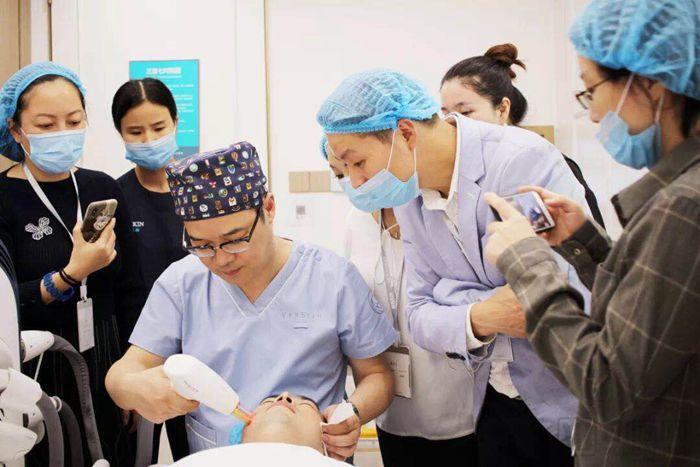
Yanshu Diagnosis and Treatment Team
In a nutshell, Yan Shu’s medical aesthetic services lean more toward the medical side in terms of breadth, such as treating disfiguring skin diseases. The company can build its reputation by addressing these conditions, whereas traditional plastic surgery struggles to gain recognition except for procedures like double eyelid surgery. Leveraging this reputation-driven patient base, Yan Shu further screens for individuals seeking anti-aging medical aesthetics. By focusing on this segment, the company delivers high-quality medical care and positions itself in the mid-to-high-end medical aesthetic market with a distinct brand tone, thereby achieving market differentiation.
Song Weimin also used a vivid metaphor: “Our philosophy is actually quite simple: we practice aesthetics grounded in medicine. Medical care builds our reputation; while it may be akin to ‘economy class,’ it reflects differentiated medical expertise and constitutes an essential need. Through our management and high-quality services, we upgrade this experience to ‘premium economy.’ With a solid medical foundation, we can further specialize in anti-aging and other aesthetic treatments, focusing on our ‘first class’ and ‘business class’ offerings. Moreover, in the field of medical aesthetics primarily addressing disfiguring dermatological conditions, we do not pursue high average transaction values.”
Yan Shu aims to build a reputable medical aesthetics brand with affordable pricing comparable to public hospitals, embodying the concept of value-based healthcare once advocated in the United States. Although the per-patient cost appears significantly higher than that of traditional pharmacological therapies, it offers superior efficacy and safety, with the potential to achieve long-term improvement or even cure.
This year, Yan Shu also launched a value-based healthcare commitment service, guaranteeing treatment efficacy for patients with melasma, rosacea, and refractory acne who have not responded to other therapies.
Profitability: Profits from Super Users
In China’s medical aesthetics market, there has always been a conflict between traffic-oriented thinking and super-user thinking. Yan Science does not make significant investments in online traffic acquisition, aiming instead to provide beauty seekers with an excellent introductory experience. “We are unwilling to offer low-priced aesthetic treatments that lack brand reputation; rather, we hope to demonstrate Yan Science’s professionalism and differentiation to those acquired through traffic channels. Currently, all our profits come from super users. According to current data, customers acquired through online traffic generation are not yet profitable.”
The current state of the market is such that, at present, the majority of offline medical aesthetic institutions are not led by physicians. Consequently, these institutions tend to be driven primarily by commercial profit motives, focusing on mass-market procedures that are technically simple, low-cost, and conducive to marketing hype. They often attract traffic through low-priced online offers, only to have skilled consultants upsell high-ticket items once customers arrive at the clinic. However, it is predictable that such institutions will struggle to build a strong reputation, while the cost of acquiring customer traffic continues to rise.
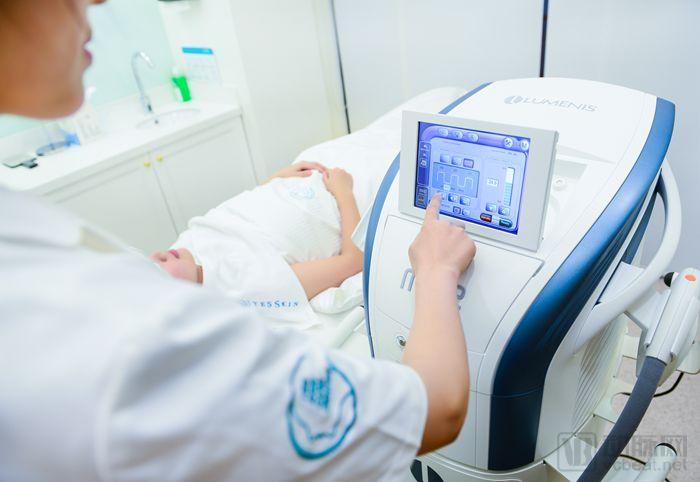
Yanshu Introduces High-End Laser Devices
Yan Shu’s approach is to first build trust through medical services. “Our entry-level average transaction value is very affordable. Once efficacy is demonstrated, we then design anti-aging or rejuvenation aesthetic projects; the pricing for these major procedures is, in fact, quite accessible.”
Why is it that the light medical aesthetics industry enjoys relatively stable profit margins but struggles to achieve explosive growth? Song Weimin explained that light medical aesthetics clinics in first- and second-tier cities should maintain a profit margin of around 20%. The key lies in enterprises’ ability to generate internal growth, such as through the training of medical personnel and innovation in service offerings, which must also possess distinctiveness.
“Refined management places exceptionally high demands on clinics. In-depth expertise in skin care, medical precision, meticulous attention to detail, and scientifically formulated treatments are all key determinants of a company’s success or failure; imitation will not lead to success.” Song Weimin is highly optimistic about the future of Yan Shu. He believes that only when a company has built substantial service capacity, broken down numerous upstream and downstream barriers, and established its own ecosystem can it unlock significant profit margins and achieve more sustainable, healthy growth.
For private institutions in China, obtaining approval for medical aesthetic services remains challenging, and it is even more difficult for dermatology clinics to be included in the national basic medical insurance and social security systems. Moreover, China’s commercial health insurance sector is still underdeveloped. In contrast, in the United States, it is commonplace for dermatologists to operate clinics that accept both public insurance programs and commercial insurance plans. With the ongoing healthcare reforms in China and consumers’ growing enthusiasm for spending, the non-surgical medical aesthetics market still has room for improvement. It holds significant potential and provides a fertile ground for the emergence of efficiently operated chain brands.