

VB100 Unveils Top 10 Female Healthcare Entrepreneurs: Vision, Innovation, and Impact
On March 8, VCBeat launched the selection of the Top 10 Female Entrepreneurs List, aiming to identify outstanding industry benchmarks in the healthcare sector and encourage female entrepreneurs to find their own direction during their growth journey. The initiative empowers them to follow their hearts, make independent choices at any time, strive for upward growth, and take proactive steps forward.
After two weeks of evaluation, the Top 10 list was officially announced on March 22. VCBeat conducted a comprehensive assessment of numerous applicant entrepreneurs based on two key dimensions: personal overall competence (including personal honors, industry experience, and leadership and management capabilities) and enterprise development potential (including technological/product/business model innovation, team strength, fundraising capability, and partnerships), ultimately selecting ten outstanding entrepreneurs.
In China’s vast healthcare market, countless pain points lie hidden. In the battle to break free from traditional medical constraints and reconstruct a new healthcare ecosystem, it has often been men who lead the charge and stand at the forefront. However, female entrepreneurs are increasingly demonstrating their keen business acumen, capabilities in lean management, and proactive spirit of exploration.
Female entrepreneurs have gradually emerged as a vibrant force in the business world. Combining beauty with wisdom, they no longer confine their attention solely to the family; instead, with immense courage and tenacious perseverance, they found or manage new enterprises, consistently striving and working diligently, often investing even more time and energy than their male counterparts.
For women, entrepreneurship is not only a battle for survival but also a challenge to self-transcendence. As they blaze their own trails, the future may hold either an abyss or the dawn of a new day. This unknown and uncertainty lend a touch of tragic heroism to women’s entrepreneurial journey.
But sunshine always follows the storm. The torment and darkness preceding entrepreneurial success often obscure the view, yet once dawn breaks, the scenery proves breathtaking. Among these ventures, several founded by medical entrepreneurs have achieved valuations exceeding $1 billion, joining the ranks of unicorns or near-unicorns.
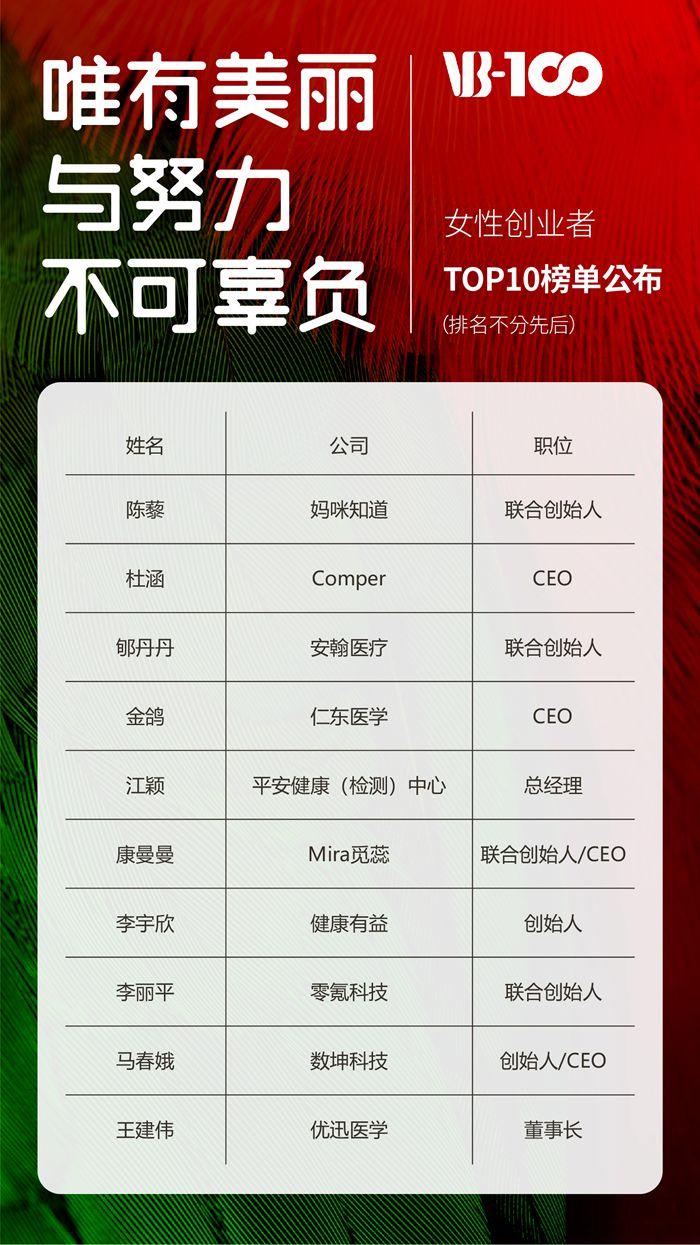
As a keen observer and recorder of the healthcare industry, VCBeat has recognized the significant role played by female entrepreneurs in the healthcare sector, as well as their resilience and strong stress tolerance. These women have already achieved remarkable success in various fields. The complete list of the VCBeat VB100 Top 10 Female Entrepreneurs is presented below (ranked in alphabetical order by surname):
Chen Li, Vice President and Co-founder of Shenzhen Yixin Technology Co., Ltd.
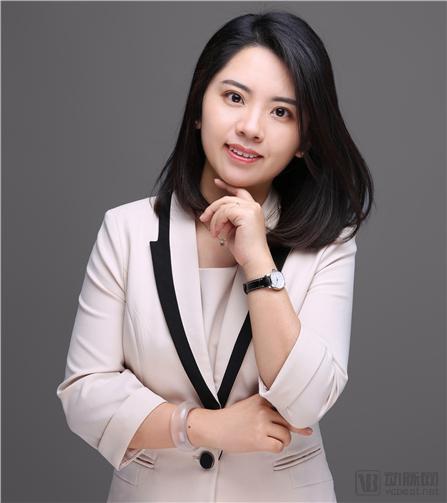
After earning his Ph.D. from Peking Union Medical College, Chen Li sought to enter the fields of mobile health and pediatric care, aiming to integrate the internet with healthcare. Upon meeting Liang Liang, founder and CEO of Mommy Knows, he discovered shared philosophies and goals during their discussions. Consequently, he chose to join Yixin Technology (Mommy Knows) as a co-founder.
Yixin Technology’s strategy in the maternal and child healthcare sector is deeply specialized vertical integration. It offers five core products: its maternal and child health consultation app, “Mommy Knows,” has exclusively contracted with over 3,000 pediatricians and obstetricians from top-tier (Grade 3A) hospitals in major cities across China, accumulating a user base of more than 6 million mothers. Eight offline “Mommy Knows Pediatrics” clinics have successively opened in Beijing, Shanghai, Guangzhou, and Shenzhen. In the era of “Internet Plus,” Mommy Knows integrates online and offline services to provide comprehensive, one-stop innovative medical care. Additionally, Yixin supports physicians’ entrepreneurial ventures through its online practice platform “Yixin Doctor,” a remote medical education platform “Yixin Women and Children Channel,” and its self-developed cloud-based medical service platform, “Smart Hospital.”
At Mommy Knows, Chen Li is primarily responsible for medical management training, including the recruitment, training, and management of physicians. She leads this medical team in delivering higher-quality services to users. On one hand, she establishes scientific performance management systems and medical frameworks aligned with international standards for physicians. On the other hand, she guides them in adopting more professional communication styles and managing their emotions, thereby improving work efficiency and enhancing job satisfaction.
Du Han, CEO of Combot Creative (Beijing) Technology Co., Ltd.

Du Han was one of the founders of Youjin Capital and previously invested in First Car Loan, Laoyuegou, Chezhibao, Danku Apartment, Ping An Health, and Zhongchi Chefu. In October 2014, he founded Kangbo Medical Health in Beijing. Upholding the philosophy that “daily prevention is more important than post-illness treatment,” the company is dedicated to the application of artificial intelligence and the research and development of smart devices in healthcare scenarios. It aims to bring convenient and reliable next-generation health experiences to more families, making high-quality and personalized medical and health services readily accessible.
For smart medical devices, safety and efficacy are paramount—can they obtain Class II medical device certification from the National Medical Products Administration (NMPA)? Can they truly capture precise, medical-grade data required by both physicians and users? Can they help users interpret medical data? These questions have guided the continuous reflection and efforts of the Comper Medical Health team. The company has established its own manufacturing facility in China, meticulously refining and rigorously controlling product quality to ensure maximum safety and effectiveness.
By the end of 2016, Comper’s domestic factory in China successfully obtained certification from the National Medical Products Administration (NMPA). The company subsequently launched a range of products, including fertility monitors, fetal heart rate monitors, infrared forehead thermometers, safety scales, and body fat scales, securing more than ten domestic and international patents. The transition from an investor to a project operator has placed greater pressure and responsibility on Du Han, requiring him to personally oversee every detail of the process and spend months carefully evaluating each new product proposal before approval.
Huan Dandan, Co-founder and Vice President of Anhan Technology (Wuhan) Co., Ltd.

Huan Dandan specializes in research on health technologies and industry, leveraging her expertise in chip design as well as her capabilities in multidisciplinary integrated R&D and the commercialization of scientific achievements. She has led her team to independently develop the world’s only endoscopic robot for the gastrointestinal tract, enabling “tube-free gastroscopy.” Since its official commercial launch in 2013, the capsule gastroscope robot has been deployed in hundreds of hospitals and health examination institutions across 29 provinces and municipalities in China, and has been exported to overseas markets including the United Kingdom, France, Italy, Hungary, and the United Arab Emirates. It was also featured in the “Five Years of Forging Ahead” major achievement exhibition.
Huan Dandan spearheaded every round of financing for Anhan. In the most recent round, SoftBank China Capital, Dazhong Investment, Houxin Health Investment, Tongsheng Capital, and Qiansheng Investment jointly invested $100 million in Anhan. Meanwhile, Huan Dandan founded Yinchuan Anhan Internet Hospital in 2018. By leveraging internet and artificial intelligence technology platforms to integrate online and offline services, the hospital achieves efficient allocation of expert resources, standing as a representative technological platform of “Intelligent Manufacturing in China.”
Jin Ge, CEO of Rendong Medical Technology Co., Ltd.

In 2008, Jin Ge embarked on his first entrepreneurial venture by founding Zhongzhi Kenuo Pharmaceutical Development Co., Ltd., which achieved annual sales exceeding RMB 400 million. In late 2015, he established Rendong Medicine. With the vision of “enabling more people to benefit from tumor immunotherapy,” the company is committed to providing comprehensive solutions for precise immune diagnosis and treatment of cancer.
Rendong Medicine is committed to expanding the benefits of tumor immunotherapy to a broader patient population. Leveraging its proprietary genetic testing technologies and multi-dimensional detection platforms, the company integrates clinical phenotypic data with follow-up data on drug efficacy. By connecting genomic data, clinical follow-up records, and medication data, Rendong Medicine aims to establish a comprehensive, tripartite closed-loop system for precision diagnosis and treatment. It is dedicated to exploring evaluation standards and frameworks for tumor immunodiagnosis and therapy, ultimately facilitating clinical translation and assisting clinicians and patients in formulating optimal treatment plans.
In August 2018, Rendong Medicine completed its Series A financing round of RMB 75 million, with investment from internationally renowned firms Tophold Yucheng Capital and Shiyu Capital. Current partners include well-known pharmaceutical companies such as Yuheng Pharmaceutical, Hengrui Medicine, and GenFleet Therapeutics; big data company LinkDoc Technology; over 100 top-tier tertiary hospitals; and more than 100 leading clinical experts.
Jiang Ying, General Manager of Ping An Health (Testing) Center

Jiang Ying has worked at Ping An Insurance for 21 years, growing alongside the company’s brand development. Her current role as General Manager of the Ping An Health (Testing) Center marks her fourth professional subsidiary appointment within the group. She has previously held positions in Ping An’s healthcare and medical sector, serving as Branch General Manager and Assistant to the Chairman at entities including Ping An Life Insurance, Ping An Health Insurance, and Ping An Good Doctor. She possesses extensive familiarity with China’s healthcare system, medical institutions, and physicians.
The original intention behind establishing the Ping An Health (Testing) Center was driven by two main factors. First, it was a response to national policies and a recognition of the major trend toward socially operated third-party medical institutions. Second, it aimed to better serve the group’s clients, ensuring they feel comfortable throughout Ping An’s end-to-end service process.
Ping An Health (Screening) Center is guided by the objectives of advancing tiered diagnosis and treatment, promoting the development of the health service industry, and realizing the sharing of regional medical resources. Leveraging internationally advanced imaging equipment, nationally renowned medical experts, a network of cooperative medical institutions across China, robust IT systems, and professional operational management capabilities, it has built an integrated online-offline comprehensive service model for imaging examinations, medical laboratory testing, and precision diagnostics. This enables the provision of more convenient, precise, and safe innovative health screening services to the general public.
Mira Mirui Co-founder/CEO Kang Manman

In 2015, Kang Manman co-founded Mira with her team. The team currently consists of 36 members. Among the founders is a Ph.D. in Biophysics from the University of Pittsburgh, specializing in the application of algorithms in the biomedical field. Kang Manman holds an MBA from Cornell University and a master’s degree from Columbia University, and previously served as Business Director at a Fortune 500 life sciences company.
Mira is the world’s first highly flexible smart point-of-care testing (POCT) system, an AI-connected in vitro diagnostic platform. Palm-sized, it offers clinical-grade quantitative accuracy, low cost, and ease of use. Its product line focuses on women’s health, chronic disease monitoring, and rapid clinical diagnostics in clinics. While traditional instruments based on fluorescence immunoassay technology are typically as large as a vertical copier and complex to operate, Mira’s device is only palm-sized, bringing hospital-grade instrumentation into home settings through miniaturization. Mira has established partnerships with two renowned multinational pharmaceutical companies. To date, the company has filed 18 patent applications, secured 6 patents, and obtained CFDA, FDA, and CE certifications.
Conception planning is just the beginning. Mira aims to become a home-based medical platform for women’s health, continuously expanding its testing capabilities to include female body fat management, menopause prediction, and early warning systems for gynecological diseases. As a next step, Mira will extend its product line to the B2B sector, serving primary care clinics and assisted reproductive technology centers.
Li Yuxin, Founder of Beijing Health Beneficial Technology Co., Ltd.

Li Yuxin is a serial entrepreneur with a track record of success. She founded several well-known enterprises in the fast-moving consumer goods (FMCG), management consulting, and financial investment sectors. Her early ventures in FMCG and consulting honed her expertise across management, marketing, finance, and overall business maturity. Later, she co-founded the Hanjing Family Fund of Funds, playing a key role in early-stage investments in companies such as Xiaomi, Baidu Waimai, Dianping (prior to its merger with Meituan), and Greenland Holdings. This extensive experience laid a solid foundation for her subsequent entrepreneurial endeavors.
In September 2014, Li Yuxin founded Beijing Health Beneficial Technology Co., Ltd., initiating its industrial layout in the field of “AI + Healthcare.” The company successfully built the ego-Healthcare Intelligent Brain, with core products including an AI technology open platform, an artificial intelligence operating system, a healthcare management system, a robotics system, and comprehensive healthcare solutions.
Currently, Health BeneFit has mastered 80% of the core AI technologies in the fields of computer vision, natural language processing, and knowledge graphs, and has built a professional knowledge system comprising tens of millions of entries. The company offers products and services such as an open AI technology platform, an artificial intelligence operating system, a health and medical management system, a robotics system, and comprehensive health and medical solutions.
Li Liping, Co-founder and COO of LinkDoc Technology
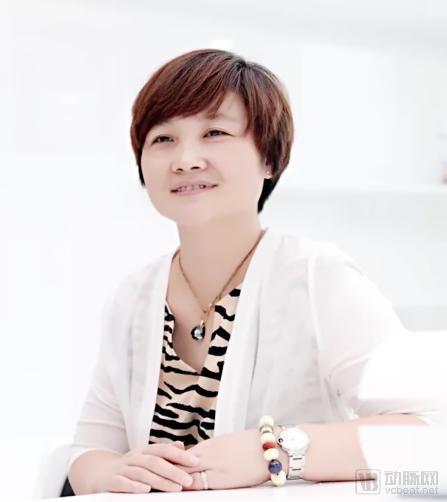
China sees 3 to 4 million new cancer cases annually, incurring medical costs exceeding hundreds of billions of yuan, with 40% of patients experiencing misdiagnosis or missed diagnosis. This reality was the original motivation behind Li Liping’s founding of LinkDoc Technology. LinkDoc chose to leverage oncology big data by partnering with hospitals to integrate, govern, and analyze clinical data, thereby unlocking the value of dormant data. Leveraging such data to improve treatment methods, enhance therapeutic standards, or facilitate the discovery of valuable new drugs creates a win-win scenario for all stakeholders involved.
As of 2018, LinkDoc had built a team of over 1,400 professionals spanning medicine, scientific research, technology, and industrial services. It collaborated with 700 Grade A tertiary general and specialized hospitals across China, establishing an advanced medical big data repository and a technical support service system. This infrastructure assisted partner institutions in data integration, cleaning, analysis, and application, thereby realizing the value delivery and monetization of data. Building on this foundation, LinkDoc engaged in the development of regional health and medical data centers, clinical research services, real-world studies, full lifecycle management and industry insights for pharmaceutical products, medical artificial intelligence applications, Direct-to-Patient (DTP) pharmacies, internet hospitals, precise end-to-end management for patients with critical illnesses, and rational drug use.
In 2014, Li Liping co-founded LinkDoc Technology (LinkDoc), successively establishing teams for clinical operations, biostatistics, follow-up and data management, and commercialization. She led the team to forge collaborations with 700 Grade A tertiary hospitals across China, currently serving over 600,000 patients. To date, LinkDoc has undertaken 50 multi-center national major research projects, including those under the National 13th Five-Year Plan, 12th Five-Year Plan, 863 Program, and 973 Program, providing comprehensive technical, clinical, and statistical services. Meanwhile, it has established commercial project partnerships with leading domestic pharmaceutical companies such as Qilu Pharmaceutical, Qidong Gaitianli, Shenyang Sunshine Guojian Pharmaceutical, Yiteng Pharma, Jiangsu Simcere Pharmaceuticals, Guizhou Yibai Pharmaceutical, and Dalian Huali Jingang.
Ma Chun’e, Founder and CEO of Shukun (Beijing) Network Technology Co., Ltd.

Ma Chun’e previously worked at IBM, where she accumulated over a decade of leadership experience in new technology R&D at the IBM Innovation Lab. She was responsible for incubating IBM Watson technologies and served as Global Director of R&D for the IBM Cloud Platform. During her tenure, she received the “Best of IBM” Award and the IBM Outstanding Technical Contribution Award.
Shukun Technology was founded in Beijing in June 2017. Like most medical AI startups, Shukun chose to focus on medical imaging. However, unlike the majority of its peers, Shukun steered clear of currently popular areas such as lung and liver conditions, and instead developed the world’s first fully automated AI-powered auxiliary diagnostic product for coronary heart disease. By covering the entire disease management workflow, it achieved a qualitative leap in the industry—from single-lesion detection to single-disease diagnosis.
Cardiac CT images require complex 3D reconstruction as a preliminary step, after which radiologists diagnose conditions such as vascular origin and course, arterial wall plaques, and luminal stenosis based on the reconstructed 3D images. Consequently, this imposes stringent requirements on both data value and technology. The absence of public datasets for cardiovascular diseases results in complex annotation processes and substantial workloads. Furthermore, the high anatomical complexity of human coronary arteries, coupled with the significant variation in vessel caliber, presents a major challenge for deep learning networks.
Shukun is the first company to develop products for this category of diseases, with no prior reference paths available. The entire process, from data annotation to model development, required independent exploration. However, it is precisely because of this that the technical challenges overcome in this new field and the continuously accumulating vast datasets have gradually enabled Shukun to establish significant competitive barriers and first-mover advantages.
Wang Jianwei, Chairman of Beijing Youxun Medical Laboratory Co., Ltd.

From 2014 to 2018, Wang Jianwei successively founded Beijing Kexun Biotechnology Co., Ltd., Beijing Youxun Medical Laboratory Co., Ltd., and Beijing Youxun Medical Device Co., Ltd., effectively establishing a corporate brand culture centered on being a “genetic testing service provider closer to clinical practice.”
During this period, Wang Jianwei led the core technology team at Youxun Medicine to establish a clinical laboratory compliant with national clinical testing standards and a next-generation high-throughput sequencing platform. The team independently developed and launched a series of specialized products and services focused on reproductive health and precision oncology treatment, successfully building an integrated medical service technology platform encompassing scientific research, clinical applications, and in vitro diagnostic (IVD) medical device development.
In the field of reproductive health, Yuxun Medical has developed Yuxin’an NIPT PLUS, a leading domestic testing product based on its independently developed Bayesian statistical algorithms. In the realm of oncology diagnosis and treatment, the company leverages dual liquid biopsy platforms for ctDNA and CTCs to support early cancer screening, medication guidance, prognostic assessment, and dynamic monitoring. Yuxun’s low-depth whole-genome sequencing (WGS) early screening technology, built upon its proprietary CCeS three-dimensional pan-cancer early screening analysis model, is currently undergoing large-scale clinical trials, following promising preliminary clinical data.
To date, Youxun Manfen has participated in over 50 external quality assessment programs organized by the National Health Commission of China and the U.S. College of American Pathologists (CAP). Its business coverage extends to 30 provinces and municipalities across China, serving more than 1,500 medical institutions, with cumulative financing exceeding RMB 200 million.