From Patent Battles to Commercial Ventures: A Comprehensive Overview of CRISPR Pioneers' Biotech Portfolios
On March 22, Sherlock Biosciences, a diagnostics company based on CRISPR technology and co-founded by Feng Zhang, secured $35 million in Series A financing. The gene-editing technology CRISPR has already spawned several startups aimed at developing new therapies using this tool. Several leading CRISPR scientists have sequentially established companies, facilitating the transition of CRISPR technology from the laboratory to commercial application.
CRISPR is currently the most popular gene-editing technology, with many stories surrounding its journey from patent applications to commercialization. As Zhang Feng’s Sherlock Biosciences secures financing, VCBeat New Medicine has compiled the patent narratives of several key scientists associated with CRISPR, along with the companies they co-founded and their current development status.
Genes are composed of DNA segments, and gene editing involves the insertion, deletion, or replacement of chemical base pairs within DNA. There are three main types of gene editing technologies currently in use: zinc finger nucleases (ZFNs), transcription activator-like effector nucleases (TALENs), and clustered regularly interspaced short palindromic repeats (CRISPR).
Zinc finger nucleases (ZFNs) were the earliest gene-editing method, dating back to the 1990s. In 2009, scientists discovered transcription activator-like effector nucleases (TALENs), which significantly improved the efficiency of gene editing. However, TALENs were soon supplanted by the emergence of CRISPR just a few years after their development. CRISPR is cheaper, simpler, and more accurate than both ZFNs and TALENs, rapidly becoming the most widely used method for gene editing.
CRISPR Emerges as the Most Groundbreaking Discovery in the Biological Sciences
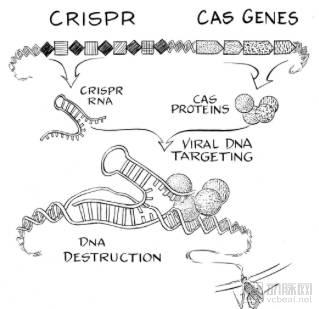
Doudna's Hand-Drawn Sketch of CRISPR
CRISPR, short for Clustered Regularly Interspaced Short Palindromic Repeats, refers to a patterned combination of short repetitive sequences discovered by scientists in bacteria. CRISPR sequences can be transcribed into RNA molecules and bind to specific proteins within the cell, known as Cas proteins.
Cas9 is an enzyme that uses a CRISPR sequence as a guide to recognize and cleave the specific strand of DNA complementary to said CRISPR sequence. The Cas9 enzyme, together with the CRISPR sequence, forms the basis of the technology known as CRISPR/Cas9, which can be used to edit genes within organisms. Once a segment of DNA sequence is captured that perfectly matches the guide RNA, the CRISPR system can identify foreign DNA, thereby activating the Cas9 protein to achieve DNA cleavage and silence the expression of foreign genes. This prevents viruses from infecting cells carrying spacer sequences homologous to the virus, thus conferring immune function.
Compared with zinc finger nucleases (ZFNs) and transcription activator-like effector nucleases (TALENs), CRISPR/Cas9 demonstrates significantly higher efficiency in DNA recognition, while substantially reducing operational complexity and costs, thereby highlighting its commercial value in gene editing and gene therapy. Some institutions predict that the gene editing market based on the CRISPR/Cas9 system will reach an annual scale of billions of dollars within a few years. Consequently, CRISPR/Cas9 is regarded as a Nobel Prize-level invention, which has triggered intense patent disputes surrounding this technology.
In 1987, Japanese scientists discovered the existence of CRISPR. However, as a natural biological system, CRISPR itself is not patentable; what can be patented are the gene-editing technologies and related methods that utilize CRISPR. The battle over intellectual property rights and commercial interests surrounding CRISPR/Cas9 has been raging since the technology’s inception. The patent dispute over CRISPR gene editing has primarily unfolded between Jennifer Doudna’s team at the University of California, Berkeley, and Feng Zhang’s team at the Broad Institute.
The Patent Dispute Over CRISPR/Cas9
Let’s first review the key scientists involved in the early development of the CRISPR/Cas9 system.
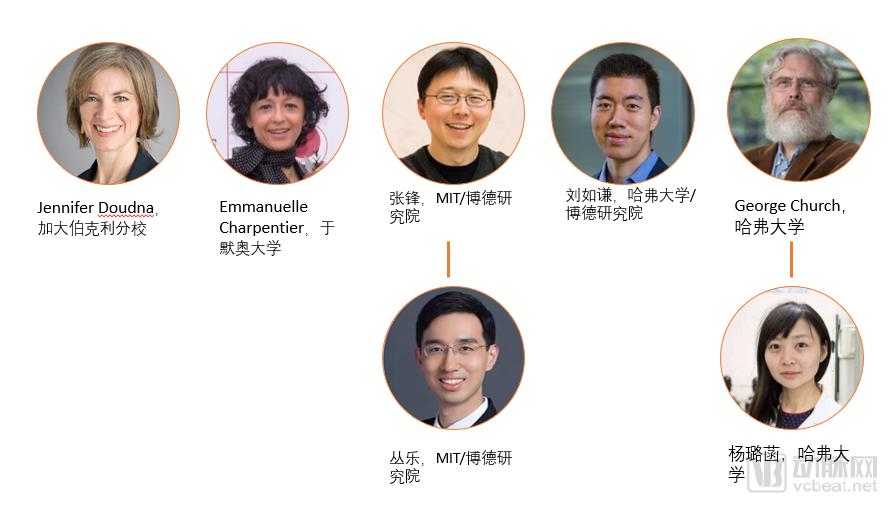
First are Jennifer Doudna of the University of California, Berkeley, and her collaborator Emmanuelle Charpentier of Umeå University in Sweden.
The second team is a group of scientists primarily from the Zhang Feng laboratory at the Broad Institute of MIT and Harvard, including Zhang Feng, his student Le Cong, and David R. Liu, Director of the Chemical Biology and Therapeutic Science program at the Broad Institute. As a biochemistry expert at the Broad Institute, Liu’s laboratory has also made significant contributions to CRISPR/Cas9 research.
The third team was led by Harvard genetics expert George Church, who published a paper on CRISPR/Cas9 in 2013 almost simultaneously with Zhang Feng; the team included George Church and Luhan Yang.
Doudna grew up in Hawaii, attended Pomona College and Harvard University, and later joined the faculty at the University of California, Berkeley. A structural biologist with a primary focus on RNA molecules, Doudna became interested in CRISPR as she sought to use X-ray diffraction methods to elucidate its three-dimensional structure and understand how it recognizes viral DNA molecules.
In the spring of 2011, Professor Doudna from the University of California, Berkeley, traveled to Puerto Rico to attend the annual meeting of the American Society for Microbiology. During the conference, another female scientist, Charpentier, approached Doudna. Charpentier had discovered that a Cas protein, in combination with two RNA molecules, could recognize and cleave DNA. During their exchange, Charpentier sought Doudna’s expertise on several questions regarding RNA, and this conversation ultimately led to the inception of the CRISPR research project.
At the time, CRISPR had been discovered by multiple scientists, but its mechanism was not fully understood. Two female scientists began collaborating from their respective laboratories and ultimately demonstrated that the CRISPR/Cas9 system could serve as a next-generation gene-editing tool, publishing their findings in Science in 2012. Compared with previous techniques, this approach reduced the workload of gene editing to approximately 1/100 of the original. However, early studies were conducted only in prokaryotic cells, such as bacteria.
Following the recognition of CRISPR/Cas9’s potential, numerous laboratories began to follow suit. In early 2013, three research groups successively demonstrated that the CRISPR/Cas9 system could efficiently edit the human genome. In addition to the Doudna team, Feng Zhang from the Broad Institute and George Church from Harvard Medical School published papers showing precise gene editing in eukaryotic cells. Zhang’s laboratory further demonstrated that multiple guide RNAs could be used simultaneously to achieve highly efficient, multiplexed, and precise surgical modifications at multiple genomic sites.
George Church of Harvard Medical School and Feng Zhang of the Broad Institute have played pivotal roles in the research on TALEN proteins, serving as key drivers in the field of gene editing. Born in China and raised in the United States, Feng Zhang graduated from Harvard University in 2004 with a degree in Chemical Physics, earned his Ph.D. in Chemistry and Chemical Biology from Stanford University in 2009, and joined the Massachusetts Institute of Technology in 2011. Feng Zhang, a Chinese scientist with an extraordinary career trajectory, was involved in pioneering the field of optogenetics as early as 2005.
Experimental records submitted by Feng Zhang show that in 2011, the year Doudna met Charpentier, he had already embarked on research into CRISPR/Cas9 technology. That year, Zhang attended a conference at the Broad Institute, where he heard a speaker casually mention the CRISPR immune system in bacteria. Zhang read all the available literature on the subject. He paid particular attention to a 2010 paper by a Canadian biologist, which highlighted the specific role of the Cas9 protein. By 2012, his experimental results had been validated. In January 2013, Zhang, as the corresponding author, and his student Le Cong, as the first author, published a paper in Science describing how to apply CRISPR gene-editing technology to plant, animal, and human cells.
Another expert, George Church, is already a well-known figure in the biological community—a true luminary. Church joined Harvard Medical School as an assistant professor in 1986. A geneticist and chemist, he is renowned for pioneering the fields of personal genomics and synthetic biology. In 1984, Church and Walter Gilbert published a method for direct genomic sequencing; some of the strategies described in that paper are still applied in next-generation sequencing technologies. He currently serves as Professor of Genetics at Harvard University and Director of the Center for Genome Research at Harvard Medical School, and was previously the postdoctoral mentor of Feng Zhang. In early 2013, Church’s paper demonstrating that the CRISPR system could be used for genome editing in human cells was also published in Science.
The timeline of the scientists’ research disclosures is outlined above. However, why did a protracted patent dispute subsequently erupt? Although Jennifer Doudna of the University of California was the first to publicly disclose her findings on CRISPR/Cas9 and filed a patent application in May 2012, the Broad Institute, when submitting its patent application in 2013, utilized the expedited examination track by paying an additional $70 fee, thereby securing the CRISPR/Cas9 patent ahead of the University of California.
The University of California certainly could not stand by and let this patent, which held immense commercial value, slip away. The ensuing patent dispute dragged on for several years. Under the U.S. patent system at the time, patents were awarded based on the “first-to-invent” rule, rather than the “first-to-file” principle. Consequently, both parties began presenting evidence of their research processes and documentation. Feng Zhang of the Broad Institute also submitted thousands of pages of materials to demonstrate that his research had begun in 2011, predating the publication of Doudna’s paper in 2012.
Moreover, the Broad Institute submitted evidence demonstrating that Doudna’s early research was conducted in prokaryotic cells, and she has repeatedly stated publicly that gene editing in eukaryotic cells presents significant challenges. In contrast, Zhang Feng’s paper described gene editing performed in eukaryotic cells, achieving successful edits in mice and even primates. Furthermore, the scope of his patent application specifically covers eukaryotic cells, underscoring the creativity and innovativeness of his invention, which is not merely a laboratory replication of Doudna’s work.
In February 2017, the Patent Trial and Appeal Board (PTAB) of the United States declared that the patent granted by the United States Patent and Trademark Office to the Broad Institute for CRISPR-based editing of eukaryotic genomes did not interfere with the relevant patents held by the University of California. In September 2018, the United States Court of Appeals for the Federal Circuit ruled to uphold the decision of the PTAB. The Broad Institute will continue to hold the intellectual property rights for the use of CRISPR gene editing in eukaryotes, which represents the most lucrative application area of this technology.
However, U.S. patent rulings do not determine patent ownership in other jurisdictions. In many regions around the world, including Europe and China, CRISPR patents have been granted to the University of California, Berkeley. A spokesperson for the Broad Institute stated that they hope to strengthen collaboration with the University of California and reach an agreement to resolve the patent dispute, through either direct cooperation or via a patent pool.
The dispute over CRISPR patents lasted for six years. During this period, the main research teams on both sides had already begun to leverage the commercial value of CRISPR, establishing companies to apply the technology in commercial sectors. Initially, Feng Zhang and his ally George Church sought to collaborate with Jennifer Doudna and others on patent matters. Together, they co-founded Editas Medicine. However, shortly thereafter, the patent battle between Doudna and Zhang erupted, leading Doudna to leave Editas and found Intellia Therapeutics. These companies have applied gene-editing technologies to address human diseases, developing novel therapies to tackle previously unsolved medical challenges.
The Commercialization of CRISPR Gene Editing Is Still in Its Early Stages
The commercial application of gene editing primarily involves editing and modifying specific defective genes to address genetic disorders caused by genetic mutations or to enhance immunity against certain diseases. Most drug development efforts by biotechnology companies specializing in gene editing are still in the experimental stage.
Scientists must first identify specific gene targets associated with the disease. Next, gene-editing therapies undergo preclinical trials, including in vitro laboratory studies or animal testing. If the preclinical trials proceed successfully, the company applies for regulatory approval from the U.S. Food and Drug Administration (FDA) or the European Medicines Agency (EMA) to initiate clinical trials in humans.
As gene editing is still in its early stages, it is difficult to predict precise market growth figures. A report by Research and Markets states that the global gene editing market will grow at a compound annual growth rate (CAGR) of 17% to reach $10.7 billion by 2025. On the other hand, Grand View Research holds a less optimistic view, estimating that the global gene editing market will reach $8.1 billion by 2025.
In the long term, many diseases can be targeted with gene editing therapies. In addition, other non-genetic diseases, including certain types of cancer, can also be treated with gene editing therapies that modify the body’s immune cells to fight disease. Therefore, the market opportunity presented by gene editing is likely far greater than the market size we previously discussed.
CRISPR Scientists and Their Companies
The patent dispute over CRISPR stems from the immense market potential of gene editing in the future, where patent licensing fees are expected to generate substantial revenue. While these experts have been engaged in extensive patent litigation, they have simultaneously continued to commercialize the technology. Beyond securing patent licenses, accelerating the commercial development of gene therapy drugs represents another avenue for monetizing the technology.
This article reviews the core business activities, financing status, and R&D pipelines of the companies affiliated with both research and development teams, examining their applications of gene editing in the commercial sector as well as their corporate development histories. We have identified a total of eight companies associated with these scientists, revealing extensive collaboration among researchers from different teams.
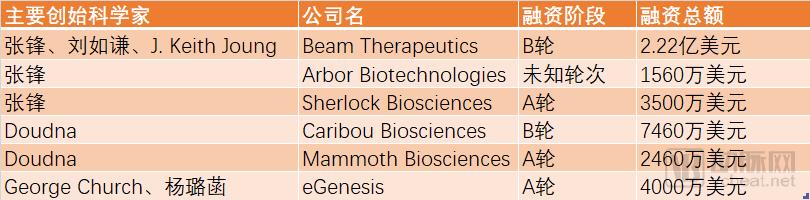

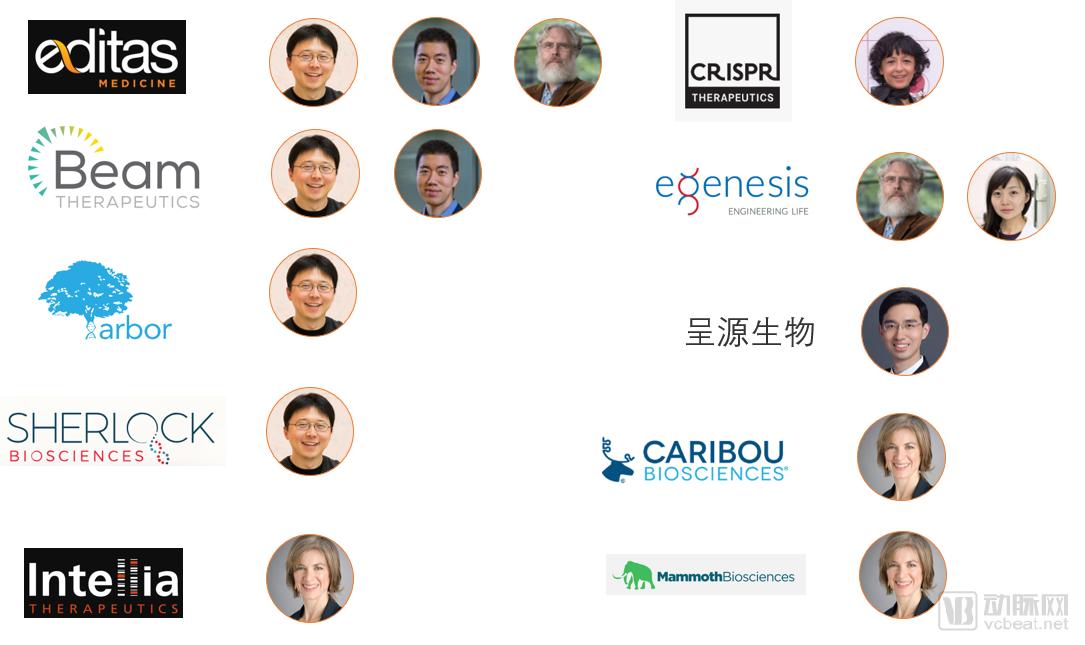
CRISPR Scientists and Their Companies
Editas Medicine
Established: 2013
Founders: Feng Zhang, Jennifer Doudna (later withdrew), David R. Liu, George Church, J. Keith Joung
Company Stage: IPO Listing on February 3, 2016
Market Cap: $1.17 billion
The founders of Editas Medicine demonstrate that the company has assembled nearly all the luminaries in the field of CRISPR gene editing. In addition to Feng Zhang, Jennifer Doudna, David Liu, and George Church, J. Keith Joung is also a pioneer of zinc-finger nucleases (ZFNs), the first generation of gene-editing tools. However, Doudna departed from the company shortly after its establishment.
The company’s mission is to translate its genome editing technology into a novel therapeutic approach for human diseases, enabling precise correction of disease-causing factors at the genetic level. The company has filed numerous patent applications and holds intellectual property rights to foundational genome editing technologies, which will allow it to convert early-stage discoveries into viable human therapeutics.
Prior to its NASDAQ listing, Editas completed three rounds of financing. The first Series A round was closed in 2013, raising $43 million from investors including Third Rock Ventures, Polaris Partners, Partners Innovation Fund, and Flagship Pioneering.
The second round of financing occurred in May 2015, with Juno Therapeutics making an exclusive investment of $47 million. Meanwhile, Juno entered into an agreement with Editas Medicine to leverage the latter’s CRISPR technology for the joint development of cancer immunotherapies, including CAR-T and TCR therapies. This collaboration is expected to generate total revenues of $737 million for Editas.
In August 2015, Editas raised $120 million in financing, with investors including Microsoft co-founder Bill Gates, Google, Deerfield Management, and Khosla Ventures.
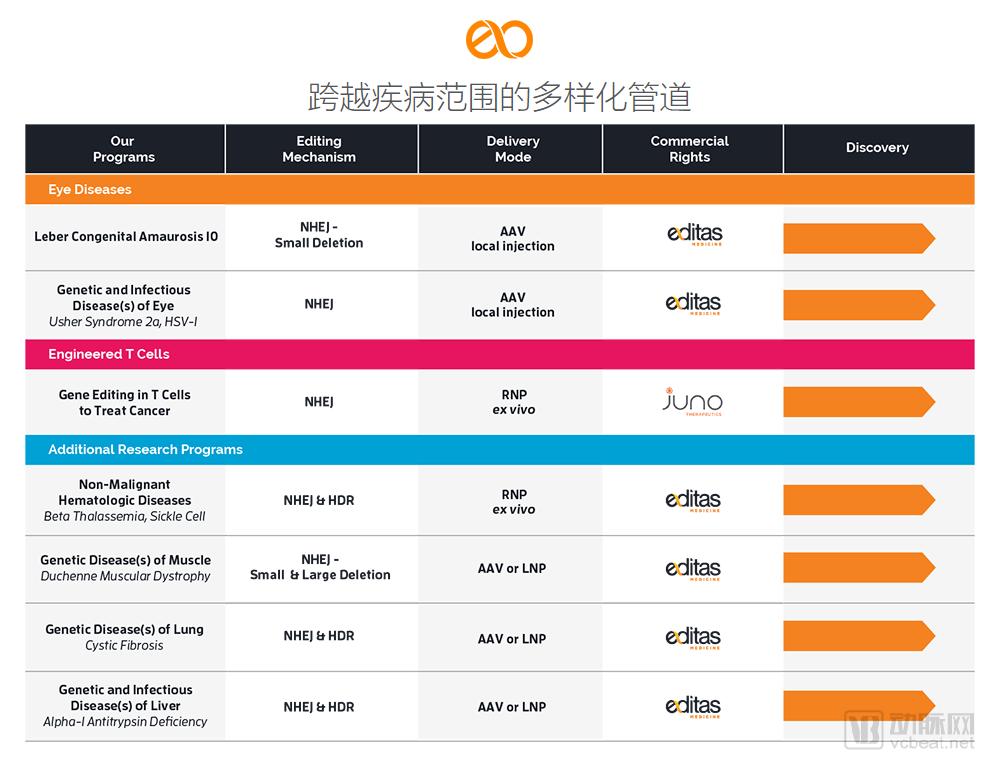
Currently, Editas’ gene therapy drug development is still in its early stages, with a primary focus on gene therapies for inherited eye diseases, the treatment of rare genetic disorders, and even efforts to increase crop yields. In January 2018, co-founder Feng Zhang published an article in Nature demonstrating that CRISPR/Cas9 editing technology successfully restored hearing in mouse models of human hereditary deafness.
In January this year, Editas published another paper in Nature Medicine. The company developed a candidate genome-editing therapeutic, EDIT-101, which removes the aberrant splice donor site generated by the IVS26 mutation in the CEP290 gene, restores normal CEP290 expression, and thereby treats Leber congenital amaurosis type 10 (LCA10), a severe retinal dystrophy caused by CEP290 gene mutations.
EDIT-101 is a therapeutic candidate developed by Editas Medicine in collaboration with Allergan in 2017, through which Editas received a $25 million milestone payment from Allergan. On December 1, 2018, the U.S. Food and Drug Administration (FDA) accepted the company’s Investigational New Drug (IND) application for EDIT-101, authorizing clinical trials to evaluate the use of CRISPR gene-editing technology for treating patients with Leber Congenital Amaurosis type 10 (LCA10). Editas planned to initiate patient screening for its Phase I/II clinical study in the second half of 2019, enrolling 10 to 20 patients in a dose-escalation cohort. EDIT-101 is poised to become the first in vivo CRISPR-based therapy administered to patients.
Another project that Editas is quickly moving into clinical testing is a CRISPR therapy for β-thalassemia and SCD. Although CRISPR Therapeutics has gained an early advantage in this field, Editas believes its gene-editing approach is superior to that of its competitors because it more effectively preserves the function of hematopoietic stem cells.
The CAR-T and T cell receptor (TCR) therapies developed by Editas and Juno are still in the early stages of research, and no plans for clinical trials have been announced.
Beam Therapeutics
Established in: 2017
Founders: Feng Zhang, David Liu, J. Keith Joung, John Evans
Company Stage: Series B
Total Funding: $222 Million
Compared with Editas, the founding team of Beam Therapeutics, established in 2017, still includes Feng Zhang, David Liu, and J. Keith Joung, but no longer includes George Church (who chose not to participate). Additionally, John Evans, who previously served as an investment manager at Agios, joined the team. Beam Therapeutics is dedicated to leveraging gene-editing technology to perform precise single-base-pair editing of DNA and RNA for the treatment of genetic diseases.
More than half of the genetic errors associated with hereditary diseases are caused by single-base changes among the billions of bases that make up the genome. Currently, Beam Therapeutics’ gene-editing technology enables the editing of individual bases (A, G, C, and T) within genes, allowing for the knockout or insertion of specific genes without cutting DNA or RNA strands. This novel gene-editing technology from Beam Therapeutics helps prevent and cure hereditary diseases.
Prior to this, Beam Therapeutics secured $87 million in Series A financing on May 14, 2018. On March 6, 2019, Beam Therapeutics completed a $135 million Series B financing round. New investors in this round included Redmile Group, LLC, Cormorant Asset Management, Google GV, Altitude Life Science Ventures, and other undisclosed investors. Existing investors F-Prime Capital and ARCH Venture Partners also participated in this round. The proceeds from this financing will be used to develop next-generation gene-editing technologies and expand its pipeline of gene-editing programs. Based on current information, Beam Therapeutics remains in the preclinical research and development stage, with no pipeline details disclosed yet.
Arbor Biotechnologies
Established in: 2016
Founders: David Scott, David Walt, Feng Zhang, Winston Yan
Company Stage: Unknown Round
Total Financing: $15.6 Million
Compared to the other two companies co-founded by Feng Zhang, Arbor Biotechnologies has a lower profile and has received very little media coverage. Information about the company was initially disclosed in filings with the U.S. Securities and Exchange Commission (SEC). Founders David Scott and Winston Yan were both doctoral students under Feng Zhang’s supervision. In an interview, the two founders discussed their work and study experiences in Feng Zhang’s laboratory, describing it as a dynamic environment characterized by creativity and intellectual freedom. In June 2017, Arbor Biotechnologies completed a $15.6 million Series A financing round led by investment firms including ARCH Venture Partners and Faridan Ventures.
According to the introduction, Arbor aims to build a novel protein discovery platform that integrates artificial intelligence, genomic sequencing, gene synthesis, and high-throughput screening technologies. By deeply mining the natural genetic diversity of peptides and proteins, the company seeks to identify novel molecules for improving human health.
In fact, the company’s first major achievement was also related to CRISPR. The co-founders of Arbor Biotechnologies leveraged this platform to discover the Cas13d protein. Although belonging to the Cas13 family, Cas13d is significantly smaller than other members, granting it greater potential for practical applications. Researchers have demonstrated its promise for RNA regulation and high-sensitivity diagnostics. In January this year, Vertex Pharmaceuticals entered into a collaboration agreement with Arbor Biotechnologies to develop novel CRISPR endonucleases aimed at advancing gene-editing therapies for cystic fibrosis and four other genetic disorders.
Sherlock Biosciences
Established: 2018
Founders: Feng Zhang, Jim Collins
Company Stage: Series A
Funding Amount: $35 million
Sherlock Biosciences has just been established and secured $35 million in funding. In April 2017, the team led by CRISPR pioneer Feng Zhang first described SHERLOCK in a paper as a rapid, low-cost, and highly sensitive diagnostic tool based on CRISPR technology. A core technology of Sherlock Biosciences is SHERLOCK, which has been licensed from the Broad Institute of MIT and Harvard. Professor Feng Zhang is also a co-founder of Sherlock Biosciences and serves as the Chair of its Scientific Advisory Board.
Caribou Biosciences
Established: 2011
Founders: James Berger, Jennifer A. Doudna, Martin Jinek, Rachel E. Haurwitz
Company Stage: Series B
Total Financing: $74.6 million
Caribou Biosciences was founded in 2011 with the aim of consolidating the CRISPR/Cas9 intellectual property generated by the Doudna Laboratory at the University of California, Berkeley. Caribou has been dedicated to commercially licensing Doudna’s intellectual property and selling it as a research and development toolkit to other companies for various applications in human and veterinary medicine, agriculture, and industrial processes.
Doudna is one of the two scientific advisors to Caribou; the other is Martin Jinek, a former member of the Doudna lab, co-author of the landmark 2012 CRISPR paper, and collaborator with Doudna and Charpentier. Caribou also helped establish another CRISPR gene-editing company, Intellia Therapeutics. Prior to its initial public offering (IPO), Caribou completed four rounds of financing—two Series A rounds and two Series B rounds—raising a total of $74.6 million.
However, Caribou is also attempting to transform from a “platform” company—a technology platform that helps other companies develop drugs and other products—into a product-focused company. This shift mirrors the transformation many biotechnology firms are undertaking as they enter the pharmaceutical industry, aiming for higher-profit but higher-risk business models.
In a recent speech at the University of California, San Francisco, company founder Doudna outlined a timeline for Caribou’s transformation: filing an Investigational New Drug (IND) application in the near term and initiating clinical trials within 18 months.
Intellia Therapeutics
Established in: 2014
Founders: Andy May, Derrick Rossi, Erik Sontheimer, Jennifer A. Doudna, Luciano Marraffini, Nessan Bermingham, Rachel E. Haurwitz, Rodolphe Barrangou
Company Stage: IPO on May 6, 2016
Market Cap: $756 million
Intellia Therapeutics holds a license to Caribou Biosciences’ CRISPR intellectual property, with Doudna serving as a co-founder. Intellia Therapeutics primarily focuses on the application of gene editing for disease treatment. Strictly speaking, Intellia was jointly established by Caribou Biosciences and Atlas Venture. Caribou Biosciences licensed its technology to Intellia, making it the exclusive licensee for human therapeutic applications. Additionally, Novartis obtained a five-year non-exclusive license from Intellia for the use of CRISPR technology in in vivo therapies.
Atlas Ventures and Novartis invested $15 million in Intellia Therapeutics’ Series A financing round. In 2015, Intellia secured $70 million in Series B funding from eight institutional investors. Subsequently, on May 6, 2016, Intellia went public on the NASDAQ through an initial public offering (IPO), and its current market capitalization stands at $756 million.
Caribou authorized the licensing of its CRISPR/Cas9 technology to Intellia for therapeutic use in humans. However, in a regulatory filing dated October 31 last year, Intellia disclosed that it had entered into arbitration with Caribou two weeks earlier, alleging that Caribou had breached the 2014 licensing agreement. The two companies have engaged in a dispute over patent licensing, and Intellia has listed Caribou as one of its competitors in the gene-editing sector.
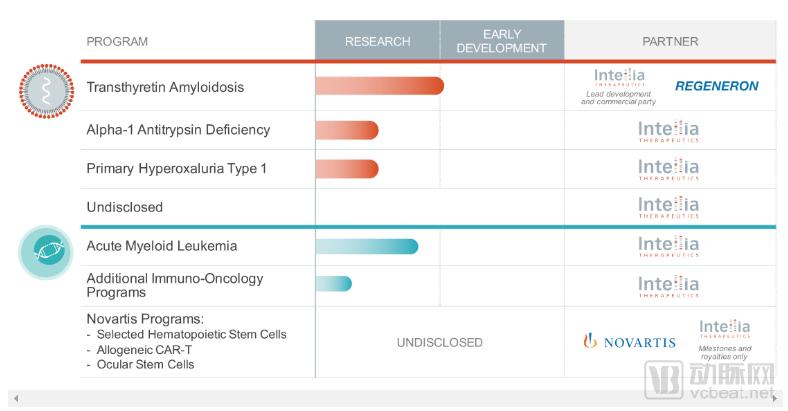
In Intellia’s pipeline, the diseases primarily targeted by in vivo therapies include transthyretin amyloidosis, alpha-1 antitrypsin deficiency, and hepatitis B virus infection, while ex vivo therapies mainly focus on hematopoietic stem cell transplantation and CAR-T cell therapy. All these programs are currently in early-stage development, and the current development stage of the CAR-T program in collaboration with Novartis has not been publicly disclosed.
Mammoth Biosciences
Established: June 2017
Founders: Ashley Tehranchi, Janice Chen, Jennifer A. Doudna, Lucas Harrington, Trevor Martin
Company Stage: Series A
Total Financing: $24.6 Million
Mammoth Biosciences, founded in June 2017, does not leverage CRISPR gene-editing technology for therapeutic or drug development purposes; rather, it applies this technology to address medical diagnostic challenges. The company aims to create point-of-care diagnostic tools capable of detecting a wide range of diseases, suitable for use in both hospital and home settings. In April 2018, Mammoth launched its first product based on CRISPR technology licensed from the Doudna Laboratory.
Mammoth is developing a platform capable of detecting any biomarker containing DNA or RNA by utilizing different enzymes: Cas12 and Cas13. According to news released on March 18, the company has added a new CRISPR enzyme, Cas14, to its “CRISPR diagnostic kit” through the University of California, Berkeley. The company’s founders believe that each CRISPR-Cas protein offers distinct advantages across various applications and can be targeted toward different diseases, with Cas14 being particularly useful in the fields of infectious diseases, oncology, and genetic mutations.
CRISPR Therapeutics
Establishment Year: 2013
Founders: Chad Cowan, Craig Mello, Daniel Anderson, Emmanuelle Charpentier, Matthew Porteus, Rodger Novak, Shaun Foy
Company Stage: IPO on October 19, 2016
Market Cap: $1.984 billion
CRISPR Therapeutics’ name directly reflects its focus on CRISPR gene editing, and its founders include Emmanuelle Charpentier. The company is dedicated to developing revolutionary therapies using its proprietary CRISPR/Cas9 gene-editing platform, with patent licenses obtained from the University of California, Berkeley.
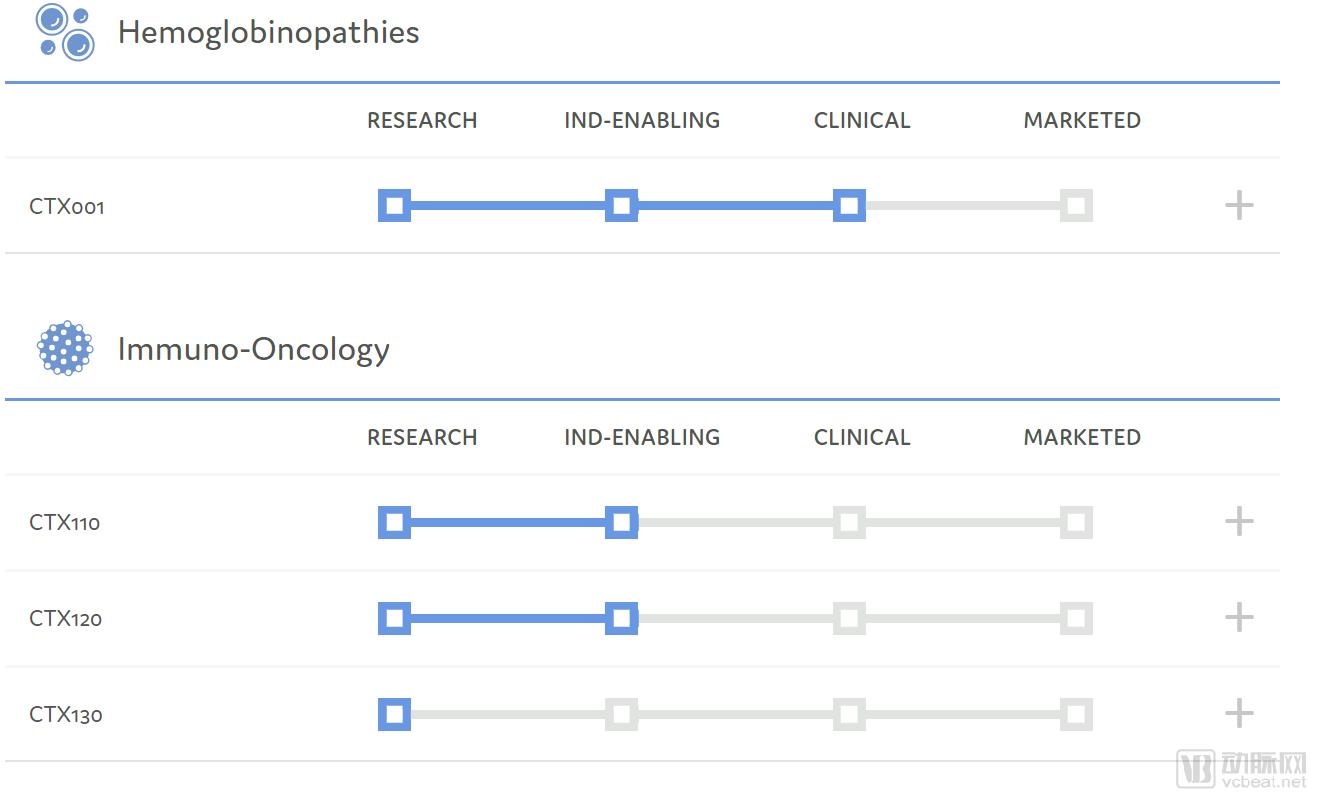
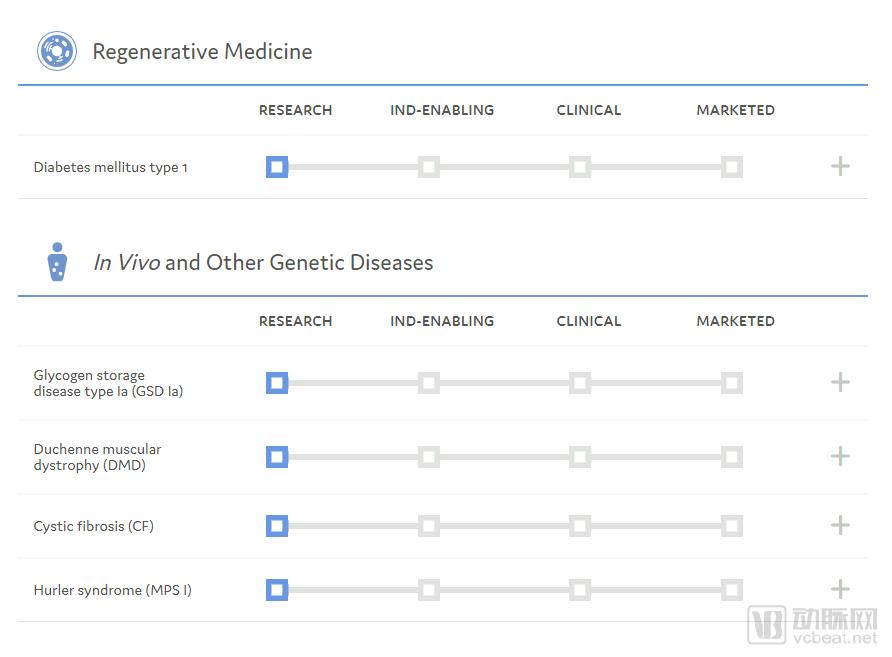
In February 2019, CRISPR Therapeutics announced that it had applied CRISPR gene-editing technology in the first-ever human clinical trial for therapeutic purposes, marking a milestone achievement in the realization of gene editing as a genuine treatment for disease.
According to CRISPR Therapeutics and its partner Vertex Pharmaceuticals Inc., the subject of this clinical trial is a patient with thalassemia. After collecting the patient’s blood cells, their DNA was edited ex vivo using CRISPR/Cas9 technology, and the modified cells were then returned to the patient via stem cell transplantation. CRISPR Therapeutics is also developing gene-editing therapies for sickle cell disease, with the first treatment expected to be completed by mid-year.
eGenesis
Established: 2014
Founders: George Church, Luhan Yang
Company Stage: Series A
Financing Amount: $40 million
eGenesis was co-founded in 2014 by Harvard University genetics pioneer George Church and his Chinese student scientist Luhan Yang, focusing on the clinical application of gene-edited xenotransplantation technology.
In March 2017, eGenesis announced that it had secured $38 million in Series A financing. The round was led by Biomatics Capital and ARCH Venture Partners, with participation from Khosla Ventures, Alta Partners, Alexandria Venture Investments, Berggruen Holdings North America, Uprising, and Fan Ventures. Additionally, Daniel S. Lynch joined eGenesis as Executive Chairman.
eGenesis leverages its proprietary CRISPR gene-editing platform to culture human healthy cells or tissue organs in pigs. Currently, this technology remains in its early stages.
“Although there are still certain technical challenges at present, we believe that our technology can help patients in need of organ transplants escape the threat of death,” said Yang Lushan, Chief Scientist and Co-Founder. “Following this financing round, we will continue our technological research. We hope that our technology can bring new hope to patients requiring organ transplants, and that we can translate xenotransplantation into clinical practice through safe and effective methods.”