

Geometry Technology Files IPO Prospectus: Smart Toilet with Biochip Aims to Build Home-Based Health Prevention Ecosystem
With the advancement of digital healthcare, the effective collection, analysis, and processing of health data are driving transformative changes in the medical industry. Currently, China’s healthcare system remains focused on addressing acute diseases, while early prevention and health management for patients, high-risk populations, and individuals in a sub-health state are emerging as key directions for the future development of healthcare.
Continuous, individual-level medical-grade health data collection and monitoring is the “golden” key to unlocking the markets for early prevention and chronic disease management. Identifying an “optimal approach” to achieve medical-grade precision in data collection with minimal disruption to users’ daily lives has become a major focus for many high-tech healthcare companies.
Geometry Technology is one such example. Founded in 2015, the company focuses on building a life and health management platform driven by human body data. Currently, its first developed health data sensor equipped with high-throughput biochips and detection devices—the fully automatic smart health monitoring toilet—has entered the commercial trial operation phase.
The smart health-monitoring toilet developed by Geometry Technology identifies users via fingerprint recognition, enabling the automatic initiation of personalized, fully automated urine testing without any additional user intervention. This system generates dozens of continuous, individualized health data points and supports precise, non-invasive, and unobtrusive data collection for multiple users.
In addition to data acquisition, this smart health-monitoring toilet can integrate with a mobile app, offline clinics, and third-party service providers to establish a closed-loop system for household health risk prevention and control. Within five minutes of completing the urine test, users can receive their results on the mobile app. If any indicators are abnormal or show potential risks, a professional medical team will promptly follow up to provide targeted health services.
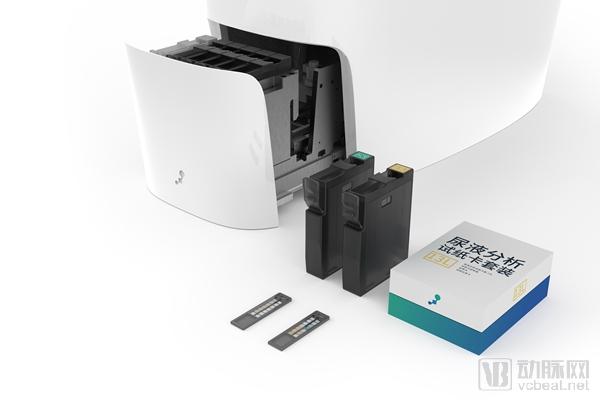
Image provided by the interviewee
Continuous, in-depth health data monitoring is of significant importance for chronic disease management and early risk screening. This smart monitoring toilet not only helps high-risk individuals effectively manage common conditions such as diabetes, kidney disease, gout, kidney stones, and urinary tract infections, but also provides effective health management for health-conscious young adults and those in a sub-optimal health state, including individuals with the “three highs” (hypertension, hyperglycemia, and hyperlipidemia), those suffering from overwork, fitness enthusiasts, long-term users of health supplements or traditional Chinese medicine, practitioners of the ketogenic diet, women of childbearing age, menopausal women, and pregnant women.
Many companies are eager to enter the health data business, but identifying the “optimal” approach for collecting human health data is no easy task. Chen Liangcheng, Founder and CEO of Geometry Technology, believes that an effective data collection method should possess the following characteristics simultaneously:
1. The collected data is of interest to users and remains under their continuous attention;
2. The collected data metrics can guide user behavior and provide feedback;
3. The collection process is convenient and efficient, aligning with users’ daily habits without causing disruption.
After comprehensive consideration, Chen Liangcheng ultimately chose the toilet as the entry point for human data collection. He stated that this decision was primarily driven by two factors: First, toilets are essential household items; using them as a platform aligns with daily habits and helps address user compliance issues. Second, urine itself holds significant diagnostic value. As urine carries various metabolic wastes and toxins excreted by the body, any disruption in internal homeostasis due to physiological abnormalities will manifest as anomalous indicators in urine, thereby revealing health status.
Currently, there are over 7,000 detectable substances in urine, among which more than 200 urinary monitoring indicators have been approved by the U.S. FDA, and as many as 168 commonly used urinary testing indicators are covered by China’s national medical insurance scheme.
With the data acquisition entry point established, the next step is the development of biotech chips. Due to the unique environment of a toilet, the R&D process for this sensor must primarily address the impact of temperature and humidity on chip stability. Chen Liangcheng stated that Geometry Technology’s patented technology ensures the stable performance of the chips and sensors in household bathrooms.
According to him, the chips currently launched by Geometry Technology can detect more than 20 human health indicators. In the future, the company will design and launch more types of chips tailored to different needs, expanding the range of detectable indicators to between 50 and 200.
Collecting health data from users is merely the first step; more importantly, it involves subsequent analysis and processing, as well as providing actionable guidance to users. Chen Liangcheng stated that the smart health-monitoring toilet equipped with a biochip is only the first sensor developed by Geometry Technology. The company’s goal is to establish a life and health management platform driven by human physiological data, thereby creating a closed-loop system for household health prevention and control.
In December 2018, Geometry Technology’s first offline medical center—Geometry Weiyou Clinic—officially opened in Hangzhou, Zhejiang. The clinic is staffed by a full-time medical and nursing team specializing in cardiology, endocrinology, nephrology, neurology, and rehabilitation medicine. All team members hold master’s or higher degrees from renowned Chinese medical schools and possess extensive clinical experience at prestigious Grade A tertiary hospitals.
Providing high-quality interdisciplinary medical services and designing health management plans are key responsibilities of Geometry Weiyu Clinic.
When the system detects abnormalities or abnormal trends in user health data, physicians will communicate with users via a mobile app to provide appropriate health plans and, when necessary, recommend that users visit relevant medical institutions for more targeted health examinations.
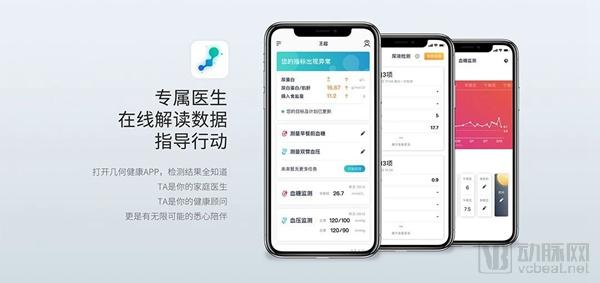
Image provided by the interviewee
Chen Liangcheng stated that, in addition to the medical care team from offline clinics, Geometry Technology is also equipped with a professional external medical advisory team and is actively seeking partnerships with third-party service providers.
The core team of Geometry Technology primarily hails from fields such as bioinformatics, cloud computing, smart hardware, clinical medicine, and health management. The R&D team masters multiple cutting-edge technologies, including rapid genetic testing, protein modeling, multi-omics analysis, and high-throughput biochips, and has published more than 50 papers in top-tier academic journals worldwide.
“To truly achieve personalized, comprehensive health risk prevention and control, we cannot rely solely on or be confined to hospitals; active cooperation outside the hospital setting is also essential.” Chen Liangcheng believes that whether for healthy individuals, those in a sub-health state, or patients, early health risks can be identified through medical-grade data monitoring at home, enabling lifestyle adjustments that effectively reduce the risk of disease onset.
“On the premise of accurately and effectively acquiring personalized, continuous health data, we will further explore and understand users’ health risks through diverse approaches, thereby unlocking the application value of these data in the process,” said Chen Liangcheng.