

When Will Exoskeleton Robots Land? Tens of Billions in Rehabilitation Market Await Activation and Hundreds of Thousands of Talent Shortages Look to 'Iron Man'

Zunosaki
Upper Limb Exoskeleton Glove Company

Buffalo Intelligent Rehabilitation
Developer, Manufacturer, and Distributor of Lower-Limb Exoskeleton Robots

AI-robotics
Exoskeleton Robot Therapy Solution Provider

Fourier
Intelligent Robot Developer
Roceso Technologies
Upper Limb Soft Exoskeleton Company
In Marvel films, exoskeleton robots can transform ordinary people into Iron Man, Tony Stark; in Guo Fan’s films, exoskeletons can equip the CN171-11 rescue team as “cyborgs” capable of carrying “Flintstones” weighing hundreds of jin; in real life, exoskeletons are being used to restore the hope of standing and even walking for those who have lost their ability to walk or move.
China’s rehabilitation medical industry remains in its early stages of development. On one hand, there is a vast and urgent market demand driven by neurological and neurodegenerative conditions that impair mobility, such as stroke, cerebral palsy, and Parkinson’s disease. On the other hand, the sector faces challenges including limited capital investment, a scarcity of rehabilitation institutions characterized by small scale, and lagging equipment R&D. This severe imbalance between supply and demand has spurred momentum for technological research and development.
In addition to the currently widely used end-effector traction rehabilitation robots and suspension-based robots, the most advanced rehabilitation robots are wearable exoskeleton robots. Designed based on bionic principles and integrated with ergonomics, these devices can be worn on the affected limbs. Each joint is equipped with an independent actuator, ensuring that the robot's movement patterns are coaxial with the human body's degrees of freedom after the patient puts it on, thereby enabling more effective rehabilitation training.
How advanced is this promising technology in the application of exoskeleton robots for rehabilitation therapy? What is the current level of commercialization? What needs can it address? And what challenges have emerged during its implementation? This article explores these questions with you.
Traditional rehabilitation relies heavily on manual labor, and rehabilitation therapists are in short supply.
Dr. Chen Gong, CEO of Maibu Robotics, once revealed thatChina’s rehabilitation industry lags behind in terms of both the number of rehabilitation therapists per capita and rehabilitation processes.Among the general public, rehabilitation is not perceived as a particularly necessary concept.
In China, the disability rate is as high as 75%, whereas abroad it is only around 30%., because foreign countries have mature rehabilitation systems, with rehabilitation initiated immediately after the acute phase, resulting in disability in only a small minority of patients. However, in China, stroke patients often return home and remain bedridden, never to recover their mobility.
Among the symptoms of stroke patients, gait disturbance has the greatest impact on independence. Similarly,During the rehabilitation process, a patient requires assistance from multiple rehabilitation therapists, resulting in significant labor consumption.
Moreover, the number of rehabilitation therapists in China is severely insufficient.Based on the number of stroke patients in China, the country requires over 400,000 rehabilitation therapists; however, there are only approximately 20,000 qualified professionals, resulting in a significant shortage.. Therefore, the use of robots to assist manual rehabilitation is an inevitable trend. Moreover, in foreign countries with more severe aging populations and higher labor costs, the demand for robots is even more urgent.
Robots are inherently tireless, making them well-suited for high-intensity, repetitive activities. Furthermore, robots can be equipped with numerous sensors to monitor human physiological status in real time and perform assessments, thereby reducing reliance on the experience or knowledge background of rehabilitation therapists. Additionally, rehabilitation robots can be pre-loaded with diverse algorithms to provide intelligent, adaptive training based on the patient’s real-time condition, thereby achieving superior rehabilitation outcomes.
In terms of the market size for medical applications (B2B market), according to statistics and estimates by Chuxin Capital, there were only 552 specialized rehabilitation hospitals in China in 2017. Data from the National Bureau of Statistics shows that there were 11,701 general hospitals nationwide in 2017. Publicly available information indicates that 30%-35% of these general hospitals had established rehabilitation departments, amounting to approximately 3,500-4,000 general hospitals with rehabilitation departments in China. Therefore, the total number of rehabilitation hospitals in China with demand for rehabilitative exoskeleton robots is estimated to be around 4,000-4,500.
Therefore, based on an average purchase of 1–2 units per hospital, the existing stock demand for rehabilitation exoskeleton robots in China is approximately 9,000 units.The market size is approximately in the billions.The lower penetration rate results in a relatively small market size for purely B2B-oriented businesses.
Whereas exoskeleton robots inConsumer Market...needs, services can be provided to three groups: elderly people with mobility impairments and individuals without walking disabilities.
According to Chuxin Capital's estimates, forIndividuals with Mild Physical Disabilitiestheir needs are similar to those of the elderly. Referencing the penetration rate of hearing aids among individuals with hearing impairment, which is approximately 5% in China, the penetration rate of exoskeletons for ambulation assistance is projected to reach 1% in the coming years, corresponding to a potential demand of around 170,000 units. According to data from the National Bureau of Statistics, in 2017, ChinaElderly PopulationThe number reached 158 million, and it is estimated that China's elderly population will reach 180 million by 2020. Similar to the population with mild physical disabilities, the penetration rate is expected to be 1%,The potential demand is 1.58 million units;Accessible PopulationThe market demand for mobility aids has yet to materialize.
In terms of morphology, exoskeleton robots can be classified into large-scale exoskeleton robots and wearable exoskeletons.
Large-scale robots, such as the Lokomat produced by the Swiss company Hocoma (now acquired by DIH) and domestic exoskeletons from Guangzhou E-Kang, are built upon body-weight-supported treadmill systems with added exoskeleton functionality. These devices have high unit prices, typically costing millions, and are intended for hospital use. In contrast, Changzhou Qianjing’s Flexbot allows patients to remain in a supine position or be positioned upright; its exoskeleton drives the lower limbs for gait rehabilitation training. While this system incorporates both body-weight support and an exoskeleton, it differs from the Lokomat in that it does not include a treadmill base.
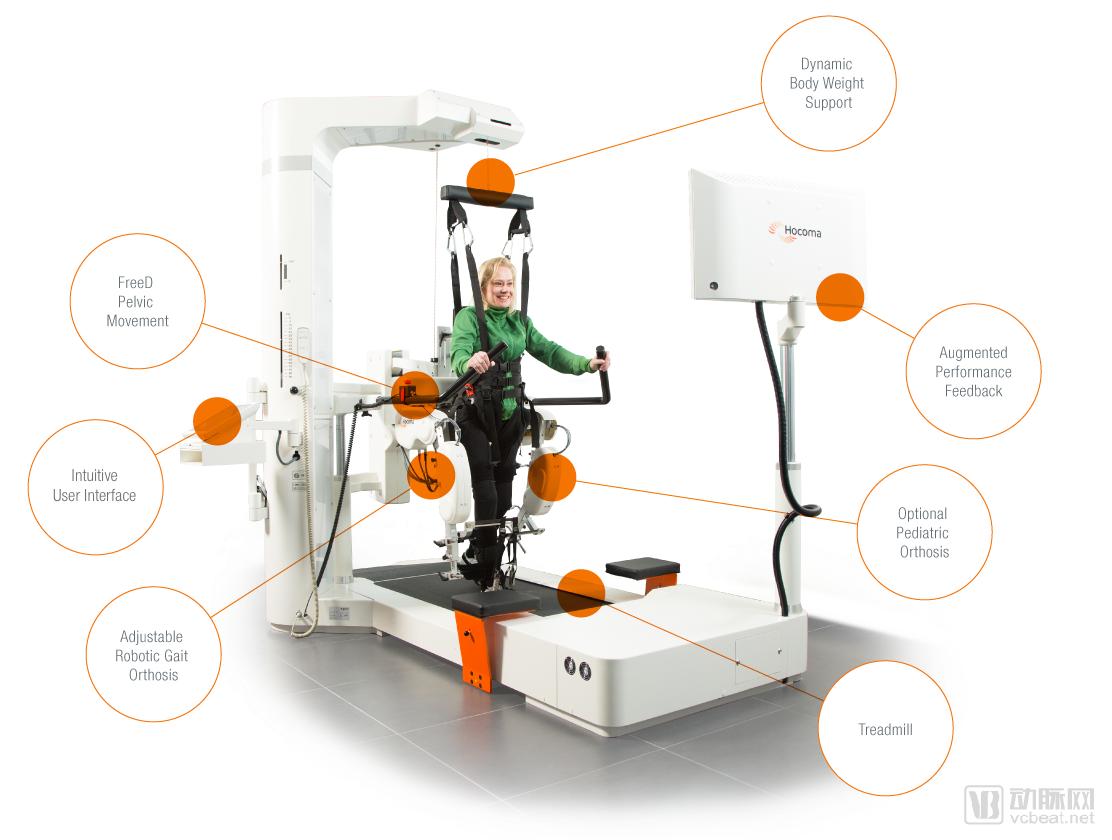
Lokomat®Pro Professional Lower Limb Rehabilitation Robot (Source: Hocoma Official Website)
Representative foreign products in the field of wearable robots include the ReWalk series from Israel’s ReWalk Robotics, HAL from Japan’s Cyberdyne, eLEGS from the US-based Berkeley Bionics, and REX from New Zealand’s Rex Bionics. In China, startups are also predominantly engaged in the research and development of wearable robotic systems.
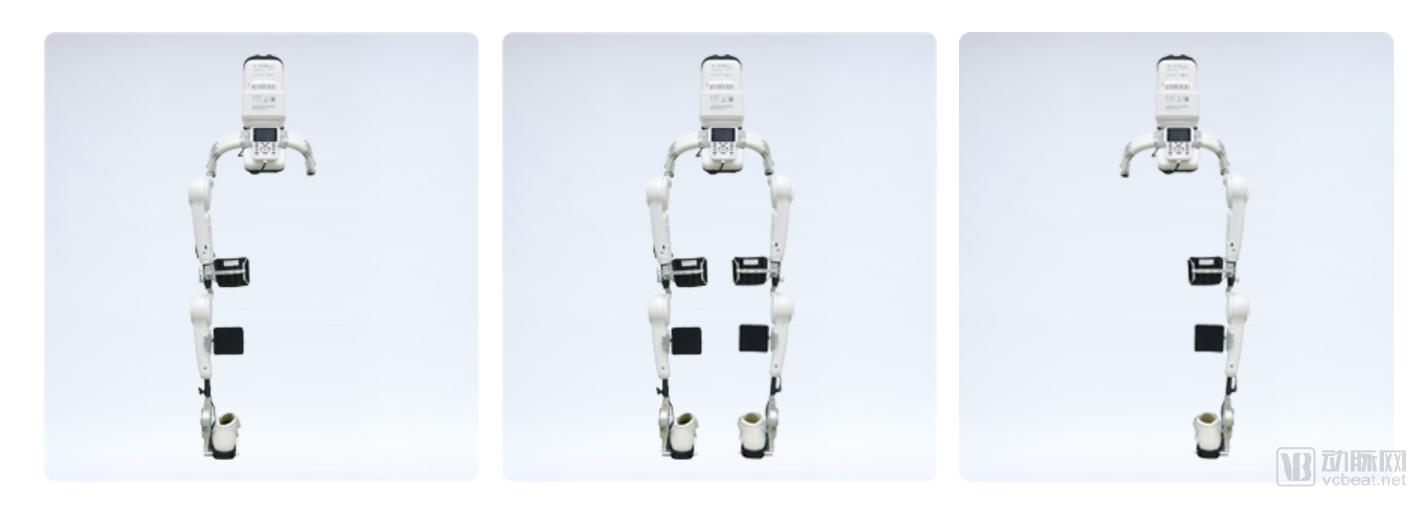
HAL Lower Limb Exoskeleton Robot (Source: HAL Official Website)
Here, we have compiled statistics on 16 robotics companies involved in exoskeleton technology or exoskeleton-form-factor robots. The basic information is listed below:
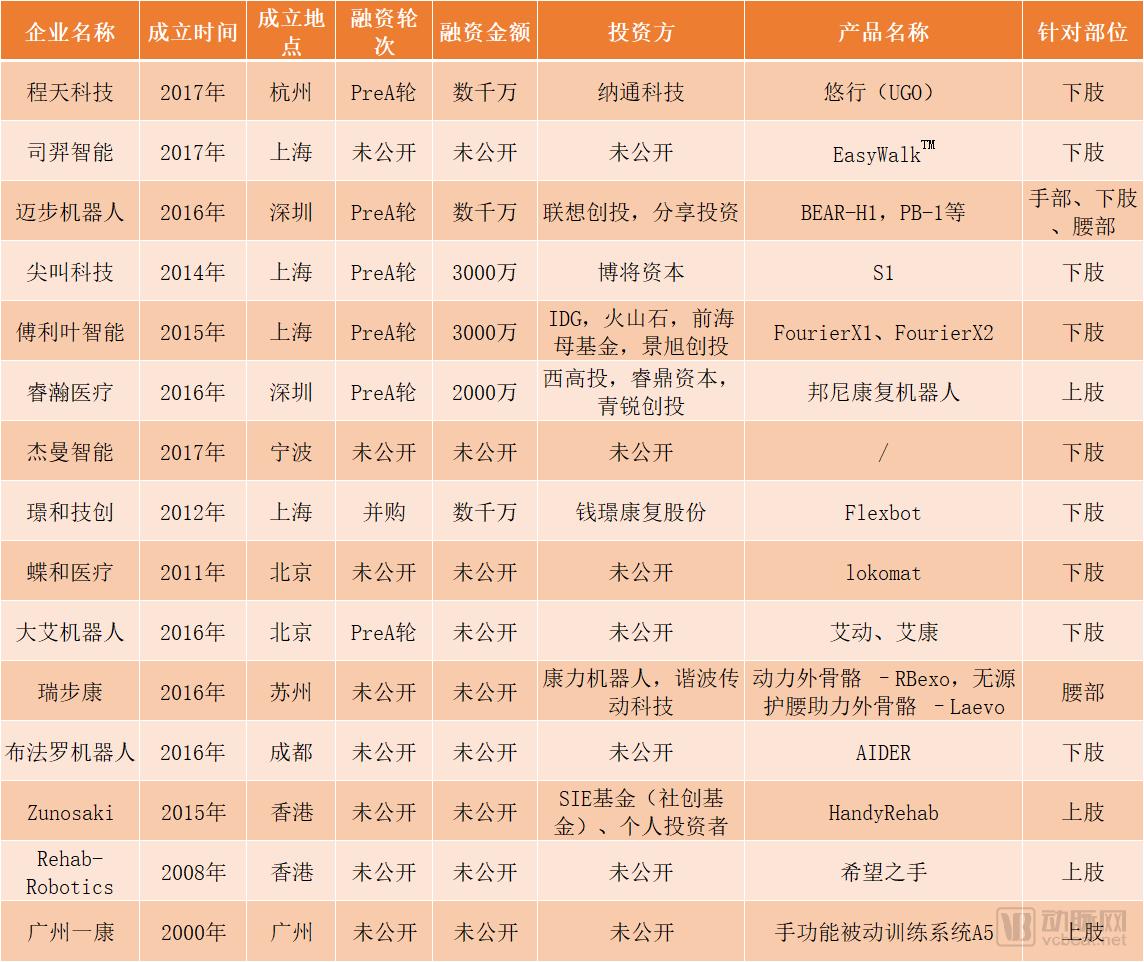
*Companies not included in this table may also contact VCBeat for further discussion.
Data Source: VCBeat Knowledge Base, Qichacha, IT Juzi
In terms of rehabilitation robot types, the upper limbs and lower limbs constitute two major categories.Among them, the form of exoskeleton robots is more suitable for the lower limbs. Gu Jie, founder and CEO of Fourier Intelligence, stated,The morphology of the lower limbs suggests that an exoskeletal structure is more suitable for clinical applications., currently, rehabilitation robots are predominantly in the form of exoskeletons; however, upper-limb or single-joint devices do not necessarily adopt an exoskeletal structure. In hospital-based rehabilitation training, robotics represent an absolute essential need, capable of assisting therapists in conducting training sessions, while home use enables functional training.
VCBeat has contacted companies such as Ruihan Medical, Singapore’s Roceso Technologies, and Hong Kong’s Zunosaki (HandyRehab), all of which offer upper-limb exoskeleton-assisted rehabilitation solutions.
Taking Roceso as an example, this Singapore-based developer of upper-limb exoskeleton gloves produces soft robotic solutions that provide functional assistance to patients with limb motor impairments during rehabilitation and in daily life. According to Wang Lu, CEO of Roceso, the challenge with the upper limbs lies in the small size of hand joints and the complexity of their movement directions. While elbow motion is relatively simple, resembling the 180-degree movement of lower limbs, the shoulder and wrist can move in various directions across a potential 360-degree range. Furthermore, finger rehabilitation is complicated by the fact that each individual’s finger joints vary in length and range of motion. Consequently, rigid exoskeletons are not well-suited for upper-limb rehabilitation, leading Roceso to opt for flexible materials primarily composed of fabrics and rubber.
Furthermore, there is another reason why the design of upper-limb exoskeletons is more complex: the uncertainty associated with the coordinated movement of various joints in the upper limbs. In contrast, during lower-limb walking, the angles, directions, and sequence of joint movements are definable. Therefore, an additional advantage of lower-limb exoskeletons lies in gait learning.
Based on materials and joint actuation, exoskeletons can also be classified into two categories: soft and rigid.For the lower limbs, only rigid materials can provide the strength necessary to support the entire body weight of patients with hemiplegia, paraplegia, or even disabilities, thereby enabling ambulation.
The primary challenge in developing soft exoskeletons lies in power transmission, specifically in how to deliver force safely and accurately. This involves pattern recognition based on artificial intelligence algorithms, which utilize data from wearable sensors to identify the precise moments within the gait cycle requiring assistance and to adaptively accommodate various walking patterns.
The control model of exoskeleton robots can be divided into the perception layer, the control layer, and the decision-making layer. The control system must ensure that the exoskeleton responds rapidly and accurately to various human movements, while also accounting for the synergy between the exoskeleton and different users to adapt to their individual movement characteristics. Consequently, this field presents significant technical barriers.
From the company’s positioning perspective, Fourier Intelligence is not a typical exoskeleton robot enterprise; rather, it is a company dedicated to the research and development of rehabilitation robots in various forms. Gu Jie stated, “Exoskeleton robots are a category defined by their form factor, which is a relatively broad concept. Wearable robots that envelop the human body can be referred to as exoskeletons. From a technical standpoint, they primarily incorporate robotics technology, sensor technology, and algorithmic technology, constituting a fairly broad technical concept.”
Yang Zhihao, Business Manager at Fourier Intelligence, told reporters that the company’s exoskeleton robot products feature several control modes. One is the passive mode, in which the robot follows a preset trajectory, allowing patients to walk along a standard path while wearing the device. Another is the active mode, which provides powered assistance for walking based on collected mechanical signals.
"Different modes are designed for users at different stages of rehabilitation. The passive mode is intended for individuals with complete lower-limb paralysis, such as patients with spinal cord injury, while the active mode is primarily targeted at patients with hemiplegia or stroke, or those with incomplete spinal cord injury. The application scenarios differ accordingly."
In addition to passive trajectory training and electromyographic (EMG) signal acquisition, technologies for controlling actions via electroencephalographic (EEG) patterns are also making breakthroughs, with the aim of enhancing human-computer interaction.Several companies, including Roceso Technologies and Buffalo, have achieved certain results in this technology. Buffalo has successfully commercialized products utilizing electromyography (EMG), electroencephalography (EEG), and hybrid EMG-EEG technologies, and demonstrated these technologies on the CCTV-1 program "Genius Brain."
As the aging process intensifies in China, the number of stroke patients continues to rise. According to data published in the 2017 "Report on Stroke Prevention and Treatment in China," there are approximately 2.46 million new stroke cases annually in China, with a continuous annual increase of 8.7%. Among them, up to 75% of stroke survivors experience varying degrees of motor dysfunction.
However, the aforementioned data represent only a subset of the population requiring rehabilitation.Regarding the indications and functions of exoskeleton robots, they are generally applied to gait disorders caused by neurodegenerative diseases such as stroke, cerebral palsy, Parkinson's disease, and spinal cord injury.
When an individual loses the ability to walk independently, they require specialized caregiving, imposing a significant financial burden on their family. Shuai Mei, a professor at Beihang University and the founder and CEO of AI-ROBOTICS, has been deeply engaged in the robotics field for over a decade. She believes that developing exoskeleton robots to genuinely aid the rehabilitation of patients unable to walk can, to some extent, “restore one patient’s mobility and bring happiness to the entire family.”
“For stroke patients, these impairments can be improved or even restored through rehabilitation training. Because the brain is plastic, repetitive and intensive training facilitates the formation of new neural circuits, leading to symptom improvement; this is what is referred to as rehabilitation training.”
Currently, Ai-ROBOTICS is collaborating with top-tier domestic rehabilitation teams, including Beijing Jishuitan Hospital, Beijing Xuanwu Hospital, the 301 Hospital (PLA General Hospital), and the National Research Center for Rehabilitation Technical Aids. The robot has been applied in clinical settings for 2,000 patients. According to Shuai Mei, the rehabilitation outcomes achieved with the robot are already supported by data, which will be published in academic literature as research findings.
Wang Lu stated that, regarding the efficacy of exoskeletons in lower-limb rehabilitation, many researchers at international conferences have conducted studies using ReWalk or Ekso. In terms of hand rehabilitation, studies have shown that “brain functional area learning” focused on activities of daily living (ADLs), as opposed to single-joint movements, not only enhances patient motivation but also improves rehabilitation outcomes.
“The benefit of exoskeletons is that they at least get patients moving; once mobile, patients’ body fat—particularly abdominal fat—will decrease, thereby reducing their risk of developing other conditions.”
After interviewing multiple exoskeleton companies, we have concluded that exoskeletal robots primarily target patients with limb dysfunction caused by stroke, trauma, or post-surgical nerve damage, helping those with paraplegia or hemiplegia restore upper limb function or lower limb mobility.
Certainly, in the health sector, there are also companies leveraging exoskeleton robots to enhance human mobility, such as Boling Robotics. According to Zhang Meng, CEO of Boling Robotics, exoskeleton robots should be devices that proactively adapt to and assist users. Therefore, the application scenarios for Boling Robotics’ products are not limited to any single specific context, such as rehabilitation.
Unlike medical devices, Boling Robotics currently targets two major scenarios. First, for users with declined mobility or motor function, it helps them better manage their weight and overall health by enhancing their motor capabilities and increasing physical activity. Second, in the fitness sector, by providing exoskeleton robot products to fitness institutions, it enables effective, quantified physical assessment and analysis, as well as personalized exercise planning, thereby helping gyms deliver customized services and achieve operational upgrades.
In addition to rehabilitation for gait disorders, Li Hongyi, Investment Director at Chuangrui Fund, stated that exoskeleton applications aimed at enhancing load-bearing capacity to prevent muscle injury in healthy individuals, or using flexible materials to augment the motor capabilities of able-bodied users, represent another promising direction.
Funding: Backed by university platforms, with most funding derived from national subsidies
In terms of policy, since 2012,Ministry of Science and TechnologyA special plan for the development of intelligent manufacturing technology was issued, which explicitly stated that priority would be given to developing technological products such as safety robots and medical rehabilitation robots. In 2015,13th Five-Year Plan for the Robotics IndustryIt also indicates the need to achieve demonstrative applications of robots in key areas such as elderly and disability assistance, consumer services, and healthcare, while carrying out key tasks including breakthroughs in core components, development of frontier common technologies, and application of medical rehabilitation robots.
Additionally, regions such as Shenzhen, Beijing, and Zhejiang have implemented favorable policies for medical service robots, which has become a significant factor boosting the research and development of exoskeletons.. Statistical data indicate that the majority of enterprises are concentrated in Shanghai and Zhejiang, which form the core of the Yangtze River Delta Economic Belt, as well as in the Guangdong-Hong Kong-Macao Greater Bay Area.
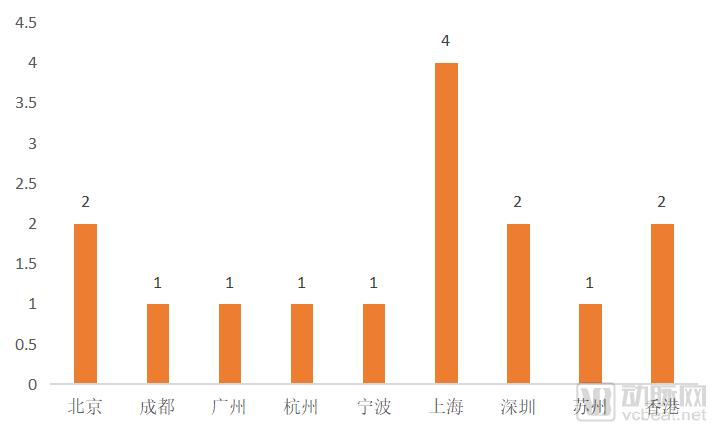
Statistics on the Locations of Exoskeleton Robotics Companies
According to Liu Qijun, founder of Ningbo German Intelligent Technology Co., Ltd, the company, based in Ningbo and supported by government policies, has received R&D subsidies totaling 20 million yuan from the Ningbo municipal government.
In terms of R&D, most exoskeleton robot companies are backed by university robotics research centers,For instance, Chengdu Buffalo Robotics relies on Professor Cheng Hong from the Robotics Research Center of the University of Electronic Science and Technology of China; AI-ROBOTICS centers on Professor Shuai Mei and his team from Beihang University, undertaking projects under the National Key Technologies R&D Program, the National Natural Science Foundation, and Beijing’s Major Science and Technology Projects. Ningbo German Intelligent Technology Co., Ltd., based in Ningbo, leverages the Zhejiang University Robotics Institute to conduct comprehensive technical cooperation, jointly carry out research initiatives, and introduce talent and technological resources.
Singapore’s Roceso Technologies also relies on research projects from the National University of Singapore. However, Wang Lu told reporters, “The research outcomes from universities are very limited. If industrial production and industrial design are to be carried out in the end, enterprises must undertake these tasks themselves. Therefore, the R&D costs for enterprises remain high, as redesigning based on academic research achievements alone requires at least 1–2 years.”
Qualifications areKey Considerations for ImplementationSafety, Efficacy, and Rationality of the Clinical Trial Protocol
Translating research outcomes from university research centers into market-ready products has become a major challenge in the commercialization of exoskeletons.To achieve commercialization, beyond technological maturity, the first hurdle to clear is regulatory approval.
On June 26, 2018, AI-ROBOTICS’ exoskeleton robots, Ai Kang and Ai Dong, obtained CFDA registration certificates in Beijing, becoming the first lower-limb exoskeleton robots in China to receive CFDA certification.Prior to this, the DaAi exoskeleton rehabilitation robot was designated as Beijing’s first Class II innovative medical device and became the first such device nationwide following the implementation of the “green channel” review and approval policy for Class II innovative medical devices. The product is categorized as a “rehabilitation training device.”
“Accelerated processes without compromising standards”“Although it was approved through the innovative medical device review pathway, Shuai Mei still emphasized to reporters the difficulty of obtaining a Class II medical device certificate. ‘There are very strict requirements for product safety, efficacy, and the rationality of clinical trial protocols.’”
Exoskeleton robots received their first Class II certification from the CFDA, marking a milestone in their commercialization. This significance extends not only to the Chinese market but also globally.The EsoGlove, developed by Singapore-based Roceso Technologies, received U.S. FDA clearance in January 2019 after multiple clinical trials and is now officially being launched in the U.S. market.
Price: Ranging from 150,000 to 800,000 yuan; the home-use market remains to be tapped.
In addition to regulatory qualifications, the high price tag of exoskeleton robots has destined their market to be primarily hospital-oriented, making the B2B2C model the dominant business approach. A global overview reveals that, except for Honda in Japan, which primarily adopts a leasing model, other established exoskeleton companies such as ReWalk, Ekso, and HAL mainly rely on direct sales. However, Honda’s three-year lease costs as much as $16,200, meaning that long-term use is virtually equivalent to purchasing units priced at over $100,000.
A rehabilitation physician told reporters that most exoskeleton robots in hospitals are currently used for efficacy validation and mechanistic research, and have not yet been truly implemented for clinical medical use. Overall, exoskeleton robots are beneficial for rehabilitation; however, while entry into this field is relatively easy, achieving high-quality outcomes is challenging.
According to Zhang Haocheng, Co-founder and COO of Zunosaki,In Hong Kong, in addition to sales to geriatric hospitals and rehabilitation hospitals, there is also a business model of selling exoskeleton robots to individual rehabilitation therapists. Exoskeleton devices can assist rehabilitation therapists with repetitive tasks during the rehabilitation process, significantly improving the efficiency of one therapist serving multiple patients.
Liu Qijun stated, "The key to reducing costs lies in the localization of all our components, including the core integrated motor and reducer. By independently developing and overcoming technical challenges for these products, we have significantly compressed our costs, bringing our selling price to approximately RMB 150,000. At this price point, our product is considered relatively affordable within the exoskeleton robot market."
According to our reporter’s findings, the prices of lower-limb exoskeleton robots in the domestic market vary significantly, ranging from RMB 150,000–200,000 at the lower end to approximately RMB 600,000–800,000 at the higher end. Compared with foreign products, they hold a certain price advantage. However, rehabilitation outcomes differ across various products: some exoskeleton robots can only provide passive walking assistance, while a minority can enhance mobility to promote neurological recovery, thereby achieving therapeutic rehabilitation effects.
During the interviews, many industry insiders mentioned that,Making exoskeleton robots suitable for home use is one of the ways to achieve better human-machine interaction effects. If artificial intelligence technology is to be applied to exoskeleton robots, a large amount of user data will inevitably be required, and making them suitable for home use, lightweight, and compact is one of the future development directions.
From the perspective of rehabilitation pathways, transitioning from acute-care medical institutions to community-based rehabilitation or home care markets during the long-term follow-up phase is an inevitable trend. Therefore, if exoskeleton robots can be adapted for home use, the market size is expected to double from its current tens of billions. However, in home settings, seamless coordination between the robot, rehabilitation therapists, and rehabilitation protocols is crucial. Moreover, considerations of comfort, portability, and safety in home scenarios will significantly raise the current technological barriers.
Tang Haofu, Managing Partner at Chuangrui Fund, believes that the current challenges facing exoskeleton robots extend beyond mere cost and pricing issues; there is still a considerable distance to go before full market adoption. This is because earlier exoskeletons featured heavy, rigid structures with limited degrees of freedom, making them unable to accommodate different types of patients, while also suffering from poor dynamic performance.
He has also evaluated the “star” exoskeleton robot projects ReWalk and Ekso. He told reporters that, given current technological capabilities, rigid exoskeletons are suitable for strength-enhancement applications in healthy individuals, as well as for military and industrial scenarios; in the medical field, soft exoskeletons may be better suited for patients, individuals with disabilities, and those undergoing rehabilitation.
Zhejiang University’s laboratory has developed a soft robotic fish equipped with “electronic muscles” that can swim in water. Unlike rigid exoskeleton robots driven by motors and joint-based mechanisms, soft robots are encased in artificial muscles that contract upon electrical stimulation, which may represent a future technological direction.
Gu Jie stated, “Current exoskeleton robots are comparable to computers from the 1950s and 1960s; their design is relatively crude, and their full potential has yet to be realized. In terms of form factor, they are classified as wearable robots with broad application prospects, capable of assisting humans in performing tasks that were previously beyond human capability.”
While the prospects are promising, current technologies still face numerous areas requiring improvement, such as energy issues (how to extend battery life), comfort issues (how to make the device lighter and more compact), human-robot interaction challenges (enabling robots to better understand human intent), as well as the need for enhanced data acquisition and actuation capabilities.
From this perspective, system integration, human-computer interaction, structural design, sensory perception and recognition, and cognitive learning capabilities will become the five key focuses in the future development of exoskeleton robots and even medical robots.
*Cover image from the official website of AI-ROBOTICS
References:
1. [Titanium Truth] Chen Gong, CEO of MaiBu Robotics: The Development History and Challenges of Gait Rehabilitation Robotshttps://www.tmtpost.com/2800307.html
2. Chuxin Capital: How Far Away Are Exoskeleton Robots?https://36kr.com/p/5188486