

Alan IPO Prospectus: The Digital Health Insurtech Challenging AXA and Allianz in France

Alan
Medical Insurance Service Provider
After more than 50 years of reform and improvement, the French healthcare security system now covers all citizens. Currently, the French healthcare security system is primarily divided into two major components: basic health insurance (Sécurité sociale) and supplementary health insurance (Mutuelle).
Basic health insurance is administered by the French Health Insurance (Assurance Maladie) and is mandatory for anyone with legal residency in France. For general medical consultations, basic health insurance reimburses 70% of medical expenses. Supplemental health insurance, offered by private insurers, can fully or partially cover the remaining 30% of costs, and patients may choose whether to purchase it based on their individual circumstances.
Effective January 1, 2016, France mandated that all employers purchase supplemental health insurance for their employees and cover at least 50% of the premiums. While this regulation has benefited employees, it has also imposed a burden on French small businesses and freelancers, who struggle to bear the high administrative and benefit-provision costs.
In February 2016, the second month after the new regulations on supplementary health insurance came into effect, Alan emerged in France as the first and only independent health insurer in three decades to receive approval from the French Prudential Supervision and Resolution Authority (ACPR).
Alan focuses on small businesses and freelancers, aiming to provide users with simple and seamlessly connected medical expense reimbursement services through its online digital insurance platform. The emergence of Alan has significantly transformed the user experience, offering a supplementary health insurance platform that reduces costs for small business employers and freelancers, while also bringing new development possibilities to France’s traditional health insurance industry.
Alan was co-founded by Jean-Charles Samuelian and Charles Gorintin, with Jean-Charles Samuelian, the company’s lead promoter, serving as Chief Executive Officer and Charles Gorintin as Chief Technology Officer.
Alan was founded out of lead initiator Jean-Charles Samuelian’s dissatisfaction with the existing health insurance industry. Born into a family of physicians, Jean-Charles Samuelian began contemplating how to leverage technology to address problems in the French healthcare system at the age of 15. In 2015, his grandfather was diagnosed with cancer. While caring for his ailing grandfather, he repeatedly encountered issues such as poor management of primary information by health insurers and overly complex insurance procedures. These experiences further strengthened Jean-Charles Samuelian’s resolve to transform the health insurance industry.
Following his grandfather’s passing, Jean-Charles Samuelian decided to sell part of his shares in the original company, transitioned from being an engineer and contractor into the health insurance industry, and co-founded Alan with Charles Gorintin. Charles Gorintin, who had previously worked at companies such as Facebook, Instagram, and Twitter, was committed to leveraging data to improve people’s lives. After co-founding Alan, Charles Gorintin continued to apply his expertise in big data research, focusing on enhancing the healthcare and insurance sectors.
From its inception, Alan has had a clear mission: to focus on enhancing user experience by offering more comprehensive, transparent, and cost-effective health insurance plans, thereby making health insurance simpler, more convenient, and more modern.
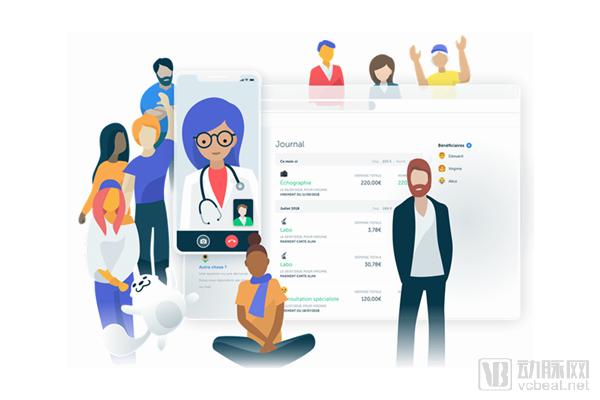
Image from Alan's official website
“Large insurance companies fail to adequately provide health insurance services to small and medium-sized enterprises (SMEs) and freelancers, whose insurance needs are often overlooked by these major insurers. However, they should not have to bear higher medical costs than larger companies simply because of their smaller size,” said Jean-Charles Samuelian, Co-founder and CEO of Alan.
Unlike large insurers that pursue multi-line diversification, Alan focuses on providing health insurance services tailored to small and medium-sized enterprises (SMEs) and freelancers, having sequentially launched medical insurance and life insurance products. These two types of insurance feature transparent pricing, relatively low premiums, and detailed reimbursement policies.
Health insurance includes Alan Green and Alan Blue. The former is a standard health insurance plan, with a monthly premium of €55 for employees under the age of 36. Premiums increase with employee age and salary; for example, the monthly premium for employees aged 56 and above is €85.
Alan Blue is a new product launched by Alan in July 2018, designed to provide premium health insurance services for companies seeking to retain talent through enhanced benefits. The premium for employees under the age of 36 is €70 per month, with rates increasing based on employee tenure and salary levels.
Employees covered by the Alan insurance purchased by their employer can also purchase Alan insurance for their partners at the same price, while premiums for children on the Alan platform are approximately €20 lower than those for adults.
The health insurance reimbursement coverage includes general practitioner consultations and care, hospitalization, eyewear costs, dental expenses, chronic disease management, and home assistance services. Depending on individual circumstances, Alan provides users with a reimbursement rate of 200% to 300%.
The price of Alan life insurance is primarily determined by employees' salaries. For instance, an employee with a monthly salary of €2,000 pays a monthly premium of €17; one earning €3,000 per month pays €26; and an employee with a monthly salary of €4,000 pays €39.
By launching both health insurance and life insurance simultaneously, Alan aims to consolidate users with diverse needs. Meanwhile, users can centralize different insurance categories on the Alan platform, thereby simplifying their insurance contracts. Furthermore, regardless of the type of insurance selected, insured individuals may withdraw at any time. Alan does not lock users into its platform for the long term by entering into long-term contracts with them.
Jean-Charles Samuelian, Co-founder and CEO of Alan, views the company as a technology firm: “We aim to build Europe’s Google or Apple by developing technologically advanced products and serving millions of users with a lean team.”
In addition to offering lower premiums than traditional insurers and providing flexible enrollment and withdrawal mechanisms, Alan’s innovation lies in its fully digital, 100% online operations. By optimizing the insurance purchase and claims processes and making reimbursement policies transparent, Alan helps employers reduce healthcare management costs.
In February 2017, Alan partnered with PayFit, a human resources management startup. Through PayFit’s digital online management platform, Alan enables corporate employers to integrate employee payroll with supplementary health insurance policies, thereby simplifying corporate payroll administration and HR processes.
Image from PayFit's official website
Alan offers two channels for user registration and insurance purchase: the PC platform and mobile devices. The Alan mobile application is compatible with both iOS and Android systems. Regardless of the channel chosen, the account registration process takes no more than five minutes.
When purchasing Alan insurance, users can send documents via smartphone or upload them through the PC website, and complete payment online. Alan automatically handles all paperwork and transmits data directly to the employer’s payroll management platform. Prior to medical visits, users can review information such as insurance plan coverage and reimbursement policies on the Alan platform. For medical expense reimbursement, users can submit medical bills to the Alan platform and communicate directly with Alan regarding claims; customer service representatives will respond within two minutes.
To create more user-friendly health insurance products, Alan has focused on enhancing its platform’s service capabilities and continuously optimizing service quality. In June 2018, Alan launched a free product called Alan Map. This care navigation tool allows users to find nearby general practitioners, dentists, ophthalmologists, or other specialists by entering their address, a doctor’s name, or a medical specialty into the search bar.
By collaborating with the official health directory of the French national healthcare system, Alan enables its users to locate more than 245,000 healthcare professionals on Alan Map, including general practitioners, cardiologists, dermatologists, and otorhinolaryngologists (ENT specialists), nearly half of whom provide pricing information. Currently, Alan Map lists details such as clinic names, addresses, phone numbers, operating hours, and average prices. Before seeking medical care, users can search for doctors who meet their expectations based on their needs and schedule appointments through Alan Map.
Certainly, Alan, which positions itself as a technology company, has goals that extend far beyond the realms of health insurance and life insurance. By collaborating with other enterprises, Alan is deliberately expanding its business within the healthcare sector.
In September 2018, Alan expanded its services beyond the health insurance sector by partnering with Livi, the French subsidiary of the telemedicine company Kry, to offer users remote medical consultation appointments. Alan’s customers can consult with doctors on the Livi platform between 7:00 AM and 11:00 PM, with all associated costs fully covered by Alan.
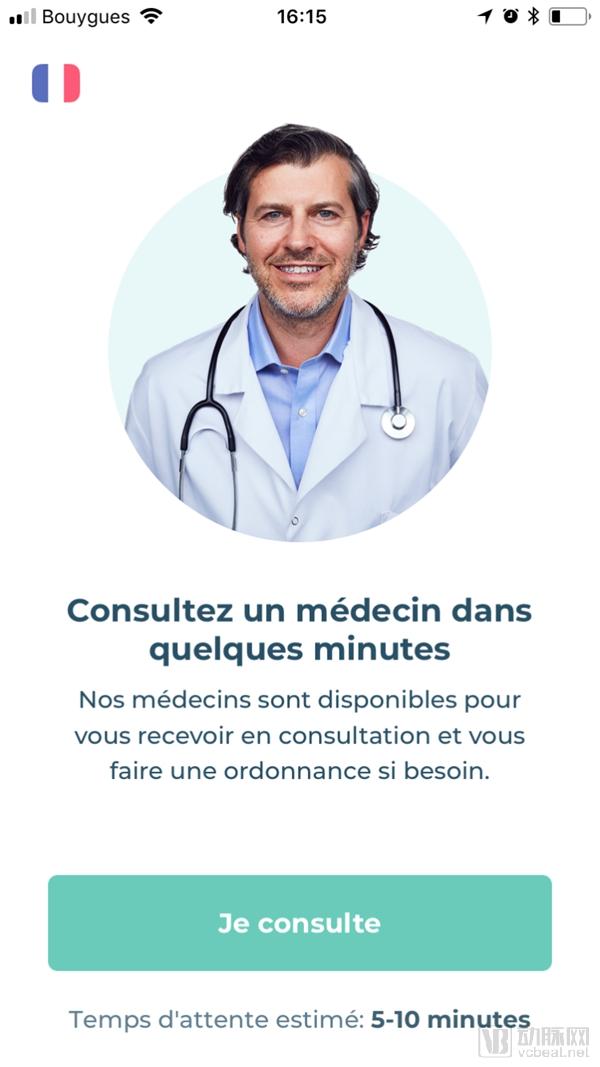
Alan embeds Livi’s video consultation feature into its mobile app (Image source: Alan blog)
In October 2018, Alan partnered with the meditation startup Petit Bambou. Alan’s users can subscribe to basic meditation courses for free via the Petit Bambou website or by downloading its mobile app. For access to additional meditation content, users are required to pay a monthly subscription fee of €7 or an annual fee of €60. However, the meditation app is not yet part of Alan’s standard service offerings.
From a timeline perspective, Alan has been in existence for only three years, yet it has already established a mature insurance service system and expanded its service scope through partnerships. Alan’s frequent moves in the French health insurance market are inseparable from the strong capital support it has received.
To date, Alan has completed three rounds of financing, raising a total of €75 million. In October 2016, less than eight months after its establishment, Alan secured €12 million in seed funding. This round was guaranteed, led, and participated in by the French national insurance company (CNP), with additional investments from Canada’s Power Financial, Partech Ventures, and individual entrepreneurs.
In April 2018, Alan completed a €23 million Series A financing round, marking the largest Series A funding in the history of the French insurance sector. The round was led by the renowned venture capital firm Index Ventures, with CNP as a participating investor. At that time, the company, which had been founded just two years earlier, was valued at between €100 million and €150 million.
In February 2019, just ten months after its previous funding round, Alan secured €40 million in Series B financing. Index Ventures once again led the round, with participation from existing investors CNP and Partech Ventures, as well as new investor DST Global Partners. Reportedly, Alan plans to use the funds to expand its market share in France, develop new services, and strengthen its market presence among small and medium-sized enterprises (SMEs) and self-employed individuals.
The deep involvement of national authoritative bodies is sufficient to demonstrate that Alan was highly regarded by various stakeholders from its inception, making the subsequent two rounds of financing a natural progression. Jean-Charles Samuelian, Co-founder and CEO of Alan, stated that the short interval between Series A and Series B funding was not due to any urgent capital shortage on Alan’s part, but rather because investors proactively approached Alan to inject additional capital.
The investors explained: “In France alone, the health insurance market is worth €36 billion. By delivering a superior health insurance experience, Alan has the potential to become the new market leader.”
Based on Alan’s performance metrics across various dimensions in 2018, the company is streamlining the health insurance process through digital online tools and has gained strong market traction.
In 2018, Alan covered more than 2,000 companies, with clients including My Little Paris, Le Slip Français, Ledger, and Converteo. The number of insured members on the platform increased from fewer than 5,000 to 27,000. The company’s revenue grew from under €3.5 million to €22 million, and it is expected to reach break-even in the near term. Alan’s workforce expanded from an initial 14 employees to 64, with plans to increase the headcount to 175 by the end of 2019.
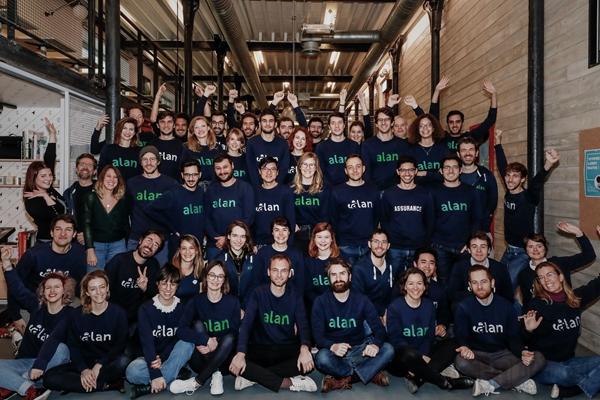
Image from Alan
Robust capital support and enthusiastic market response have given Alan significant confidence in its growth. Despite being a startup, Alan differentiates itself from—and competes with—global insurance giants such as AXA, Allianz, and Generali by adopting distinct market positioning and targeting specific customer segments, thereby striving to capture greater market share.
Currently, Alan primarily serves companies within France and plans to expand its business into other European markets in the future. Although the U.S. market offers numerous opportunities, it is also crowded with participants, resulting in intense competition. Jean-Charles Samuelian believes that developing in the European market will bring more opportunities to Alan. However, due to the differing regulatory frameworks across European countries, it will take Alan a considerable amount of time to fully capture the European market.
Similar to the situation in France’s traditional insurance industry, China’s traditional insurance sector is also grappling with sluggish growth. Meanwhile, due to the ineffective interoperability of medical data, health insurers and healthcare providers face significant coordination challenges. As a result, genuine health insurance products in China still suffer from limited variety, small scale, and inconvenient policy renewal processes.
However, these pain points have also spurred the emergence of a wave of internet insurance companies dedicated to addressing them. In the health insurance sector, China is now home to multiple companies committed to revolutionizing the industry, such asLeYue Health、Doubao.cometc.
Leyue Health is a direct-billing platform for commercial health insurance, meticulously developed by Leyue Information Technology (Shanghai) Co., Ltd. It upgrades the traditional offline claims process to an online system, eliminating the need for patients to photocopy documents, make repeated trips, or fill out forms. Instead, real-time settlement is available directly at hospital payment counters. This solution addresses the key pain points of commercial insurance policyholders—difficulty in filing claims, slow reimbursement, and cumbersome procedures—by letting data “do the running” so that patients have to “run less,” thereby significantly enhancing patient satisfaction.
According to Fu Xinhua, President of Leyue Health, the company has assisted the health and family planning commissions of more than ten provinces and cities, including Liaoning, Nanjing, Sichuan, Chongqing, and Guiyang, in developing and operating commercial insurance service platforms. Its network covers over 3,000 hospitals at Level II and above, securing a leading position in the industry in terms of both the number of connected hospitals and insurance companies.
Doubao.com, founded by Zhang Qike, has entered the insurance market through service innovation, committing to provide comprehensive protection services featuring “workplace-based marketing + intelligent operations” for insurance intermediaries, insurance companies, and users. It is understood that Doubao.com primarily serves small and medium-sized insurance companies and insurance intermediary firms by providing data-driven management systems and building digital assets. Through its one-stop SaaS platform, it helps partner institutions manage customers, expedite claims processing, and handle risk management, thereby enhancing the efficiency of policy issuance, renewals, and post-insurance services.
As of August 2018, the Doubao.com platform had served more than 100 insurance intermediaries and human resources agencies, with over 2 million policyholders insured, more than 7,000 corporate clients served, and 300,000 claims processed.
Zhang Qike, founder of Doubao.com, stated that China’s insurance services market has entered the 3.0 stage, necessitating a shift in its development model. Introducing third-party insurance intermediaries, in addition to policyholders and insurance companies, represents the future direction for industry development.