

Cardea Bio Secures $7.8M Series A1 Funding to Advance Graphene-Based Digital Biosensor Technology

Alexandria Venture Investments
Healthcare Venture Capital Firms

Cardea Bio
Biosensor Device Manufacturer

Serra Ventures
Venture Capital Firms
VCBeat (WeChat Official Account: vcbeat) has learned that on March 22, 2019, Cardea Bio, a world-leading manufacturer of biosensor devices, announced the completion of an $7.8 million Series A1 financing round. The funds will be used to accelerate the development and commercialization of Cardea Bio’s graphene-based digital biosensor technology, expand the company’s technical team, and establish new strategic partnerships through the Cardea Innovation Partner Program.
This funding round was led by Alexandria Venture Investments, with participation from Serra Ventures. Jonathan Kabakoff, Senior Director of Technology at Alexandria Venture Investments, has joined the board of directors of Cardea Bio, serving alongside Tim Hoerr, CEO and Managing Partner of early-stage investor Serra Ventures. To date, Alexandria Venture Investments has completed 10 investments totaling $528 million this year, all of which were directed toward the biomedical sector.
Headquartered in San Diego, USA, Cardea Bio is a world-leading manufacturer and developer of graphene-based digital biosensor hardware, software, and molecular foundational testing facilities. Cardea Bio’s biosensors can be applied to any biological system, making this technology an ideal channel for developing the future Internet of Medical Things (IoMT). Cardea Bio’s mission is to transform the life sciences and healthcare industries and create new products and solutions for them through collaborations with innovative partners.
Cardea Bio will leverage this new funding to establish partnerships with companies and scientists in the medical field through its Innovation Partner Program, investigating the applicability of its biosensor platform across diverse sectors such as agriculture, industry, and clinical research. Pharmaceutical companies are early adopters of this technology, utilizing Cardea Bio’s biosensor platform as a research tool for characterizing biomolecules. Produced and marketed under Cardea Bio’s sub-brand, Nanomed, the biosensor system is designed to assist pharmaceutical companies in evaluating early-stage therapeutic candidates while providing expert feedback to Cardea Bio.
Michael Heltzen, CEO of Cardea Bio, stated, “We are fortunate to have established a genuine partnership with Jonathan and the investment team at Alexandria Venture Investments. Jonathan possesses a profound understanding of the life sciences industry, and we are honored to have him join the Cardea Bio Board of Directors. The financial support from our investors, coupled with their trust in Cardea Bio’s compelling vision and cutting-edge technology, has enabled us to expand our technologically advanced team, cultivate innovative strategic alliances, and accelerate the commercialization of our graphene-based digital biosensor products. Together with Cardea Bio, all our partners will pioneer the Internet of Biology, making the connectivity and extraction of biological information as simple as a Google search.”
Cardea Bio’s graphene-based ultra-sensitive biosensors can directly measure and digitize interactions between biomolecules. Unlike silicon, graphene is stable in both aqueous and air environments, allowing it to come into direct contact with biomolecules such as proteins, RNA, and DNA within electronic circuits. Biomolecules possess complex intrinsic polarizability; when they bind or interact with other molecules, their electronic states undergo subtle changes. Cardea Bio’s biosensors detect these changes and immediately transmit digital signals for computational analysis.
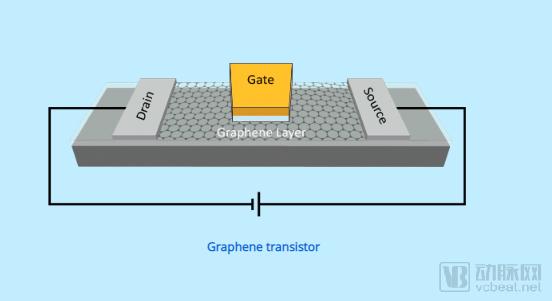
Principles of Graphene Sensor Technology (Image from the official website)
Jonathan Kabakoff stated, “Cardea Bio’s technology is backed by strong foundational patents and has the potential to address a major bottleneck in the current field of biometrics. It replaces complex reagents and optical systems with electronic sensors for on-site molecular testing, which can be deployed in any research environment. These electronic sensors not only enhance molecular sensitivity and reduce turnaround time for results but also provide real-time feedback to scientists in the medical field, enabling them to gain deeper and clearer insights into the biological world around us.”
About Alexandria Venture Investments
Alexandria Venture Investments, established in 1996, is the strategic venture capital arm of Alexandria Real Estate Equities. Alexandria Venture Investments focuses on investing in innovative and breakthrough discoveries in the fields of biopharmaceuticals, diagnostics, research tools, agricultural technology, and technology. Leveraging its extensive experience and deep understanding of the life sciences and technology industries, long-standing relationships with leading investors, and a world-class international scientific advisory network, Alexandria Venture Investments provides funding to companies at the seed, early, and growth stages.
About Serra Ventures
Serra Ventures is a private equity and venture capital firm that specializes in investing in companies across various life stages, including seed, startup, early to mature, mid-stage venture, late-stage venture, emerging growth, and later stages. Serra Ventures seeks to invest in emerging technologies, particularly in the fields of information technology and software, equipment and instruments, materials and agricultural technology, life sciences, medical devices, clean materials technology, and agri-industrial software. With over 30 years of activity in the Midwest venture capital ecosystem and West Coast markets, Serra Ventures believes that the tech hubs in the Midwest and on the West Coast will create unique venture capital opportunities over the next 10 to 20 years.
(Compiled by Wang Shuijing)