

Personalized Neoantigen-Based Cancer Immunotherapy Showcases Clinical Progress at 2019 CSCO Immuno-Oncology Summit
VCBeat News learned that the CSCO Summit on Tumor Immunotherapy, hosted by the Chinese Society of Clinical Oncology (CSCO), opened in Shanghai on March 22–23, 2019. The summit gathered experts and scholars from around the world in the field of tumor immunology to share the latest advances in immunotherapy, ranging from translational research to clinical application, with a particular focus on solid tumors with high incidence rates in the Asia-Pacific region.
On the afternoon of the 22nd, Dr. Li Zhenli from Mengchao Hepatobiliary Hospital of Fujian Medical University delivered a poster presentation titled “Correlation Between Neoantigen Burden and Immune Heterogeneity in Hepatocellular Carcinoma.” The presentation primarily highlighted the advantages of neoantigen-based cancer immunotherapy over tumor-associated antigen therapies in terms of drug tolerance, as well as research progress on multi-target treatments that are specific to tumor tissue and exhibit reduced toxicity to normal tissues.
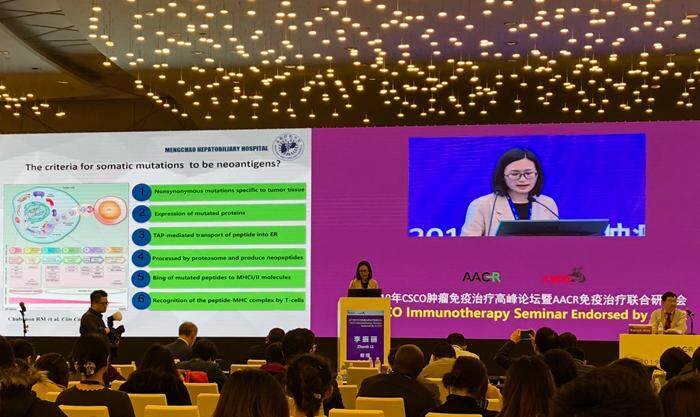
Dr. Li Zhenli Delivers Poster Presentation at the CSCO Forum
Meanwhile, Dr. Li Zhenli shared with attendees during the poster session a case study on the clinical research of personalized tumor vaccines conducted jointly by Mengchao Hepatobiliary Hospital of Fujian Medical University and Geyuan Zhishan (Shanghai) Biotechnology Co., Ltd. By leveraging the hospital’s extensive in-depth research and sample data, along with Geyuan Zhishan’s personalized tumor vaccine and deep learning platform technologies, the clinical trials have gradually revealed that personalized immunotherapy based on tumor neoantigens may emerge as an effective new strategy for treating various cancers, including liver cancer, cholangiocarcinoma, and renal cell carcinoma.
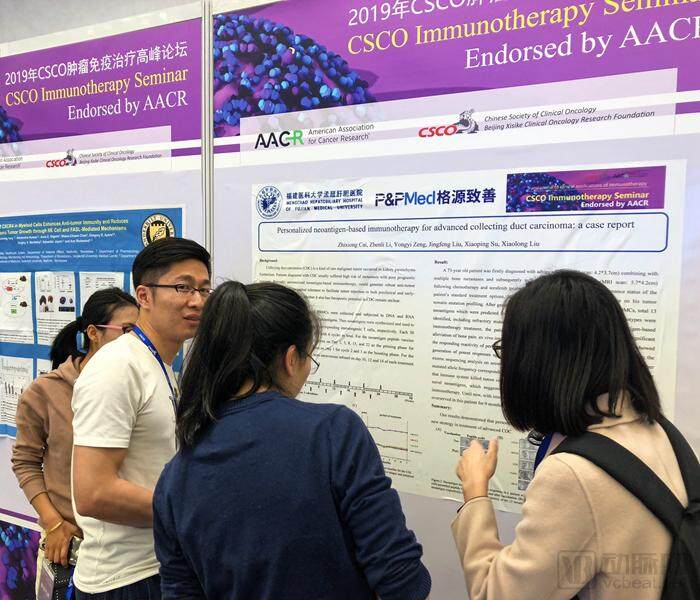
Dr. Li Zhenli is discussing posters with attendees
Since the 2018 Nobel Prize in Physiology or Medicine was awarded to James Allison and Tasuku Honjo for their “novel cancer therapy based on negative immune regulation,” the global field of tumor immunotherapy has become increasingly vibrant. To date, multiple immune checkpoint inhibitors have been approved in China, leading 2018 to be regarded as “Year One of Tumor Immunotherapy in China.”
As the first biomedical company in China to center its core technology on the research and application of personalized cancer vaccines, Dr. Su Xiaoping, Chief Scientist at Geyuan Zhishan (Shanghai) Biotechnology Co., Ltd., stated after the CSCO Forum: “Cancer vaccines have been studied for two decades as a crucial component of tumor immunotherapy, yet personalized cancer vaccines remain in their early stages. This is a highly complex and high-barrier technology that integrates precise genetic testing with tumor immunotherapy. It leverages tumor gene mutations as the entry point for vaccine design, aiming to stimulate patients’ autologous immunity to eliminate cancer cells. Although personalized cancer vaccines are still under investigation, multiple global clinical studies have demonstrated that, by targeting neoantigens generated from tumor mutations, they offer precise targeting and minimal side effects. These advantages have also been positively validated in our clinical trials conducted in collaboration with Mengchao Hepatobiliary Hospital of Fujian Medical University and several other centers.”
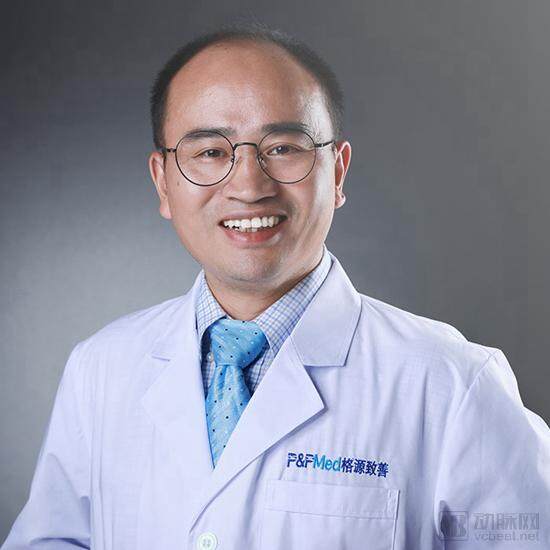
Dr. Su Xiaoping, Chief Scientist of Geyuan Zhishan
Notably, Geyuan Zhishan’s independently developed TumorNeo™ AI-based prediction and optimization system for neoantigens and the TumorVac™ high-efficiency in vitro evaluation platform for neoantigens have played a pivotal role in clinical trials. Leveraging machine learning assistance, these technologies enable more efficient, precise, and safe development of personalized tumor peptide vaccines tailored to individual patients and various cancer types. Currently, Geyuan Zhishan holds and has filed multiple intellectual property rights and invention patents.
Personalized cancer vaccines remain in the experimental and exploratory stages. In addition to Mengchao Hepatobiliary Hospital of Fujian Medical University, Geyuan Zhishan has collaborated with major Grade-A tertiary hospitals in China, such as Shanghai East Hospital affiliated with Tongji University and the Second Affiliated Hospital of Wenzhou Medical University, as well as internationally renowned pharmaceutical companies. These partnerships are conducting clinical studies on various cancer types, including hepatobiliary cancers, lung cancer, and gastrointestinal cancers, with the aim of providing tumor patients with more comprehensive and precise immuno-oncology treatment solutions.