

Masimo Receives FDA 510(k) Clearance for Rad-67 Pulse CO-Oximeter System for Spot-Check SpO2 and Noninvasive Hemoglobin Monitoring

Masimo
Developer, Manufacturer, and Seller of Medical Monitoring Instruments
VCBeat (WeChat Official Account: vcbeat) has learned that medical device company Masimo announced on March 25 that its Rad-67 Pulse CO-Oximeter system had received FDA 510(k) clearance.
Masimo Corporation, founded in Irvine, California, in 1989, is a publicly traded medical device company. The company improves patient outcomes and reduces care costs by developing, manufacturing, and selling non-invasive patient monitoring products. As a global leader in innovative non-invasive monitoring technologies, Masimo provides monitoring solutions for patients, including monitors and sensors designed for repeated use on individual patients. Its Masimo SET measurement technology addresses the primary limitations of traditional pulse oximetry. Additionally, the company offers remote alarm monitoring solutions.
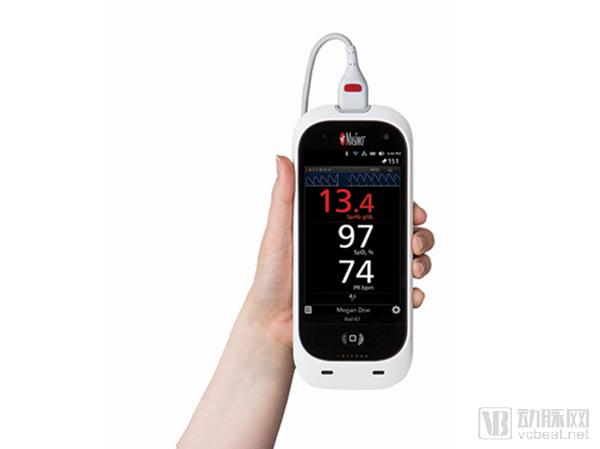
Masimo Rad-67 (Image from the official website)
The Rad-67 serves as a single-device solution for clinicians across various clinical and non-clinical settings, such as emergency departments, preoperative/postoperative environments, and physician offices, by providing portable spot-check measurements of blood oxygen saturation and non-invasive hemoglobin. Powered by a rechargeable battery, the Rad-67 offers up to six hours of continuous operation. Additionally, it features a high-resolution color display with touchscreen navigation that automatically adjusts brightness to optimize visibility in diverse care settings. During next-generation non-invasive hemoglobin (SpHb) monitoring, the Rad-67’s feedback screen provides real-time user guidance, while its slim sensor connector port delivers tactile feedback upon proper connection.
Rad-67 provides historical data review and unique patient identifiers directly on the device to improve system documentation and workflow. Its built-in wireless connectivity enables transmission of results to point-of-care printers, helping to reduce transcription errors and prevent incomplete medical records.
Dr. Andrew Klein of the Royal Papworth Hospital in Cambridge, UK, stated, “Rad-67 is very easy to use and delivers rapid results, providing us with quick turnaround times during busy preoperative periods. It helps us identify patients who may require further testing, making it highly practical.”
Joe Kiani, Founder and CEO of the Company, stated, “We are proud to launch Rad-67 in the United States. This technology represents a significant advancement over the non-invasive monitoring technology we invented a decade ago, and we look forward to its continued improvement.”
Additionally, the company stated that the SpHb monitoring technology of the Rad-67 Pulse CO-Oximeter system is not suitable for pediatric patients, pregnant women, or patients with renal disease, and it cannot replace laboratory blood tests. Blood samples should be analyzed using laboratory instruments before making clinical decisions.
Notably, earlier this month, the company’s next-generation SedLine brain function monitor, designed for pediatric patients, received CE certification from the European Union.
(Compiled by Li Chengping)