

Kactus Biosystems Files IPO Prospectus: Addressing Unmet Protein Needs in Antibody Drug Discovery
The last time I spoke with Wang Gang was in October 2018, just after he had completed the Chicago Marathon, finishing the full 42.195-kilometer course in 3 hours, 12 minutes, and 30 seconds. Although this result still lagged behind that of professional marathon runners, it represented a top-tier performance among amateur athletes. Over the years, Wang has treated his twice-weekly, professional-grade high-intensity endurance training sessions and race participation as a form of self-cultivation. He told a reporter from VCBeat New Medicine that entrepreneurship is like running a marathon: the start is exhilarating, followed by fatigue, confusion, and pain; the entire journey is fraught with uncertainty and goes against human nature, yet the joy experienced at the moment of crossing the finish line is immensely captivating.
In March 2018, Wang Gang and Dr. Manhee Suh co-founded Kactus Biosystems in Zhangjiang Pharma Valley, Shanghai. Kactus is an R&D-driven innovative company specializing in protein and antibody tools, focusing on addressing the unmet needs for recombinant proteins among global innovative drug developers. Specifically, Kactus Biosystems provides high-activity recombinant proteins based on unique structural biology designs and innovative monoclonal antibody library screening technologies for applications including antibody drug discovery, cell therapy, clinical diagnostics, mRNA cancer vaccines, and MHC neoantigens.
Over the past year since its establishment, Kactus Biosystems has gained recognition from both the capital market and its customers. After securing RMB 6 million in angel investment at its inception, Kactus Biosystems announced in late 2018 the completion of a RMB 30 million Pre-A financing round led by Dehui Capital, aimed at building a protein target research and development platform. According to Wang Gang, Kactus Biosystems has entered into CRO collaborations with more than 50 domestic innovative pharmaceutical companies, including leading biotechnology firms specializing in cutting-edge therapeutic technologies, with delivered order values reaching millions of yuan. Furthermore, Kactus Biosystems has established a catalog library covering nearly 100 target proteins, focusing on its flagship products such as the transmembrane proteins CD20 and Claudin 18.2, MHC complexes targeting intracellular antigens, and a series of trimeric proteins with enhanced cellular activity.
Wang Gang holds a master’s degree in Biology from Fudan University, with formal academic training in the field. However, unlike most STEM professionals who tend to focus on details, his MBA business training at CEIBS (China Europe International Business School), combined with nearly a decade of commercial and management experience at Agilent Technologies, has long accustomed him to thinking more comprehensively from a product manager’s perspective. Wang Gang firmly believes that the rapid growth of Kactus Biosystems is rooted in its strategic selection of niche market segments, underpinned by precise market analysis.
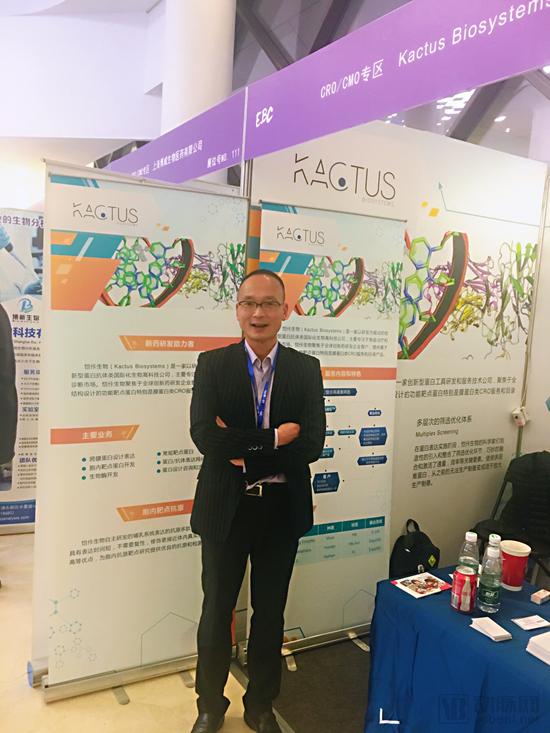
Wang Gang, Co-founder and CEO of Kactus Biosystems
At the outset of the venture, Wang Gang clarified to his team two key principles for selecting the core business focus: first, target sunrise industries characterized by the annual emergence of numerous new technologies and new customers; second, address substantial unmet needs within the industry that can be resolved by the team’s existing technical capabilities. Since 2013, capital and talent in China have converged on the field of new drug development at an exponential rate; however, the entire R&D value chain remains inefficiently integrated, with significant deficiencies evident even in the niche area of target proteins.
For instance, antigen activity may be suboptimal, resulting in detectable binding between the antigen and antibody in ELISA (enzyme-linked immunosorbent assay) but poor binding activity at the cellular level. In other cases, the antigen fails to elicit an effective immune response, making it impossible to obtain antibodies with sufficient affinity, or soluble antigens for transmembrane proteins (such as GPCRs) are simply unavailable on the market. These shortcomings undoubtedly constrain the progress of new drug development in China; however, the lack of access to high-quality target proteins is actually a challenge faced by drug development worldwide.
Kactus Biosystems has targeted this market gap by focusing on the market for target proteins used in the early discovery of innovative antibody drugs and in cell therapies.
Dr. Manhee Suh, Chief Technology Officer of Kactus Biosystems, is a Korean-American expert in protein structure who spent many years in the U.S. industrial sector developing bioprotease and vaccine projects. Prior to entering industry, Dr. Suh conducted over ten years of research on protein crystallization and membrane proteins at Cornell University. As a co-founder of Kactus Biosystems, his professional expertise and technical accumulation have helped translate various technological concepts into tangible products.
At Kactus Biosystems, Manhee led the R&D team in spending over half a year to establish SAMS (Structure-Aided Design and Multiplex Screening), an innovative platform dedicated to the development of antigen proteins for challenging targets. Leveraging bioinformatics and computational protein structure modeling, the SAMS platform enables customized design of each protein based on clients’ specific applications and facilitates simultaneous construction of multiple variants for the same protein. By employing a proprietary protein expression screening method, SAMS rapidly identifies clones with optimal expression levels, thereby saving time for users while significantly enhancing success rates and yields.
According to Wang Gang, Kactus Biosystems has developed the “Three Musketeers” Trimer protein series, including LIGHT and CD40L, which effectively resolves the dilemma where target proteins demonstrate binding activity in ELISA assays but lack biological activity in cellular assays. Furthermore, Kactus Biosystems’ independently developed antigen peptide–MHC complexes, expressed in mammalian systems, offer advantages such as short expression times, no requirement for refolding, post-translational modifications that more closely mimic in vivo conditions, and high activity, thereby providing superior antigens and detection tools for intracellular antigen target research. Meanwhile, Kactus Biosystems also possesses the capability to develop complex biological enzymes, such as the Vaccinia virus Capping Enzyme, which has significant applications in the field of mRNA immunotherapy and therapeutics.
“Every niche market is now saturated with competition; the key differentiator among enterprises lies in strategic capability and execution, where sound judgment is paramount.” Wang Gang believes that for biotechnology companies, developing competitive and differentiated products is of utmost importance, noting that “the success or failure of a product can even determine the fate of the company.”
Wang Gang has even applied the experience he gained while managing global business unit product lines at Agilent to refining every detail of Kactus Biosystems’ products. From market research and product positioning, collaborating with the R&D team to develop prototypes, to financial analysis, customer trial feedback, go-to-market channel strategies, product launch, and commercialization, he strives for excellence in every step. “This approach may lengthen the R&D cycle, but it enables us to create truly premium products. Our goal is to deliver greater value to customers. I believe the greatest waste for a company is failing to focus and ending up with a portfolio of unsellable products—a pitfall that Kactus aims to avoid as much as possible.” Kactus Biosystems has established a Product Strategy Advisory Committee composed of senior scientists from leading antibody drug development companies who are also its customers. This committee regularly provides product feedback, insights into future technological trends, and market demand information, thereby helping Kactus make more objective, forward-looking decisions on product R&D and technology investments.
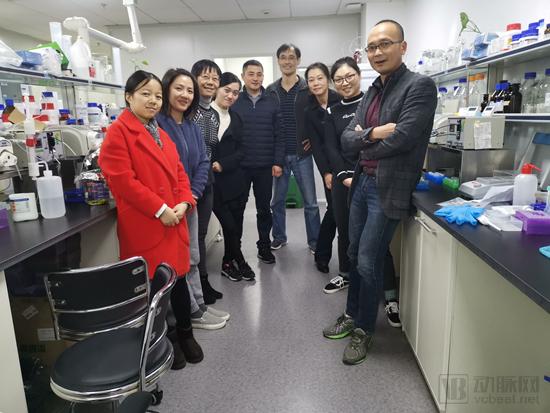
Kactus Biosystems R&D Team. Dr. Manhee is fourth from the right.
Using technology to meet product design requirements has always been the principle adhered to by Wang Gang and Manhee. Currently, Kactus Biosystems has 20 full-time employees, 16 of whom are dedicated to research and development. “As long as the products are made well enough and have distinctive features, subsequent marketing and scaling up become relatively straightforward.” In fact, as a startup, Kactus Biosystems was able to establish initial trust with users precisely thanks to the technical expertise demonstrated by its technical staff during user interactions.
Regarding the reasons behind Kactus Biosystems’ rapid market expansion, Wang Gang believes that, in addition to the advantages of its products and technology, the team’s ability to respond promptly and follow up on user feedback is also indispensable.
Wang Gang told VCBeat’s New Medicine reporter that in the initial stage of business development, he opted for a direct sales strategy to grasp customers’ real needs through face-to-face communication with end users. Against the backdrop of the booming domestic biopharmaceutical industry, the pursuit of speed and efficiency is the most prominent characteristic Wang Gang attributes to Kactus Biosystems’ user profile. However, membrane protein R&D is not an overnight endeavor, and there are often significant differences in experimental conditions and researchers’ operational habits on the user side, necessitating repeated adjustments to the product portfolio.
Taking the popular targets CD20 and Claudin18.2 as examples, when Kactus Biosystems launched its first target protein, users provided varied feedback. However, Manhee believed that a good product must have broad applicability and high stability, so he led the R&D team to respond quickly. Through multiple rounds of protein structure modification and optimization, Manhee and his colleagues continuously expressed and purified small test samples for user trials. After eight iterations of updates and optimizations, the final product became suitable for most customers with standard experimental conditions. Furthermore, once the manufacturing process was stabilized, production yield and cost control ensured that the price remained within customers’ affordability.
It is also due to Kactus Biosystems’ customer-centric approach and world-class protein R&D capabilities that clients are willing to provide opportunities for trial and error, ultimately enabling the resolution of highly challenging technical issues. “The sole criterion for evaluating the success of a biotechnology company is customer satisfaction and market share.” Therefore, Wang Gang sets extremely high standards for the comprehensive qualities of his team members. He expects them to be mentally mature individuals with strong self-drive. The company emphasizes management by objectives and direct communication. Notably, it does not provide private offices; instead, all management personnel work alongside employees in open-plan areas. This practice reflects the company’s American-style corporate culture, which underscores equality, respect, transparency, and collaborative communication.
By the end of this year, Wang Gang plans to establish a Kactus Biosystems office in Boston, extending its reach to more biopharmaceutical companies worldwide and advancing its globalization strategy through an initial international product launch. In preparation for future expansion into larger markets, Kactus Biosystems is collaborating with ecosystem partners to advance several self-developed innovative therapeutic and diagnostic targets into clinical development.