

Sanofi CEO Olivier Brandicourt Calls for Accelerated Global Collaboration to Support World-Class Pharmaceutical Innovation in China

Sanofi
Pharmaceutical Manufacturer
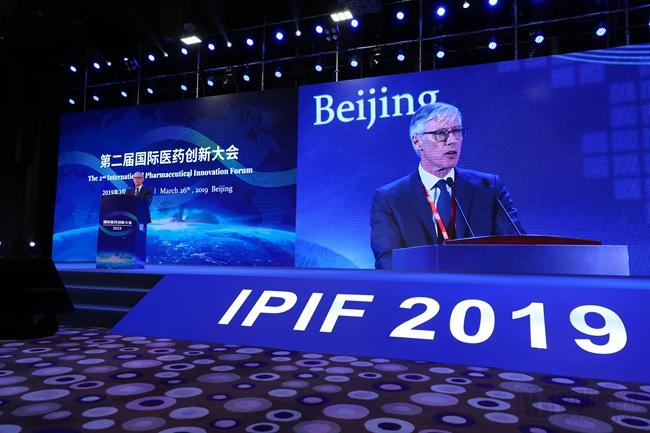
On March 26, the Second International Pharmaceutical Innovation Forum (IPIF) was held in Beijing. The International Pharmaceutical Innovation Forum (IPIF) is a biennial international conference initiated by the R&D-Based Pharmaceutical Association Committee (RDPAC) of the China Association of Enterprises with Foreign Investment. It aims to create a high-level dialogue and collaboration platform among leaders of China’s healthcare innovation ecosystem, with the shared goal of accelerating world-class innovation in China to better meet the needs of patients worldwide. At this year’s forum, participants called for joint action to accelerate world-class innovation in China, thereby saving lives and improving the quality of life for patients around the globe.
Olivier Brandicourt, CEO of Sanofi and Chairman of the Pharmaceutical Research and Manufacturers of America (PhRMA), delivered a keynote address at the conference. He welcomed the series of policies and healthcare reforms recently introduced in China. “From 2000 to 2016, Chinese authorities approved approximately 100 new drugs for marketing. In 2018 alone, the National Medical Products Administration of China approved 48 drugs, a figure nearly on par with the annual approvals by the European Medicines Agency or the U.S. Food and Drug Administration. More importantly, these numbers mean that millions of Chinese patients can access cutting-edge innovative therapies for conditions such as cancer, rare diseases, and infectious diseases.”
Bai Liwei also praised the Chinese government for its increasingly important role in the global medical innovation ecosystem. He emphasized, “As the development of innovative drugs has become a global and even more complex endeavor, the fragmented, country-by-country approach is no longer viable. I firmly believe that international collaboration is a key factor in driving world-class innovations for Chinese patients in the future.”
This article is compiled from Bai Liwei’s on-site remarks.
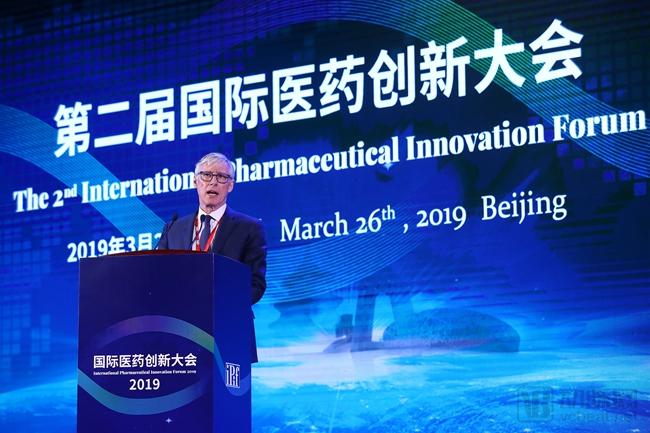
Sanofi CEO and Chair of the Pharmaceutical Research and Manufacturers of America (PhRMA), Olivier Bogillot
Deepening Development of China's Healthcare Reform
At the end of 2016, the Central Committee of the Communist Party of China and the State Council officially issued the Outline of the “Healthy China 2030” Plan, clearly defining its goal as: to stimulate new momentum for healthcare reform in China. Today, the vision of Healthy China is taking shape, with the Chinese government making significant progress in implementing innovative policies across the entire healthcare system.
China has recently introduced a series of policies to strengthen the review and approval of innovative drugs. From 2000 to 2016, Chinese authorities approved approximately 100 new drugs for market launch. In 2018 alone, the National Medical Products Administration (NMPA) of China approved 48 drugs, a figure nearly on par with the annual approvals by the European Medicines Agency (EMA) or the U.S. Food and Drug Administration (FDA). More importantly, these numbers signify that millions of Chinese patients now have access to cutting-edge innovative therapies for conditions such as cancer, rare diseases, and infectious diseases.
China’s initiatives in major systemic reforms last year were equally impressive. The establishment of the National Health Commission, the National Medical Products Administration, and the National Healthcare Security Administration has clarified functional responsibilities and enhanced predictability, all while maintaining the pace of regulatory approvals—a development highly worthy of commendation.
Key Success Factors: Coordinating Health Policies and Strengthening International Cooperation
The Chinese government’s ability to consistently and coherently advance the drafting, adoption, and implementation of health policies has been a key factor enabling China to rapidly catch up with other developed economies. By prioritizing public health as a strategic priority and formulating its healthcare reform agenda under the framework of “Healthy China 2030,” the Chinese government has demonstrated to the world the significant strategic importance of the health industry to a nation’s economic development.
One of the key initiatives in this regard is the government’s efforts to strengthen intellectual property protection and reimbursement systems. Consistent, stable policies and reforms that reach top international standards will ultimately benefit patients and drive China’s participation in global biopharmaceutical innovation.
Beyond this series of ambitious healthcare reforms, I would like to specifically commend the Chinese government for its increasingly pivotal role in the global medical innovation ecosystem. Drawing on my experience in the biopharmaceutical industry, I firmly believe that international collaboration is a critical driver for advancing world-class innovations for patients in China.
On a global scale, we are undergoing a monumental transformation in healthcare. The foundational work we conducted two to three decades ago in gene therapy, immunology, and next-generation biologics has now come to fruition.
This new era of pharmaceuticals is still in its infancy, and regulatory systems around the world must keep pace with the speed and direction of scientific discoveries. As the development of innovative drugs has become a global—and even more complex—endeavor, the fragmented, country-by-country approach is no longer viable. In this context, China’s accession to the Management Committee of the International Council for Harmonisation of Technical Requirements for Pharmaceuticals for Human Use (ICH) in 2018 marked a significant step toward modernizing its regulatory framework and integrating itself into the new wave of healthcare innovation.
The National Medical Products Administration (NMPA) has recently established an ICH Office within its Center for Drug Evaluation, demonstrating China’s commitment to aligning with international standards and practices. Today, I wish to emphasize through this conference that, as the pharmaceutical industry, we fully support China’s efforts in implementing ICH guidelines.
China's Regulatory Reform: Achievements and Challenges
Although China’s ICH membership is still relatively new, we have observed an acceleration in the technical review and approval of pharmaceuticals, demonstrating that alignment with international regulatory standards has become a key strategy for China to provide its population with world-class healthcare.
The National Medical Products Administration (NMPA) previously issued the new “60-day” rule for the review and approval of drug clinical trials, as well as the Technical Guidelines for Accepting Overseas Clinical Trial Data for Drugs, marking a significant step forward in enabling multinational pharmaceutical companies to participate in China’s development initiatives.
However, these efforts to align the development of China’s pharmaceutical industry with global standards remain constrained by other issues. For instance, regulatory reforms in areas such as clinical trial data verification and the Chinese Pharmacopoeia still need to be harmonized with international practices. In particular, the verification of clinical trial data remains a key bottleneck for China in reducing overall review timelines. If we are to accelerate drug development, we must work together to address these challenges.
As participants in the pharmaceutical industry, we are also eager to establish collaborative partnerships with local stakeholders, fostering mutual learning and knowledge sharing. For instance, here in Beijing, where this conference is being held, the Pharmaceutical Research and Manufacturers of America (PhRMA) has engaged in a highly successful collaboration with Peking University. Together with other partners, they have jointly established an APEC Center of Excellence for Regulatory Science. This platform enables PhRMA to conduct training programs on cross-regional clinical trials and clinical practices. Later this year, Peking University will expand this program to incorporate international guidelines on pharmacovigilance and safety reporting.
# Looking Ahead
In the coming years, China’s ability to successfully deliver world-class innovative drugs to patients will largely depend on how quickly it can adapt and align with current international standards. Equally important is the need for Chinese regulatory authorities to expand their regulatory frameworks to incorporate cutting-edge innovations.
Let us take real-world evidence as an example. Every pharmaceutical company is exploring the use of real-world data in research on new drugs and marketed products. The potential applications of such data are diverse and growing exponentially, whether in identifying unmet medical needs, designing clinical trials, or conducting pharmacovigilance. The advent of artificial intelligence has further accelerated this development.
Despite the optimism of pharmaceutical companies, it is understandable that we remain cautious about the full adoption of real-world evidence until regulatory measures become more predictable, making global harmonization of standards essential. Regulators worldwide are still exploring how to use these data as a basis for regulatory decision-making. Establishing a global standard now, rather than individual national or regional standards, will ensure that regulators and drug developers work toward the same goal.
Similar collaborative frameworks can also be adopted for topics such as gene and cell therapies or digital health solutions. For all these emerging areas of regulatory science, I firmly believe that the key to success lies in the increasingly strengthened collaboration and dialogue among regulatory agencies, industry, and other stakeholders.
Conclusion: Many hands make light work.
Over the past 30 years, my experience as a leader in the biopharmaceutical industry has taught me much, particularly that no single stakeholder—whether government, regulatory agencies, or the industry itself—can independently resolve the inherent complexities within the healthcare system.
Looking ahead, the key to our success depends largely on our ability to coordinate and share lessons learned, as well as our capacity to move forward together as a global community. Many hands make light work; we are stronger when we unite, driven by a shared mission: to transform the lives of thousands upon thousands of people.
Policy issues such as international cooperation, regulatory standards, and access to innovation or intellectual property are central to global healthcare innovation. I look forward to listening to and discussing innovative policy solutions that will help all stakeholders in the healthcare system move together toward the goals of “Healthy China 2030.”