

Huami Releases First Cardiac Health White Paper: Both Insufficient and Excessive Sleep Harm Heart Health
In recent years, with the improvement in living standards driven by China’s rapid economic development and the intensifying social pressures during the transitional period, cardiovascular diseases have surpassed cancer to become the leading cause of death and disability among Chinese people, both in urban and rural areas. According to estimates from the 2017 Report on Cardiovascular Diseases in China, the number of individuals with cardiovascular disease in China has reached 290 million, with both prevalence and mortality rates continuing to rise.
On March 27, VCBeat (WeChat Official Account: vcbeat) learned that Huami Technology (NYSE: HMI), a global leader in smart wearable devices, officially released its inaugural White Paper on Heart Health. As early as 2017, Huami Technology pioneered the launch of the Amazfit Health Band 1, which was upgraded to the 1S version in September 2018. Leveraging built-in ECG sensors and high-precision photoplethysmography (PPG) optical sensors, along with AI algorithms such as neural networks, Huami Technology enables 24/7 monitoring of heart health.
As of mid-December 2018, Huami’s health cloud services had collected and analyzed more than 11.95 million electrocardiogram (ECG) data records. The white paper analyzes factors that may affect heart health from multiple dimensions, including sleep, diet, body composition, and climate, and presents the findings in visual formats. It aims to help users gain a deeper understanding of heart health knowledge and improve their cardiovascular well-being through lifestyle adjustments.
Heart Health Barometer—Average Sleep Heart Rate
Meaning of Average Sleep Heart RateAverage sleep heart rate refers to the mean heart rate during nighttime sleep. Research has found that average sleep heart rate is the most predictive heart rate metric for cardiovascular mortality and all-cause mortality, earning it the title of “barometer of heart health.” A higher average sleep heart rate is associated with an increased risk of cardiovascular disease incidence and all-cause mortality.
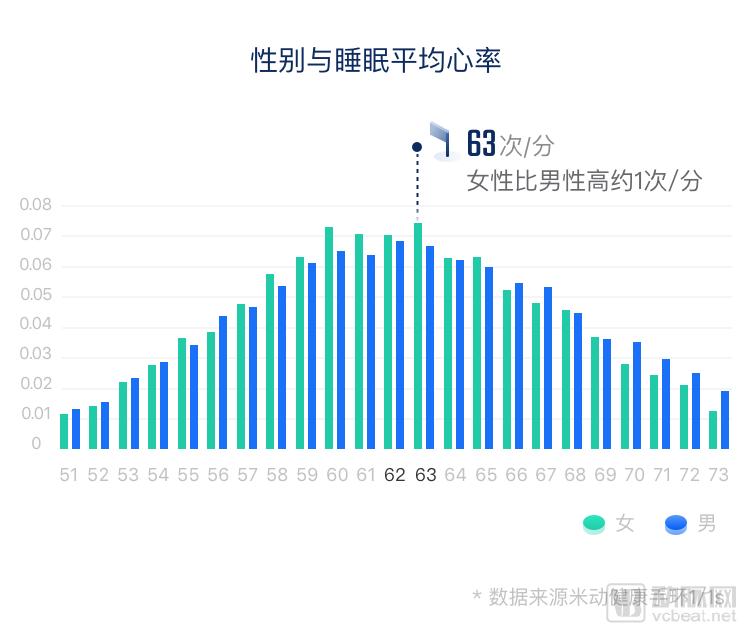
Relevant studies indicate that once the average sleep heart rate exceeds 66 beats per minute (bpm), the risk of cardiovascular disease increases significantly, warranting close attention. Big data from Amazfit shows that the average sleep heart rate of Amazfit Health Band users is 63.26 bpm, with all values falling within the healthy range. Among them, the most common average sleep heart rate for men is 62 bpm, while women’s average is approximately 1 bpm higher than that of men.
Both Insufficient and Excessive Sleep Are Detrimental to Heart Health
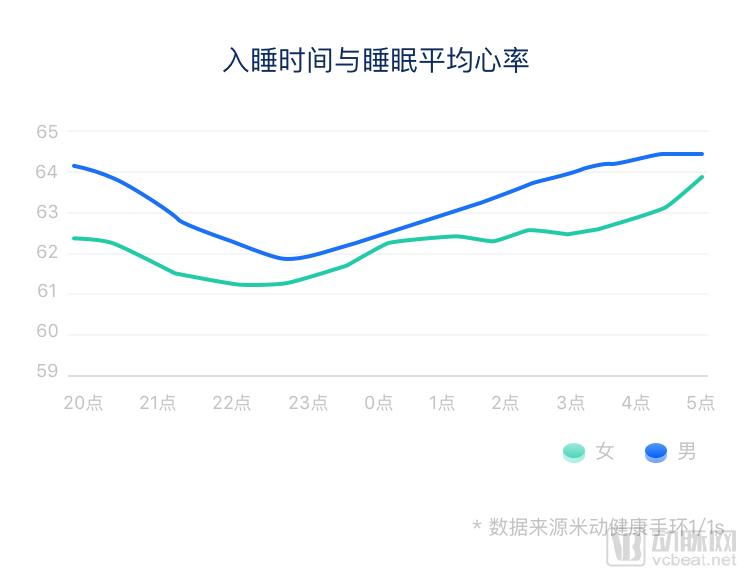
Is Going to Bed Early and Waking Up Early Good for the Heart? Avoiding late nights and going to bed moderately early is beneficial for heart health, but going to bed too early may not be. According to Mi Motion big data, men who fall asleep between 10:30 PM and 11:30 PM have the lowest average heart rate during sleep, while women who fall asleep between 10:00 PM and 11:00 PM have the lowest average heart rate during sleep. For those who go to bed before 10:00 PM, heart rates are relatively high regardless of gender. It is recommended to scientifically adjust bedtime based on one’s own biological clock.
Data also show that the average heart rate during sleep is lowest when both men and women sleep for approximately 7 hours. Sleeping less than 6 hours or more than 9 hours significantly increases the average heart rate during sleep, indicating that both excessive sleep and insufficient sleep are detrimental to cardiovascular health. In fact, in 2015, the U.S. National Sleep Foundation recommended a sleep duration of 7–9 hours for adults and 7–8 hours for older adults aged 65 and above.
Of course, sleep quality is not only related to sleep duration but also highly correlated with the proportion of deep sleep. The higher the proportion of deep sleep, the lower the average heart rate during sleep. Meanwhile, high-quality sleep can not only protect the heart by lowering the average heart rate during sleep but also reduce the risk of dementia.
Quitting Smoking Significantly Improves Heart Health
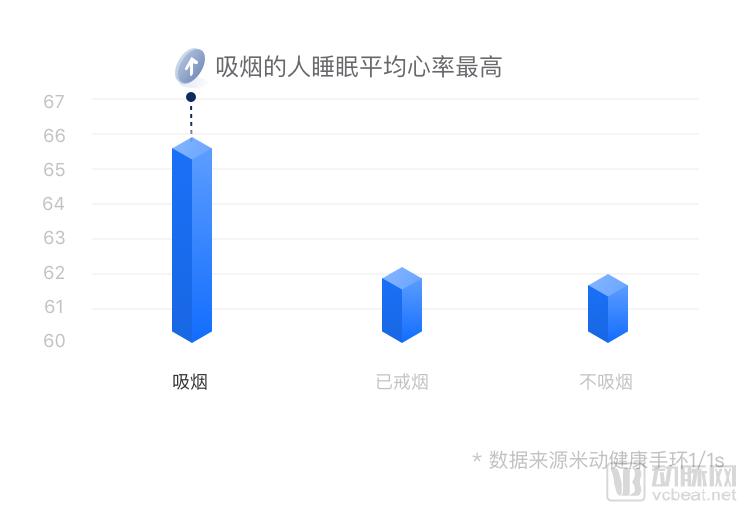
According to big data research by Mi Band, the average sleeping heart rate of non-smokers and former smokers is significantly lower than that of current smokers. Experts believe that smoking, on one hand, stimulates sympathetic nervous system activity, leading to an increased heart rate and greater cardiac burden; on the other hand, it damages the vascular endothelium, promoting atherosclerosis and causing thrombotic vessel occlusion.
For smokers, quitting smoking will significantly improve heart health. Data shows that the average sleep heart rate for people who have never smoked is 62.42 bpm, while for those who have quit smoking, it is 62.75 bpm—a minimal difference. Users of the Amazfit Health Band may notice within a few days of quitting smoking that their average sleep heart rate begins to decrease, indicating that their heart is becoming healthier.
“Strong Flavors” and Obesity Carry High Risks
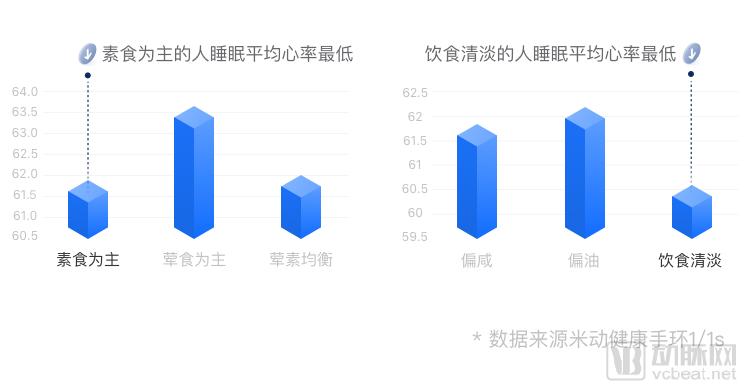
In terms of diet, individuals whose diets are predominantly meat-based exhibit the highest average heart rate during sleep, whereas those following a primarily vegetarian diet have the lowest. Individuals with a balanced intake of meat and vegetables maintain relatively lower heart rates. Meanwhile, individuals with "heavy-flavor" dietary preferences should remain vigilant, as habits characterized by high salt or high fat intake can significantly affect heart rate levels.
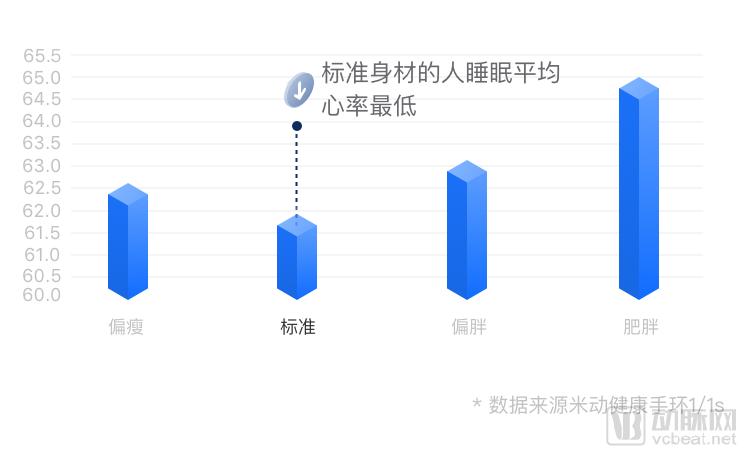
Correspondingly, individuals with better body composition tend to have lower average heart rates during sleep; this metric rises among those who are either underweight or overweight, with the trend being more pronounced in obese populations. Data shows that the lowest average sleep heart rate for individuals with a standard body type is 61.9 bpm, whereas it reaches as high as 65.1 bpm in obese individuals, approaching dangerous levels. Taking these factors into account, Mi Fit Big Data recommends increasing physical activity, maintaining dietary discipline, reducing salt and oil intake, and adopting a plant-based diet to support cardiovascular health.
Young People Should Also Be Wary of Atrial Fibrillation
Atrial fibrillation is one of the most common cardiac arrhythmias. Currently, the number of patients with atrial fibrillation in China is estimated to exceed 8 million. The 2018 Chinese Guidelines for Atrial Fibrillation state that the prevalence of atrial fibrillation among residents aged 30 to 85 years is 0.65%, with an increasing trend observed with advancing age; the prevalence reaches as high as 7.5% in individuals over 80 years of age.
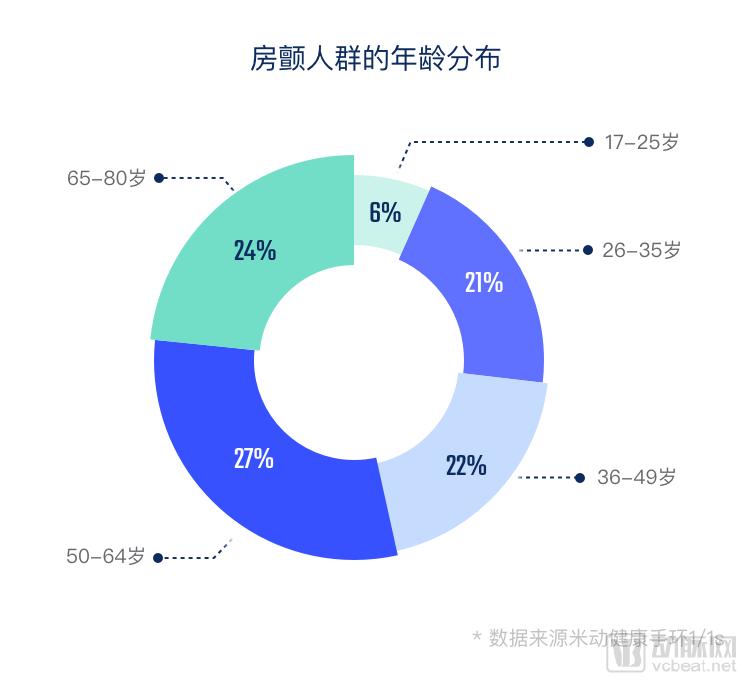
The Amazfit Health Band also features 24-hour real-time monitoring for arrhythmias, including atrial fibrillation. Among the user electrocardiograms analyzed by Huami’s health cloud services, more than 13,000 cases of atrial fibrillation were clinically confirmed by physicians in 2018 alone. Data show that over one-quarter of Amazfit Health Band users with suspected atrial fibrillation are under the age of 35, indicating that young people should not overlook atrial fibrillation prevention, in addition to the need for prevention and monitoring among middle-aged and older adults.
Experts warn that atrial fibrillation (AFib) can lead to stroke, heart failure, myocardial infarction, dementia, and other conditions. Paroxysmal AFib and asymptomatic AFib are particularly difficult to detect using conventional methods, underscoring the need for long-term monitoring. As China’s population continues to age, cardiac health issues are becoming increasingly prominent. Innovative technological approaches, including smart wearable devices, undoubtedly offer new perspectives and possibilities for improving this situation.