

UPS Launches In-Home Healthcare Services to Counter Amazon's Expansion
Marken
Clinical Supply Chain Solutions Provider
Arterial Network Medicine (WeChat ID: biobeat1) has learned that UPS, the U.S. postal and logistics giant, recently signed a new service agreement with pharmaceutical manufacturer Merck & Co. The companies will launch a vaccine distribution program in late 2019, expanding UPS’s existing vaccine transportation services to include last-mile delivery. Under this arrangement, contracted nurses will pick up medications from UPS-partnered pharmacies and provide nursing care at patients’ homes. While logistics companies have long been involved in the healthcare sector, their roles have traditionally been limited to the logistical transport of pharmaceuticals, specimens, vaccines, and other medical products. This latest partnership with UPS marks a further expansion into the emerging field of in-home healthcare services.
UPS has maintained a long-standing partnership with Merck & Co. As early as 2003, UPS entered into an agreement with Merck to provide nationwide general parcel transportation and delivery services across the United States. Subsequently, the scope of their collaboration expanded to cover North America, Asia, Latin America, Europe, and other regions. In 2011, UPS and Merck reached a new expansion agreement, under which UPS began managing the latter’s pharmaceutical and vaccine distribution, warehousing, and transportation in North America. However, it was not until the recent launch of its vaccine delivery program that the Atlanta, Georgia-headquartered global logistics leader achieved a new business expansion, entering the healthcare services sector to tap into the multi-billion-dollar market for outsourced medical logistics and home-based healthcare services.
In recent years, UPS has gradually expanded its presence in the healthcare services sector through acquisitions. When UPS completed its acquisition of Marken in 2016, Teresa Finley, Chief Marketing and Business Services Officer at UPS, stated that healthcare logistics is a strategic market of significant importance to UPS, which had already completed multiple asset acquisitions, including Marken, to strengthen its position in this area. Marken is a global provider of clinical trial logistics solutions. Its partnership with Merck & Co. leverages Marken’s distribution channels to facilitate vaccine delivery.
Compared with Amazon, which has been aggressively acquiring healthcare assets across the board, UPS’s moves appear sluggish. In June 2018, Amazon acquired the online pharmacy PillPack and hired veteran supply chain executive Nader Kabbani to build and operate its offline express delivery network, aiming to intercept the prescription drug delivery business long handled by UPS and FedEx. Amazon’s overt encroachment on the logistics market share of UPS and FedEx caused both companies’ stock prices to drop sharply, wiping out billions of dollars in market value overnight. However, this collaboration with Merck & Co. delivers a significant blow to Amazon, which is currently building its own network for home care services.
After reviewing publicly available information, Artery New Medicine reporters found that three events had a profound impact on UPS’s efforts to counter Amazon: first, the acquisition of Marken; second, the acquisition of Mail Boxes Etc.; and third, the appointment of Chris Cassidy as Vice President of Global Healthcare Logistics Strategy. This series of moves laid a solid foundation for UPS’s entry into the healthcare services sector.
In its vaccine distribution plan, UPS focuses on its own hub facilities, franchised stores, and Marken. Pharmaceuticals from Merck & Co., including HPV vaccines, hepatitis B vaccines, and measles vaccines, are first transported to the 1.7-million-square-foot hub in Louisville, Kentucky. After packaging, they are shipped to UPS franchised stores located in major cities across the United States. Subsequently, during the “last mile,” Marken arranges for contracted nurses to deliver the vaccine packages directly to patients’ homes for administration.
The UPS Store, a wholly owned subsidiary of UPS, manages over 4,700 franchised locations, making it the largest retail shipping, postal, printing, and business services franchise system in the United States. Marken is a global leader in clinical trial logistics. The integration between The UPS Store and Marken represents a critical step for UPS in strengthening its vaccine logistics capabilities.
Marken claims to be the only patient-centric clinical trial supply chain, maintaining a leading position in patient services and biosample transportation. It has established over 60 GMP-compliant clinical supply centers and logistics hubs across 48 cities worldwide, providing transportation services for more than 55,000 types of medications and biosamples to over 150 countries across North America, South America, Europe, the Middle East, Asia, and other regions. Notably, in addition to cold chain logistics modules with strict temperature control requirements—such as bioshipping, storage, and distribution—Marken also offers a comprehensive suite of patient care services, including gene therapy support, home healthcare, and patient communications.
Marken’s home healthcare services are designed to recruit and retain patients capable of participating in clinical trials. By collaborating with regional agencies, Marken contracts highly qualified nurses to provide basic medical services at patients’ homes, including subcutaneous and intravenous infusion administration, blood draws and other biological sample collections, and EKG/ECG testing. Leveraging Marken’s direct-to-patient (DTP) biological sampling network across 51 countries and regions, these home healthcare services further expand their scope of coverage.
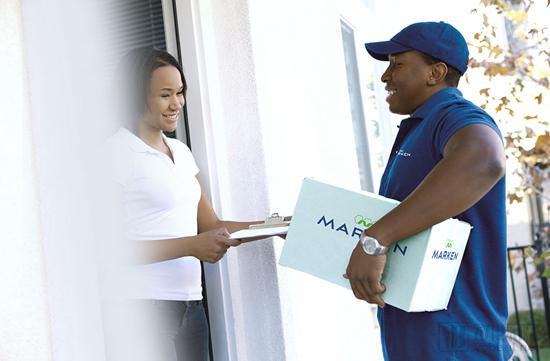
Marken’s DTP Services
In November 2016, UPS acquired Marken in a full buyout. At the time, Finley enthusiastically stated that with Marken, UPS would be able to provide better healthcare services to users worldwide.
Marken, acquired by UPS, has maintained a low profile while quietly adding nationwide UPS delivery services to the functional sections of its official website. According to Marken, under this UPS delivery service, healthcare professionals will store biological samples collected from patients’ homes at The UPS Store. UPS then provides next-day air logistics, ensuring delivery to the laboratory by the following morning.
The UPS Store has long been a key competitive advantage for UPS, providing it with a direct-to-consumer network three times larger than that of its competitors. Approximately 84% of the U.S. population lives within 10 miles of a UPS Store location. UPS’s involvement enables Marken to recruit and retain more patients for clinical trials through more flexible home-care services. Conversely, Marken’s integration brings professional caregivers into The UPS Store, transforming these small outlets—primarily designed for community logistics services—into functional home-care stations.
In 2017, UPS and Marken were rated as the top providers of temperature data collection and clinical trial materials management services by the New York-based research firm Nice Insight, achieving the highest scores for operational and service capabilities among 22 comparable vendors.
In the description of Marken’s empowerment of UPS’s direct customer network, it is evident that UPS Store plays a foundational role in vaccine distribution services.
The predecessor of The UPS Store was Mail Boxes Etc. The Mail Boxes Etc. concept was first launched in 1980, with the initial aim of serving as an alternative to post offices. In 2001, UPS acquired Mail Boxes Etc. In 2003, UPS and Mail Boxes Etc. jointly introduced The UPS Store brand, initially establishing 3,000 locations. In addition to selecting sites in shopping malls and commercial complexes—locations favored by conventional chain convenience stores—The UPS Store also sets up outlets on university campuses, military bases, and at convention centers. Its distinguishing feature is the provision of logistics services, including domestic and international shipping, packaging, and printing, alongside consumer retail offerings.
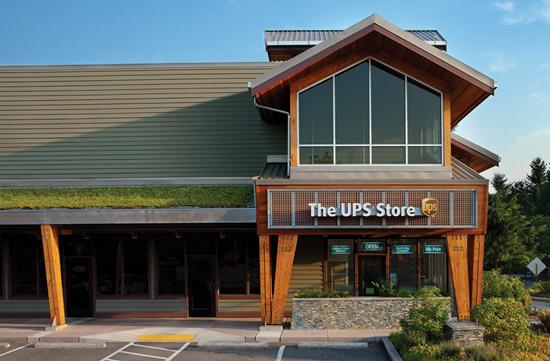
UPS STORE
For 28 consecutive years, The UPS Store has been rated as a top brand in Entrepreneur magazine’s “Franchise 500” and was named a winner of the American Brand Excellence Award in the retail category by City Business Journals. Applicants with $60,000 to $100,000 in liquid assets are eligible to join The UPS Store’s franchise network.
Today, The UPS Store operates more than 5,000 locations across the United States and Canada, undoubtedly providing strong momentum for UPS to counter Amazon.
In May 2018, UPS appointed Chris Cassidy as Vice President of Global Healthcare Logistics Strategy, leveraging his 18 years of experience in global logistics and business transformation. Cassidy will be responsible for leading and advancing UPS’s healthcare supply chain management. He previously held long-term supply chain management roles at GSK, where he made outstanding contributions to enhancing the efficiency of GSK’s global pharmaceutical warehousing and distribution network.
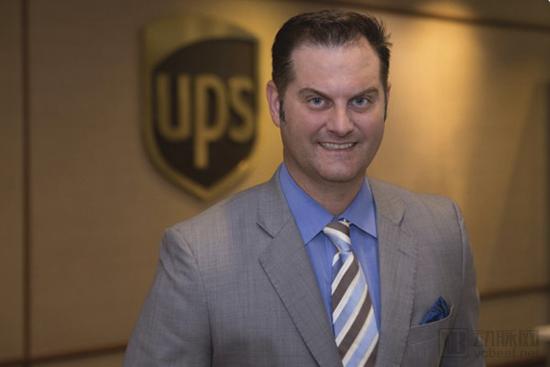
Chris Cassidy, Vice President of Global Healthcare Logistics Strategy at UPS
When Cassidy joined UPS, building and refining the healthcare supply chain had already become a top priority for the company.
UPS Discloses Vaccine Distribution Plan: Although few implementation details were provided and Cassidy’s specific role was not explicitly named, it is evident that Cassidy’s supply chain integration capabilities are beginning to influence UPS’s healthcare supply chain. This conclusion can be drawn from Cassidy’s response to media inquiries on behalf of UPS regarding the vaccine distribution plan, along with his remark that “cross-industry operations are becoming a mainstream trend in the business world.”
In recent years, as the focus of U.S. healthcare services has increasingly shifted from high-cost clinical settings to low-cost, convenient care environments, home-based care has assumed a growing role in the healthcare system. Industry giants from diverse sectors are actively entering the home care market, and UPS’s efforts to build a healthcare supply chain are simply a strategic move aligned with this trend.
Let us provide further details regarding this vaccine distribution plan. Although the specific vaccine categories involved in the distribution were not disclosed, UPS’s participation in Merck’s pilot vaccine distribution program is sure to have significant impact. Merck & Co., recognized as one of the “Big Four” global vaccine manufacturers, reported vaccine sales exceeding $5.5 billion, accounting for approximately 20% of the global vaccine market, according to EvaluatePharma. Merck’s flagship vaccine products include the HPV vaccine Gardasil and the zoster vaccine Zostavax. Notably, Gardasil became the sole HPV vaccine available in the U.S. market after GSK’s Cervarix exited, achieving $1.9 billion in sales in 2016 and completely dominating the U.S. HPV vaccine market. Gardasil 9 (the 9-valent HPV vaccine) was launched in mainland China in May 2018.
Shifting focus to China, in recent years, companies such as SF Express, China Post, JD.com, and DHL have all entered the pharmaceutical logistics sector to varying degrees, turning the pharmaceutical logistics market into a new “battlefield” for logistics enterprises.
Take SF Express, China’s logistics leader, as an example. In early 2017, the pharmaceutical logistics center project launched in Chengdu by SF Express’s subsidiary, Chengdu Shunyifeng Pharmaceutical Co., Ltd., and Sanofi China Investment Co., Ltd., sparked heated industry discussion, with many exclaiming that “the wolf is at the door.” Over the past two years, SF Express has rapidly established two pharmaceutical cold-storage warehouses and 12 pharmaceutical trunk lines, while building a promising customer network.
However, after checking SF Express’s official website, VCBeat found that the primary driver for SF Express’s entry into pharmaceutical logistics is likely to expand its logistics product portfolio. At least based on its current scope of business, SF Express has not truly ventured into the healthcare sector. Under its “Cold Chain Services,” SF Express has established a dedicated “Pharmaceutical Services” module, offering services such as Secure Pharmaceutical Delivery, Dedicated Pharmaceutical Delivery, LTL (Less-Than-Truckload) Pharmaceutical Shipping, Dedicated Pharmaceutical Vehicles, and Pharmaceutical Warehousing. Its medication delivery services cover more than 300 cities across China. These pharmaceutical distribution services primarily emphasize the safety and timeliness of item delivery, without involving professional medical personnel or healthcare services.
This is not surprising. Even in recent years, as companies like JD.com and Suning have opened offline stores with robust logistics capabilities, China’s logistics industry still predominantly relies on a decentralized delivery model for the “last mile,” with service ending once the package reaches the customer. Although cross-sector expansion by logistics enterprises represents a strategic response by operators to a complex external environment, we should not simply assume that integrating healthcare services will automatically open up a blue-ocean market. Nevertheless, as UPS and Marken extend their business reach into Asia, healthcare services may well represent a new domain worth exploring for companies such as SF Express.
References:
https://www.reuters.com/article/us-ups-healthcare-focus/ups-eyes-in-home-health-services-with-us-vaccine-project-idUSKCN1R30EChttps://pressroom.ups.com/pressroom/ContentDetailsViewer.page?ConceptType=PressReleases&id=1478525588949-972
https://med.sina.com/article_detail_100_2_34253.html
http://www.pharmtech.com/ups-acquire-marken
https://arstechnica.com/science/2019/03/ups-plans-to-deliver-vaccine-toting-nurses-to-your-doorstep/
https://vcbeat.top/OWY5NjYxMDU2ZWU4MTM4YzFhNzA2ZWU5MzcxNWZhNjk=