

Two Innovative Drugmakers and One Medical Imaging Company Among Second Batch of Sci-Tech Innovation Board IPO Applicants
On March 27, the second batch of eight companies applying for listing on the STAR Market was unveiled, namely Suzhou Huaxingyuanchuang Technology Co., Ltd., Shenzhen Chipscreen Biosciences Co., Ltd., Xiamen Amoytop Biotech Co., Ltd., QuantumCTek Co., Ltd., ArcSoft Corporation Limited, Beijing 21st Century Space Technology Application Co., Ltd., Shenzhen Appotronics Corporation Limited, and Shenzhen Basda Medical Co., Ltd. Among these eight companies, three are healthcare-related, including those engaged in innovative drug R&D.MicroCore Biologics, the R&D of biopharmaceuticalsAmoytop Biotechand manufacturers of medical imaging equipmentBesta。

Figure: Revenue and Profit of Three Medical Companies
MicroCore Bio
MicroCore Biopharm was founded in 2001, focusing on the original research and development of small-molecule drugs. Prior to submitting its application for listing on the STAR Market, the company completed seven rounds of financing, with investors including Lilly Asia Ventures, CCB Capital, Shenzhen Capital Group, China Merchants Bank International, and other renowned investment institutions.
Chipscreen Biosciences is primarily engaged in the research and development of innovative small-molecule drugs. Its core technology is an integrated platform for drug innovation and early-stage evaluation based on chemogenomics. Chemogenomics leverages extensive known gene expression data and functional significance analysis to conduct correlation studies on the effects of various known and novel compounds on whole-genome expression. This approach enables the evaluation and prediction of potential molecular pharmacology and toxicology of compounds, continuously optimizing candidate compound structures so that lead compounds with the most favorable comprehensive evaluation metrics advance to the next stage of development, thereby reducing the risks associated with new drug development. Over the years, Chipscreen Biosciences has accumulated 121 invention patents both domestically and internationally, and has obtained three software copyright registrations.
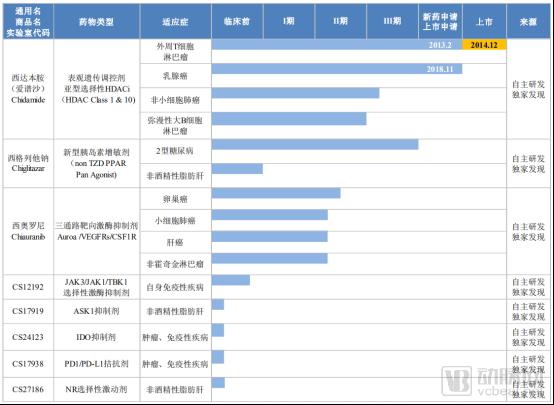
Figure: Chipscreen Biosciences' R&D Pipeline
Chipscreen Biosciences’ product pipeline covers multiple therapeutic areas, including oncology, type 2 diabetes, non-alcoholic fatty liver disease (NAFLD), and immune-mediated diseases. As an innovative biopharmaceutical company, Chipscreen Biosciences has successfully discovered and developed three first-in-class novel drugs and a series of new molecular entity (NME) candidates based on its core technologies. Among these, Chidamide (brand name: Epidaza), a Class I innovative drug approved by the National Medical Products Administration (NMPA), has been commercialized for the treatment of peripheral T-cell lymphoma (PTCL) and is the world’s first subtype-selective histone deacetylase (HDAC) inhibitor. Another Class I innovative drug, Chiglitazar Sodium, has completed Phase III clinical trials and is the world’s first pan-PPAR agonist to reach this milestone. The third drug, Cinobufagin (Xiaoluoni), also a Class I innovative drug, is undergoing multiple Phase II clinical trials; it is a novel multi-target, multi-pathway (Aurora/VEGFRs/CSF1R) selective kinase inhibitor.
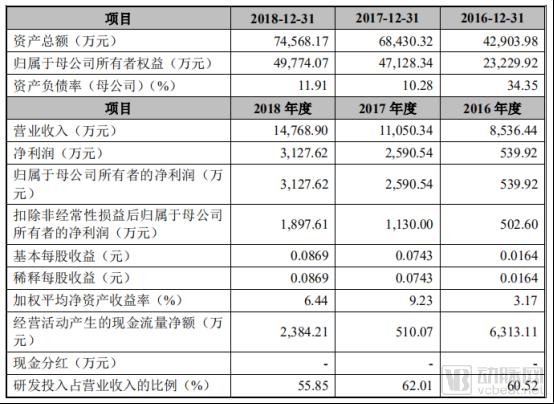
Figure: Key Financial Data and Financial Indicators of Chipscreen Biosciences
According to the prospectus of Chipscreen Biosciences, the company reported total operating revenue of RMB 85.3644 million and net profit of RMB 5.3992 million in 2016; total operating revenue of RMB 110.5034 million and net profit of RMB 25.9054 million in 2017; and operating revenue of RMB 147.6890 million and net profit of RMB 31.2762 million in 2018. Overall, operating revenue demonstrated a steady growth trend. R&D expenditure has consistently remained at approximately 60% of operating revenue.
Tebao Bio
Xiamen Amoytop Biotech Co., Ltd. (“Amoytop Biotech”) is a national innovative biopharmaceutical enterprise primarily engaged in the research and development, manufacturing, and sales of recombinant proteins and their long-acting modified drugs. Established in August 1996, Amoytop Biotech is under the actual control of Mr. Yang Ying, Ms. Lan Chun, and Mr. Sun Li. The second-largest shareholder, Tonghua Dongbao Pharmaceutical Co., Ltd., together with its actual controller, Mr. Li Yikui, holds a cumulative 35.53% equity interest in Amoytop Biotech.
Since its establishment, Xiamen Amoytop Biotech Co., Ltd. has undertaken a total of nine National Science and Technology Major Projects for “Major New Drug Development,” with five polyethylene glycol (PEG)-modified long-acting protein drugs approved to commence clinical trials. To date, Amoytop Biotech has successfully developed four therapeutic biotechnology products—Pegbin, Telrise, Teljin, and Telkang—for the treatment of diseases such as viral hepatitis and malignant tumors. Among these, Pegbin was approved for market launch in late 2016, becoming the first long-acting interferon product in China with independent intellectual property rights. Featuring an original structural design and comprehensive patent protection, Pegbin has broken through the patent blockade imposed by foreign pharmaceutical giants and was selected as one of the “Top Ten Advances in Chinese Pharmaceutical Biotechnology” of the year by the Chinese Association of Pharmaceutical Biotechnology.
Pegbin (generic name: Pegylated Interferon Alfa-2b Injection), a Class 1 new drug in China, is primarily indicated for viral hepatitis and serves as a first-line agent for antiviral therapy in chronic hepatitis B. Pegbin was included in the 2017 National Reimbursement Drug List (Category B). Head-to-head comparative clinical trials have demonstrated that it has fewer side effects than the imported comparator drug, Pegasys. Currently, a series of studies are underway to evaluate Pegbin’s role in achieving clinical cure for patients with chronic hepatitis B.
Terjin (generic name: Recombinant Human Granulocyte Colony-Stimulating Factor Injection), a biosimilar, is primarily indicated for neutropenia following cancer chemotherapy. It is listed in Category B of the 2017 National Reimbursement Drug List and ranks third in market share among similar domestic products. Terjin has achieved export of finished injectable products to multiple countries and has obtained GMP certificates and product registration certificates in several nations.
Teli® (generic name: Recombinant Human Granulocyte-Macrophage Colony-Stimulating Factor for Injection) is the first recombinant human granulocyte-macrophage colony-stimulating factor (rhGM-CSF) drug marketed in China, representing a key achievement of the National Torch Program. Teli® is included in Category B of the 2017 National Reimbursement Drug List and has long held the largest market share among similar domestic products. In recent years, as an important immunomodulator for cancer vaccines, Teli® has undergone international clinical trials in Europe, with related research findings presented at prestigious oncology platforms such as the American Society of Clinical Oncology (ASCO) Annual Meeting.
Telcon (generic name: Recombinant Human Interleukin-11 for Injection) is primarily indicated for the treatment of Grade III and IV thrombocytopenia following chemotherapy in patients with solid tumors and non-myeloid leukemia. Telcon is listed in Category B of the 2017 National Reimbursement Drug List and ranks third in market share among similar domestic products.
Pegbin, Teerjin, Teerli, and Teerkang were approved for market launch in 2016, 1999, 1997, and 2005, respectively. In recent years, Pegbin has surpassed Teerjin to become the primary source of Amoytop Biotech’s main business revenue.
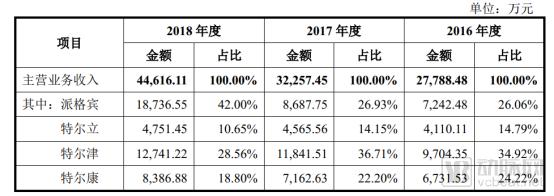
Figure: Revenue Structure of Tebao Bio's Main Business
In addition, the products currently in clinical trials and expected to be launched on the market within the next few years mainly include Y-shaped pegylated recombinant human growth hormone injection, Y-shaped pegylated recombinant human erythropoietin injection, and Y-shaped pegylated recombinant human granulocyte colony-stimulating factor injection, which are intended for the treatment of diseases such as tumors, viral hepatitis, renal failure, and dwarfism.
The prospectus reveals that Tebao Bio is a supplier of raw materials for multiple national reference standards, including recombinant human granulocyte-macrophage colony-stimulating factor (rhGM-CSF), recombinant human granulocyte colony-stimulating factor (rhG-CSF), recombinant human interleukin-11 (rhIL-11), recombinant human interferon alpha-2a (rhIFN α2a), and recombinant human interferon alpha-2b (rhIFN α2b). The company has repeatedly participated in the development and collaborative calibration of national homogeneous reference standards, as well as in collaborative calibration initiatives organized by international bodies such as the United States Pharmacopeial Convention (USP) and the World Health Organization (WHO).
Amoytop Biotech is in sound operational condition, with Sinopharm Group, China Resources Pharmaceutical, and Shanghai Pharmaceuticals consistently ranking as its top three customers. Data from the income statement for 2016–2018 show that Amoytop Biotech achieved a compound annual growth rate (CAGR) of 26.4% in operating revenue over the past three years, with cumulative revenue exceeding RMB 1.05 billion and cumulative net profit amounting to RMB 50.4856 million; however, net profit experienced a sharp decline in 2017. Based on the five sets of market capitalization criteria for initial public offerings on the STAR Market published by the Shanghai Stock Exchange, Amoytop Biotech’s financial metrics meet the requirements of at least one tier.
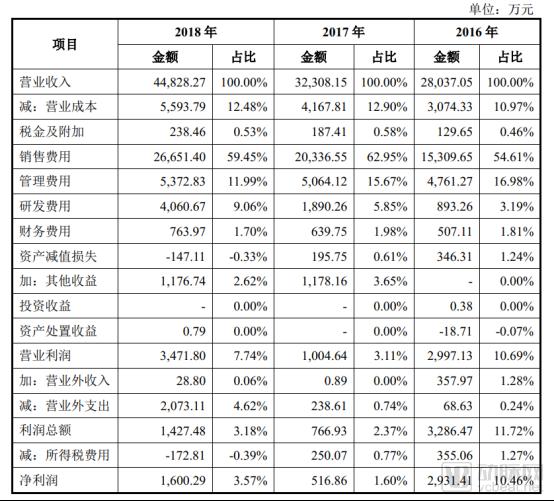
Figure: Tebao Bio's Income Statement
According to the prospectus, Toubao Biopharma plans to raise RMB 607 million, with the proceeds intended for the expansion and renovation of protein drug production facilities and the construction of a research and development center, as well as for new drug development and clinical cure research on chronic hepatitis B.
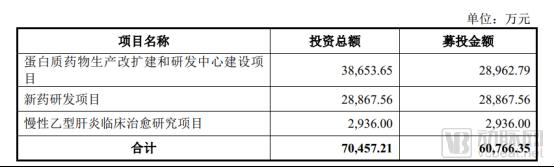
Figure: Proposed Use of Funds to be Raised by Tebao Bio
Besta
Basda, founded in 2000, is a professional manufacturer integrating the R&D, manufacturing, sales, and service of large-scale medical imaging diagnostic equipment. Its product portfolio comprises nearly forty models across five major series, including magnetic resonance imaging (MRI) systems, medical X-ray equipment, color ultrasound diagnostic systems, nuclear medicine equipment, and healthcare informatics software, which are primarily applied in clinical diagnostics at healthcare institutions of all levels.
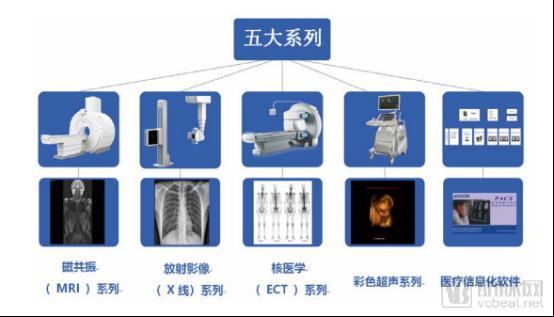
Figure: Basda's Main Product Lines
Besta’s magnetic resonance imaging (MRI) product line is extensive. In the field of permanent magnet MRI systems, it offers five models with magnetic field strengths of 0.22T, 0.30T, 0.35T, 0.42T, and 0.50T. For superconducting MRI systems, it provides four models with magnetic field strengths of 0.50T, 0.70T, 1.5T, and 3.0T. Besta’s 3.0T superconducting MRI system obtained registration certification from the China Food and Drug Administration (CFDA) in January 2018, making Besta the second domestic company to receive such certification.
In the field of medical X-ray equipment, the company’s product portfolio encompasses three categories comprising sixteen models: Digital Radiography (DR) systems, medical diagnostic X-ray fluoroscopy and radiography systems, and digital mammography X-ray systems. The DR systems are available in various configurations, including ceiling-mounted, floor-mounted, and mobile units, to meet diverse customer preferences. In the area of color Doppler ultrasound, the company offers both portable and console-based systems, catering to the needs of different clinical scenarios.
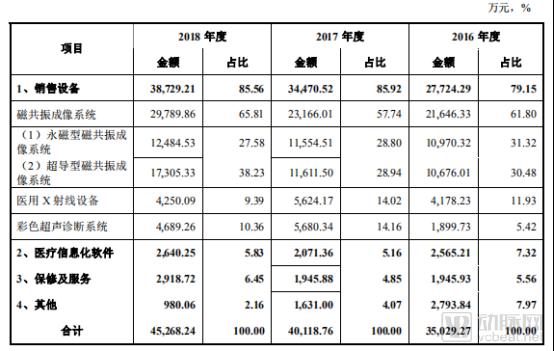
Figure: Basda's Main Business Revenue
In 2018, Besta’s main business revenue was RMB 450 million, with total revenue reaching RMB 471 million and net profit amounting to RMB 108 million. Prior to its delisting from the National Equities Exchange and Quotations (NEEQ), Besta had a corresponding total market capitalization of RMB 2.857 billion.
Prior to its listing on the National Equities Exchange and Quotations (NEEQ), Besta had three rounds of financing. Since its NEEQ listing, it has conducted four private placements. Besta’s previous financing agreements included as many as eight valuation adjustment mechanism (VAM) agreements. In addition to performance targets, these VAM agreements frequently specified deadlines for an initial public offering (IPO). In 2011, Besta accepted investment from GTJA Capital and signed a VAM agreement that included performance commitments and a requirement to complete an A-share IPO by December 31, 2013. Investments from Huajun Investment and Fuhai Yintao No. 2 were also subject to VAM agreements, requiring Besta to submit an A-share IPO application by December 31, 2014. Ultimately, Besta provided compensation to these investors due to failure to meet performance targets and inability to achieve an IPO. All VAM agreements have now been centrally cleared.
After being listed on the National Equities Exchange and Quotations (NEEQ) in September 2015, Besta began seeking an initial public offering (IPO) on the ChiNext board the following year. In March 2016, the company completed its filing for IPO tutoring with the Shenzhen Bureau of the China Securities Regulatory Commission (CSRC). In May 2017, Besta submitted its prospectus with plans to list on ChiNext, but this attempt failed. In January 2018, Besta resubmitted its prospectus, yet there was no further progress regarding its ChiNext listing. In May 2018, Besta announced for the second time that it had completed the filing for IPO tutoring with the Shenzhen CSRC Bureau. In July 2018, Besta terminated its listing on the NEEQ and made a comeback by aiming for a listing on the STAR Market.