

60 Israeli Digital Health Innovators Showcase Cutting-Edge Technologies at the 5th Israel International Medical Conference
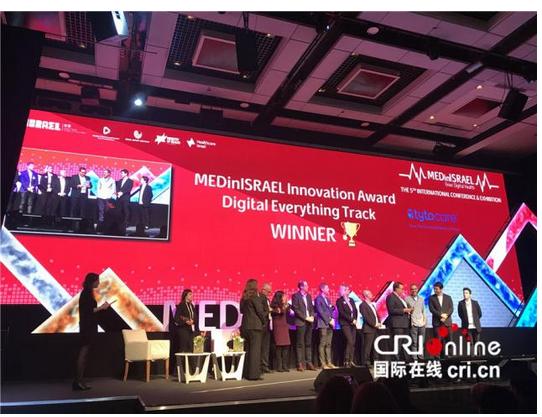
The 5th Israel Medical International Conference Held in Airport City. (Photo by Sun Lingli)
VCBeat (WeChat ID: vcbeat) has learned that the 5th Israel Medical International Conference and Expo was held in Airport City, a central Israeli city, from March 25 to 28. Focusing on new trends in digital health, the event brought together researchers, medical experts, entrepreneurs, and government officials who discussed topics such as telemedicine and the medical applications of virtual reality (VR) and augmented reality (AR) technologies. Sixty digital health exhibitors showcased their advanced medical technologies.
At the exhibition, 60 innovative Israeli technology companies showcased advanced medical technologies related to digital health, including telemedicine, remote rehabilitation training, wearable devices, and cybersecurity for medical health data. At the booth of a VR health company, a visitor wearing VR glasses was experiencing cognitive games. VRhealth, a medical healthcare company founded in 2016, utilizes virtual reality technology to help patients engage in cognitive games, alleviate pain, and test memory and reaction speed, thereby assisting in the customization of personalized medical treatment plans. Omer, the Head of Clinical Analysis, stated that the company’s medically developed wearable devices enable patients to undergo rehabilitation training at home, while doctors remotely monitor and analyze data to provide medical advice.
Aomer stated, “Patients can use our devices and software at home. We have one platform for hospitals and rehabilitation centers, and another for patients to use at home. Patients can complete their exercise regimens at home in accordance with medical protocols, while hospitals can remotely monitor their performance and recommend the next rehabilitation tasks to be completed.”
Tytocare, founded in 2012, is dedicated to remote medical testing. By providing professional, user-friendly smart diagnostic devices, it enables individuals to perform routine tests at home and consult with physicians remotely, thereby achieving the goal of receiving medical care from home. Eyal, Director of Strategic Accounts, stated that the company’s home diagnosis kit, which includes components such as an otoscope, stethoscope, basic thermometer, and digital camera, not only measures body temperature but also facilitates medical-grade examinations of the lungs, heart, and abdomen. This home-based testing offers considerable convenience for children who are afraid of going to hospitals.
Eyal said, “We can provide families with a comprehensive suite of medical diagnostic devices that anyone can use. These are the same tools and equipment found in clinics, enabling doctors not only to communicate with patients but also to review their test data, just as they would during an in-clinic visit. The same diagnostic tools and procedures are used, but children do not need to go to the hospital; everything can be completed at home.”
Many diseases are nearly irreversible once they occur, making prevention more critical than treatment. Established in 2006 and headquartered in Israel, Air Brain is a neurotechnology company specializing in brain data analysis and the assessment of brain health. Tanya, Vice President of the General Health Business Division, stated that the company’s developed Brain Network Analysis System integrates electroencephalography (EEG) technology with big data analytics and machine learning. This system quantifies and visualizes the functions of neural networks, reveals multidimensional patterns of brain activity, and provides assessments of brain health.
Tanya said, “Brain diseases have a long latency period; it may take 20 to 30 years for symptoms to manifest. Therefore, if you can detect early signs of brain abnormalities through screening, you can take measures to delay the progression of brain disease or prevent its onset. Brain health is critically important for everyone.”
Cui Yuting, China’s Science and Technology Counselor to Israel, stated that through his participation in this medical exhibition, he identified two trends in the future of digital health technology: the gradual widespread adoption of telemedicine and the increasingly prominent importance of prevention.
Cui Yuting stated, “One of the most significant development trends is the rise of telemedicine and personalized healthcare. By integrating artificial intelligence (AI) and various new technologies and innovations, healthcare services are being shifted from hospitals to homes. This transition not only reduces costs but also improves efficiency, making it more convenient for individuals to monitor their health. Another major trend is the shift from a sole focus on disease treatment to an integrated approach combining prevention and treatment. For instance, through user-friendly mobile applications, patients can measure health metrics at home and transmit the data to their family doctors or hospitals. The hospital can then use the app to inform patients of any issues, recommend preventive measures, dietary adjustments, treatment options, and exercise regimens. This creates a comprehensive continuum from prevention to treatment, with a particular emphasis on upstream prevention—a distinctive feature of the Israeli healthcare system.”
Cui Yuting pointed out that China and Israel can engage in comprehensive cooperation in the field of medical technology, with broad prospects for collaboration ranging from the establishment of medical ecosystem systems, joint research and development of cutting-edge technologies, and project introduction, to personnel exchanges.
Cui Yuting stated, “The healthcare system must first establish a sound ecological environment. The government should lead the top-level design by integrating academic institutions, hospitals, and startups to build a robust ecosystem characterized by mutual reliance and interconnectivity. There is a high degree of synergy in innovation cooperation between China and Israel. While China’s healthcare system is comprehensive, Israel excels in refining every aspect of its healthcare system. Its technologies, particularly small-scale medical devices, can be seamlessly integrated into China’s healthcare framework, thereby enhancing our medical standards. China and Israel can also collaborate on cutting-edge technologies. We can jointly establish R&D centers with leading Israeli research institutes to conduct collaborative research. Furthermore, through personnel exchanges and technical training, we can facilitate the application of these co-developed technologies in the Chinese market.”
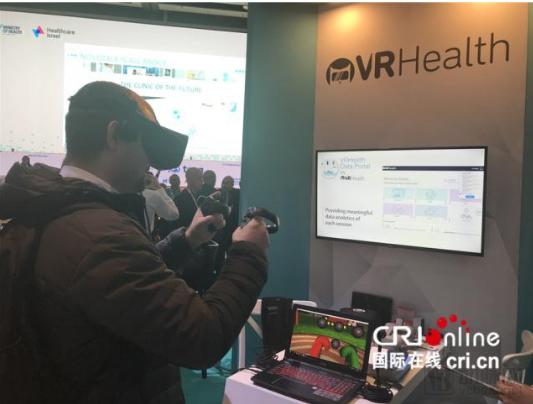
Visitors experience VRhealth’s equipment and software. (Photo by Sun Lingli)
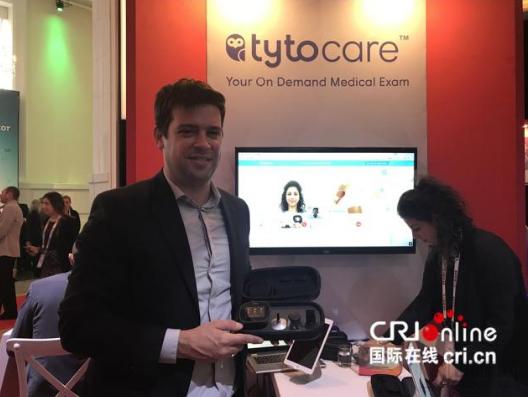
Eyal, Director of Strategic Clients at Tytocare, holds the company’s home-use medical testing device. (Photo by Sun Lingli)
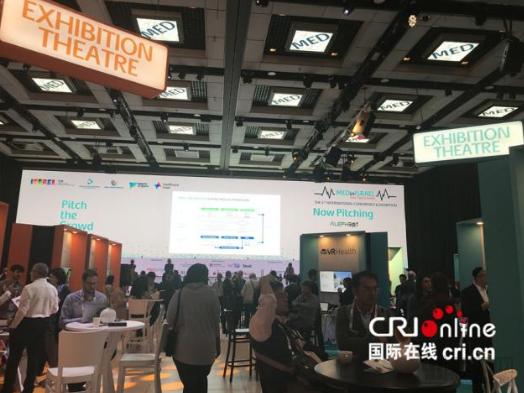
Exhibition site. (Photo by Sun Lingli)
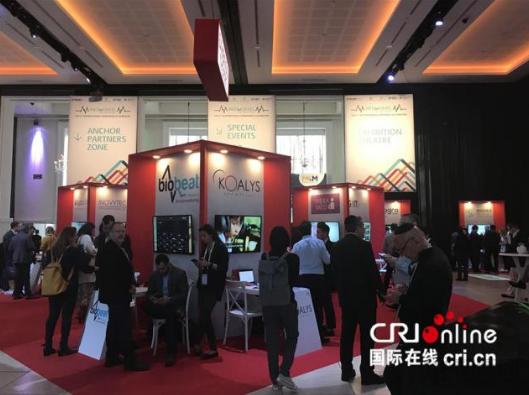
Israeli Startups at the Exhibition. (Photo by Sun Lingli)
This article is reprinted from: CRI Online