

PreCar Project Achieves Major Breakthrough in Early Liver Cancer Detection with NGS-Based Classification Model
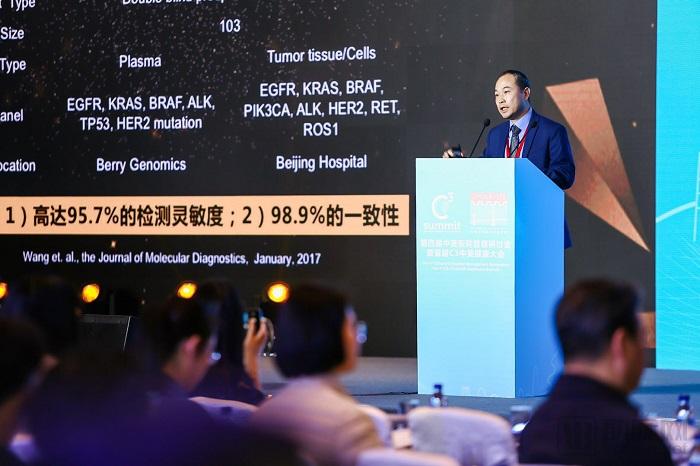
On March 30, 2019, at the 4th Sino-US Hospital Management Symposium and the 1st C3 Sino-US Health Conference, Dr. Zhou Daixing, CEO of Berry Genomics and Director of Berry Oncology, announced a major breakthrough in the PreCar project for early screening of liver cancer. Data showed that in controlled trials involving patients with liver cirrhosis and liver cancer, the test achieved a sensitivity of over 97% for detecting liver cancer while maintaining 100% specificity.
This result marks the successful development of an NGS-based classification model for liver cirrhosis and hepatocellular carcinoma (HCC) by the PreCar early screening project. The model effectively distinguishes between patients with liver cirrhosis and those with HCC using features derived from plasma biomarker sequencing, and accurately identifies cirrhotic patients who have undergone malignant transformation. The identification of molecular biomarkers and detection methods for early diagnosis and screening is undoubtedly a critical component of cancer early screening. These newly released trial findings represent another significant step forward in China’s exploration of early HCC diagnosis. Following the announcement of impressive pilot study results at the 2018 CSCO Annual Meeting, this outcome constitutes a major breakthrough for the PreCar project, positioning it at the forefront of similar trials both domestically and internationally.
It is reported that the PreCar project for early screening of liver cancer was jointly initiated in 2018 by the National Liver Cancer Science Center/Shanghai Eastern Hepatobiliary Surgery Hospital, Nanfang Hospital in Guangzhou, and Berry Oncology, a member enterprise of Berry Genomics, with the participation of dozens of clinical centers across China. This is the first and currently the only large-scale prospective cohort study on early screening for liver cancer based on NGS technology in China.
It is understood that the full name of the PreCar project is the Prospective suRveillance for very Early hepatoCellular cARcinoma, a nationwide, multicenter, prospective cohort study involving 10,000 participants to screen for ultra-early warning biomarkers of liver cancer. Led by Professor Wang Hongyang, an academician of the Chinese Academy of Engineering, Director of the National Center for Liver Cancer Science, and Deputy Chief Expert of the Ministry of Science and Technology’s Special Project on Infectious Diseases, together with Professor Hou Jinlin, President of the Asian Pacific Association for the Study of the Liver and affiliated with Nanfang Hospital in Guangzhou, the project was jointly initiated by Berry Oncology. It has received strong support from multiple centers, hospitals, and platforms across China. This is the first and currently the only large-scale prospective cohort study in China focused on early liver cancer screening based on next-generation sequencing (NGS) technology. The project serves as a model collaboration between authoritative institutions in clinical basic research on liver cancer in China and leading enterprises in tumor genetic testing. The total investment in the project exceeds RMB 100 million, with the majority borne by Berry Oncology.
[About Berry Genomics]
Berry Genomics (Stock Code: SZ000710), established in May 2010, is an innovative biotechnology company in China dedicated to translating genetic testing technologies into clinical applications, and a pioneer in the Chinese genomics industry. The company’s mission is to serve society and benefit humanity through continuously innovative genetic technologies. Berry Genomics has not only taken the lead in successfully promoting genetic testing as an essential clinical screening method across China but has also gained significant recognition from academic circles and clinical experts. The company has consistently maintained its investment in research and development, striving to provide clinical solutions for detecting a broader range of diseases.
[About Berry Oncology]
Founded in August 2017, Berry Oncology is a company spun off from Berry Genomics that specializes in oncology genetic diagnostics. With joint support from Berry Genomics and professional investment institutions, Berry Oncology has leveraged its comprehensive advantages in “technology + distribution channels + capital,” fully inherited Berry Genomics’ original oncology business, and further consolidated its leading position in products and services such as liquid biopsy for mid-to-late stage cancers, tumor immune gene profiling, and hereditary cancer testing. Strategically extending its business layout into the field of early cancer diagnosis, Berry Oncology has become a pioneering enterprise in China with the most representative technology, strongest capital aggregation, and greatest industrial implementation capabilities in this sector.