

"Point-and-Click" AI Research Platforms Emerge as Full-Scale Medical Research Becomes the New Frontier of Artificial Intelligence

Infervision
Artificial Intelligence Product Developer
“The process of exploring the unknown and integrating scientific research with clinical practice is, in my view, one of the greatest charms of medicine,” said Ning Guang, an academician of the Chinese Academy of Engineering. However, there is often a gap between ideal and reality; not every physician is willing or has the capacity to devote themselves to scientific research.
Reality is harsher than it appears to the general public. The “Report on the Current Survival Status of Chinese Medical Practitioners” shows that 77% of medical practitioners have worked more than 50 hours per week, and 24.6% have worked more than 80 hours per week.
However, technology has continued to advance. Conditions that were once undiagnosable now have breakthrough diagnostic pathways, and the rough, single-slice X-rays of the past have been replaced by hundreds of imaging slices... Everything is moving in a positive direction.
So, where does the problem lie?
Having spent 22 years at Philips, Xi Weiling is deeply moved by this journey. She has witnessed Philips’ epoch-making transformation from entry-level CT scanners to the state-of-the-art Brilliance iCT. What has evolved is increasingly clear imaging technology; what remains unchanged is the effective working time available to clinicians.
“As the number of slices in single diagnostic imaging studies continues to increase, physicians face a growing workload for image interpretation. However, their reading efficiency has not improved significantly. Uneven technological development has placed increasing pressure on clinicians,” remarked Xi Weiling.
“However, clinical practice is not the only avenue for physicians to realize their value. As medicine is an experience-based discipline, physicians often aspire to dedicate more time to organizing their clinical experiences and exploring unknown possibilities, synthesizing these insights into academic papers for exchange and learning among like-minded professionals.”
Thus, Xi Weiling’s departure from his former employer, Philips, to join the startup Infervision as President of Marketing was not a step backward, but rather an endeavor to pioneer new technologies and unlock the value of healthcare professionals.
“In the past, during the era of traditional medical devices, CT scanners produced only single-slice images. More than two decades later, chest CT scans now generate over 300 slices. Although technological advancements have continuously improved image quality and acquisition speed while reducing contrast agent usage, these improvements ultimately serve to help physicians gain a deeper understanding of patients’ diseases, but they have done little to alleviate clinicians’ workload.”
“Infervision’s AI-assisted diagnostic products are continuously reducing the workload of radiologists. The company now even considers fostering clinicians’ creativity beyond direct patient care, aiming to engage more healthcare professionals in the scientific research and development of medical AI, thereby creating greater value for healthcare.”
Recently, Infervision launched the AI Scholar Research Platform—InferScholar® Center, an integrated hardware-software medical artificial intelligence device. It supports research in medical imaging big data management and analysis, data annotation, deep neural network model construction, radiomics feature extraction, omics feature analysis, and machine learning model building. The platform is applicable to deep learning and radiomics modeling for various imaging modalities, including X-ray, CT, MRI, PET/CT, pathological slides, and digestive endoscopy. In addition to medical imaging data, InferScholar® Center can also integrate structured clinical text information to investigate diverse medical topics.
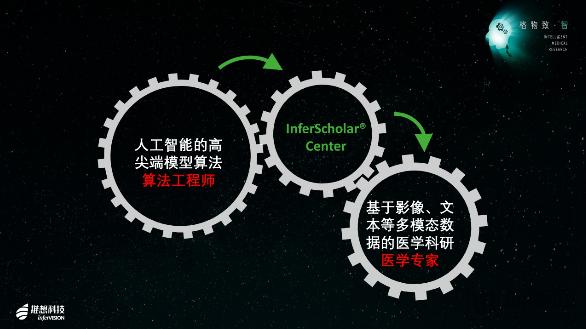
Physicians can leverage InferScholar® Center to build proprietary AI models for research, infusing medical practice with a human touch. Medical experts can autonomously select the data, models, logic, parameters, and other elements used to incubate AI, ensuring that the AI aligns more closely with the specific characteristics of healthcare operations and yields greater scientific achievements from a clinical perspective. The AI models incubated through InferScholar® Center are not merely independent, cold, or unfamiliar machines; rather, they serve as assistants that physicians can control and understand. Its model research and incubation tools can be widely applied to intelligent and precise imaging studies for diseases such as tumors, cardiovascular conditions, neurological disorders, and respiratory illnesses. These tools hold particular value for AI-driven imaging research focused on early disease diagnosis, treatment monitoring, and prognosis prediction.
The launch of this product aligns with the current needs of medical professionals: an increasing number of medical researchers not only wish to utilize AI products but also aim to leverage their own advantages in large-scale medical data and clinical experience to conduct independent AI-driven clinical research. However, engaging in deep learning and radiomics research often requires robust coding skills, as well as a comprehensive foundation in mathematics, statistics, and computer engineering, and even theoretical knowledge in cognitive science. Building such an interdisciplinary knowledge system typically demands years of systematic training, which constitutes the highest barrier to entry for deep learning and radiomics research. This has, to some extent, hindered the dissemination and adoption of deep learning and radiomics as next-generation methodologies for medical big data analysis across various disciplines. The vast majority of healthcare institutions lack the infrastructure and specialized personnel necessary for conducting deep learning and radiomics research. Consequently, there is an emerging demand for more intelligent, user-friendly clinical research assistants.
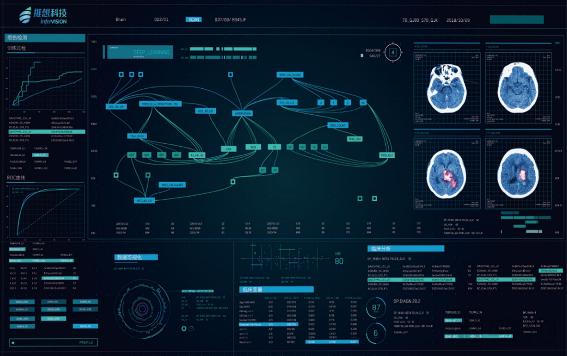
In terms of specific operations, clinicians need only enter the relevant data into the interface and configure the corresponding parameters to complete the preparation. For each parameter adjustment, the system provides a visualized output, allowing clinicians to optimize the existing model based on the predefined structure. Once the preparation is complete, the platform processes the provided data using mature algorithms, and clinicians simply await the platform’s execution and resulting output.
In terms of security, InferScholar® Center fully addresses the safety requirements of clinical medical research by adopting an integrated hardware-software appliance delivered directly to hospitals. It operates in an environment completely isolated from the internet, ensuring that data remains within the hospital premises and eliminating any risk of leakage for all scientific research data, model algorithms, and research outcomes.
Furthermore, Infervision’s two scientific teams—the Global Institute for Clinical Research (iCR) and the Institute for Advanced Research (iAR)—will leverage InferScholar® Center to provide medical researchers on the platform with foundational models, as well as a range of services including development, training, and support for clinical research. The Infervision Scientific Team comprises seasoned experts with extensive experience in clinical medicine and accomplished young scientists at the forefront of artificial intelligence technology. Working in close collaboration, these teams conduct client-centric research anchored by InferScholar® Center, applying cutting-edge AI technologies to clinical studies. This approach covers the entire workflow of clinical medical research, enabling users to jointly unlock the value of clinical scientific inquiry.
Since 2012, artificial intelligence technology has undergone dozens of iterations. Although existing products can meet the needs of clinicians in specific disease contexts, their contribution to the broader healthcare sector remains merely a drop in the ocean. There is an urgent need for more physicians to engage in medical exploration and the advancement of AI technologies.
However, the gap between artificial intelligence technology and healthcare has long plagued industry practitioners, as the profound depth of each discipline adds significant complexity to their integration. While AI experts have consistently sought to bridge into medicine, Infervision is attempting the reverse approach by empowering medical professionals to embrace artificial intelligence.
In response, Xi Weiling expressed full confidence: “I joined Infervision from Philips precisely because I saw the potential for the commercialization of artificial intelligence. The commercialization of this technology will differ from that of previous technologies, and we expect to see more disruptive models emerge.”
Today, Infervision’s InferScholar® Center platform has been adopted by top-tier Grade 3A hospitals such as Tongji Hospital and Changzheng Hospital, marking a promising beginning. Clinicians may soon be freed from the burdensome tasks of data organization and analysis. With AI support, an era of comprehensive AI-driven medical research may be on the horizon.