

OODA Health Files for IPO to Revolutionize U.S. Healthcare Payments with Real-Time Settlement Platform

OODA Health
Provider of Medical Insurance Payment Systems

Ping An Healthcare
One-stop Solution Provider for Health Management
In the United States, hospitals are typically required to advance the costs of providing medical services to patients. After treatment concludes, the hospital independently compiles and organizes the medical bills and submits a claim to the insurance company, which is responsible for reimbursement. If the reimbursement amount is insufficient, the hospital then sends a bill to the patient for payment of the remaining balance.
In this process, hospitals have invested more effort and assumed greater risks. Meanwhile, interactions among multiple parties inevitably lead to communication friction and payment delays, and may even result in bad debts due to complex billing.
In 2018, JAMA (The Journal of the American Medical Association) estimated the billing administration costs for a large academic medical center. The results showed that expenses related to hospital billing management activities accounted for the following proportions of professional revenue: 14.5% for primary care visits, 25.2% for emergency department visits, 8.0% for general internal medicine inpatient stays, 13.4% for outpatient surgeries, and 3.1% for inpatient surgeries. By simplifying claims processing procedures, a hospital could save an average of $200 per claim.
“I believe healthcare providers should not be in the business of collecting patient information and tracking bills; they should focus more on delivering high-quality medical services. It is insurers and other payers who are responsible for collecting medical fees from patients.” This view was expressed by Giovanni Colella, co-founder of a health tech startup. The company he founded, OODA Health, was established in San Francisco, United States, in 2017.

In the words of its founding team, OODA Health was established to transform the U.S. healthcare payment system. By fostering collaboration among health insurers, healthcare providers, and patients, OODA Health aims to bring the U.S. healthcare administrative system in line with contemporary innovations.
OODA Health was co-founded by Giovanni Colella and Seth Cohen. However, this was not Giovanni Colella’s first entrepreneurial venture; prior to establishing OODA Health, he had founded two companies, and Seth Cohen was an early employee at the second of these ventures.
In 1998, Giovanni Colella and Gary Gannot co-founded Relay Health, with Giovanni Colella serving as President and Chief Executive Officer. Relay Health is a health technology company primarily providing real-time online physician-patient communication services. By connecting patients, healthcare providers, pharmacies, payers, and pharmaceutical companies, Relay Health’s online consultation tools streamline the entire healthcare interaction process, reduce costs, and improve care outcomes.
The services provided by Relay Health also enable patients to maintain their personal health records at home, view prescription medication lists and request refills, schedule appointments, receive test results, and communicate securely with healthcare providers.
After completing its Series F financing, Relay Health was acquired in 2006 by McKesson (NYSE: MCK), a globally renowned publicly listed company specializing in healthcare services and information technology.
In 2008, Giovanni Colella embarked on his next entrepreneurial venture, co-founding Castlight Health alongside Bryan Roberts and Todd Park. As a healthcare navigation services company, Castlight Health appointed Giovanni Colella as its Chief Executive Officer. In its inaugural year, the company introduced a big data-driven tool designed to enhance transparency in medical pricing. In 2012, it launched its first consumer-grade health platform. These two offerings complemented each other, providing millions of Americans with an integrated navigation platform that addressed a wide range of healthcare needs.
In 2014, Castlight Health successfully completed its initial public offering (IPO) on the New York Stock Exchange under the ticker symbol CSLT, achieving a valuation of $2 billion. Seth Cohen, who previously served as Vice President of Sales and Alliances at Castlight Health, led the team responsible for establishing market partnerships and maintaining key client relationships.
The first company was acquired by a publicly listed corporation, and the second successfully completed its initial public offering (IPO), marking Giovanni Colella’s rise to prominence and success. A few years later, Giovanni Colella chose to embark on a new venture. This time, he set his sights on the payment systems within the healthcare industry. Having been immersed in the healthcare sector for many years, he had long identified a latent issue: the complexity of the U.S. healthcare payment system results in significant financial waste annually.
“Making changes is difficult, but they cannot be postponed indefinitely.” With the goal of rebuilding the payment system in the healthcare industry, Giovanni Colella, along with Seth Cohen, embarked on another entrepreneurial journey in 2017 by founding OODA Health and assembling a leadership team with decades of experience in the healthcare sector.
In *The Tencent Story*, Wu Xiaobo states that the vast majority of entrepreneurial ventures are essentially an extension of past experiences. Giovanni Colella is no exception. Having personally spearheaded the development of a real-time online consultation platform for doctors and patients, as well as a comprehensive healthcare navigation platform, Mr. Colella has accumulated extensive experience in internet healthcare along with a vast network of professional connections.
As previously mentioned, Seth Cohen was one of the early employees at Castlight Health and holds degrees from Stanford University and Harvard University. At Castlight Health, Giovanni Colella witnessed firsthand Seth Cohen’s growth from a junior sales representative to a director of the company. In his view, Seth Cohen, who possesses strong business acumen, would bring tremendous energy to the new venture.
Following the establishment of OODA Health, Giovanni Colella assumed the role of Chief Executive Officer, and Seth Cohen became President. They also recruited a team of industry executives with extensive experience, including Usama Fayyad, who previously held key positions at Microsoft, Yahoo, and NASA and possesses substantial expertise in big data and machine learning research. Upon joining OODA Health, he served as the company’s Chief Technology Officer.
Some former Castlight Health employees who had previously left the company have also returned, joining Giovanni Colella’s team.
Sophie Pinkard, who previously led the data analytics team at Castlight Health, is now the Head of Product at OODA Health. Anshul Amar, the former first Chief Technology Officer of Castlight Health, currently serves as the Chief Architect at OODA Health. Midori Uehara, who was responsible for implementing market strategy at Castlight Health, is now the Director of Product Marketing at OODA Health.

OODA Health Founding Team (Screenshot from the company's official website)
The founders have a track record of serial entrepreneurship with notable success, while the leadership team boasts extensive industry experience and a well-balanced distribution of skills. More importantly, OODA Health is mission-driven: to transform the healthcare payment system by focusing on building a retail-like real-time payment system, a first in the U.S. healthcare industry.
Since its inception, OODA Health has emerged as a star player in the industry, attracting significant attention from prominent investment firms and major insurance companies. Notable venture capital firm Oak HC/FT provided $2 million in seed funding, while Blue Shield of California not only established a strategic partnership with OODA Health but also made a $1.5 million equity investment. In September of its second year, OODA Health closed a $40.5 million Series A financing round led by Oak HC/FT and DFJ, with participation from several large health insurance companies and healthcare providers.
“As consumers, we are accustomed to simple, instant transactions. However, in the healthcare sector, billing management is both time-consuming and costly.” Seth Cohen, Co-founder and President of OODA Health, explained his motivation for joining Giovanni Colella in launching the venture: “We aim to streamline the claims process through technology and establish a real-time payment system, enabling physicians, patients, and insurers to fulfill their respective roles without worrying about bill payments.”
Within the newly established healthcare payment system, OODA Health serves more as a “lubricant” among healthcare providers, payers, and patients, facilitating their collaboration and real-time interaction. This transforms the complex, opaque, and unpredictable payment landscape into one that more closely resembles the retail payment experience encountered in daily consumer spending, while simultaneously reducing the administrative costs associated with medical billing.
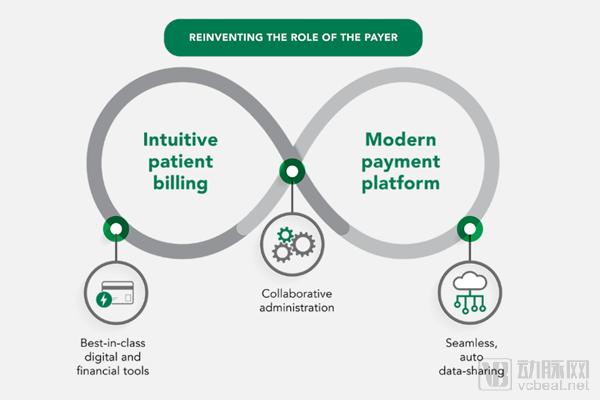
How OODA Health Works (Screenshot from the company's official website)
Typically, patients must wait several weeks after completing treatment to receive medical bills, while hospitals must wait even longer to collect payments. To enable real-time payments and ensure timely reimbursement for hospitals, OODA Health’s primary objective is to dismantle the cumbersome constraints of the claims process.
To this end, OODA Health has partnered with Blue Shield of California to jointly develop a cloud-based software platform. This platform streamlines claims adjudication, medical billing, and patient information collection processes, while providing intuitive patient medical bills.
Meanwhile, OODA Health partners with healthcare providers and acts as an intermediary in processing billing documents, helping them exit the billing collection workflow. After patients receive treatment, OODA Health’s software platform pays healthcare providers immediately based on the information contained in electronic health records (EHRs). Any unresolved payment issues are no longer handled directly by healthcare providers; instead, OODA Health is responsible for engaging with patients to resolve them.
To understand OODA Health through the words of its co-founder and president, Seth Cohen, it is more akin to a credit card company. “If a consumer dines at a restaurant and chooses to pay with a credit card, the restaurant receives payment immediately. The credit card company then handles the subsequent repayment from the consumer.”
Currently, Hill Physicians Medical Group, the largest independent physician association in California, USA, has partnered with OODA Health. In early 2019, Hill Physicians Medical Group implemented OODA Health’s software platform at its Oakland-based clinic, Hill Health, to streamline the patient billing collection process and leverage OODA Health’s real-time claims payment services.
Furthermore, healthcare providers such as Dignity Health, as well as health insurers including Anthem, Blue Cross Blue Shield of Arizona, and Zaffre Investments (a subsidiary of Blue Cross Blue Shield of Massachusetts), have established strategic partnerships with OODA Health.
The key to attracting numerous partners lies in OODA Health’s real-time claims system, which enables a win-win outcome for the entire healthcare ecosystem. Health insurers can avoid delayed billing and penalties for missed payment deadlines; patients facing high deductibles and out-of-pocket costs are not required to pay providers upfront, while intuitive bills make charges easier to understand; and healthcare providers no longer need to pursue outstanding balances, as they receive prompt reimbursement.
OODA Health derives its primary revenue from insurance companies, which pay it administrative fees and risk-sharing payments. However, in reality, OODA Health bears significant risk on the patient side. If patients fail to pay their outstanding medical bills in a timely manner, particularly when they are aware that delinquent medical debts will not impact their credit scores, OODA Health will be unable to maintain effective cash flow operations.
Fortunately, the application of big data can mitigate these risks. When patients complete insurance applications with insurers, they are required to register their credit card information in payment files and may opt for prepayment. By collaborating with insurance companies to collect patient data, OODA Health can leverage its big data platform to anticipate patients’ potential expenditure plans in advance.
“If a patient undergoes a prenatal ultrasound, we can project their potential healthcare expenditures over the next nine months, enabling us to develop a sustainable spending plan in advance to meet their needs,” said Seth Cohen, Co-founder and President of OODA Health.
Of course, the formation of a complex system is not an overnight achievement. Giovanni Colella, Co-founder and CEO of OODA Health, is acutely aware that “the current healthcare payment network is a hodgepodge of payment rules, claims processes, and intermediaries. Transforming this industry requires not only technical fixes but also a rethinking of the entire ecosystem within a complex system characterized by numerous interdependencies.”
To a certain extent, the services provided by OODA Health are somewhat similar to those of Third-Party Administrators (TPAs), as both handle claims processing. However, the key difference is that OODA Health focuses exclusively on real-time claims payment, whereas TPA companies offer a broader range of services, including new policy issuance and policy administration, claims processing, customer service, building networks of healthcare providers, and arranging medical expense settlement services.
Furthermore, OODA Health acts as a connector, integrating healthcare providers, payers, and patients within a single network. In contrast, if categorized by their service recipients, TPA companies fall into three distinct types: those serving payers (including social health insurance, commercial insurance, and individuals), those serving healthcare providers, and those serving patients, with the aim of enhancing the patient care experience.
In fact, while real-time payment in healthcare was just gaining momentum in the United States, China had already introduced commercial insurance direct reimbursement systems similar to OODA Health’s real-time payment system as early as 2016.
In August 2016, Wuhan Central Hospital officially launched China’s first “Online Direct Claim and Payment System for Commercial Health Insurance.” Users of commercial health insurance could enjoy a one-stop comprehensive payment solution combining “basic medical insurance + commercial insurance + out-of-pocket expenses” at the hospital. Commercial insurance claims were settled instantly in “seconds,” allowing for online direct claim processing during outpatient payments and discharge settlements. At that time, Ping An and Taikang, two insurance companies, simultaneously integrated their systems with Wuhan Central Hospital.
In December of the same year, Ping An Good Doctor partnered with Shenzhen Hospital of Southern Medical University to create an innovative “Internet + Insurance + Hospital” model and pioneered the launch of a direct commercial insurance claims settlement system within the industry. Li Wenming, Assistant General Manager of Ping An Life Insurance, stated that this newly implemented direct claims settlement system establishes an industry benchmark for public hospitals directly interfacing with commercial insurance, serving as the first pilot project for a Chinese-style HMO management open platform.
Subsequently, ZhongAn Insurance partnered with WeDoctor to launch China’s first commercial insurance direct billing system for outpatient services at internet hospitals, while Zhengzhou Central Hospital introduced the country’s first direct billing platform for commercial insurance among Grade 3A hospitals. Direct billing through commercial health insurance is gradually becoming a prevailing trend in China’s healthcare payment sector.
Industry insiders have stated that due to the wide variety of health insurance products and technical factors such as hospitals’ internal systems, the increasing number of insurance companies integrating with hospital systems may place significant pressure on cybersecurity, thereby slowing the development of direct billing services for commercial health insurance. However, in the long run, health insurance’s entry into hospitals through payment channels can foster a large-scale ecosystem and exert a profound impact on the existing landscape of the healthcare industry.