

Baidu Huang Yan: Embracing Open Collaboration in the AI Era to Empower a New Healthcare Ecosystem with Lingyi
In recent years, artificial intelligence (AI) has emerged as a significant force in clinical medical applications, becoming an important “assistant” for physicians. VCBeat (WeChat Official Account: vcbeat) has learned that on April 1, the 2019 International Forum on Medical Artificial Intelligence and the Joint Meeting of the ITU and WHO Focus Group on Artificial Intelligence for Health convened in Shanghai.
During the session on innovations in new medical AI technologies, Huang Yan, Senior Director of Baidu’s AI Innovation Business Division and General Manager of Smart Healthcare, was invited to deliver a speech. She shared insights on how AI will transform the healthcare ecosystem amid accelerating population aging and structural imbalances in medical resource distribution. Additionally, she showcased several practical applications where Baidu Brain leverages AI capabilities to empower healthcare. Huang Yan stated, “Equality in life and health is what we have always pursued. We hope to harness the power of AI to ensure that every individual worldwide has access to adequate medical security and services.”
As the highest-level conference in China on “AI + Healthcare” to date, it brought together top experts and elites from academia and industry to Shanghai Expo Center to jointly explore solutions for leveraging artificial intelligence to stimulate and unlock the potential of the healthcare sector.
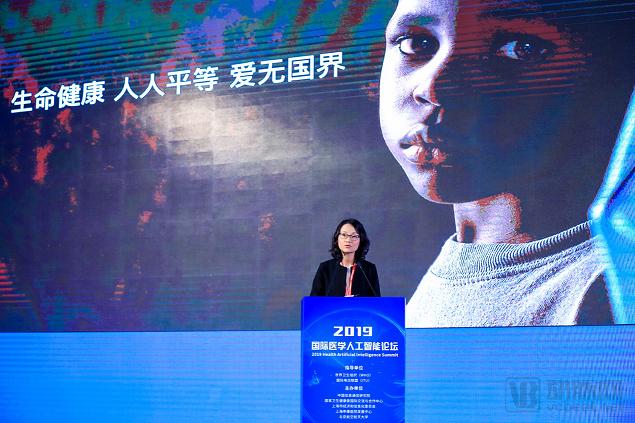
In her speech, Huang Yan pointed out that on a global scale, deep population aging, limited medical resources, and the heavy healthcare burden pose significant challenges to human health. In China, structural imbalances in medical resources have intensified these challenges, with the phenomenon of “tertiary hospitals being overcrowded while primary care facilities remain nearly empty” long being the norm for domestic hospitals. Data show that over the years, tertiary hospitals, which account for only 8% of the total number of hospitals, have shouldered the responsibility for 40% of outpatient visits and inpatient admissions.
Driven by the urgent needs and critical pain points stemming from the severe imbalance between medical supply and demand in China, the AI healthcare industry has witnessed rapid growth. Huang Yan stated that, strongly supported by three major trends—digitalization, intelligence, and cloud adoption—the healthcare ecosystem will shift from being hospital-centric to patient-centric, and from a focus on treatment to an emphasis on health management. This transformation will bring about a fundamental upgrade of the entire healthcare ecosystem. However, due to the highly specialized and rigorous nature of the medical industry, the barrier to implementing AI in healthcare is higher than in other sectors. Achieving widespread adoption requires substantial accumulation of AI technologies and extensive experience in deploying AI applications.
Baidu boasts the most robust accumulation of AI technology and the most extensive experience in deploying AI applications, providing a solid foundation for the implementation of AI in the healthcare industry. Baidu Lingyi is a prime example of Baidu leveraging its AI technology to empower the healthcare sector. According to Huang Yan, Baidu Lingyi has achieved widespread application and made phased progress in three key areas: primary care screening, clinical decision support, and structuring medical data.
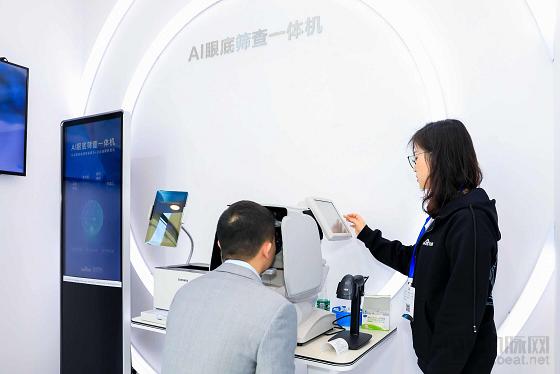
She began by introducing Baidu Lingyi’s practices in leveraging AI to support primary care screening. Taking fundus screening as an example, studies have shown that individuals aged 40 and above are at high risk for fundus diseases. Most fundus conditions can be detected and treated early through regular fundus photography screening, significantly reducing the rate of blindness. In China, there are over 600 million people in this high-risk group, yet there are only 36,000 professional ophthalmologists, with merely a few thousand specialists capable of interpreting fundus images. Built on a robust foundation of fundus imaging data, Baidu Lingyi has developed a fundus screening software system by integrating an interpretable algorithm architecture based on evidence-based medicine with high-accuracy deep learning algorithms. Through deep integration with fundus cameras, it has created an all-in-one AI fundus screening device combining both hardware and software. The system can screen for three major blinding fundus diseases—diabetic retinopathy, glaucoma, and macular degeneration—with an accuracy rate of 94%, approaching the diagnostic capability of physicians at top-tier (Grade 3A) hospitals. It generates examination reports in just 10 seconds and supports offline operation, fully meeting the needs of primary care screening. According to current pilot programs in primary care settings, this product has been highly acclaimed by grassroots physicians.
Beyond medical imaging, Baidu Lingyi is also deeply engaged in the field of clinical decision support. Faced with complex and diverse medical conditions, many primary care physicians in China lack sufficient expertise and experience. Baidu Lingyi’s Clinical Decision Support System (CDSS) aims to provide every primary care physician with a professional, accurate, and readily accessible medical assistant, thereby enhancing the quality of diagnosis and treatment.
Baidu Lingyi’s CDSS system is underpinned by a robust technical framework. First, by learning from authoritative textbooks, pharmacopoeias, clinical guidelines, and vast amounts of medical record data from Grade A tertiary hospitals, it has constructed semantic associations between hundreds of millions of heterogeneous data points and knowledge graphs, covering tens of millions of medical facts, thereby solidifying the foundation of its medical knowledge graph. Leveraging decision-support technologies such as deep learning and multi-layer Bayesian networks, it has ultimately realized a Clinical Decision Support System (CDSS). Building on this foundation, its capabilities have been productized and deployed, currently enabling multiple functional modules—including assisted diagnosis, treatment plan recommendations, clinical quality control, and similar case retrieval—to safeguard and support primary healthcare services.
Currently, Baidu Lingyi’s CDSS product covers 27 standard clinical departments and over 4,000 diseases, essentially encompassing common disease categories, with a recommendation accuracy rate of 95% for the top three diseases. Meanwhile, the adoption of evidence-based algorithms ensures result interpretability, providing physicians with a rational basis for clinical decision-making.
The third practice introduced by Huang Yan is to “structure” medical data. Leveraging Baidu’s overwhelmingly leading natural language processing technology, Baidu Lingyi’s solutions can organize medical record texts across three levels—temporal dimensions, medical entities, and entity attributes—thereby transforming medical information into structured, computable formats. Structuring medical data can assist hospitals in clinical practice and support physicians’ scientific research. It also provides data-driven support for government public health decision-making and operational support for insurance enterprises, such as underwriting, claims assessment, and design of new insurance products. More importantly, it serves every stage of pharmaceutical R&D, reducing development costs and accelerating time-to-market. This truly unlocks the “fuel” value of data, revitalizes the industry ecosystem, and promotes rapid sectoral growth.
Finally, Huang Yan stated, “The integration of the traditional healthcare industry with AI represents the convergence of two distinct worlds, a process that is bound to be fraught with challenges. We firmly believe that working in isolation is contrary to the spirit of the AI era. Instead, we are committed to an open and win-win approach, collaborating with partners to jointly build the foundational infrastructure for AI. The future healthcare ecosystem will undoubtedly be the result of our collective efforts.” Love knows no borders, AI knows no borders, and healthcare knows no borders. Baidu consistently maintains an open stance, welcoming industry partners across China and around the globe. We look forward to sharing our extensive practical experience and accumulated expertise worldwide, helping to bridge the gap in unequal medical resource distribution and contributing to a shared community of human health.
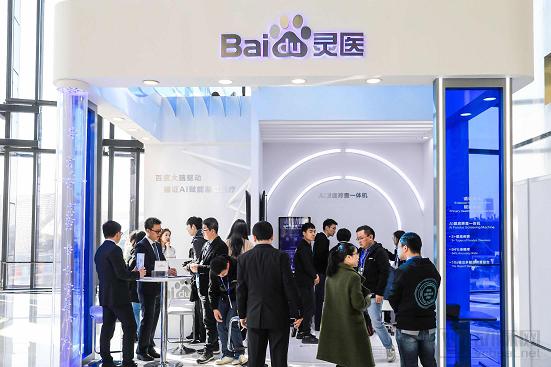
During the conference, accompanied by Huang Yan, the attending leaders jointly visited the Baidu Lingyi exhibition area. The event also attracted numerous industry professionals, with many guests personally experiencing the AI fundus screening all-in-one machine and learning about products such as the intelligent triage and guidance system and the Clinical Decision Support System (CDSS).