

DXY Releases '2018 Digital Lives of Doctors and Patients Report': 76% of Physicians Express Optimism Toward the Future of Internet Hospitals
In the Internet era, how can market opportunities be captured through physician-patient behavioral data? How can digitalization be leveraged to penetrate into physicians’ clinical workflows? On April 3, these topics were thoroughly discussed by over 300 professionals from more than 80 healthcare companies at the DXY Elite Club Medical Digital Innovation Sharing Session.
At the event, DXY and Kantar Health jointly released the “2018 Report on the Digital Lives of Chinese Doctors and Patients.” Since 2012, the two organizations have published this report annually, providing data support and professional insights to help the industry understand the real-life experiences of doctors and patients in the digital environment.
This report collected over 10,000 data points, comprehensively covering physicians of various ranks across more than 4,000 hospitals at all levels in urban and rural areas, spanning over 30 medical specialties. The patient cohort included more than 1,800 samples, encompassing departments such as respiratory medicine, cardiology, infectious diseases, and oncology.
Elite Club is a high-quality, regular exchange initiative launched by DXY, targeting elite professionals in the healthcare and medical sectors. Participants primarily include senior executives from pharmaceutical, medical device and equipment, and insurance companies, as well as stakeholders from investment firms and consulting agencies with a focus on the healthcare industry. Each session invites multiple guests from diverse fields to discuss and exchange views on current hot topics in the industry, sharing advanced insights into digital business development and management practices.
The report shows that doctors spend an average of 29.2 hours online per week, with 16.2 hours dedicated to medical-related activities. While the overall internet usage time remains on par with 2017 levels, the time spent on medical-related content has increased by 0.7 hours. Among these, WeChat has become the primary channel for doctors to obtain information, followed by websites and mobile apps.
During online activities, physicians primarily engage in seven categories of activities: acquiring medical professional knowledge and information, searching for medical literature/data, using specialized medical tools, participating in continuing medical education, engaging in professional communication and exchange, conducting free doctor-patient interactions, and generating compliant income.
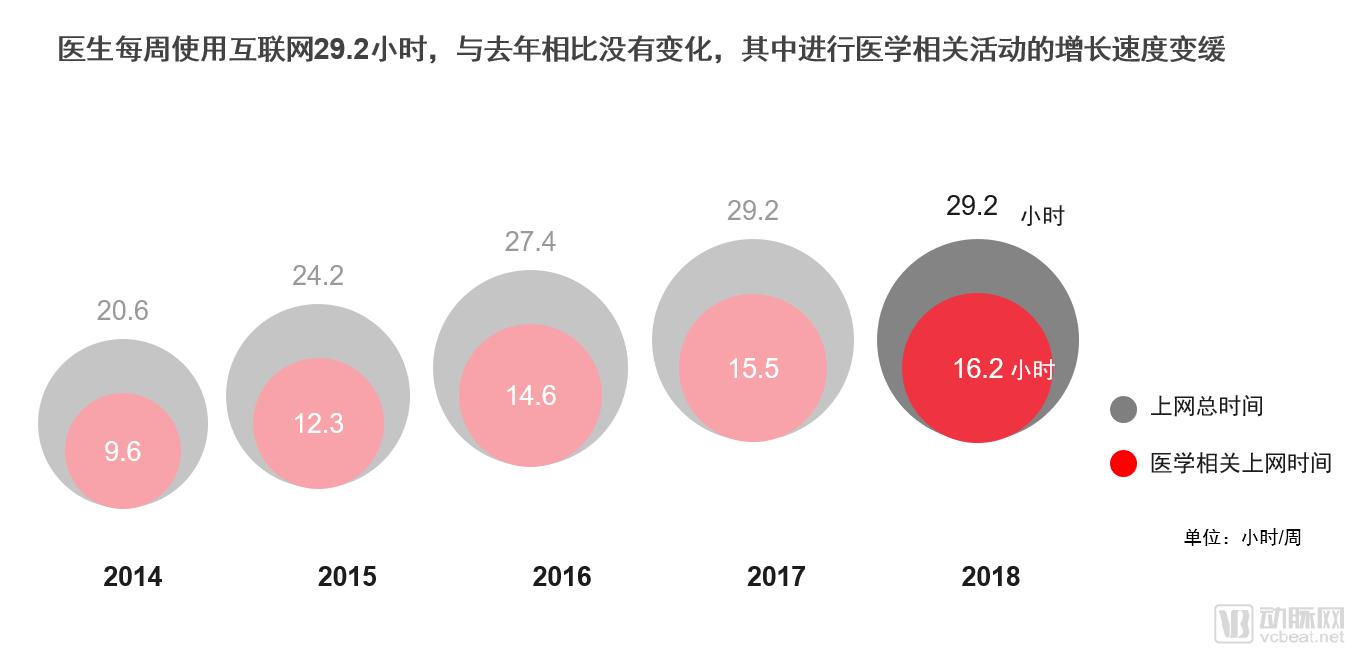
According to statistics, regarding the acquisition of medical-related information, which consumes the most time, physicians participating in the survey downloaded an average of 14 medical articles per week. Young physicians under the age of 30 downloaded as many as 21 articles per week. Furthermore, physicians in first- and second-tier cities and tertiary hospitals demonstrated a significantly higher demand for medical literature compared to their counterparts.
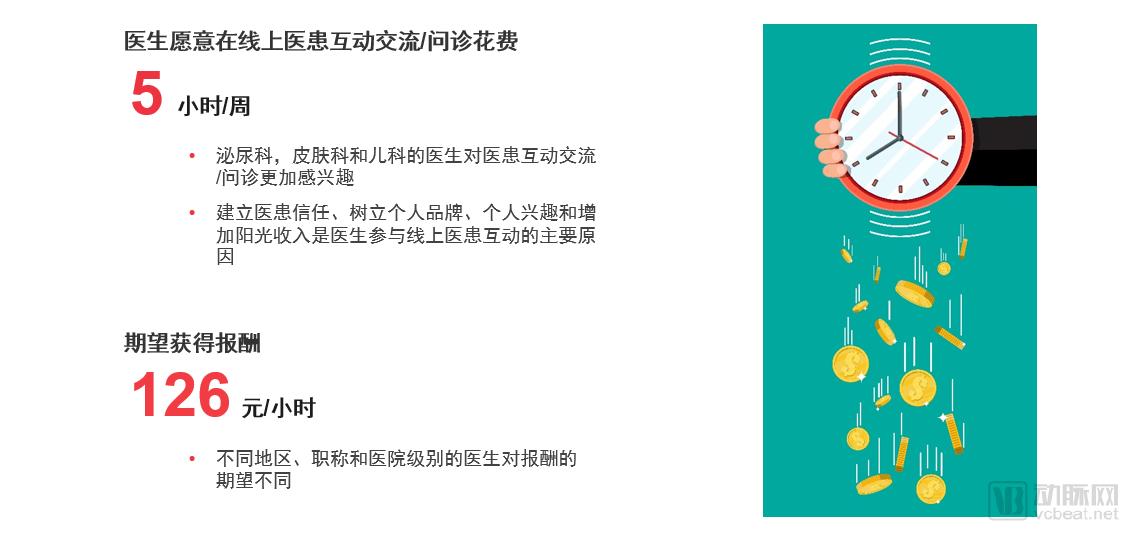
It is worth noting that the majority of physicians have conducted online consultations on third-party platforms, and over 10% reported that their hospitals have established doctor-patient interaction platforms. Furthermore, physicians are willing to dedicate five hours per week to online doctor-patient communication.
Building doctor-patient trust, establishing personal brands, and increasing legitimate income are the primary reasons for physicians to engage in online doctor-patient interactions. Expectations regarding compensation vary among physicians across different regions, professional titles, and hospital tiers, with RMB 126 per hour considered a reasonable rate by most physicians.
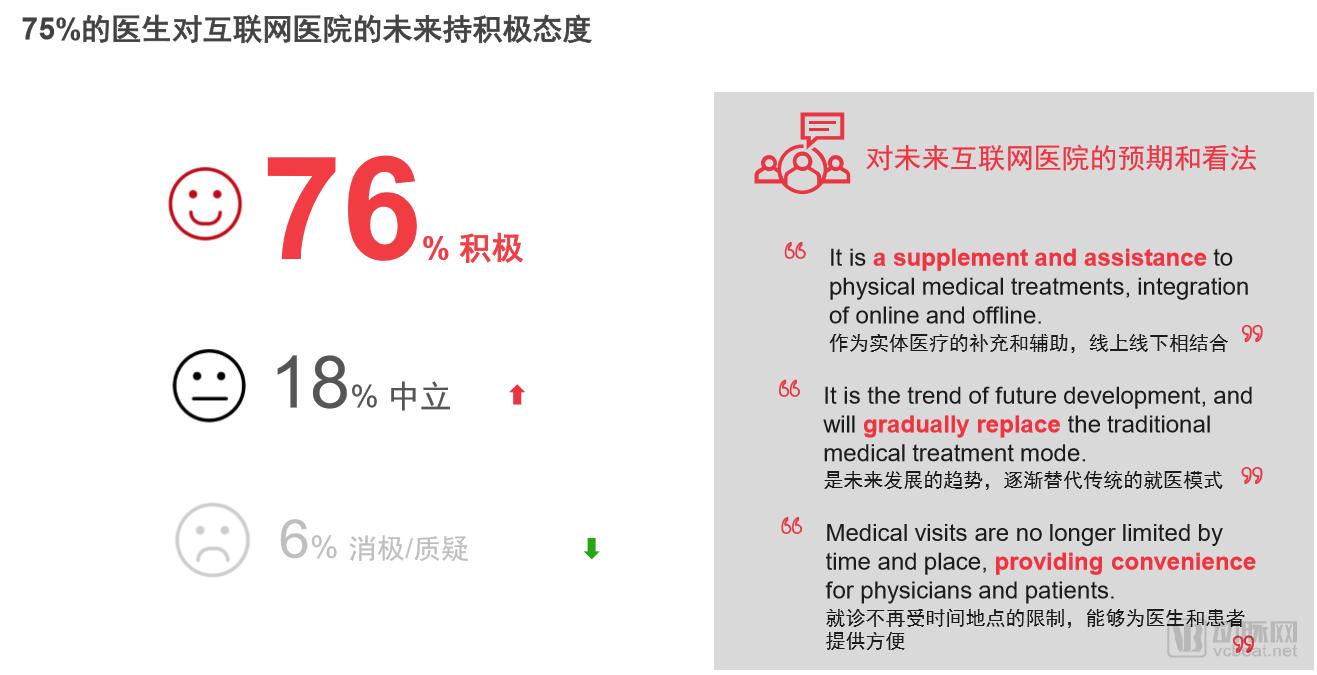
In 2018, the promulgation and implementation of multiple policies on internet healthcare propelled the industry into a fast lane, with the physician community being no exception. Among them, 76% of physicians held a positive outlook on the future development of internet hospitals.
They believe that internet hospitals represent a future development trend, serving as a supplement and aid to physical medical institutions. Medical consultations are no longer constrained by time and location, providing convenience for both doctors and patients. Meanwhile, 42% of physicians believe that artificial intelligence will become an auxiliary tool for clinical diagnosis in the future.
Although digital life has had a profound impact on physicians, survey results also indicate that their need for access to medical literature remains unmet. Furthermore, regarding online consultations, many physicians believe that the returns are far outweighed by the time and effort invested.
Report data shows that Chinese patients spend 26 hours per week online, with 7 hours dedicated to medical-related activities, accounting for 29%, a 3% increase compared to 2017.
Over the course of seven hours of medical-related activities, ten categories—including public education on medicine and diseases, medication assistance and references, and online consultations—accounted for the total time patients spent on medical matters. Notably, information about and purchase of commercial health insurance entered the top ten rankings for the first time this year.
Patients are most interested in basic disease knowledge/popular science education, wellness and healthcare information, as well as drug information and usage instructions. However, patient satisfaction with medical-related information found through online searches is not high, with 84% of patients questioning the medical information obtained online.
In terms of search channels, Baidu remains the most widely used search engine; however, the share of more specialized platforms with stronger functionality, such as Dingxiang Doctor, is steadily rising, as patients place greater trust in information found on professional physician communities and websites.
As patients access more medical information through digital platforms, their willingness to participate in developing treatment plans has increased. The model of shared decision-making between doctors and patients is becoming increasingly common. Data shows that decisions made solely by physicians account for 47%, shared decision-making accounts for 31%, and decisions made solely by patients account for 21%. However, in oncology departments, patients rarely engage in shared decision-making with their doctors; 81% of decisions are made solely by physicians.
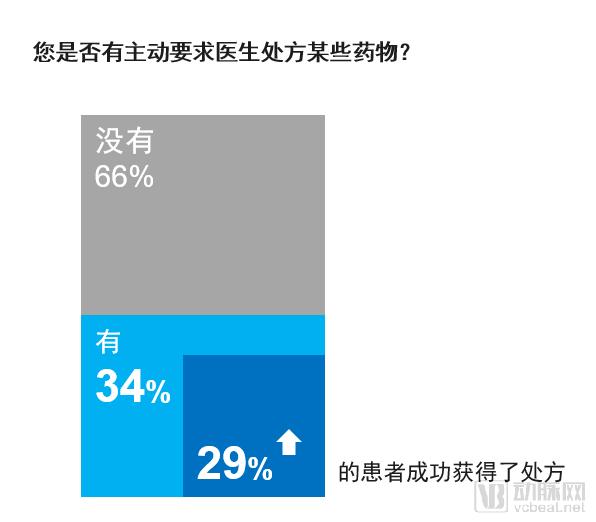
Data show that 34% of patients proactively request prescription medications from their physicians, with 29% of these requests being fulfilled.
In addition, the proliferation of medical information has also influenced patients’ healthcare-seeking attitudes. Eighty-four percent of patients are willing to accept free online consultations, facilitating the mutual flow between online and offline services. More than 30% of patients are influenced by doctors’ viewpoints on public media when seeking specialists and making online appointment registrations. Forty-five percent of patients purchase medications online, with JD.com, Tmall, and Ping An Good Doctor being the most popular online pharmaceutical platforms.
Nevertheless, an indisputable fact remains that finding hospitals/experts is still the greatest unmet need for patients.
Li Zheng, Business Director at Kantar Health, stated, “The time patients spend obtaining medical information via the internet is continuously increasing, yet 84% of patients harbor varying degrees of skepticism toward online medical information. Healthcare professionals are poised to identify business opportunities by providing accurate, responsible science popularization and professional information.”
So how can these healthcare professionals realize the innovative value of digital doctor-patient services and identify business opportunities?
Zhang Wei, Vice President of DXY and Head of the Corporate Cooperation Division, stated that the doctor-patient value chain extends from specialists to frontline physicians, then to patients, and finally to their families. This structure forms the foundation for four interconnected infrastructure sectors in the healthcare industry: physician education, physician-physician interaction, doctor-patient interaction, and patient services. “By leveraging data on doctor and patient behaviors, we can accurately and effectively analyze needs, empower both doctors and patients, and achieve an optimal combination of efficiency and effectiveness.”
Chen Baiping, a Partner and Managing Director at Boston Consulting Group, believes that pharmaceutical companies should shift their focus from product marketing to service marketing to improve operational efficiency. He stated, “For instance, by collaborating with internet hospitals, pharmaceutical companies can facilitate physician education and empower patients in chronic disease management, thereby establishing a sustainable and effective marketing model.”
Xue Chunrong, Director of the Corporate Cooperation Division at DXY, believes that integrated doctor-patient care is an effective approach to exploring innovative models amidst the evolving landscape of the healthcare industry. In 2018, DXY collaborated with multiple stakeholders, including the National Health Commission and the Chinese Center for Disease Control and Prevention, to jointly establish the China Influenza Prevention, Control, and Service Cloud Center. By integrating data from various sources, the center identified a strong correlation between online learning behaviors among medical students and disease outbreaks. Based on these findings, it developed a comprehensive content system for disease treatment and a dissemination and education program, thereby enabling timely feedback and effective control of influenza epidemics.
Furthermore, DXY has adopted a medical consortium model based on intelligent dermatology, leveraging AI to assist primary care physicians in diagnosis. This approach helps establish specialized dermatology medical consortia, integrates regional healthcare resources, and empowers physician education and patient management, thereby steadily enhancing the overall efficiency of medical services.