

Sangamo and Pfizer Report Early Positive Data for Hemophilia A Gene Therapy SB-525, with Factor VIII Levels Exceeding Expectations

Sangamo Therapeutics
Genomic Medicine Developer
Editor’s Note: This article is reprinted from YiMaiKe, authored by Chen Wanyi. VCBeat has been authorized to republish it.
On February 7, Sangamo announced preliminary data from SB-913, the first in vivo zinc-finger nuclease (ZFN) genome-editing therapy, demonstrating that in vivo genome editing had occurred and that genome-edited hepatocytes enabled patients with Hunter syndrome to produce the deficient enzyme iduronate-2-sulfatase (IDS).
However, the increase in cellular enzyme levels was insufficient to convince investors that the therapeutic design was effective. Sangamo also reported results from another in vivo genomic study involving patients with Hurler syndrome. The company acknowledged that the results fell short of expectations but expressed confidence in its zinc-finger nuclease approach. Additional data from patients receiving higher doses of gene therapy are expected later this year.
This marks Sangamo’s steepest stock price decline in nearly a decade, with shares dropping more than 30%, while the stocks of several other gene-editing-focused companies also plunged by 8%–9%.

On April 2, Sangamo and its partner Pfizer announced interim data from the Phase 1/2 study of their investigational gene therapy for hemophilia A. The data showed that SB-525 was generally well-tolerated and demonstrated a dose-dependent increase in factor VIII (FVIII) levels across four dose cohorts. A total of eight patients received treatment. Based on these results, the Safety Monitoring Committee (SMC) recommended expanding the cohort at the 3e13 vg/kg dose level.
On the day the data was released, Sangamo’s stock price surged 45% in early trading, marking its largest single-day gain since May 2017 and reaching a five-month high, before closing up 28.96%; shares of its partner, Pfizer, also rose gradually.
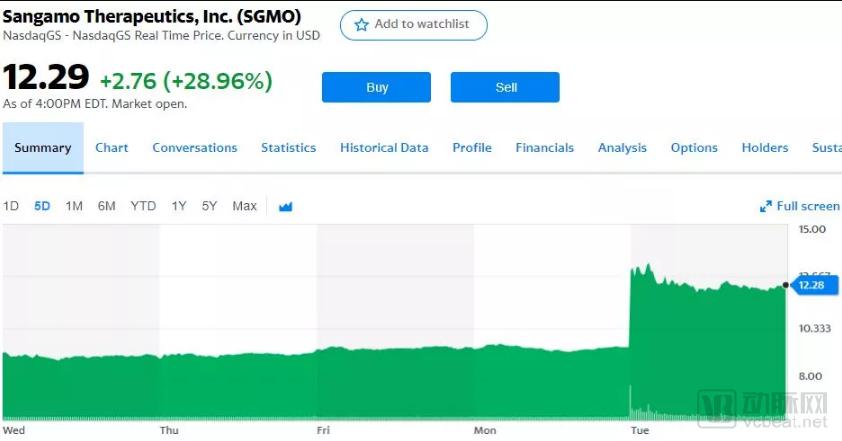
Check out these thrilling waves! (Image source: Yahoo)
“Interim data from the first eight patients with hemophilia A treated with SB-525 gene therapy in the Alta study are encouraging, demonstrating dose dependency, sustained factor levels, and low variability both within and across patient cohorts,” said Dr. Edward Conner, Chief Medical Officer at Sangamo. “These interim results suggest that SB-525 may be well tolerated, with predictable and durable therapeutic effects, offering clinical benefits to patients with hemophilia A.”
SB-525 is a recombinant adeno-associated virus serotype 6 (AAV6) vector encoding complementary DNA (cDNA) for B-domain-deleted human factor VIII (FVIII). The SB-525 vector cassette is designed to optimize vector manufacturing yield and liver-specific FVIII protein expression. The SB-525 transcription cassette incorporates multifactorial modifications to the liver-specific promoter module, the FVIII transgene, the synthetic polyadenylation signal, and the vector backbone sequences.
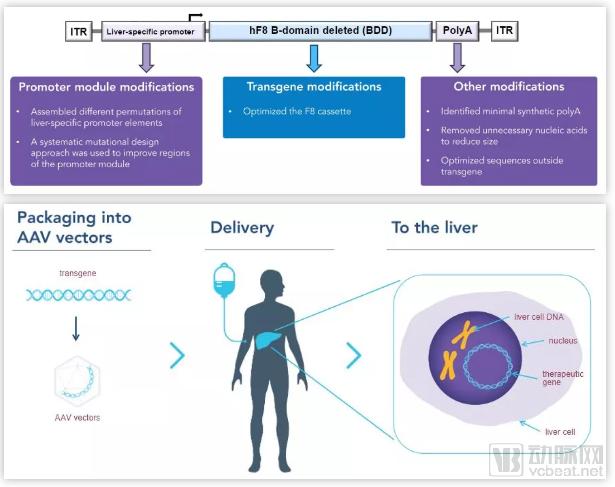
Structure and Treatment Protocol of SB-525 (Image source: Sangamo)
Alta Study
Including 8 patients treated across 4 escalating dose cohorts (9e11 vg/kg, 2e12 vg/kg, 1e13 vg/kg, and 3e13 vg/kg, with 2 patients per cohort).
Efficacy
Patients exhibited a dose-dependent increase in FVIII levels, achieving clinically relevant increases in FVIII activity in the higher-dose groups and normal FVIII levels (normal range: 50–150%) in the highest-dose group (3e13 vg/kg).
At week 6 post-infusion, FVIII levels in the two patients in the highest dose cohort reached 140% and 94% of normal values (measured by one-stage clotting assay) and 93% and 65% of normal values (measured by chromogenic assay). A dose-dependent reduction in the use of FVIII replacement therapy was also observed. Patients in the highest dose cohort did not require factor replacement therapy after the initial prophylactic administration, and no bleeding events have occurred to date.
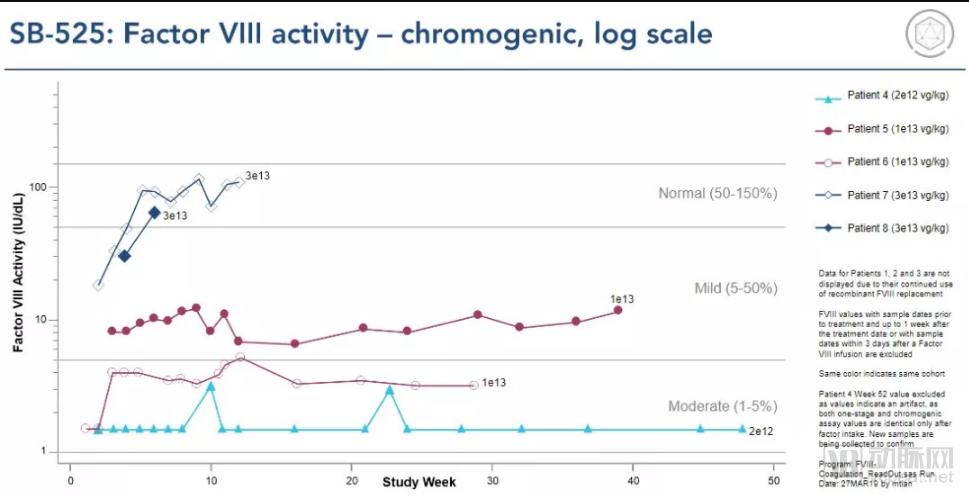
(Image source: Sangamo)
Sangamo’s April 3 analysis excluded three patients—two who received a dose of 9e11 vg/kg and one who received 2e12 vg/kg—because they did not exhibit factor levels above the detectable range.
Safety Profile
SB-525 was generally well tolerated. One subject in the highest dose group reported serious adverse events of treatment-related hypotension and fever, which were resolved with treatment. The same patient experienced elevated liver enzymes exceeding 1.5 times the upper limit of normal, which were subsequently resolved with oral steroids. However, elevated liver enzymes are not uncommon in gene therapy, and the patient did not exhibit any loss of FVIII activity during this process.
Patients in the Alta study did not receive prophylactic steroid therapy. No treatment-related serious adverse events were observed in the first three cohorts, and no elevations in liver enzymes requiring corticosteroid treatment for more than seven days occurred.
“We are encouraged by the early clinical data, which demonstrate the tolerability of the recombinant AAV6 vector and the potential for normalization of FVIII levels. We look forward to the opportunity to expand the cohort receiving the 3e13 vg/kg dose and subsequently proceed with our pivotal study program,” said Seng Cheng, Senior Vice President and Chief Scientific Officer of Pfizer’s Disease Research Unit. “As the development and commercialization partner for SB-525, we are encouraged by the prospect that SB-525 may one day transform the treatment landscape for patients with hemophilia A.”
Per the SMC recommendations and study protocol, Cohort 4 will be expanded to include up to five patients. Patient enrollment is ongoing.
For Sangamo
Cowen analyst Ritu Baral wrote that the news regarding SB-525 was “very encouraging,” demonstrating a competitive advantage in the treatment’s risk/benefit profile. Although the small patient population and relatively short follow-up period leave the durability of response as an unresolved question, FVIII expression levels were comparable to those of competitors with minimal variation. Meanwhile, its favorable safety profile may also provide a competitive edge.
In February, Roche announced that it would acquire Spark Therapeutics for $4.8 billion; Spark is currently conducting Phase 3 development of SPK-8011, a gene therapy for hemophilia A.
SPK-8011 utilizes Spark200, a bioengineered AAV capsid optimized for more efficient transduction of hepatocytes, and contains an optimized B-domain-deleted FVIII expression cassette. In the Phase 1/2 trial, 12 patients with hemophilia A were treated with SPK-8011. As of November 2, 2018, there were no inhibitor developments, no thrombotic events, and no persistent or unresolved elevations in transaminases. Across all three dose cohorts, the annualized bleeding rate decreased by 94% and FVIII infusion requirements decreased by 95%, starting from the fourth week after vector infusion.
Of concern, seven patients received courses of oral steroids with diminishing responsiveness, including five in the low-dose group (2e12 vg/kg). All subjects responded to vector infusion with increased circulating FVIII levels. Two subjects in the 2e12 vg/kg group exhibited suspected capsid immune responses, leading to a decline in their FVIII levels to below 5%. One of these subjects did not respond promptly to oral steroids and was selectively hospitalized to receive two intravenous methylprednisolone injections. The event subsequently resolved without persistent adverse effects other than reduced FVIII activity. Hospitalization for these infusions met the criteria for serious adverse events.
The company is expected to provide further updates on its Phase 1/2 study in mid-2019, which will include an additional dose cohort of 2e12 vg/kg. Each cohort will enroll 5 to 10 subjects receiving products manufactured using our suspension-based manufacturing process, and will evaluate a prophylactic rather than reactive steroid dosing regimen, with the goal of reducing or eliminating immune responses.
The immunogenicity issues surrounding SPK-8011 remain to be resolved, and data from expanded studies will be crucial. It remains to be seen whether Spark Therapeutics’ new manufacturing process can enhance the safety of its product.
Meanwhile, another competitor, BioMarin’s valoctocogene roxaparvovec (valrox), is undergoing Phase 3 clinical trials. The company was the first to develop a gene therapy for hemophilia A, and valrox had previously received Breakthrough Therapy designation from the U.S. FDA, with an independent editorial in the NEJM describing it as “a cure for hemophilia.”
The aforementioned candidate gene therapies share a similar mechanism of action, all utilizing adeno-associated virus (AAV) vectors to deliver functional copies of the FVIII gene into patients. However, based on current data, the clinical profile of valrox is more compelling compared to that of SPK-8011.
In the Phase 1/2 clinical trial named GENEr8-1, a total of 40 patients with hemophilia A were enrolled. At a dose of 6e13 vg/kg, the therapy reduced the mean annualized bleeding rate by 97%. Furthermore, up to 104 weeks post-treatment, the mean factor VIII (FVIII) consumption decreased by 96%, with FVIII activity levels maintained at 59% of the normal range and a median level approaching normal at 46%. In addition, valrox demonstrated good tolerability; no patients developed inhibitors against exogenous FVIII, and no patients withdrew from the clinical trial.
However, concerns regarding the durability of valrox persist. Data from the Phase 1/2 trial, presented at the World Federation of Hemophilia (WFH) conference in Glasgow, UK, last May, showed a significant decline in FVIII expression levels at the two-year mark in the highest-dose cohort (6e13 vg/kg) compared to the levels previously reported at the ASH annual meeting. These concerns are likely to persist until the company releases three-year data later this year.
Sangamo investors undoubtedly hope that the latest SB-525 may outperform SPK-8011 and valrox.
However, Sangamo’s project still has a long way to go: before entering Phase III, 3 to 5 patients will be treated with high doses in the Alta study. Longer-term data are also needed to determine the durability of SB-525.
Pfizer is responsible for late-stage development. During a conference call, Sangamo executives noted that its partner would determine the dose of SB-525 to be used in pivotal trials. Under the agreement, Sangamo is eligible for $475 million in milestones, with $300 million tied to SB-525.
For Pfizer
In addition to its pipeline for hemophilia A gene therapy, Pfizer is advancing Spark Therapeutics’ hemophilia B gene therapy program and is responsible for initiating the Phase 3 clinical trial.
Under the terms of the agreement, Pfizer will solely bear responsibility for clinical development, regulatory affairs, manufacturing, and global commercialization of any products associated with its hemophilia B gene therapy program. According to ClinicalTrials.gov, the company is currently recruiting patients for a 6-month “lead-in” study, which will serve as part of the control group in the subsequent Phase 3 clinical trial.
On the same day, Sangamo announced early data for ST-400, a ZFN gene editing-based ex vivo gene therapy developed in collaboration with Sanofi for the treatment of β-thalassemia.
The data are still in their early stages, but they may represent a robust proof-of-concept for the ability of ZFN technology to edit cell genomes ex vivo.
The first patient with transfusion-dependent beta-thalassemia treated with ST-400 in the Phase 1/2 trial showed data indicating successful editing of the gene responsible for the disease. Following infusion, the patient exhibited increased hemoglobin levels and became transfusion-independent after a brief period (approximately two weeks) of regular transfusions. The patient experienced a severe but transient allergic reaction associated with the cryoprotectant in the product. This appeared to be an individual-specific reaction rather than one related to the treatment itself.
On April 2, Sangamo announced an agreement with Brammer Bio, a contract development and manufacturing organization (CDMO) specializing in gene therapy, to secure large-scale AAV manufacturing capacity. Recently, Thermo Fisher Scientific announced its acquisition of the latter for $1.7 billion.
In addition, Sangamo is constructing a new facility in Brisbane, California—a Phase 1/2 cGMP manufacturing plant—expected to become operational in 2020.
The agreement with Brammer Bio provides Sangamo with dedicated AAV manufacturing capacity at bioreactor scales of up to 2,000 liters, enabling large-scale commercial production for products such as ST-920, Sangamo’s gene therapy candidate for Fabry disease. The agreement also allows Sangamo to leverage Brammer Bio’s viral vector manufacturing technologies at its new Brisbane facility, ensuring a seamless transition from early development through late-stage clinical trials to commercial-scale manufacturing.
Over the past two months, gene-editing company Sangamo has experienced its share of ups and downs. The recent surge in its stock price has offset earlier losses, but before achieving true success with its gene therapies, the company must treat more patients and demonstrate long-term data.
References:
https://investor.sangamo.com/news-releases/news-release-details/sangamo-and-pfizer-announce-phase-12-interim-data
https://www.bloomberg.com/news/articles/2019-04-02/sangamo-soars-as-hemophilia-gene-therapy-results-quiet-bears
https://www.biopharmadive.com/news/sangamo-setback-pulls-down-gene-editing-biotech-peers/548024/
https://medcitynews.com/2019/04/sangamos-shares-skyrocket-on-early-gene-therapy-data-in-hemophilia-beta-thalassemia/?rf=1
https://www.evaluate.com/node/14551/amp?__twitter_impression=true