

Nanjing Micro-Tech and Shanghai MicroPort HeartFlow Advance Toward STAR Market Listings with Innovative Medical Device Portfolios

MICRO·TECH
Minimally Invasive Medical Device R&D and Manufacturer
VCBeat (WeChat ID: vbeat) has learned that Nanjing Micro-Tech Medical Technology Co., Ltd. (hereinafter referred to as “Nanjing Micro-Tech”) is included in the latest list of companies accepted for review on the STAR Market. From 2016 to 2018, Nanjing Micro-Tech’s operating revenues were RMB 410 million, RMB 640 million, and RMB 920 million, respectively, with a compound annual growth rate of 49.19%.
On the same day, MicroPort Scientific Corporation (00853.HK) announced its plan to spin off its subsidiary, MicroPort Endovastec, for listing on the STAR Market. The Stock Exchange of Hong Kong has confirmed that the Company may proceed with the proposed spin-off.
Established in 2000, MICRO·TECH initially focused on the R&D, manufacturing, and sales of endoscopic diagnostic and therapeutic devices and consumables. It later expanded its product portfolio to include tumor ablation equipment and consumables through mergers and acquisitions. Its subsidiary, Kangyou Medical, is primarily engaged in the manufacturing of tumor ablation equipment and consumables.
Endoscopic diagnostic and therapeutic instruments refer to auxiliary, disposable devices used in endoscopic diagnosis and treatment, excluding medical endoscopes and their supporting equipment. These instruments include biopsy forceps, stents, and others, and are applicable to the diagnosis and treatment of diseases in the digestive tract, respiratory tract, urinary system, and other areas, such as gastric cancer, esophageal cancer, and colorectal cancer. The rate of endoscopic examination in China is low, indicating significant room for development.
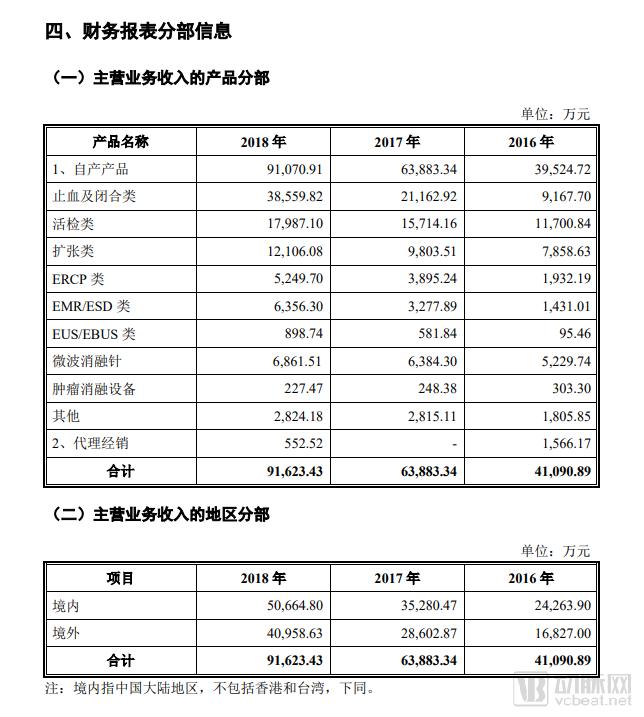
Sales Data of MICRO·TECH's Main Products
There is significant room for import substitution in this market. International endoscopic diagnostic and therapeutic device manufacturers, represented by Boston Scientific, Cook Medical, and Olympus, hold a substantial share of the domestic market in China. Over 80% of China’s endoscopic diagnostic and therapeutic devices rely on imports.
Potential domestic competitors that could emerge as substitutes in the Chinese market include: Changzhou Jiuhong Medical Instrument Co., Ltd., Anrui Medical Devices (Hangzhou) Co., Ltd., Micro-Tech Group, Aohua Medical, and Sonoscape Medical.
As is well known, companies listed on the STAR Market are subject to stringent requirements for technological innovation. Currently, Micro-Tech’s Endoscopic Optical Coherence Tomography (EOCT) system represents the first application of optical coherence tomography technology in China for early cancer diagnosis within the natural lumens of the digestive tract, and it is the second EOCT system worldwide to achieve commercialization.
Endoscopic Optical Coherence Tomography (EOCT) pioneers the integration of optical coherence tomography with endoscopy. It achieves an axial resolution of 6 to 7 micrometers, which is 10 to 15 times higher than that of endoscopic ultrasound, and provides an imaging depth of 5 millimeters. This capability is sufficient to visualize the layers commonly affected by gastrointestinal diseases, namely the mucosa, submucosa, and muscularis propria.
Another innovative product is the endoscopic ultrasound system. Endoscopic ultrasound (EUS) represents an organic integration of ultrasound technology with digestive endoscopy, enabling endoscopists to extend their visual field beyond the limitations of naked-eye observation to structures beneath the superficial tissue layer, thereby facilitating earlier detection of lesions. In particular, EUS-guided fine-needle aspiration (FNA) and related techniques allow for the acquisition of pathological specimens, which are of significant importance in differentiating between benign and malignant lesions and in tumor staging.
In 2017, Micro-Tech Group planned to list on the Shanghai Stock Exchange; however, its IPO review was terminated in March 2018. Previously, the company had faced criticism for excessively high sales expenses. According to data disclosed in its prospectus, Micro-Tech’s R&D expenditure in 2018 amounted to nearly RMB 50 million, while its sales expenses reached RMB 180 million.
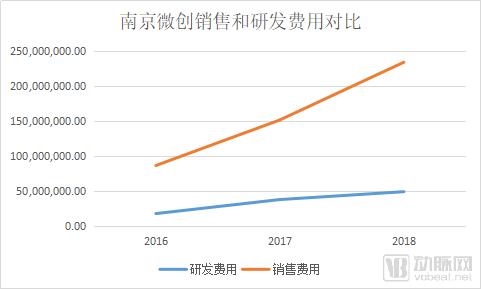
Source: MICRO·TECH IPO Prospectus; Unit: RMB
MicroPort Endovascular is one of the subsidiaries of Shanghai MicroPort Medical (Group) Co., Ltd. (HK: 853) (hereinafter referred to as “MicroPort Endovascular™”). Its main products include thoracic and abdominal aortic stent graft systems, intraoperative stent systems, large balloons, and peripheral vascular stents. The company’s products are widely used in Grade IIIA hospitals across China and exported to countries and regions in South America, Southeast Asia, and beyond.
MicroPort achieved revenue of US$670 million in 2018, a year-on-year increase of 8.44%, with net profit attributable to shareholders of the parent company amounting to US$23.91 million. In 2018, its aortic and peripheral vascular intervention business grew by 41.1% year on year, while its electrophysiology business grew by 34.7%.
Micro-Tech currently has four products that have been launched on the market through the special approval procedure for innovative medical devices, namely the Fontus™ branched intraoperative stent system,Minos™ Stent Graft System、Castor™ Branched Aortic Stent Graft and Delivery System、Altura™ Endovascular Stent Graft System for Abdominal Aortic Aneurysm、Reewarm® PTX Drug-Coated Balloon Dilatation Catheter、Talos™ Straight Thoracic Aortic Stent Graft System.
The single-branch stent design of the Fontus™ branched intraoperative stent system eliminates the need for extensive dissection of the left subclavian artery. By elevating the proximal anastomosis site, it reduces surgical complexity and shortens operative time. The proximal segment features a protein-coated synthetic graft with a long history of clinical use, effectively preventing blood leakage. Its patented design—featuring retrograde deployment, pre-curvature capability, and an adjustable branch structure—ensures higher precision, smoother delivery, and enhanced safety during stent release. These unique advantages facilitate the wider adoption of the Sun’s procedure for treating aortic dissection, thereby saving more patients with this condition.
Aortic diseases pose a severe threat to human life and health, primarily including aortic dissection and aneurysms, with a mortality rate of up to 90% upon rupture. Currently, there are 30 million patients with aortic diseases worldwide, including 4 million in China, 40% of whom have involvement of the ascending aorta.
The market launch of the Minos™ stent-graft system provides a superior solution for patients with complex abdominal aortic anatomy, particularly benefiting those with stenotic and tortuous access arteries.
Castor was the first to expand the indications for TEVAR to aortic arch pathologies, becoming the world’s first branched aortic stent graft to enter clinical application. Its integrated branch design enables safe and convenient reconstruction of the left subclavian artery while reducing the incidence of various types of endoleaks and ensuring long-term stability.
Reference: China’s Endoscopic Diagnosis and Treatment Device Market Is Growing Rapidly and May Replace Imports
Micro-Tech Group Prospectus