

Shenzhen Municipal Health Commission and Ping An Smart City Forge Strategic Partnership to Build an Integrated Smart Healthcare System
VCBeat (WeChat ID: vcbeat) has learned that on April 4, the Shenzhen Municipal Health Commission and Ping An Smart City entered into a strategic cooperation agreement for smart healthcare. Luo Lexuan, Party Secretary and Director of the Shenzhen Municipal Health Commission, and Jessica Tan, Co-CEO of Ping An Group, signed the agreement on behalf of their respective parties. The two sides will focus on the construction of Shenzhen’s smart healthcare infrastructure as a key area of collaboration, jointly building a comprehensive, digital, intelligent, and integrated smart healthcare system that covers medical and health services, public health management, and health management.
Leaders from relevant departments of the Shenzhen Municipal Health Commission, Gao Mengxuan, Co-General Manager of Ping An Smart City, and Lü Chengdao, Deputy General Manager of Ping An Smart City, attended the meeting.
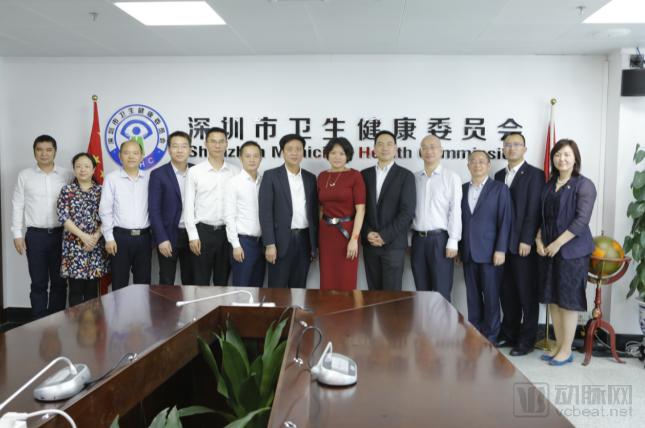
With the support of the Shenzhen Municipal Health Commission, Ping An Smart City’s Smart Healthcare division will engage in intelligent medical and health research collaborations with healthcare institutions in Shenzhen. Focusing on key specialties such as oncology and cardiovascular diseases, it will apply intelligent healthcare solutions to empower community health service organizations in Shenzhen, assisting family doctor contract fulfillment, general practice at the primary care level, and chronic disease management. Furthermore, it will advance the standardized clinic management service platform, establishing Shenzhen as a model for smart healthcare. In addition, Ping An Smart Healthcare will develop a visualized intelligent supervision platform for the Shenzhen Municipal Health Commission, helping the government enhance the capability and efficiency of health-related decision-making.
Luo Lexuan, Party Secretary and Director of the Shenzhen Municipal Health Commission, stated that Shenzhen has become one of the first cities in China and the only city in Guangdong Province to serve as a pilot for public hospital reform. In future healthcare reforms, Shenzhen aims to create a “Shenzhen Model” for Healthy China, achieving “Three First-Class” standards and “Six Areas of Leading Progress.” The “Three First-Class” standards refer to a first-class health service system, a first-class medical and health city, and a leading city in the inheritance and innovation of Traditional Chinese Medicine (TCM). The “Six Areas of Leading Progress” entail taking the lead in six aspects: the health “gatekeeper” system, high-quality development of public health, social health services, modern hospital management systems, medical technological innovation, and international medical cooperation. Luo Lexuan expressed hope that, with the support of Ping An Smart City, Shenzhen’s healthcare system reform will deepen further, elevating the healthcare standards of the Special Economic Zone to new heights and achieving new development milestones.
Jessica Tan, Co-CEO of Ping An Group, stated that the group will increase its resource commitment to ensure the smooth implementation of collaborative projects, thereby supporting Shenzhen’s development into a national model city for smart healthcare.
Since 2017, the Shenzhen Municipal Health Commission and Ping An Group have engaged in in-depth cooperation in the field of healthcare big data, with Ping An Group developing disease prediction models, such as the influenza index, for Shenzhen. Gao Mengxuan, Co-General Manager of Ping An Smart City, stated that Ping An Smart Healthcare will comprehensively upgrade its capabilities in intelligent disease prediction, prevention and control, and precision health management on this basis. This initiative aims to improve residents’ health levels while controlling medical demand and expenditures. Ping An Smart Healthcare will support the Shenzhen Municipal Health Commission in achieving intelligent and efficient regulation and services, establishing a sound online-and-offline healthcare service system at the primary and community levels that benefits and facilitates public access. It will help enhance the overall quality and efficiency of medical services in Shenzhen, optimize the allocation of medical resources, and realize the goals of “seeking care for minor illnesses at community health centers and for major illnesses at hospitals” and “managing minor illnesses within the community and treating major illnesses within Shenzhen.” These efforts will assist Shenzhen in creating a model program that serves as a national exemplar.