

Keya Medical Advances as a Leader in AI-Powered Cardiovascular Diagnostics with CE Certification and NMPA Fast-Track Approval
Introduction: At present, the main赛道 of medical AI in China seems to be fully occupied, but there are still hidden gems in the market that are not widely known. Keya Medical can be considered one of them. Keya Medical was founded in early 2016 and has completed tens of millions of dollars in Series A financing, with investors including Zhou Yahui from Kunlun Tech, Guangxin Capital, and others.Its independently developed non-invasive CT-FFR DeepVessel FFR product is the first Class III AI medical imaging product to enter the National Medical Products Administration (NMPA) “Green Channel for Innovative Medical Devices.”。
In China, Keya Medical has established in-depth collaborations with over 100 hospitals, developing a series of vascular function assessment products centered on the circulatory system and an intelligent imaging platform designed for radiology departments.
Keya Medical has also successfully entered the international market. Its DeepVessel FFR received European CE certification in August 2018 and is currently being offered as a paid service in Hong Kong, Malaysia, and other regions.. The intelligent imaging platform has integrated with multiple large medical centers and radiologist groups in the United States, while also establishing commercial collaborations with several medical device manufacturers, successfully achieving product implementation.
After my interview with Dr. Cao Kunlin, President of R&D at Keya Medical, I remained exhilarated for quite some time, continuously discussing the company with my colleagues. Although the VCBeat database has currently collected information on more than 180 enterprises related to medical AI research, we had overlooked this shining gem.
Featured Product: Non-invasive CT-FFR DeepVessel FFR
“DeepVessel Fraction” is the first artificial intelligence-based software for assessing coronary physiological function.. By analyzing coronary CT angiography (CTA) images to perform non-invasive and rapid fractional flow reserve (FFR) assessment, it can significantly reduce unnecessary invasive coronary angiography and interventional procedures.Serves as the gatekeeper for invasive coronary angiography.。
Coronary heart disease (CHD) is an ischemic heart disease caused by atherosclerotic lesions in the coronary arteries. From 2003 to 2015, the prevalence of CHD in China increased by more than 120%. In 2018, the number of CHD patients in China reached 15 million, with approximately 3 million coronary angiography procedures and 900,000 percutaneous coronary intervention (PCI) procedures performed, posing severe challenges to public health and healthcare services in the country.
Coronary heart disease (CHD) patients predominantly present with stable CHD. Clinical diagnosis requires assessment of both the degree of vascular stenosis and myocardial perfusion function. The extent of coronary artery stenosis is commonly evaluated using non-invasive imaging modalities such as coronary computed tomography angiography (CTA) and invasive techniques like invasive coronary angiography (ICA). The gold standard for assessing myocardial perfusion function is invasive fractional flow reserve (FFR).
Under normal circumstances, the FFR value is 1.0. Medical therapy is recommended when FFR > 0.8; percutaneous coronary intervention (PCI) for revascularization is recommended when FFR ≤ 0.8 (an FFR of 0.8 indicates that the blood supply capacity of this coronary artery is 80% of normal).
Currently, in clinical practice, coronary CTA is generally used for initial screening to rule out the absence of coronary stenosis; subsequently, patients with positive screening results undergo further invasive ICA and FFR assessments, followed by PCI treatment.
However, clinical studies have shown that the accuracy of using coronary CTA alone to assess vascular stenosis is not high—more than 70% of patients who initially test positive do not actually have functional ischemia. Subjecting this population to subsequent unnecessary invasive ICA, FFR testing, and PCI treatment increases medical risks and burdens for patients, and also leads to a certain degree of waste of medical resources.。
Non-invasive CT-FFR leverages non-invasive coronary CTA images to provide functional insights, enhancing the accuracy of coronary CTA in assessing coronary artery disease and enabling non-invasive evaluation of whether stenosis causes myocardial ischemia.. Keya Medical has developed the non-invasive CT-FFR product “DeepVessel FFR,” which applies non-invasive CT-FFR assessment metrics to significantly reduce the proportion of unnecessary invasive coronary angiography procedures and subsequent percutaneous coronary intervention (PCI) treatments.
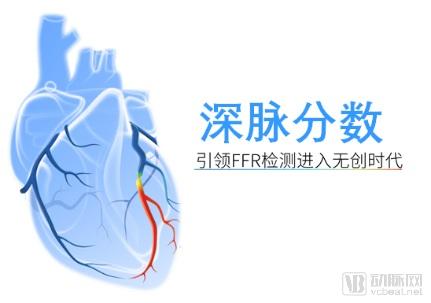
“DeepV Fraction” employs a proprietary hemodynamics-based Feature Flow deep learning technology to efficiently and accurately calculate FFR values at every point along the entire vascular tree, rapidly providing the quantitative results required for clinical practice.
“Deep Vein Score” facilitates early diagnosis and serial follow-up assessments for patients, providing physicians with accurate quantitative clinical metrics to guide the development of individualized treatment plans. This approach maximizes patient benefits while avoiding overtreatment, thereby reducing the financial burden on patients and the overall cost to the healthcare system.
“DeepVessel FFR” requires only the tester’s CTA images to achieve truly non-invasive detection, providing a one-stop solution that delivers dual information on coronary anatomy and physiology, thereby assisting physicians in selecting treatment plans and strategies for coronary heart disease.. Therefore, "DeepVessel Fraction" is suitable for health checkups in the general population or screening of high-risk groups, precise auxiliary diagnosis for patients with suspected coronary heart disease, and adjuvant therapy for diagnosed patients.
10 Seconds and 0.94
Dr. Cao Kunlin, President of R&D at Keya Medical, told reporters that compared with traditional computational fluid dynamics (CFD) simulation methods, the “DeepVessel FFR” product, which is based on artificial intelligence technology, has two major advantages. First, it can greatly improve efficiency. Traditional CFD simulation techniques often take hours to perform flow field simulations, whereas “DeepVessel FFR” can provide fractional flow reserve (FFR) calculation results within 10 seconds after coronary artery reconstruction, significantly enhancing detection efficiency.
On the other hand, accuracy is crucial. The accuracy of AI products stems from the volume and diversity of training data. Keya has collected extensive multi-source data on coronary artery lesions and performed deep learning on functional and anatomical data from various cases.
In 2017, Keya conducted a multicenter, prospective, registration-enabling clinical trial of its product at Beijing Anzhen Hospital, Capital Medical University; the General Hospital of the Air Force; and Cangzhou People’s Hospital. The trial results demonstrated that, using invasive FFR as the diagnostic reference standard, the diagnostic accuracy of “DeepVessel FFR” on a per-vessel basis was 88.9%, with an AUC (area under the receiver operating characteristic curve) of 0.94.
The Product Is Far More Than Just Deep Vein Score
Dr. Cao Kunlin told VCBeat that Keya Medical’s AI products are mainly divided into two parts,One is a series of products developed for specialty care, focusing on the assessment of vascular function within the circulatory system., such as vascular assessment products for the circulatory system, including DeepVessel FFR, DeepVessel CTA, carotid arteries, pulmonary arteries, cerebral arteries, and lower extremity arteries.
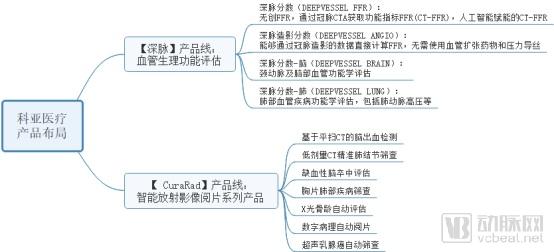
Another product is an intelligent imaging platform designed for radiology departments., it is primarily developed for different anatomical regions based on multi-modal data, with the aim of improving the work efficiency of radiologists. Examples include CT-based lung nodule screening, non-contrast CT-based detection of intracranial hemorrhage and assessment of ischemic stroke, X-ray-based examination of thoracic diseases and bone age assessment, ultrasound-based lesion detection and analysis, and rapid cancer detection and assessment using pathological images.
Keya Medical attaches great importance to the regulatory compliance of these products.Currently, multiple products have completed multi-center clinical trials and are in the process of filing for approval with the NMPA and FDA. Among them, the imaging platform has already obtained a Class II medical device certification. Products involving assisted diagnosis are registered as Class III medical devices, which entails a longer approval timeline.
During the research and development process,Keya Medical places great emphasis on product accuracy and ease of use for physicians.In the medical industry, safety is paramount, and physicians’ demand for accuracy is unquestionable. On the other hand, as end users, physicians do not want tools that increase their workload. Therefore, Keya Medical’s products can be seamlessly integrated into existing image reading systems to directly generate imaging analysis reports and provide functional assessment data. These tools not only significantly reduce physicians’ workload but also help improve diagnostic accuracy.
Furthermore, Keya Medical has also intensified its efforts in natural language processing products, developing an AI-powered diagnostic system based on multi-source data by integrating report structuring with multimodal image analysis. The company has currently constructed a knowledge graph in the field of cardiovascular and cerebrovascular diseases. Leveraging this knowledge graph, physicians can rapidly make diagnoses and formulate personalized treatment plans based on patients’ electronic medical records, examination results, and other relevant information.
In-hospital, Out-of-hospital, and Third-party Collaboration
In terms of specific implementation forms, Keya Medical is currently mainly divided intoIn-hospital Model, Out-of-hospital Model, and Third-party CollaborationThree types.
In-Hospital ModelThe initiative primarily targets benchmark-tier Grade A tertiary hospitals. Dr. Cao Kunlin emphasized that due to the high patient volume at large Grade A tertiary hospitals, there is a critical need for rapid return of diagnostic results to physicians, coupled with stringent requirements for data privacy and security; generally, data are not permitted to leave the hospital premises. Therefore, Keya Medical has established on-site AI diagnostic centers, with analysts stationed directly within hospitals to perform processing tasks.
Currently, Keya Medical has partnered with several large Grade A tertiary hospitals, including Beijing Anzhen Hospital of Capital Medical University, the Chinese People's Liberation Army General Hospital, West China Hospital of Sichuan University, the Air Force General Hospital, and Qilu Hospital of Shandong University, establishing “Deep Pulse Fraction AI Diagnostic Centers” within these institutions. This collaborative model will serve as a key approach for product implementation in the future.
Out-of-Hospital ModelPrimarily targeted at medical institutions such as hospitals and health checkup centers that offer cardiac examination services. CTA images are transmitted via Keya’s PACS system to the AI Diagnostic Center for analysis. It is suitable for general population health screenings, high-risk population screening, precise auxiliary diagnosis for suspected patients, and adjunctive treatment for confirmed patients.
Third-party collaboration models primarily target overseas clients.. By collaborating with existing PACS system providers, medical information software vendors, and radiologist groups, AI-based image interpretation services are integrated into established reading workflows.
Currently, more than 100 hospitals in China are collaborating to use products developed by Keya Medical, with over 90% being Grade A tertiary hospitals.
Overseas, it has established commercial partnerships with multiple large medical centers and radiology groups in the United States; it has also provided fee-based clinical analysis services to hospitals in Hong Kong, Malaysia, and other regions, with rapid expansion underway in additional markets.
Rapid Growth Stems from the Company’s Three Core Advantages
Keya Medical’s rapid development is primarily driven by three key advantages:
First,Precisely Addressing Actual Clinical Needs. Currently, most products on the market primarily assist physicians in image interpretation, thereby improving their work efficiency. ““Deep Vein Score” can further provide functional information based on imaging.. This information cannot be obtained through image interpretation alone; it provides physicians with a novel diagnostic method and tool, thereby offering greater clinical value.
Second, prioritize product compliance. Keya Medical has advanced more rapidly and steadily than its competitors in obtaining approvals from the National Medical Products Administration (NMPA) and ensuring regulatory compliance.Currently, in addition to obtaining European CE certification, “DeepVessel FFR” entered the National Medical Products Administration (NMPA) Green Channel for approval of Class III innovative medical devices in April 2018. It is currently the only Class III AI-based medical device to have entered this expedited approval pathway. Furthermore, multiple FDA applications are underway, and several international multicenter clinical trials have been successfully completed, with progress proceeding smoothly.
Third, independent research and development of core technologies, fully owned and controlled by the company. Keya Medical has over 100 R&D personnel, including more than 20 PhD holders who returned from overseas. Many of them have held core R&D positions at the North American research centers of globally renowned medical imaging companies, bringing extensive expertise in AI technology and image analysis.。
Currently, Keya Medical holds more than 10 granted patents and has over 50 invention patent applications under review. The company has published dozens of papers in top-tier journals and conferences on AI and medical imaging. Two collaborative projects led by Keya Medical—“Impact of Early Identification and Risk Warning of Coronary Atherosclerotic Lesions” with the Chinese PLA General Hospital, and “Research on Digital Cerebral Blood Flow Diagnostic Assessment Technology and Its Applications” with Xuanwu Hospital—are both designated as key national research projects under the Ministry of Science and Technology’s 13th Five-Year Plan.
Keya Medical has consistently adhered to a demand-driven approach grounded in real-world clinical needs, maintaining long-term, close collaborations with healthcare institutions and clinicians while integrating technological trends into product design and development. Furthermore, Keya Medical’s R&D team possesses extensive expertise in medical software development, demonstrating strong professional competence and a steadfast commitment to regulatory compliance. Consequently, Keya Medical’s products are better equipped to meet the practical demands of clinical practice.