

Rational Capital or Neglected Market? The Billion-Dollar Rehabilitation Industry Begins Its Land Grab

Insight Capital
Early-Stage Healthcare Venture Capital Firms

Northern Light Venture Capital
Venture Capital Firms
“After investing in projects over the past two years, I have clearly felt that the rehabilitation market is actually much larger than we had imagined.” Zhang Lan, founding partner of Boxing Capital, told a reporter from VCBeat (WeChat ID: vcbeat) in an interview.
In 2017, as the sports rehabilitation market began to take shape, Boxing Capital participated in the early-stage financing of Hongdao Sports Medicine Clinic. In the same year, it also invested in Demei Medical, a company specializing in orthopedic consumables and sports medicine services. Additionally, it participated in the investment in Enqi Medical, an enterprise focused on autism rehabilitation.
From Zhang Lan’s perspective, the opportunity in the rehabilitation market lies in its sufficiently inelastic demand.
According to the "Analysis Report on the Development Prospects and Investment Forecast of China's Rehabilitation Medical Industry" by Qianzhan Industry Research Institute, the market size of rehabilitation in China was RMB 38 billion in 2017. It is predicted that by 2020, the market size of China's rehabilitation medical industry will exceed RMB 70 billion, forming another trillion-yuan market with a compound annual growth rate of no less than 20%.
Capital serves as the “barometer” of the market, with many industry booms driven by the influx of “hot money.” However, when turning our attention to the rehabilitation sector, we find that it has not attracted a capital rush comparable to hype-driven fields such as internet healthcare and artificial intelligence. According to incomplete statistics from the VCBeat database, among the 60 financing events in the rehabilitation sector from 2016 to the present, various investors have injected more than RMB 3.6 billion into this field.
Through statistical analysis of data and interviews with investment firms involved in the rehabilitation sector, we can identify certain realities and trends for discussion.
Underdevelopment of Rehabilitation Departments in Public Hospitals Creates Opportunities for Private Rehabilitation Services
In China's rehabilitation market,Rehabilitation Departments in Public Hospitals Have Long Been in a “Marginalized” Position, although policies mandate that general hospitals at Level II and above must establish departments of rehabilitation medicine, these departments remain undervalued in China’s general hospitals due to factors such as low profitability. The root cause lies inIn China, the primary revenue source for medical institutions is pharmaceuticals, whereas rehabilitation therapy largely relies on physical modalities and thus does not generate such income for these institutions.
Previously, studies suggested that a single rehabilitation bed in a general hospital could generate daily revenue of RMB 300–500 for the hospital, whereas assigning the same bed to surgical departments would yield daily revenue of RMB 3,000–5,000. Compared with other hospital departments, the rehabilitation department contributes relatively lower profits. This has led most general hospitals to establish rehabilitation departments merely as a formality, resulting in not only an extremely limited number of beds but also incomplete equipment. The rehabilitation departments in public hospitals are currently facing an awkward predicament.
In fact, the barriers to entry in the rehabilitation medical sector are relatively low. This is characterized by a lower dependence on physicians and large-scale medical equipment, smaller capital investment for individual hospitals, and lower medical risks, making it suitable for private capital investment. Many public secondary hospitals are seeking transformation. Following the implementation of the zero-markup policy on pharmaceuticals under the new healthcare reforms, secondary hospitals—where pharmaceutical sales previously accounted for 70%-80% of revenue—are now struggling to survive and need to identify new revenue streams. Although the average daily treatment cost in rehabilitation medicine is lower than that in general hospitals, its longer rehabilitation cycles and lower capital investment enable net profit margins to reach approximately 15%-20%.
This explains why listed companies are keen on acquiring rehabilitation hospitals. According to previous statistics by Caixin Health, there are currently 14 listed companies clustering into the rehabilitation sector, primarily through acquisitions or self-built rehabilitation hospitals, among which five, including Aoyang Technology and Wanfang Development, are cross-industry entrants.Operating rehabilitation hospitals offers higher profit margins than simply selling products.
However, for the majority of venture capital firms in the market, rehabilitation hospitals may not be an attractive investment target.An investment analyst at a certain fund told reporters that, in terms of the business model of rehabilitation hospitals, they are generally not suitable for fund investment. Market responses indicate that mergers and acquisitions by large industrial enterprises are more common. “Hedging, property-like characteristics, relationships with medical insurance programs, and the loss of management personnel are all hidden risks, placing high demands on management.” Therefore,Venture capital firms tend to favor asset-light or innovative private rehabilitation service providers.
Is Investing in Rehabilitation a “Land Grab”?
Zhang Lan told reporters, “Over the past decade, we have internally referred to medical innovation as“From Zero to One”, and the next decade may be a'From Existence to Excellence'...state. Previously, the focus was merely on seeking medical treatment; now, it is recognized that every stage—from prevention to treatment and rehabilitation—is crucial. National policies are also advocating this approach. Given the robust demand for rehabilitation services, this constitutes a major underlying logic.”
When it comes to views on the rehabilitation market, the most common perspective we have received is—This market is still in a very early stage, but there is sufficient rigid demand.。
In the United States, where the rehabilitation market is already quite mature, per capita rehabilitation expenditure has reached $80, whereas in China, it stands at merely RMB 15. It is precisely this vast disparity that has alerted astute investors to the significant market potential.
The United States has a large number of rehabilitation and medical care institutions, approaching 30,000, with the figure stabilizing in recent years. The most numerous category is skilled nursing facilities, numbering 15,000 and accounting for over 50% of the total. Another significant segment is home health care agencies, which represent approximately 40%.
In the U.S. rehabilitation system, various rehabilitation institutions are established according to the acute phase, rehabilitation phase, and long-term follow-up phase of diseases. These institutions have clear divisions of labor and defined scopes of rehabilitation services, forming a “positive pyramid” structure: there are fewer institutions for acute-phase rehabilitation and more for rehabilitation-phase care, effectively channeling a large number of patients to specialized rehabilitation facilities. Through differential reimbursement policies, clear functional differentiation among institutions has been achieved, thereby alleviating patient pressure on emergency hospitals.Compared with the well-established system in the United States, China’s rehabilitation diagnosis and treatment system and payment system are underdeveloped, which is considered a major factor constraining the development of the rehabilitation industry.
Xin Jifu, Managing Partner of Danen Capital, believes thatThe current overarching direction of healthcare reform is to encourage the development of the rehabilitation industry, and the rehabilitation sector has reached a stage where investment is warranted.
While the comparison with the United States reveals certain shortcomings, it also highlights significant opportunities. Despite being heavily influenced by policy factors, an investment director at a certain fund articulated this perspective to reporters—“By the time national policies are fully implemented, investment opportunities will have largely vanished. In China, the market always precedes policy.”
“A fund investment analyst mentioned above believes that, given the current macro environment, reimbursement for rehabilitation services remains a major challenge; unless insurance-related issues are resolved, it will be difficult to fully unlock the market’s potential. In terms of public expenditure, rehabilitation may continue to rely on social capital. At this stage, the state does not have sufficient resources to allocate to rehabilitation; investing in prevention, screening, and chronic disease management would yield greater savings in healthcare expenditures than investing in rehabilitation.”
Based on our analysis of 60 financing events in the rehabilitation sector, investment in this industry appears more rational and long-term oriented compared to internet healthcare and artificial intelligence, which have attracted tens of billions in funding within a single year.
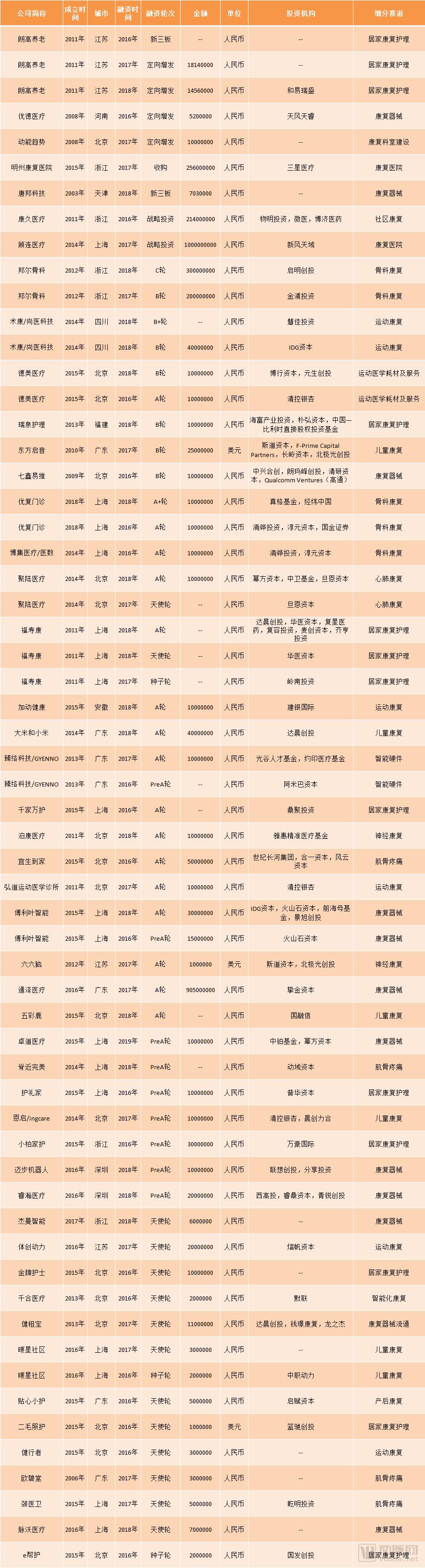
*To facilitate statistical analysis of funding amounts, financing events disclosing funds in the tens of millions or hundreds of millions of yuan are uniformly calculated as RMB 10 million and RMB 1 million, respectively.
*Typical M&A transactions involving listed companies acquiring rehabilitation hospitals are not included.
Financing Events in the Rehabilitation Sector Over the Past Three Years (Data as of March 18, 2019; Source: VCBeat Database)
From the perspective of the annual distribution of financing events,Over the past three years, the rehabilitation industry has actually been in a state of steady development, without showing a clear growth trend.However, with the further increase in the aging population and greater state investment in integrated medical and elderly care services, rehabilitation, as part of the “post-diagnosis and treatment market,” has attracted considerable attention from capital investors, both in terms of market size and actual demand.
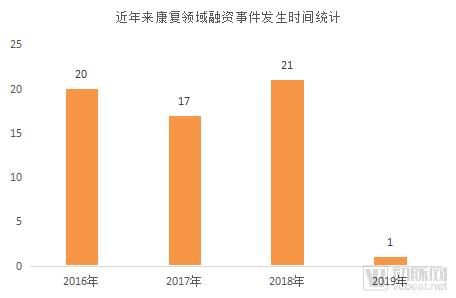
Statistics on the Timing of Financing Events in the Rehabilitation Sector (Chart by VCBeat)
In terms of the rounds of financing events based on statistical data,Events at Series A and earlier stages accounted for approximately 60% of the total., the enterprise has not yet reached maturity, and its business model is still in the exploratory stage. OneFirst, the weak foundation of China’s rehabilitation market has kept most capital in a wait-and-see mode. Second, since many specialized rehabilitation hospitals are transformed from public hospitals rather than established by private individuals, capital injection is not feasible. Consequently, investments in the private rehabilitation services market are largely concentrated in business models such as specialized chain institutions and asset-light home-based rehabilitation.
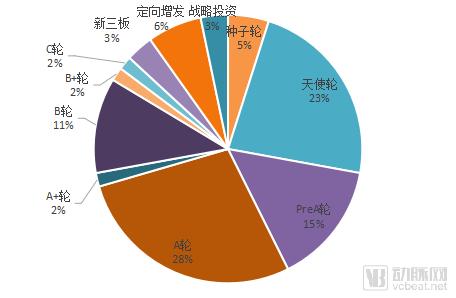
Distribution of Financing Rounds in the Rehabilitation Sector (Chart by VCBeat)
However, the market is also replete with companies such as Demei Medical, Dongfang Qiyin, Boner Orthopedics, Shukang, and Qingsong Rehabilitation, which are at Series B or later funding stages. These enterprises boast relatively stable business models, generate profitable revenue, and have repeatedly attracted capital investment.
Marco Ma, Vice President of Investment at Northern Light Venture Capital, believes thatThe rise of rehabilitation will not occur as a sudden explosion at a single point in time, but rather as a gradual upward trend driven by national economic growth and the increasing consumer and rehabilitation awareness among the public.
Investment in the Rehabilitation Market Must Still Be Driven by Real Demand
Many entrepreneurs in the rehabilitation sector have stated, “Rehabilitation is not about curing disease, but about alleviation.” Traditionally, post-surgical patients, particularly the elderly, are advised by their physicians to return home for rest and recovery. In reality, however, home-based convalescence often equates to a “low quality of life.” Consequently, a prevailing concept among rehabilitation entrepreneurs is that rehabilitation focuses not on treatment, but on function, with “restoring patient function” as its primary objective.
Data indicate that the efficacy of rehabilitation is significant, yet market response remains lukewarm; fundamentally, this underscores the need to enhance public awareness of rehabilitation.Xin Jifu believes that advancements in clinical medical cognition can indirectly enhance the public's awareness of rehabilitation.
“Patients in the rehabilitation market typically come from hospitals responsible for acute-phase treatment. A critical factor is physicians’ awareness of rehabilitation; if doctors do not include rehabilitation referrals in their medical orders, patients are highly unlikely to seek rehabilitation services.”
“Starting from demand and from the customer, we must align with corresponding business models.”To address the rehabilitation needs for autism and cardiopulmonary rehabilitation, Danen Capital has invested in Wucailu and Julu Medical, respectively, both of which are early-stage projects.He believes that within the healthcare industry chain, the position of rehabilitation is continuously rising. As clinical medicine’s understanding of rehabilitation strengthens, patient demand and policy incentives reinforce each other, making rehabilitation an increasingly essential market.
Marco stated that venture capital firms like Northern Light Venture Capital tend to invest in projects with significant growth potential within an acceptable risk range. “In the rehabilitation sector, we focus on ‘emerging areas of rehabilitation.’ This means the projects fall within the scope of rehabilitation but represent new business models, targeting overlooked markets and addressing unmet needs in niche segments.”
After identifying the gap between China’s and the United States’ autism rehabilitation systems, he recognized the opportunity in this niche market. As a Series B investor in Oriental Speech (Dongfang Qiyin), Marco believes that the company has developed rigorous and professional speech therapy curricula while introducing the advanced STAR autism intervention system from the U.S. Coupled with an excellent operational team, its business model is scalable, and its services are in strong market demand.
How to Assess Opportunities in Niche Market Segments?
Rehabilitation therapy encompasses a broad scope, including neurological rehabilitation, pediatric rehabilitation, orthopedic rehabilitation, sports injury rehabilitation, and cardiopulmonary rehabilitation. Rehabilitation service providers can be categorized into specialized rehabilitation hospitals, rehabilitation departments within general hospitals, rehabilitation clinics, and quasi-rehabilitation medical institutions (such as long-term care facilities and nursing homes for the sick and disabled).
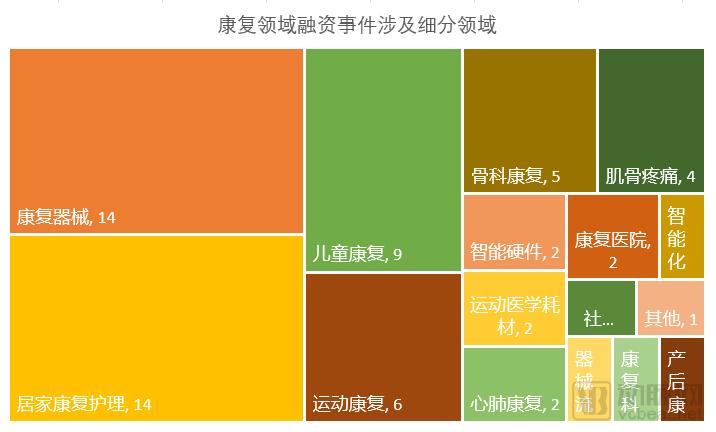
Distribution of Financing Events in the Rehabilitation Sector by Sub-sector (Chart: VCBeat)
Based on statistical data from financing events, apart from the broad category of rehabilitation equipment, several niche service segments within the rehabilitation services market outside the public rehabilitation system have attracted relatively concentrated interest from investment institutions. These include asset-light home-based rehabilitation and nursing services; pediatric rehabilitation covering autism, speech therapy, and cerebral palsy; sports rehabilitation focused on orthopedics and sports medicine; orthopedic rehabilitation; and the musculoskeletal pain segment, which is primarily driven by physical therapy and manual therapy.
Pediatric Rehabilitation
Autism rehabilitation, a sub-sector within pediatric rehabilitation, is one of the investment tracks favored by institutional investors. The rationale lies in the fact that the United States has a well-established rehabilitation system for autism, and patients have a particularly strong demand for such services. In terms of prevalence, the incidence rate of autism is approximately 1%–2%.
Zhang Lan stated, “Although the incidence rate of autism in children is only 1.6%, parents exhibit a particularly strong willingness to pay, making the market substantially large.” Given the long intervention cycles for children with autism and parents’ strong payment willingness, autism rehabilitation institutions that combine public welfare and social attributes while delivering effective intervention outcomes are in short supply relative to demand in the market.
When describing the current operational status of Dongfang Qiyin, Marco told reporters: “Whenever Dongfang Qiyin launches a new stage of its curriculum, it notifies parents in advance through their group chats. At that point, you will see parents rushing to register. Once a small class is fully booked, parents have no choice but to wait for the next session.” In fact, there are golden periods for rehabilitation in children with autism, speech disorders, and cerebral palsy. Therefore, when early intervention is possible, parents highly recognize institutions that can provide high-quality services.
Neurorehabilitation
The demand for rehabilitation medical services primarily stems from four groups: the elderly, individuals with disabilities, postoperative patients, and those with chronic diseases. The niche of neurological rehabilitation, which concentrates on the elderly population, is considered an absolute essential need. However, due to its inherent risks and high technical barriers, patients require absolute trust and strong brand recognition from service providers. This sector typically involves asset-heavy operations, predominantly in the form of specialized hospitals, while private capital also participates in the research and development of intelligent innovative equipment.
In Marco's view,Neurorehabilitation actually has a significant market potential, but from a business model perspective, it is typically quite “asset-heavy,” making it difficult to develop into an asset-light clinic format.“The nature of a hospital may necessitate numerous departments and physicians, which resembles hospital investment. This may not align with the investment logic we favor or aspire to.”
Sports Rehabilitation
From a statistical and recent industry trend perspective, a number of projects primarily in the form of chain clinics have emerged in the sports rehabilitation sector, such as Hongdao Sports Medicine Clinic and Youfu Clinic.
In China, early sports rehabilitation primarily referred to medical services targeted at professional athletes, along with rehabilitative physiotherapy for a very small number of middle- and high-income individuals. However, with the widespread adoption of national fitness initiatives, there is a growing trend toward emphasizing scientific exercise. Sports rehabilitation is transitioning from a niche market serving professional athletes to a mass market catering to sports enthusiasts.
Boxing Capital selects projects in the field of sports rehabilitation,First, it is driven by demand; second, public hospitals lack effective diagnostic and therapeutic options.。
Zhang Lan told reporters, “In the field of rehabilitation, public hospitals are constrained by staffing quotas and lack dedicated space for sports rehabilitation. Historically, such services have been limited and unprofessional, and large-scale expansion is unlikely in the future. Therefore, there is indeed an opportunity in this area.”
Sports medicine is a specialized segment within orthopedics that has experienced rapid growth in recent years. Cong Bo, Vice President of Boxing Capital, stated, “Sports medicine is an area our team began strategically positioning itself in at an early stage; in 2015, we engaged with and led the investment in Demei Medical.”
At that time, the domestic sports medicine market was relatively small, with surgeries concentrated mainly in provinces and municipalities such as Beijing, Shanghai, Guangzhou, and Zhejiang, and the consumables sector was entirely dominated by imported products. DeMei was one of the few companies in China engaged in the R&D, manufacturing, and sales of sports medicine consumables, with its team having cultivated deep expertise in the field for many years. After completing its investment in DeMei Medical, the Boxing team conducted a thorough study of the entire sports medicine industry. They determined that the sports medicine rehabilitation market would present significant opportunities, driven by rising public awareness and demand for sports activities, coupled with the growing volume of arthroscopic surgeries. “We aimed to invest in an institution specializing in sports medicine rehabilitation to enhance our strategic layout in the sports medicine sector.”
Hongdao Sports Medicine Clinic is also a project that the Boxing team began to engage with and lead in investment in 2016. At that time, sports medicine rehabilitation was still in its early stages. In China, sports medicine rehabilitation clinics were mostly established by former team doctors or rehabilitation therapists from national teams or clubs. While these individuals possessed strong professional capabilities, it was difficult for their clinics to expand.
Cong Bo stated, “We specifically traveled to the United States to examine its physical therapy model. The U.S. physical therapy industry is highly mature, with clinics predominantly operating as community-based facilities. Leveraging a well-established referral system, these clinics provide convenient and professional rehabilitation services to patients and consumers, and are commonly found in gyms and office buildings. Hongdao was the first clinic in China to hold a sports medicine license and one of the few with significant scalability. It stands as a leading institution in China, both in terms of professional expertise in rehabilitation therapy and operational expansion capabilities.”
“We have been paying attention to sports rehabilitation, but the market has not seen a significant boom.” From the perspective of market demand and scale, Marco offered a different viewpoint. He believes that sports rehabilitation may remain a small yet attractive niche, with a higher likelihood of being acquired in the future.
Rehabilitation Equipment
Compared with medical devices, the intelligentization of rehabilitation devices seems to be progressing at a slower pace. Xin Jifu believes that the technical threshold for rehabilitation devices is relatively lower. Although there are some high-tech innovative companies in this field, they may still be some distance away from commercialization and monetization in the market.
“The problem currently facing rehabilitation equipment is actually a lack of adequate services. ‘Having equipment alone is useless; hospitals must have academic development, talent, patient sources, and services in place for the equipment to be effectively utilized,’ Xin Jifu told reporters.”
Similarly, the aforementioned investment analysts also told reporters that they had reviewed several rehabilitation robotics projects, but noted that “the end-user price is too high,” which would lead to a slower pace of market adoption.
The aforementioned investment director of a certain fund stated that rehabilitation equipment currently caters mostly to mid-to-high-end service institutions or public hospitals, leading to a higher proportion of imported equipment procurement. Large-scale rehabilitation devices are expensive, making it even more difficult for rehabilitation departments—which often occupy a marginal position within hospitals—to procure costly terminal equipment. Therefore, visits to most rehabilitation hospitals in China reveal outdated equipment in their rehabilitation departments, with patient rehabilitation still relying primarily on the manual labor of rehabilitation therapists. “If the number of private rehabilitation hospitals/institutions increases in the future, and high-end rehabilitation services shift more toward the mid-tier market, domestically produced equipment will see a wave of opportunities.”
What Characteristics Define a Good Investment Target? Talent and Scalability Are Key
For investors, what characteristics do high-quality investment targets in the rehabilitation sector typically possess?
Marco believes that high-quality investment targets in the rehabilitation sector share three characteristics: asset-light models, significantly unmet demand, and strong operational capabilities.
From Zhang Lan’s perspective, medical resources, patient acquisition capabilities, therapeutic efficacy, and standardized services are the key to ensuring profitability.
An investment analyst at a certain fund believes that relying on equipment is preferable to relying on personnel. For service-oriented enterprises, staff turnover can cause significant losses. Therefore, high-quality investment targets typically possess characteristics such as rapid scaling, the ability to transcend geographical limitations, and ease of standardization.
According to the theory of Clayton Christensen, a professor at Harvard Business School and the “father of disruptive innovation,” rehabilitation therapy represents a typical value-added service model. It is characterized by precise diagnosis and a clear correlation between treatment plans and outcomes. By integrating diagnostic and therapeutic processes, treatment quality can be efficiently improved. Meanwhile, management and service aspects can achieve low-cost expansion through standardization, thereby enabling the export of management capabilities.
In Zhang Lan’s view, the foremost principle of rehabilitation is"Industry Standards"。During the rehabilitation process, it is essential to establish phased goals in order to evaluate the effectiveness of rehabilitation.“If there are no standards, it is essentially completely unscientific.”
“Establishing standards for rehabilitation is an endeavor that leaders in each subfield are striving to achieve. For instance, Enqi, the autism rehabilitation project we invested in, has actually driven the China Disabled Persons’ Federation to establish numerous standards across the field of autism.”
“He who wins talent wins the world”—this saying applies equally to the field of rehabilitation.When investing in rehabilitation projects, given the varying market demands and business models across different niche sectors, investors place significant emphasis on the operational teams and rehabilitation therapist staff during the early-stage layout process.
According to the view of a certain fund's investment director mentioned above,At this stage, investment opportunities in the rehabilitation market are still being evaluated based on narrowly defined sub-sectors., From an epidemiological perspective and based on population size, patients requiring neurological rehabilitation and orthopedic rehabilitation are relatively easy to identify and demonstrate a stronger willingness to pay; pediatric rehabilitation may be considered for integration with pediatric clinics, as although the birth rate is currently declining, the unit price per service may be higher; cardiac rehabilitation still requires a process of awareness building.“This industry is still in its early stages. Early-stage projects focus primarily on the team rather than the specific sector; however, the core of rehabilitation therapy remains addressing the challenges faced by therapists.”
The core competitiveness of enterprises in the rehabilitation sector lies in their talent, including rehabilitation therapists and operational management professionals.
In China, there is a severe shortage of human resources due to the educational system for rehabilitation medicine. According to research by the Pharmaceutical and Healthcare Research Group of Qianzhan Industry Research Institute, developed countries require 30–70 rehabilitation therapists per 100,000 people, whereas China currently has only about 16,000 practicing rehabilitation physicians and over 14,000 therapists, facing a significant gap.
The shortage of rehabilitation physicians may be even more severe. It is understood that few medical schools in China offer rehabilitation medicine programs, and graduates often enter general hospitals. Currently, a significant proportion of rehabilitation physicians at the primary care level come from other specialties such as internal medicine, while others are rehabilitative therapists who have undergone advanced training to become physicians.
Rehabilitation therapists, physical therapists, and nursing assistants serve as the primary providers of rehabilitation services; however, many still lack sufficient professional knowledge, and their overall professional competence requires improvement. To establish a mature rehabilitation market in the future, it is essential to strengthen the training of specialized personnel.
Talent development has also revealed certain patterns in previous projects. The three companies interviewed by the reporter—Hongdao Sports Medicine Clinic, Dongfang Qiyin, and Wucailu—have all been favored by investment institutions for their comprehensive talent systems and high replicability.
Xin Jifu told reporters that physical therapists in the United States undergo six to seven years of professional training, followed by clinical practice, before becoming qualified practitioners, whereas China’s training system is essentially nonexistent.
Amid the current shortage of rehabilitation therapists, the enterprises contacted by reporters are all seeking ways to achieve internal talent “self-sufficiency.” We have observed that some rehabilitation teams are now training their own therapists, establishing systematic training methodologies and frameworks, thereby developing self-sustaining capabilities. For instance, Wucailu’s teacher training mechanism sends outstanding teachers abroad for training, while Dongfang Qiyin’s therapist retention system incorporates therapist training as a key component of its KPIs. In the rehabilitation industry, building robust talent training systems and preventing talent attrition are two critical tasks for project operators.
Given that rehabilitation is a well-established field abroad but relatively new in China, Danen Capital evaluates not only talent as the core competitive advantage but also the team.Possesses strong integration capabilities and robust business acumen.Xin Jifu stated that during project evaluation, the primary focus is on the enterprise’s team itself, assessing the company from an evolutionary and dynamic development perspective, including individual growth rates and organizational transformation speed. Additionally, criteria for consideration include the team’s business acumen and market insight, as well as their openness, learning agility, and capacity for self-reflection.
From the current market perspective, VC/PE investment in the rehabilitation sector remains limited to small-scale trials, without significant capital commitment. In previous large-scale M&A transactions involving rehabilitation hospitals, the primary participants were industrial capital and investment institutions such as publicly listed companies, insurance firms, and healthcare management organizations. Social capital with substantial cash flow, including real estate developers, is also actively positioning itself in this space.
GTJA Research points out that, on the one hand, listed companies and large industrial capital can withstand the long investment cycle of hospitals; on the other hand, industrial capital is also attempting strategic layout and exploration through the rehabilitation medical industry, which targets a vast population (particularly the elderly), as seen with pharmaceutical listed companies such as Tasly, Fosun, and Luye.
In essence, the rehabilitation industry is driven by payers; given the long-standing weakness of payers in China, the slow development of the rehabilitation sector is understandable. Drawing from practices in the U.S. market, rehabilitation services have gained significant momentum, increasingly extending from in-hospital to out-of-hospital settings, with integration into nursing care becoming a prevailing trend. Current financing data in the rehabilitation market indicate that asset-light home-based rehabilitation and nursing care present more visible opportunities than private rehabilitation services focused on specific vertical niches.
Whether it is home-based rehabilitation nursing or private rehabilitation services, both are models that rely heavily on human resources. Therefore, overcoming the challenges of a shortage of skilled professionals and high staff turnover is a critical issue that entrepreneurs must address. In terms of the overall market environment, rehabilitation medicine represents an inelastic demand; high-quality services are undoubtedly needed by the market. This trend is driven not only by growing medical awareness of rehabilitation but also by the development of the national economy. It echoes the saying: “The completeness of a country’s rehabilitation industry often reflects its level of development.”