

Huiying Medical Invited to Intel Capital Global Summit 2019: Data-Centric Approach Drives AI Clinical Deployment
HY Medical
Provider of Medical Imaging and Oncology Radiotherapy Platforms
The 19th Intel Capital Global Summit was held in Phoenix, Arizona, USA, from April 1 to 3, 2019. HY Medical, invited as both a strategic investment partner of Intel and a leading Chinese enterprise in medical imaging AI, joined over 600 entrepreneurs, venture capitalists, and technology industry leaders from around the world to discuss collaboratively building a technological future. Chai Xiangfei, Founder and CEO of HY Medical, delivered a keynote speech at the summit, sharing the company’s data-centric medical AI philosophy and its achievements in product implementation across various scenarios. During the summit, he also gave an exclusive interview to Nasdaq.
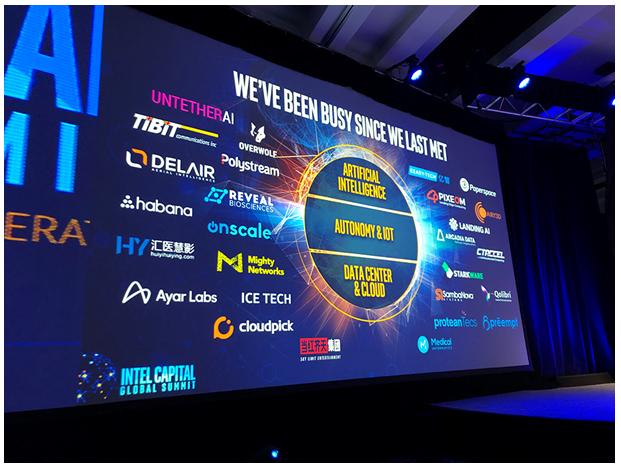
At this year’s Global Investment Summit, Intel Capital focused on healthcare, big data, manufacturing, and artificial intelligence. Wendell Brooks, President of Intel Capital, stated, “Our unwavering goal over the past 50 years has been to make computing ubiquitous, and these sectors are precisely the fast track to helping us build a smarter, interconnected society.”These companies are transforming how we think about artificial intelligence, communications, manufacturing, and healthcare, and have become key to building a data-centric, more intelligently connected world.”
“HY Medical integrates artificial intelligence with cloud computing technology to create more comprehensive, real-time, and personalized diagnostic services without compromising quality,” said Chai Xiangfei in his keynote address at the summit. “We are committed to accelerating physicians’ workflow efficiency by automating routine tasks, thereby addressing the shortage of medical supply. To date, we have improved imaging diagnostic accuracy by 30% and efficiency by 50%.”
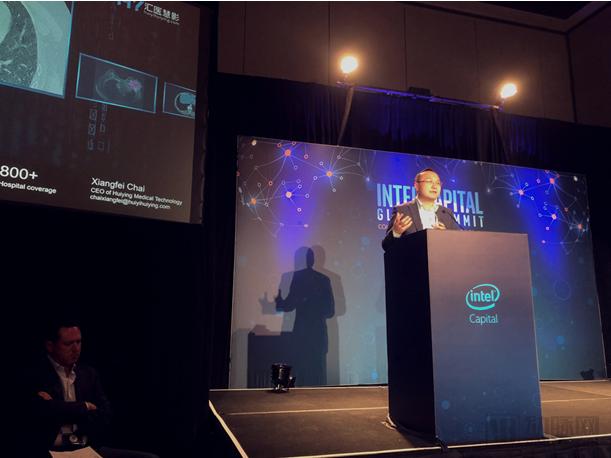
“Data is one of the advantages that enables HY Medical to stand out among numerous medical imaging AI companies.”Chai Xiangfei stated, “We began laying the groundwork for a comprehensive data center at our inception. To date, we have established collaborative relationships with nearly 1,000 hospitals and maintain in-depth partnerships with 500 research-oriented hospitals on the Radcloud Big Data Intelligent Analysis Cloud Platform. We possess over 1 million valuable, meticulously annotated imaging datasets, along with tens of millions of clinical, laboratory, and pathological data records. This comprehensive data center, built through the integration of these diverse data sources, serves as a vital foundation for the vitality and sustainability of medical AI enterprises.”
Intel Capital announced new investments totaling $117 million in 14 tech startups at the summit. An analysis of this investment landscape reveals a key theme: product commercialization.Whether AI can enable more efficient and rapid connectivity across multiple scenarios remains a key focus of Intel Capital’s ongoing attention.
HY Medical received strategic investment from Intel at the end of 2018. Benefiting from its extensive achievements in product implementation and accumulated experience, Chai Xiangfei shared insights at the event, stating, “To date, we have developed ten AI product lines, ranging from pulmonary nodule detection, chest radiography, and fracture screening, to imaging cloud services and big data cloud platforms. These also include the AORTIST AI-based precision diagnosis and treatment system for aortic diseases, as well as the AI-driven full-cycle health management cloud platform for breast cancer, developed in collaboration with Intel. These products have been deployed in 800 hospitals.”
“What truly sets us apart is our application of artificial intelligence in clinical practice, with in-depth research into treatment and prognosis,” pointed out Chai Xiangfei. “For instance, our full-cycle products for vascular and breast cancer are designed not only to detect issues but also to provide precise measurements and detailed surgical plans, thereby unlocking the potential of AI.”
Furthermore, through in-depth collaboration with Intel, we have optimized our algorithms for multi-core scalable CPUs, enabling efficient capacity expansion by maximizing the utilization of existing hardware without incurring any additional hardware costs. As one attendee noted, “HY Medical’s extensive track record of successful implementations and its comprehensive, end-to-end product portfolio covering relevant application scenarios align perfectly with Intel’s investment strategy.”
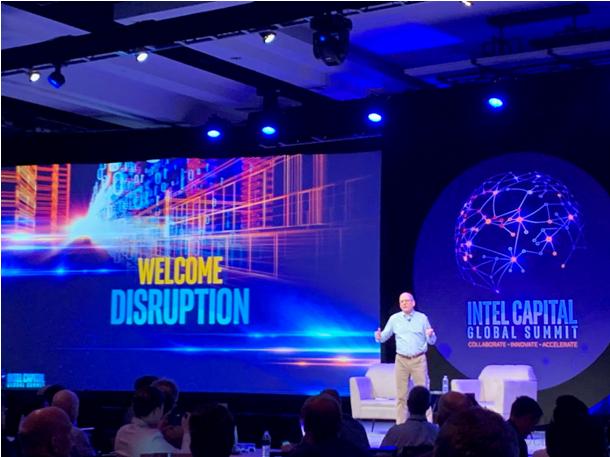
Bi Wende stated, “Our long-term goal has always been to leverage Intel’s global resources and expertise, as well as its customer and partner ecosystem, to help startups accelerate their growth and innovation. The investment is merely the beginning of our collaboration.”This means that there is potential for further collaboration between Intel Capital and its portfolio companies in the future.
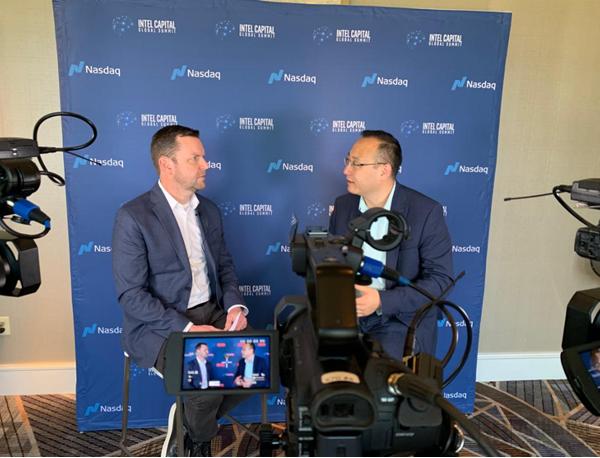
(Chai Xiangfei’s exclusive interview with Nasdaq)
During the summit, Chai Xiangfei granted an exclusive interview to Dylan James, Vice President of Nasdaq, discussing the development trends and prospects of AI in medical imaging, as well as offering industry recommendations. “At numerous medical imaging conferences, including those held by the RSNA, we have consistently heard the theme of AI without exception; AI is ubiquitous,” said Chai Xiangfei.The Biggest Trend: Artificial Intelligence Will Be Integrated into the Digitalization of the Entire Healthcare Industry“This is already evident in hospitals collaborating with HY Medical, where our end-to-end product suite has been successfully deployed. Driven by supportive policies from multiple stakeholders and advancements in technology, we believe that the application of AI in the medical imaging industry will become more standardized next year and extend to a broader range of scenarios.”
Regarding some suggestions for enterprises and entrepreneurs who are currently or will be engaging in the medical AI industry, Chai Xiangfei stated, “It is essential to recognize that the transition from technology to product realization requires a longer cycle than anticipated.. This is particularly true in the healthcare sector, where it is a gradual process; moving from research and regulatory approval to clinical implementation often takes several years. Furthermore, rather than handling everything personally, it is better to invest time in finding suitable partners and collaborators, which can simplify processes and yield better outcomes.”
About Intel Capital
Intel Capital makes equity investments in innovative startups worldwide. Its investment portfolio spans a broad range of sectors, including artificial intelligence, autonomous driving, data centers and cloud computing, 5G, future computing, and other disruptive technologies. Since 1991, Intel Capital has invested in 1,550 companies globally, with total investments exceeding $12.5 billion. During this period, more than 670 of its portfolio companies have gone public or been acquired by other firms.