

Corsera Health Secures $80 Million in Oversubscribed Series A Financing to Advance Preventive RNAi Therapies for Cardiovascular Disease

Corsera Health
Developer of Cardiovascular Disease Prediction Tools and Preventive Medications
Recently, Corsera Health announced the completion of an $80 million oversubscribed Series A financing round.This round of financing was co-led by Forbion, a well-known European life sciences investment institution, and Population Health Partners. The funds raised will mainly be used to advance the company's strategic goal of "healthspan extension," which is to help individuals identify and effectively reduce ASCVD risks earlier through innovative means.
Meanwhile, Corsera Health announced that its first preventive small interfering RNA (siRNA) drug, COR-1004, has entered Phase I clinical trials. The drug is administered via subcutaneous injection, targeting the inhibition of PCSK9 gene expression to reduce low-density lipoprotein cholesterol (LDL-C) levels — one of the two core drivers of ASCVD.
Clive Meanwell, Co-Founder and Co-CEO of Corsera Health and Managing Partner of Population Health Partners, stated: "The launch of this clinical trial marks a significant milestone in our journey toward a future healthcare system centered on prevention. We believe that through early intervention, people will be able to enjoy longer and healthier lives."
"Corsera Health has the potential to completely transform the prevention and treatment pathway of cardiovascular diseases — shifting from passive treatment to proactive prevention while achieving broad population coverage — by leveraging AI to predict individual lifelong ASCVD risk and combining it with long-acting RNAi preventive drugs," added Dr. John Maraganore, the other Co-CEO.
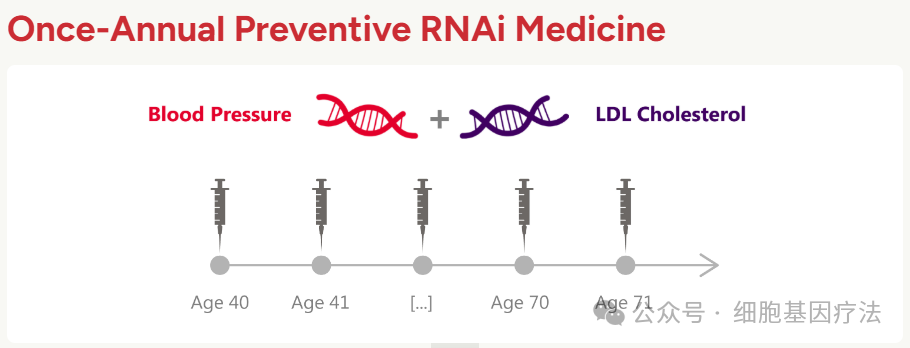
It is reported that Corsera Health's preventive RNAi drug platform adopts a "dual-target" strategy, simultaneously targeting LDL-C and hypertension, the two major causes of ASCVD. In addition to COR-1004, another siRNA drug, COR-2003, which targets angiotensinogen (AGT) to lower blood pressure, is expected to enter Phase I clinical trials by mid-2026. Both drugs are designed to require only one dose per year, aiming to improve medication adherence, expand accessibility, and provide a feasible solution for public health interventions worldwide.
Currently, the Phase I clinical trial of COR-1004 primarily evaluates the safety and tolerability of the drug, with secondary endpoints including the reduction in plasma PCSK9 levels and serum LDL-C, as well as pharmacokinetic characteristics. The company expects to release preliminary proof-of-concept data within 2026.
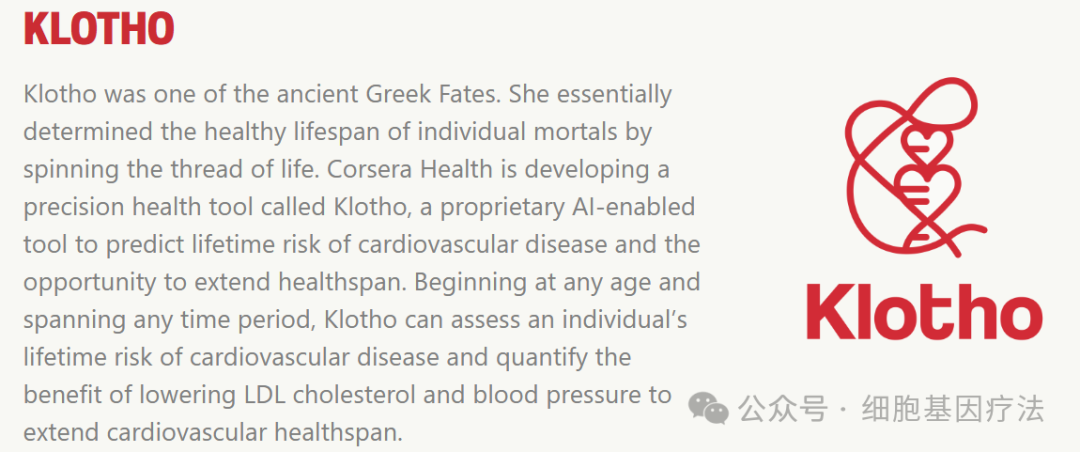
In addition, the funds raised in this round will also be used to continuously develop the company's self-developed AI-driven precision health platform — Klotho. This platform can dynamically assess an individual’s lifelong cardiovascular disease risk based on personal data and quantify the health benefits achievable by reducing LDL-C and blood pressure, thereby providing scientific evidence for personalized prevention strategies.
E.N.D

Disclaimer: The reference materials are sourced fromCorsera Healthetc., thisWenAiming toKnowledge SharingEnjoy, all content is for reference onlyFor reference only, not constituting any advice.。