

Stride Health Files IPO Prospectus to Expand Access to Health Benefits for America's Underserved Independent Workers

Stride Health
Medical Insurance Recommendation Service Platform
Professional nursing is one of the fastest-growing employment sectors in the United States. According to projections by medical media outlet MedCity News, the U.S. population aged 65 and older is expected to reach 98 million by 2060, driving rapid growth in demand for professional nursing personnel.
However, a critical issue exists within the professional caregiving industry: caregivers are typically independent contractors rather than corporate employees, with patients or their families paying them directly. This means they do not have access to the same benefits afforded to full-time employees.
Independent workers include freelancers, self-employed individuals, and temporary staff employed by enterprises. According to McKinsey data, this group accounts for 30% of the working-age population. Traditionally, they have not been covered by health insurance.
The situation took a turn for the better with the enactment of the Affordable Care Act under the Obama administration. The Affordable Care Act mandates that, starting in 2014, all U.S. citizens must have health insurance, thereby allowing individuals and small businesses to purchase health coverage for themselves and their employees through government-run health insurance marketplaces. This provision opened up the insurance market for independent workers.
San Francisco-based insurance brokerage Stride Health focuses on meeting this market demand by helping independent workers secure better healthcare and benefits plans.
Addressing Market Pain Points Through Personal Experience
In May 2013, Noah Lang co-founded Stride Health with Matt Butner, and the company is headquartered in San Francisco, California.
Noah Lang graduated from Stanford University with a major in Product Design and was a President’s Scholar during his time there. In addition to serving as the Founder and CEO of Stride Health, he is a member of the Data Governance Advisory Committee of the Department of Medical Assistance Services (DMAS) and was selected as a “Privacy by Design Ambassador” in 2011.
Prior to founding Stride Health, Noah Lang served as Vice President of Business Development at Reputation.com, where he spent five years developing and selling privacy products. During the social media revolution, he witnessed firsthand the shortcomings in personal data usage, as well as the value that could be created when such data was leveraged effectively.
In 2012, Noah Lang purchased four insurance policies for himself. However, due to a lack of clear understanding, these plans provided him with little benefit. When paying for medications under these plans, he attempted to calculate the costs of his commonly used drugs to determine how much money the insurance could save him. To facilitate a comparison of equivalent medications, he built an Excel model, but insufficient drug-related data made any meaningful comparison impossible. When he sought to gather the necessary data, he found it extremely difficult to obtain.
In Noah Lang’s view, health insurance is a critical factor influencing every medical expense incurred by a family. However, only a small fraction of the employed population truly understands the coverage details of their insurance plans, as well as key concepts such as deductibles, copayments, coinsurance, and out-of-pocket maximums. The term “consumer” is rarely used in healthcare; instead, healthcare companies focus on traditional “payer” identities—such as patients, employees, and insured individuals—rather than treating them as consumers.
When consumers do not understand the specific coverage and scope of their insurance products, they cannot comprehend how each transaction at a doctor’s office, pharmacy, or hospital is billed according to their insurance plan. Consequently, consumers often face underutilization of benefits and overpayment.
“Everyone tells me that existing tools can help consumers make their insurance decisions. I’ve tried them all. None of these tools gave me confidence in my decision, nor did they help me understand the product I was purchasing. In fact, no one treats health insurance as a consumer product. The average consumer is willing to spend only nine minutes selecting a plan, and the result often fails to align with their actual circumstances. I believe it is time to open up the individual insurance market.”
Noah Lang is an adventure sports enthusiast and a passionate runner who has completed 11 marathons. While climbing Mount Whitney, he met Matt Butner, a data scientist and software engineer. Noah shared his experiences and ideas with Matt, and the two instantly clicked. After the hike, they immediately decided to found a company aimed at helping independent workers make truly beneficial insurance purchasing decisions in less time—without having to pick up the phone, feel confused, or rely on guesswork.
Provide personalized recommendation services while strictly safeguarding data privacy.
Stride Health has developed an algorithm based on early customer feedback, proprietary data from health insurance companies, and government data to provide consumers with health plan recommendations. The operational process involves collecting consumer data through its own platform, then integrating this consumer data with health insurer data to offer users decision support and health plan recommendations.
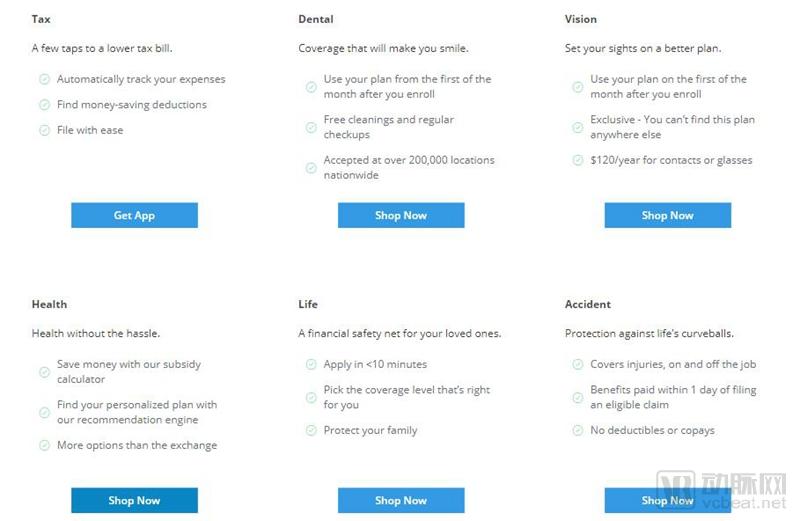
Stride Health Business Type (Image sourced from the company's official website)
Stride Health’s algorithm compares users’ private data—such as age, gender, medical conditions, medications taken, smoking habits, and preferred physicians—with government information, including the FDA’s drug database and CMS Medicare payment data. The system then generates a list of recommended health insurance plans that may meet the user’s needs. The top-ranked option is labeled the “Best Health Insurance Plan,” followed by the “Second-Best Health Insurance Plan.” The algorithm also includes forgoing health insurance as one of the recommendations, but it warns consumers that this is a “high-risk decision” that could result in federal penalties, and clarifies that this choice would not generate any revenue for Stride Health. Noah Lang believes that providing consumers with a comprehensive range of choices is highly important.
For each health insurance plan, Stride calculates the consumer’s projected annual costs, monthly premiums, deductibles, and out-of-pocket expenses for doctor visits and prescriptions. The entire process takes just 10 minutes from start to finish.
Through Stride Health’s system, consumers can also see which health insurance plans are accepted by their specialist physicians. Additionally, they can understand how conditions such as sports injuries, heart disease, and asthma would impact their out-of-pocket expenses. As consumers set preferences and input more information, Stride Health updates the cost estimates and rankings for each health insurance plan. The company has patented its algorithm.
Bryan Sivak, Chief Technology Officer of the U.S. Department of Health and Human Services, commented, “Stride Health has leveraged off-the-shelf datasets to create a highly practical application. We have all experienced purchasing health insurance plans with no information beyond the monthly premium, and Stride Health has helped us eliminate this frustration.”
Stride Health’s services guide independent workers and business employers in selecting health insurance plans that best suit their needs, while also helping them secure subsidies to offset out-of-pocket healthcare costs. Furthermore, the company’s services make it easier for customers to understand complex insurance plans and estimate their costs for tests, medications, procedures, and premiums.
The value proposition of Stride Health is evident: users are spared the time-consuming burden of completing extensive forms. By leveraging and analyzing consumer-shared data, Stride Health streamlines the insurance enrollment process. For independent workers, it facilitates access to insurance benefits and reduces healthcare costs. For businesses, it aids in managing independent contractors and lowers corporate premium expenses.
Regarding consumer data privacy protection, Noah Lang stated that companies must consider privacy issues from the consumer’s perspective, rather than relying solely on the HIPAA regulations as their guide. The company never requests consumers to provide additional information beyond what is currently necessary. Furthermore, unless explicitly requested by the consumer, the company does not share data with third parties without authorization.
Consumers will benefit from the collection and analysis of health data, leading to tangible improvements in their healthcare shopping experience. However, each individual must decide whether they are willing to accept this trade-off: Stride Health can leverage personal health information to deliver significant benefits, and the more information consumers share, the more precise the plan recommendations the company can provide. At the same time, consumers may face data privacy risks.
In an interview with foreign media, Noah Lang stated that a prevailing phenomenon in today’s digital health sector involves collecting as much personal information as possible and then monetizing it. Many companies valued at billions of dollars have suffered significant setbacks due to privacy concerns surrounding personal data during the social media revolution. As participants in digital health, enterprises should work together to ensure that such issues do not recur in the health technology revolution. He emphasized that all consumer health entrepreneurs should read the White House’s “Consumer Privacy Bill of Rights,” paying close attention to data collection, transparency, access, and control rights.
Improve Service Quality and Strengthen Corporate Collaboration
Stride Health’s primary revenue model involves collecting commissions from health insurance companies after consumers purchase their plans. However, industry insiders are concerned that for-profit companies may rank and recommend health plans based on the amount of commission paid by insurers. This practice is similar to the paid-ranking systems for medical services seen on some websites in China.
Therefore, the challenge faced by companies like Stride Health is how to rank health insurance plans. The optional health insurance plans provided by the company are comprehensive, but the coverage of available plans may not be exhaustive. Generally, the cost of health insurance plans appears to be the most significant factor influencing their rankings.
However, Stride Health stated that its search engine rankings do not factor in insurance company commissions. Federal regulations also prohibit service providers from ranking plans based on commissions, but this restriction applies only to digital health insurance brokers selling plans on the federal online health insurance marketplace, healthcare.gov.
In 2014, foreign media reported that Stride Health’s services offered little benefit to consumers eligible for government subsidies under the Affordable Care Act. The company stated that this situation was likely to improve soon. Certain actions taken by the Trump administration to undermine the Affordable Care Act, including cuts to the law’s marketing and outreach budget, have benefited Stride Health’s business.
Subsequently, Stride Health established a new public-private partnership with the Centers for Medicare & Medicaid Services (CMS), known as “Enhanced Direct Enrollment,” to facilitate consumer enrollment in the Federal Health Insurance Marketplace. Following this integration, users can directly select benefits, apply for subsidies, and receive approval through the company’s platform.
Stride Health’s long-term plan is to establish a parallel, or at least comparable, service that provides gig workers and independent contractors with benefits packages akin to those offered to full-time employees. With this in mind, the company has expanded its health insurance offerings to include dental and vision coverage, as well as tax-related services, and plans to introduce additional services in the future.
Since its inception, in addition to generating revenue by charging commissions to insurance companies, Stride Health has also completed several rounds of financing:
In June 2014, the company completed its seed funding round, with the amount undisclosed;
In January 2015, Stride Health expanded its seed funding round with a $2.4 million investment from NEA and Rock Health. Following this financing, Stride Health joined the Rock Health accelerator program.
Four months later, in May 2015, the company raised another $13 million in its Series A financing round, with investors including NEA, Venrock, and F-Prime Capital Partners;
In August 2017, Stride Health completed a $23.5 million Series B financing round, with existing investors NEA and Venrock continuing their support, and new investor Portag3 Ventures also participating.

Stride Health’s Existing Investors (Image sourced from the company’s official website)
In addition, Stride Health has partnered with the five largest U.S. health insurers—UnitedHealth Group, Cigna, Anthem, Humana, and Aetna—to recommend their health insurance plans on its platform. Stride Health has also established collaborations with numerous enterprises, including Uber, Chinese Community Health Plan, Blue Shield of California, Health Net, Kaiser Permanente, and WellPoint.
Stride Health’s partnership with Uber was finalized in the fall of 2014. A spokesperson for Uber stated that the company decided to partner with Stride Health because it “makes it easier for people to find and use health plans that meet their individual needs and lifestyles.” TaskRabbit, a home services company, also announced that it chose to promote Stride Health to its workers after evaluating alternatives such as Healthcare.gov, Oscar Health, and NerdWallet. “We selected this company because they offer the most comprehensive services for independent contractors.”
An Overview of Key Players in Niche Segments of Health Insurance
In addition to Stride Health, other players in the niche segment of health insurance recommendations include Wellthie, Zipari, and Picwell, each with a distinct focus in their target clientele.
Zipari
Founded in August 2014 and headquartered in New York, USA, Zipari is an insurtech company that provides customer relationship management (CRM) SaaS solutions for health insurance providers. Its SaaS solutions can be rapidly integrated into insurers’ existing systems, delivering a service experience for policyholders akin to that of online retail. Designed specifically for health insurance companies, the SaaS suite comprises the CX Engine user interface and analytics engine, the Digital Experience self-service product suite, and the InsureCX Customer Engagement platform.
To date, the company has completed three rounds of financing, raising a total of $12 million.
Picwell
Picwell was founded in 2012 and is headquartered in Pennsylvania, USA. The company aims to reduce the complexity of health insurance selection for consumers by leveraging predictive analytics and machine learning to provide personalized insurance plans and tailored recommendations based on their needs and preferences.
Since its establishment, the company has completed three rounds of financing, with a total amount of $11.1 million.
Wellthie
Wellthie, founded in 2014 and headquartered in New York, USA, is a technology company dedicated to digital insurance distribution. The company has launched a national online health insurance marketplace for small businesses in the United States, enabling real-time search, comparison, and purchase of health insurance plans. This online marketplace allows small business owners to browse thousands of medical, dental, and vision insurance products from hundreds of insurers nationwide. Additionally, users can receive professional guidance from licensed brokers. Wellthie also provides online tools, customer education, expert support, and brokerage services to assist small business owners in making informed purchasing decisions.
Since its establishment, the company has completed four rounds of financing. The Series A round raised $5 million, while the amounts for the other rounds remain undisclosed.
In the vast U.S. health insurance market, startups focused on niche segments continue to emerge. In contrast, China currently lacks companies specializing in insurance plan recommendations; instead, insurance agents typically recommend policies to clients based on “insurance plan brochures.”
The underlying reasons lie in the differences between domestic and international insurance systems, coupled with stringent regulation and an underdeveloped market. A noteworthy reference point is that China’s young and middle-aged working population exhibits similar trends, with a growing number of freelancers. Insurance products tailored to this relatively young and lower-risk demographic hold significant market potential.
(Compiled by Nie Guanghong)
Source:
https://www.stridehealth.com/
https://www.wired.com/2014/03/stride-health-insurance/
https://www.crunchbase.com/organization/stride-health#section-overview
https://rockhealth.com/why-patients-need-to-be-treated-like-consumers-qa-noah-lang/
https://www.fastcompany.com/3052328/stride-health-gig-economy-band-aid-or-the-new-social-contract