

Taikang's 2.5 Million-Square-Meter Chain of Senior Disney-Inspired Communities Redefines Retirement Living

Taikang Community
Chain养老机构
“Innovation is about being the first to imitate.”
At 1:30 p.m. on April 8, Chen Dongsheng attended the Taikang media briefing. During the three-day World Health Expo, Chen Dongsheng, in his capacity as President of the Chu Merchants Association and Chairman of Taikang Insurance Group, participated in multiple sub-forums on behalf of the organizer (Chu Merchants Association) and co-organizer (Taikang Insurance Group).
“The theme of this event is, naturally, related to holistic health. Chen Dongsheng said slowly, ‘Each of us has a final destination in life; we all age, and aging inevitably brings illness. Yet without exception, everyone aspires to age gracefully. This requires access to medical care and elderly care services.’”
Cast back to 2008, Chen Dongsheng visited the Willow Valley retirement community near Philadelphia, USA. There, he witnessed 95-year-old Americans running on treadmills and 85-year-old women practicing ballet. The community featured a large sports center, a cultural center, comprehensive medical and rehabilitation equipment, and more. At that time, elderly care in China was still mired in the notion that “placing one’s parents in a nursing home is unfilial.”
“Introducing U.S.-style retirement communities to China in their authentic form, enabling Chinese seniors to age with elegance within these communities.” Guided by this conviction, Taikang formally submitted a feasibility report and pilot application to the former China Insurance Regulatory Commission (CIRC) for investing life insurance funds in retirement communities.
In 2009, Taikang received approval from the former China Insurance Regulatory Commission (CIRC). In 2010, Taikang’s subsidiary, Taikang Home Investment Co., Ltd., was formally established, marking its entry into the elderly care industry. From 2011 to the present, Taikang has developed 15 large-scale senior living communities across 15 cities in China. Chen Dongsheng stated that Taikang is committed to driving a revolution in elderly care, transforming Chinese seniors’ attitudes toward life and their lifestyles. By integrating medical care with elderly care, Taikang aims to further promote active aging and enable more people to enjoy high-quality senior living.
From the Outside In: Cultivating an Artistic Atmosphere to Bridge the Path to Spiritual Fulfillment for Seniors
At the opening of the thematic forum on the development of the elderly care and rehabilitation industry held on April 9, a five-minute-and-35-second video titled “Taikang Community: Voices from Our Residents” immersed everyone present in the world of Taikang Community. The footage showcased residents swimming, dancing, painting, singing, and engaging in other activities within the community, highlighting its rich artistic atmosphere.
“Ten years ago, when I shot promotional videos, I had to hire models and borrow the Commune by the Great Wall under Pan Shiyi’s ownership. I even wrote the script myself, and finally managed to produce a promotional film. Today, we have turned that dream into reality with real settings and real people,” said Liu Tingjun, Vice President of Taikang Insurance Group and CEO of Taikang Health Industry Investment Holdings Co., Ltd. (hereinafter referred to as “Taikang Health Investment”), speaking excitedly from the stage to the industry peers and clients in the audience who had come to hear his report.
In the conference hall, elderly attendees gradually took their seats. Viewed from behind, the hair colors in the front row were a mix of black and white. Just as seen in the video, these seniors, aged 70 to 90, appeared hale and hearty, occasionally whispering to one another. Liu Tingjun introduced that these elders possessed “a wide array of talents.”
“Can you imagine two elderly gentlemen getting into an argument over whose paintings were displayed on the exhibition board?” laughed a staff member from Taikang. “They’re just like big kids. Such situations are quite common in our community, so we have to rotate the exhibitions on a scheduled, batch-by-batch basis.” To meet seniors’ pursuit of spiritual and cultural enrichment, Taikang has organized multiple themed activities under the banner of “Everyone Is an Artist.” Professional artists are regularly invited to the community to collaborate with residents in creating artistic works. Liu Shuqin, Senior Vice President of Taikang Health Investment, explained that while it is normal for seniors to engage in casual doodling, transforming those doodles into proper artworks requires professional guidance.
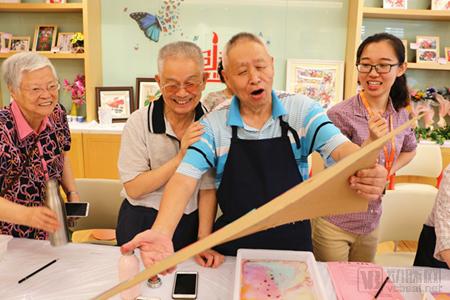
Artworks Created by Residents of Taikang Community·Yue Garden (Image source: Provided by the enterprise)
Subsequently, Taikang displays the residents’ artwork at exhibition booths, thereby enhancing the community’s aesthetic environment. In addition to fine arts and painting, Taikang has introduced square dancing. Initially, elderly residents observed dancers from outside the community; later, they actively participated and engaged in friendly competitions. This approach helps elderly residents gain greater insight into the “outside world,” promotes continuous integration between the community and broader society, and reinforces their sense of social identity—ensuring they feel included rather than marginalized or burdensome to their children.
Taikang has always adhered to the principle of striving to fulfill seniors’ “unrealized aspirations” by organizing a wide variety of activities, such as golden wedding anniversary celebrations, qipao fashion shows, ballroom dance competitions, and swimming contests. This approach addresses seniors’ seven core needs: social interaction, physical activity, gourmet dining, cultural engagement, health management, financial planning, and spiritual belonging. To date, Taikang Community has established more than 100 interest groups and clubs across China, with seniors leading 60% of the courses.
It is worth mentioning that Taikang has an “Oral History” initiative, which compiles the life experiences of elderly residents into documentaries. This provides seniors with an opportunity to share their personal stories with their children. Liu Shuqin recalled, “The children of some residents told me that only after watching their father’s ‘story’ did they realize how difficult it was for their parents to raise the three siblings.” Furthermore, such documentaries not only reflect the family history of the elderly but also mirror the transformations within the specific industries in which they worked, thereby offering deeper insights into the nation’s development and changes.
In addition to its rich cultural and spiritual activities, Taikang’s artistic ambiance is also reflected in its interior design and culinary culture. Taikang has chosen the butterfly as the community’s emblem. On one hand, the butterfly evokes childhood memories with its vibrant and colorful wings; on the other hand, it symbolizes rebirth and renewal, instilling a sense of hope whenever it is seen.
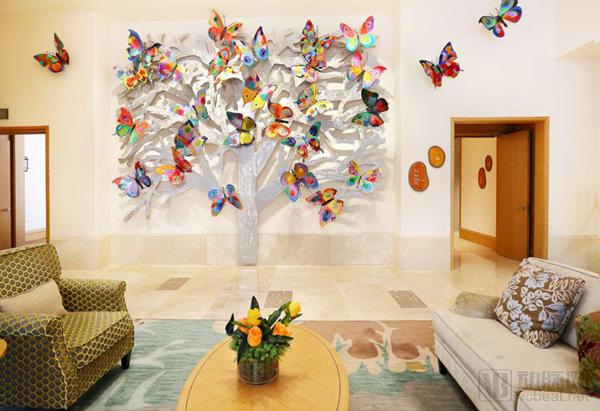
Butterfly Tree in the Lobby of Taikang Community Yan Garden Clubhouse (Image source: Provided by the enterprise)
At the community level, each design embodies local architectural culture and distinctive features. For instance, Taikang Community Chengdu Shuyuan adopts the courtyard-style architecture of traditional western Sichuan residences, with design inspiration drawn from the renowned “Kuanzhai Alley.” Taikang Community Shanghai Shenyuan features buildings that replicate the stone-gate entrances (Shikumen) of old lane houses. Taikang Community Wuhan Chuyuan incorporates core elements of Wuhan University, such as glazed tile roofs and the iconic Cherry Blossom Avenue. The development of each community extracts local architectural elements, integrating culture and features that reflect regional characteristics into Taikang’s hardware facilities.
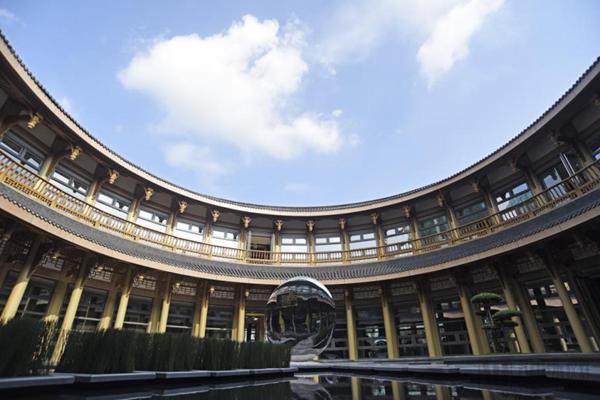
Taikang Community·Shuyuan’s Western Sichuan-style Architecture (Image source: Provided by the company)
In terms of diet, each community also has its own characteristics. For example, Guangdong has morning tea, Chengdu has various snacks, Shanghai has exquisite pastries, and Beijing has donkey rolls and other snacks. Each place is different.
The overall artistic atmosphere has added significant vibrancy to Taikang Community. Underpinned by this artistic environment, the deeper model of elderly care is rooted in Taikang’s twelve years of exploration and practice in implementing the U.S.-standard CCRC (Continuing Care Retirement Community) model.
Continuing Care Retirement Communities Gradually Expand into Second- and Third-Tier Cities
In fact, many people perceive Taikang’s hallmark as the integration of medical and elderly care services with high quality, which also comes with a hefty price tag.
Liu Tingjun crunched the numbers on-site, using Taikang Community Chuyuan in Wuhan as an example. The monthly fee for the smallest room is over RMB 5,000. Hiring a live-in caregiver in Wuhan also costs around RMB 3,000–4,000. When adding the depreciation cost of one’s own home, the total expense is not significantly different from the price of residing at Chuyuan.
Moreover, within Chuyuan, as residents’ health declines and their ability to perform activities of daily living diminishes, they can transition from the Independent Living area to the Assisted Living area, the Skilled Nursing area, or the Memory Care area. This allows them to continue living in a familiar environment while receiving care services commensurate with their physical condition. Should residents experience discomfort or require medical attention during their stay, the on-site rehabilitation hospital can manage most chronic conditions; for certain acute or critical cases, patients can be referred to tertiary hospitals.
The journey from robust health and full self-sufficiency to the end of life can span forty to fifty years. As elderly individuals experience declines in cognitive and behavioral functions, they can receive continuous care within a single community without needing to relocate—a model collectively known as CCRC (Continuing Care Retirement Community). Ji Qiongxiao, Assistant President of Taikang Health Investment and Chief Wellness Officer of Taikang Community, emphasized that the core philosophy of CCRC is to provide continuous care; otherwise, it cannot be regarded as a true CCRC.
As a hallmark of Taikang’s elderly care services, continuing care retirement communities (CCRCs) have now been established in the core cities across China’s five major economic regions: the Guangdong-Hong Kong-Macao Greater Bay Area, the Yangtze River Delta integration zone, the Beijing-Tianjin-Hebei region, the central Yangtze River economic belt, and the Chengdu-Chongqing economic circle. Nevertheless, Chen Dongsheng remains convinced that the broader health and wellness ecosystem will continue to expand downward in a sequential manner.
Liu Tingjun stated that Taikang, with its continuing care retirement communities (CCRCs) as the flagship, will gradually build an elderly care network by integrating technology and talent development, and leveraging various approaches such as leasing and partnerships with central state-owned enterprises to deliver its services. Against the backdrop of driving a revolution in elderly care, Taikang aims to offer increasingly affordable solutions with enhanced market competitiveness.
Market competitiveness is reflected not only in pricing but also in its unique characteristics.
Large-Scale, Full-Service, High-Quality, Integrated Medical and Elderly Care, Migratory Bird Chain
Taikang’s senior living communities are characterized by their large scale, comprehensive amenities, high quality, integration of medical and elderly care, and snowbird-style chain network.
First, large scale. Currently, Taikang Community has a total above-ground building area of over 2.5 million square meters across 15 cities, with capacity to accommodate 37,000 elderly residents.
Second, it offers comprehensive functionality. The continuous care model encompasses four service sectors: independent living, assisted living, skilled nursing, and memory care. These four sectors address the elderly care needs of residents across varying health conditions. Ji Qiongxiao noted that among these four sectors, memory care and skilled nursing present high technical barriers and are challenging to implement effectively. To achieve breakthroughs in these two areas within its senior living communities, Taikang has innovated the “1+N Care Model,” wherein one primary care manager leads and N care team members provide support. This model integrates resources from multidisciplinary teams to deliver holistic, continuous, and coordinated care services, ensuring that residents receive comprehensive and professional care.
It is understood that to fully leverage the capabilities of memory care and professional nursing, Taikang regularly sends employees abroad for training, continuously learning advanced practices from countries such as the United States, to ensure that residents in its senior living communities receive services that keep pace with the times.
Third is high quality. Ji Qiongxiao emphasized that high quality and high cost-performance ratio are equivalent, and the comparison between expensive and cheap is essentially a comparison of cost-performance. Taikang advocates for high cost-performance, where 100 yuan can purchase services worth more than 100 yuan.
Ji Qiongxiao revealed that Taikang has an internal estimate: under the premise of receiving equivalent services, the cost of living in other places (such as one’s home or other elderly care institutions) would be 1.5 to 2 times the price of living in Taikang’s retirement communities.
Fourth is the integration of medical care and elderly care. Currently, nearly all Taikang senior living communities are equipped with Level II rehabilitation hospitals as standard, featuring approximately 100 acute-care beds and around 200 skilled nursing beds. These facilities focus on three key disciplines: geriatric emergency medicine, which is particularly critical for the elderly; geriatric general practice; and geriatric rehabilitation.
The three major disciplines of Taikang Rehabilitation Hospital are closely centered on the residents of Taikang Community, with a focus on elderly care. It is understood that the medical equipment purchased by the rehabilitation hospital mainly covers these three disciplines. For instance, orthopedics and dentistry are included within the scope of comprehensive geriatric services, providing outpatient care, inpatient treatment, and health check-ups to assist the elderly in managing their health.
Taikang Rehabilitation Hospital extends its health management services deep into communities and residents’ homes. From the day seniors move into the community, Taikang Rehabilitation Hospital establishes comprehensive health records for them. Each time a senior visits the hospital, whether for inpatient care or outpatient services, their health and clinical data are synchronously updated in the backend system, continuously enriching their personal health profiles. These health records are accessible to both the seniors and their children at any time.
Fifth, the “snowbird” network. Taikang’s current senior living community footprint basically covers key provinces and municipalities across China, from Shenyang in the north to Sanya in the south, Shanghai in the east, and Chengdu in the west. Within this broad network, residents have largely realized a “snowbird” lifestyle: for example, residents based in Shanghai can spend the winter in Guangzhou, while those in Wuhan can spend the summer in Shenyang.
It is understood that under the "migratory bird" chain model, Taikang introduces preferential policies annually and assigns dedicated staff to organize travel for seniors. To ensure their safety, each trip is accompanied by a doctor and a butler throughout the journey.