

Wisdom Hospital Construction Drives Industry Boom: WinHealth Revenue Exceeds RMB 1 Billion, Healthcare IT Sector Grows by Average of 27.82%

Winning Health
Digital Health Product Provider

Neusoft
Provider of Connectivity and Software Products and Services
From 2018 to 2019, new standards such as the Electronic Medical Record (EMR) System Grading and Smart Hospital Construction were successively introduced. With a focus on EMR systems, interoperability, and the development of regional medical consortia, hospitals drove a new peak of growth in the healthcare informatics industry. Naturally, numerous domestic listed companies capitalized on this wave of opportunities.
In April 2019, publicly listed companies in the healthcare IT sector successively released their 2018 annual reports. According to calculations by VCBeat, the average revenue growth rate for these enterprises was approximately 27.82%, indicating a highly favorable market outlook. The specific revenue figures are presented below:
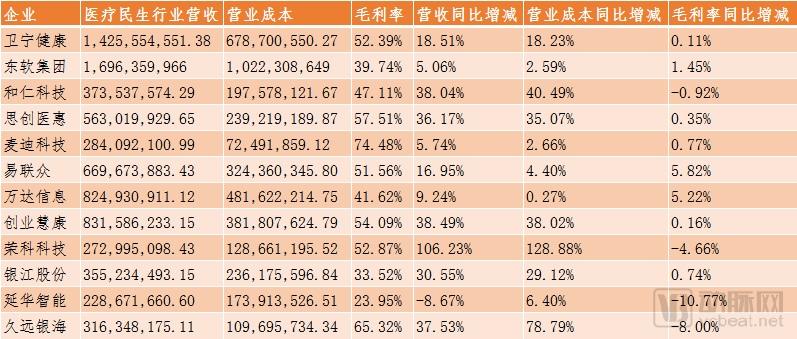
Data Source: 2018 Annual Reports of Various Companies
Among them, Neusoft and Winning Health Technology Group Co.,Ltd. each reported total healthcare sector revenues exceeding RMB 1 billion. Therefore, these two companies can be regarded as the current leading enterprises in healthcare informatization.
The company with the fastest revenue growth was Rongke Technology, with a year-on-year increase of 106.23%. Alongside this revenue growth, Rongke Technology’s cost of revenue also rose by 128.88%.
In terms of gross profit margin, based on the data from various companies in the table, the average gross profit margin for medical IT enterprises in 2018 is estimated to be approximately 49.51%. MediTech, whose gross profit margin exceeded 80% in its first-half 2018 financial report, also delivered impressive performance in its annual report, remaining the only company with a gross profit margin above 70%.
Winning Health with Revenue Exceeding RMB 1 Billion
Throughout the reporting period, Winning Health secured numerous orders from major hospitals in areas such as JCI accreditation, HIMSS evaluations, the National Healthcare Information Interconnectivity Standardization Maturity Assessment, and the Graded Evaluation of Electronic Medical Record System Functional Application Levels. Notably, these contracts are generally valued at over RMB 10 million each.
Regarding JCI, Winning Health facilitated Longhua Hospital Affiliated to Shanghai University of Traditional Chinese Medicine, Shanghai Pudong Hospital, and Shanghai Tianyou Hospital in obtaining JCI accreditation.
In terms of HIMSS, Winning Health facilitated Longhua Hospital Affiliated to Shanghai University of Traditional Chinese Medicine and Children's Hospital Affiliated to Shanghai Jiao Tong University in achieving HIMSS Level 7 accreditation, and assisted Yangjiang People's Hospital in Guangdong Province and Pudong Hospital in Shanghai in passing the HIMSS Level 6 assessment.
In terms of interoperability and electronic medical record (EMR) ratings, Winning Health facilitated the People’s Hospital of Nanchuan District in Chongqing, the First Affiliated Hospital of Anhui Medical University, Fujian Provincial Hospital, and the Health and Family Planning Bureau of Luhe District in Nanjing to pass the Level 4 Class A interoperability assessment, and assisted Dahuah Hospital in Xuhui District, Shanghai, in achieving Level 5 EMR evaluation, among other accomplishments.
In addition, the revenue growth of Winning Health is closely related to the business performance of its four cloud platforms: “Cloud Medicine,” “Cloud Insurance,” “Cloud Pharmacy,” and “Cloud Health.”
Throughout 2018, Nali Health, synonymous with Winning Health’s “Cloud Medical” initiative, achieved operating revenue of RMB 55.1786 million, a year-on-year increase of 70.83%. In the “Cloud Insurance” segment, Winning Internet reported standalone operating revenue of RMB 18.8434 million, surging by 620.09% year on year; Winning Software Technology recorded operating revenue of RMB 12.3220 million, up 39.57% year on year. Keyshiquan, representing the “Cloud Pharmacy” business, generated operating revenue of RMB 87.4285 million in 2018, marking a year-on-year growth of 151.44%.
However, at present, the net profits of the four cloud businesses remain less than ideal. Specifically, “Cloud Medical” reported a net loss of RMB 9.8629 million; “Cloud Insurance” posted net profits of RMB 52,000 and a net loss of RMB 32.5614 million, respectively; and “Cloud Pharmacy” recorded a net loss of RMB 9.2718 million. Identifying suitable profit growth drivers based on existing operations will be key to influencing future revenue performance.
Meditech with Gross Margin Exceeding 70%
As a dynamic force among publicly listed healthcare IT enterprises, MediTech is a company whose core business revolves around its Clinical Information System (CIS) series of application software products and comprehensive clinical informatization solutions. Clinical systems have consistently been a high-gross-margin product category within the healthcare IT sector. As of the end of December 2018, MediTech’s end-users spanned all 32 provinces across China, covering more than 1,400 medical institutions, including over 400 Grade III Class A hospitals.
In last year’s semi-annual report, VCBeat noted that MediTech’s overall gross margin stood out compared to other peers in the industry. This was primarily due to three factors: first, a higher proportion of high-margin products and services—such as anesthesia, intensive care, and operation and maintenance (O&M) services—in its project portfolio; second, the company’s technological advantages enabled it to secure a substantial volume of high-margin clinical system orders without resorting to low-price bidding strategies; and third, its technical prowess helped reduce internal R&D and secondary development costs.
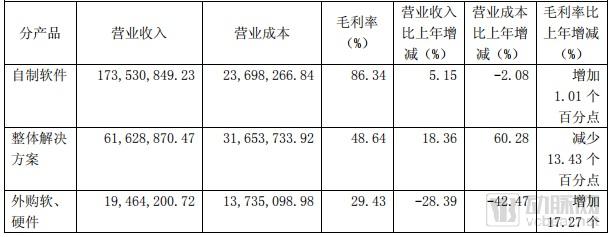
During the 2018 annual reporting period, MediTech discontinued low-quality procurement agency contracts. As a result, although revenue from outsourced software and hardware decreased by 28.39% compared to 2017, the gross profit margin of its products increased by 17.27 percentage points, which became one of the key factors enabling MediTech to maintain a relatively high gross profit margin.

Rongke Technology, with Medical Revenue Surging Over 100% Year-on-Year
In 2018, Rongke Technology vigorously promoted the integration of its healthcare business, organically consolidating its wholly-owned subsidiaries and equity-participated companies into a community of shared interests, thereby further enhancing its market competitiveness and profitability. The current consortium includes multiple operating entities such as Rongke Technology, Mijian Information, Shenzhou Shihan, Shanghai Maijian Information Technology Co., Ltd., and Shanghai Jinchuang Information Technology Co., Ltd. These companies share customer, product, and sales resources.
According to Rongke Technology’s annual report, the company’s revenue increased by 106.23% year-on-year. This growth was primarily driven by the company’s capture of significant opportunities in the development of healthcare informatization, its proactive pursuit of inorganic expansion through mergers and acquisitions in the healthcare business segment, the expansion of high-quality distribution channels, the promotion of sales, and the enhancement of market share.
As the two pioneers of Rongke Technology in the healthcare industry, Mijian Information and Shenzhou Shihan have certainly made indispensable contributions.
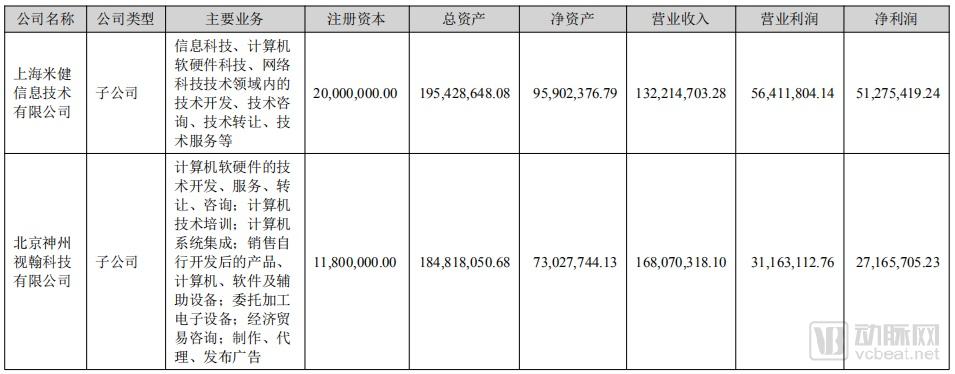
Regarding Mijian Information, during the reporting period, the company further improved its emergency management informatization solutions, established several model hospitals, and initially formed rapid delivery capabilities.
In the field of clinical anesthesia informatics, Mijian is strengthening refined product management capabilities to deeply meet customer business needs by integrating operating room management, physician behavior management, and digital operating rooms into a comprehensive operating room solution. Meanwhile, its newly developed Ambulatory Surgery Management System is poised to become a new sales highlight, aiming to rapidly capture the domestic ambulatory surgery market and increase market share.
Regarding Shenzhou Shihan, 2018 was a year of vigorous development following its acquisition by Rongke Technology, during which the company achieved dual growth in both business revenue and net profit. While strengthening its existing hospital informatization services, Shenzhou Shihan worked closely with its holding and participating companies to jointly explore the medical and education informatization markets.
Shenzhou Shihan’s Yijie Telemedicine series, launched in 2018, along with products such as IoT-enabled electronic bedside cards and IoT wireless scanners, have filled gaps in the industry and received positive market response. These products are poised to become new profit growth drivers for Shenzhou Shihan in the future.
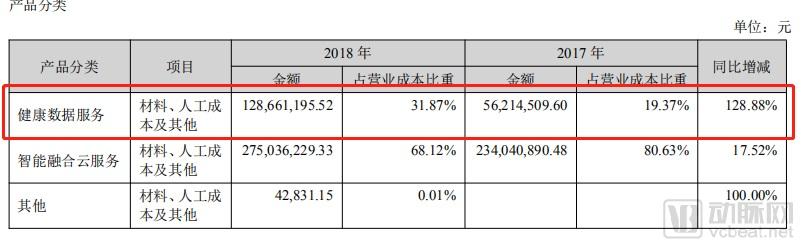
Notably, alongside revenue growth, Rongke Technology’s cost of revenue also increased by 128.88%, primarily driven by higher material and labor costs resulting from business expansion.
Yanhua Intelligence, the Only Company with Negative Revenue Growth
As shown in the revenue statement, Yanhua Intelligent was the only listed company in 2018 to experience negative growth in medical-related business revenue. Specifically, its revenue decreased by 8.67% year-over-year, and its gross profit margin declined by 10.77% year-over-year.
According to the official statement, in 2018, the performance of Chengdian Yixing and Medishilan, subsidiaries controlled by Yanhua Intelligent, failed to meet expectations for the year. Out of prudence, the company recognized a goodwill impairment provision of RMB 221.667 million, resulting in a decrease of RMB 221.667 million in the net profit attributable to shareholders of the listed company for 2018.
In the cost of sales statement, the project construction costs for smart healthcare increased by 6.4% year-on-year.
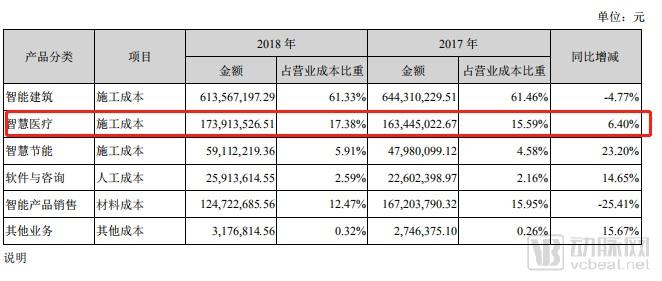
According to Yanhua Intelligent, fluctuations in construction costs during the course of project implementation may affect gross profit margins and corporate performance. In response, Yanhua Intelligent will proactively deepen its business transformation by vigorously advancing the development of its smart healthcare, smart energy conservation, consulting, and software businesses. This strategy aims to increase revenue from software services, improve financial metrics, and comprehensively enhance the company’s gross and net profit margins.
Division of Labor in the Information Technology Industry for Smart Hospital Development
In recent years, the integration of information technologies such as the Internet, the Internet of Things (IoT), and big data with healthcare has propelled hospital informatization into a new phase. In 2019, the National Health Commission of China provided interpretations on the definition, connotation, and scope of stages involved in smart hospitals.
The first domain is "Smart Healthcare" for medical professionals, which refers to the development of information systems centered on electronic medical records (EMR) for use by healthcare providers.
The second area is “Smart Services” for patients. Hospital all-in-one kiosks and self-service terminals, along with mobile payment, appointment registration, scheduled consultations, information notifications, and derived services such as parking information push notifications and alerts, all constitute smart services for patients, making their experience more convenient and efficient.
The third domain is “Smart Management” for hospital administration. The earliest hospital management system was the Hospital Information System (HIS). Currently, there are numerous systems dedicated to hospital management, including those for finance, billing, and supply chain management. These systems cover the management of a wide range of materials within hospitals, such as pharmaceuticals, consumables, laboratory reagents, medical waste, and patient linens. All of these rely on refined, information-driven hospital management.
In this regard, the National Health Commission also issued the Notice on the Graded Evaluation Standard System for Smart Hospital Services (Trial) in March this year. In accordance with the basic service content that should be covered in the pre-diagnosis, during-diagnosis, and post-diagnosis stages for patients, and in combination with hospital informatization construction and the internet environment, the National Health Commission has determined 17 evaluation items across five categories.
An analysis of the business operations of listed companies involved in healthcare informatization since 2018 reveals that, within the three key domains of smart hospitals—“Smart Medical Care,” “Smart Services,” and “Smart Management”—different companies have already prioritized and launched corresponding business initiatives based on their core competencies. It is foreseeable that in the coming years, healthcare informatization centered on smart hospitals will profoundly influence the overall business development of these listed companies.
Winning Health’s “Smart Hospital 2.0” leverages artificial intelligence as its engine and a robust platform as its foundation. By implementing unified data governance and enabling deep data utilization, it constructs a people-centric, proactive, and precise medical service system, thereby enhancing participant satisfaction and elevating the hospital’s operational capabilities.
In terms of clinical application, the Electronic Medical Record (EMR) system incorporates a template knowledge base to strengthen medical record quality control management, enabling multi-level oversight through physician self-assessment, departmental review, and hospital-level medical affairs supervision. The mobile physician workstation has been upgraded with intelligent voice-enabled order entry and medical record documentation, as well as paperless medical record functionality, thereby achieving truly paperless ward rounds and realizing smart mobile clinical applications. Additionally, a medical affairs management system has been developed, covering seven major modules including ledgers, approvals, authorizations, and physician profiles, which has significantly improved the efficiency and quality of medical affairs management.
Leveraging the Clinical Data Repository (CDR), we have developed a 360-degree patient view, an Electronic Medication Administration Record (EMAR), a closed-loop management system, and a patient issue list. This enables continuous control over medication processes across pre-administration, intra-administration, and post-administration stages, achieving closed-loop business process management and automatic aggregation of key exceptions, thereby enhancing medical efficiency and quality while ensuring patient safety.
In the field of medical imaging systems, Winning Health has developed auxiliary detection systems for pediatric bone age assessment, pulmonary nodule detection, and common diseases identified in chest radiographs. By leveraging deep learning algorithms to extract morphological, grayscale, and texture features from imaging data, the company has built an AI engine-based auxiliary diagnosis platform, facilitating the rapid translation of artificial intelligence technologies into clinical business systems.
Winning Health responds to the national policy of serving patients by expanding its patient-facing mobile application, enabling patients to view their personal examination reports and medical images released by the hospital on mobile devices in real time, thereby breaking through the spatial and temporal limitations associated with accessing reports and images.
Yinjiang Co., Ltd. Smart Healthcare Big Data Analytics Solution is a comprehensive big data analytics and decision-making solution designed for provincial and municipal health and medical institutions, aimed at addressing current issues such as uneven distribution of medical resources, institutional redundancy, low medical efficiency, subpar quality of medical services, and inflated drug prices.
By deeply processing the vast amounts of pharmaceutical and healthcare big data and information accumulated in existing systems—such as Hospital Information System (HIS) data, Laboratory Information System (LIS) data, Picture Archiving and Communication System (PACS) data, and Electronic Medical Record (EMR) data—this solution leverages cutting-edge big data, business intelligence (BI), and data mining technologies. It enables data interconnectivity and multi-level drill-down capabilities, delivering deep analytical insights characterized by novel perspectives, comprehensiveness, intelligence, predictability, and visualization. This empowers health officials and hospital administrators to more effectively unlock data value, thereby enhancing their decision-making, insight discovery, and process optimization capabilities.
The Smart Healthcare Big Data Analytics Solution encompasses six major applications and ten analytical modules. The six applications include: Patient Treatment Application, Chronic Disease Prevention and Treatment Application, Healthcare Management Institution Application, Healthcare Resource Allocation and Planning Application, and Government Regulatory Application. The ten analytical modules comprise: Patient Analysis, Disease Analysis, Physician and Medical Staff Analysis, Prescription Analysis, Population Analysis, Pharmaceutical Analysis, Medical Testing and Inspection Analysis, Medical Safety Risk Analysis, Healthcare Resource Analysis, and Healthcare Effectiveness Analysis. Currently, this solution has been successfully deployed and is undergoing trial operation in a sub-provincial city in China.
In terms of payment services, Yilianzhong won bids for the national-level China UnionPay Electronic Health Card Platform, as well as the electronic health card projects in Xiamen and Hefei, making the electronic health card a key breakthrough for business development. The company launched a mobile medical insurance payment application in Fuzhou, advancing successful pilot programs for multi-code integration. It has established health city portals such as “Rongyitong,” completing the “Rongyitong” project that covers more than 40 hospitals and nearly 200 grassroots community health service centers in Fuzhou.
In addition, multiple payment products from Yilianzhong, including its hospital payment platform and multi-channel social security contribution payment platform, have been successfully implemented and promoted in Fujian, Guangdong, Guangxi, Jilin, Shandong, Shanxi, Jiangsu, Hebei, Jiangxi, and other regions. Meanwhile, the company is actively conducting pilot programs in commercial payments, smart parking, and smart communities to explore development models for commercial payment services.
Neusoft is continuously advancing the cloud migration of its product portfolio, comprehensively strengthening the development of its internet healthcare business and transforming its business model. By promoting cloud-based healthcare solutions across diverse formats and sectors, Neusoft focuses on primary care institutions, county-level medical communities, and national health information platforms at all levels, thereby achieving cloud-enabled software platforms, integrated operations, and intelligent services.
Neusoft’s National Health Information Cloud Platform and Medical Consortium Information Cloud Platform have covered 7 provinces and 29 prefecture-level cities across China. Neusoft’s Cloud HIS and Cloud Maternal and Child Health products now serve customers nationwide, including over 1,500 central township hospitals/community health service centers, more than 3,000 general township hospitals/community health service stations, and over 50,000 village clinics.
Furthermore, Neusoft is actively facilitating the transformation of cloud service models for private healthcare groups, partnering with major medical conglomerates and specialized chain institutions such as Taikang Community, Ping An Good Doctor, Fukang Medical Group, He Eye Specialist Hospital, and Fresenius, a leading international enterprise. The company continues to advance its market expansion in county-level medical communities, successfully implementing informatization projects in more than 20 such communities. Its national pilot projects in Tianchang, Yangqu, and Yiliang have gained industry recognition.
Through the research and development of cutting-edge technologies and continuous innovation, Sichuan Ewell integrates mobile internet and the Internet of Things (IoT) across multiple levels, including terminals, networks, and platforms. Leveraging its core strengths in healthcare informatization and health management, the company vigorously promotes the establishment of a smart healthcare ecosystem platform, the application of medical big data and artificial intelligence in healthcare, and the research, development, and promotion of RFID-enabled healthcare consumables with deep collaborative capabilities. It focuses on personalizing information services and enhancing service experience.
In the realm of “Smart Management” for hospital administration, Suncare Medical leverages its strengths in Internet of Things (IoT) technology to further develop IoT-based smart healthcare traceability management solutions, exemplified by intelligent linen management systems, thereby enhancing the level of refined hospital management.