

Beijing Issues First Internet Medical Practice License; WeDoctor's Beijing Full-Care Clinic Launches Internet-Based Diagnosis Services and Files IPO Prospectus
On August 15, the high-level forum titled “‘Internet+’ Boosting the ‘Healthy China Initiative’,” co-hosted by People’s Daily’s Health Times and WeDoctor, was held in Beijing. A reporter from VCBeat (WeChat ID: vcbeat) learned at the event that the internet-based diagnosis and treatment base established by WeDoctor has commenced operations. As the physical medical institution underpinning this base, Beijing WeDoctor General Practice recently received the city’s first license for internet-based diagnosis and treatment services, issued by the Xicheng District authorities, thereby gaining approval to provide such services.

(Pictured: Unveiling ceremony of the Beijing Weiyi General Practice Internet Diagnosis and Treatment Base)
Mao Qunan, Director of the Department of Planning and Information under the National Health Commission; Jin Xiaotao, President of the Chinese Society for Health Informatics and Medical Big Data; Han Demin, President of the China International Exchange and Promotion Association for Medical and Healthcare and Academician of the Chinese Academy of Engineering; Lu Qingjun, Director of the National Health Commission’s Telemedicine Management and Training Center; medical experts from provinces and municipalities including Beijing and Shanghai; Liao Jieyuan, Founder of WeDoctor Group; and media representatives from People’s Daily, Health Times, and other outlets attended the forum to jointly explore how digital technologies can support the “Healthy China Action.”
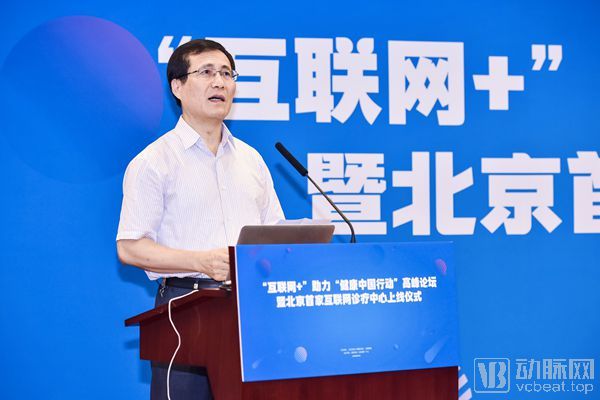
(The photo shows: President Jin Xiaotao delivering a speech at the “Internet+” Empowering the “Healthy China Initiative” Summit Forum)
On the launch day, a remote multidisciplinary consultation (MDT) for a complex case was conducted at Beijing Weiyi General Practice. Ms. Zhao, aged 64, had suffered from headaches and dizziness for over 20 years and experienced sudden deafness one year ago. She had sought treatment at the neurology, otolaryngology, and orthopedics departments of multiple hospitals in Shandong Province, but the underlying cause remained undiagnosed. To facilitate the patient’s early recovery, Dr. Zhu Haiying, Chief Physician of the Neurology Department at Jinan Fourth People’s Hospital Weiyi Internet Hospital, initiated a request for remote MDT. The consultation team included Dr. Wang Moli, Chief Physician of the Neurology Department at Beijing Xuanwu Hospital; Dr. Ren Lili, Associate Chief Physician of the Otolaryngology Department at PLA General Hospital (301 Hospital); and Dr. Xu Gaofeng, Chief Physician at Beijing Weiyi General Practice. Through the consultation, the expert team identified the cause of Ms. Zhao’s condition and formulated a further treatment plan.
Such clinical scenarios are part of the routine operations of Beijing Weiyi General Practice. According to Liao Jieyuan, with its qualifications for internet-based diagnosis and treatment, Beijing Weiyi General Practice will become an online practice platform for specialists from major hospitals in Beijing, connecting core medical resources across China on a large scale and further strengthening WeDoctor’s digital healthcare network. As a chain of physical medical institutions under WeDoctor built upon its digital healthcare platform, WeDoctor General Practice Centers have established seven offline service bases in six major cities across China. The network connects with 1,200 public tertiary hospitals, has formed one-stop collaborative partnerships with top-tier hospitals in the United States, Japan, the United Kingdom, Germany, and other countries, and provides access to health examination services offered by domestic Grade A tertiary hospitals and premium check-up institutions both in China and abroad.
By deeply integrating top-tier medical resources across China and internationally, the WeDoctor platform has established a digital healthcare service system characterized by “online + offline, general practice + specialty care, and hub + network” models. This system provides users with health-oriented services encompassing prevention, wellness, and medical treatment. In alignment with the roadmap for the Healthy China Initiative, the forum released a “trilogy” of action plans for a Digital Health-based Healthy China. These plans are designed to provide high-level, exclusive health protection systems for three key groups: entrepreneurs, who are major participants in economic activities; enterprises, the fundamental cells of the national economy; and families, the smallest units of society. The services are scheduled to officially launch in the coming days.
This innovative practice represents a concrete action by Beijing Municipality and Xicheng District to implement the national “Internet + Healthcare” and private healthcare policies, serving as a significant measure to advance the “Healthy China Initiative.” The Beijing Municipal Government encourages social forces to integrate online and offline healthcare resources and supports innovation in “Internet + Healthcare” service models. In 2018, the Beijing Municipal Health Commission issued relevant guidelines requiring medical institutions at all levels to expand the scope and content of healthcare services by leveraging internet information technologies, centered on patients’ healthcare needs.

(Pictured: Director-General Mao Qun'an delivering remarks at the High-Level Forum on “Internet+” Empowering the Healthy China Initiative)
Director-General Mao Qunan stated in his remarks that the Healthy China Initiative cannot be separated from “Internet+,” and the application of the Internet in the healthcare industry has shown strong momentum. He expressed hope that Beijing’s first internet-based diagnosis and treatment base would play a leading and demonstrative role in promoting the decentralization of high-quality medical resources and innovating service and operational models, thereby leveraging “Internet+” to support the Healthy China Initiative.
Wuzhen Internet Hospital, established by WeDoctor, has pioneered a new business model in China’s internet hospital industry and achieved rapid growth under the support of the national “Internet + Healthcare” policy. By leveraging software and hardware terminals, Wuzhen Internet Hospital has brought diagnostic and medical capabilities to villagers’ doorsteps, extending service scenarios to homes, enterprises, institutions, and communities. It has broken down the “data silos” among municipal, county, township, and village-level medical institutions, achieving interconnectivity across medical care, pharmaceuticals, health insurance, and elderly care, thereby gradually becoming the foundational infrastructure for digital health in China.
“The first internet-based diagnosis and treatment base has been established in Beijing. We must fully leverage Internet Plus, big data, and artificial intelligence technologies to replicate the expertise of top-tier specialists, thereby driving improvements in the diagnostic and therapeutic capabilities of primary healthcare institutions,” stated Academician Han Demin. He expressed hope that the entire industry would continue its efforts to promote the establishment of health and medical big data management systems, service systems, and digital health service platforms.
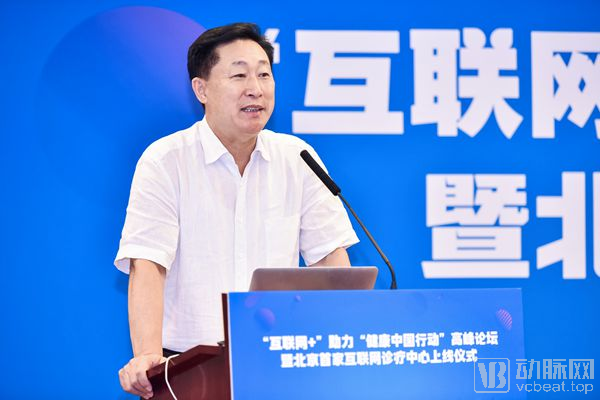
(Pictured: Academician Han Demin delivering a keynote speech at the High-Level Forum on “‘Internet+’ Empowering the Healthy China Initiative”)
To address the challenges of difficult diagnoses and high medical costs for patients with complex and refractory diseases, and to enable such patients to consult top-tier specialists locally, People’s Daily’s Health Times partnered with WeDoctor to launch the “Public Welfare Initiative for Expert Consultations on 100 Complex Cases” at this forum. Thirty medical experts from renowned institutions, including Peking Union Medical College Hospital, West China Hospital, and Huashan Hospital, responded to the call in the first phase. They will subsequently provide comprehensive, science-based pro bono consultations to 100 patients with complex and refractory diseases across China.

(The image shows the official launch of the “Public Welfare Initiative: Expert Consultations for 100 Challenging Cases”)
“Safeguarding health must be empowered by high-quality medical resources. The launch of Beijing’s first internet-based diagnosis and treatment base represents a significant step forward in both technological innovation and healthcare service innovation,” pointed out President Jin Xiaotao. He expressed his expectation that Beijing will take new strides in “Internet + Healthcare” services in the new era, setting an example for the rest of China in promoting the healthy development of internet-based healthcare and advancing the Healthy China Initiative.