

Xishan Technology Advances Import Substitution with 12 Medical Devices Included in National Reimbursement Drug List, Saving Hospitals Over RMB 500 Million
In recent years, calls for import substitution of domestically produced pharmaceuticals and medical devices have grown increasingly loud. A series of policies have even been introduced, including the issuance of provincial and municipal lists restricting the procurement of imported products, the implementation of case-based payment systems, and requirements to reduce the proportion of consumables costs. These measures have led hospitals to increasingly favor domestic brands.
In the field of medical devices, taking surgical staplers as an example, Chongqing Xishan Science&Technology Co., Ltd. (hereinafter referred to as “Xishan Technology”), located in the Liangjiang Digital Economy Industrial Park, launched eight independently developed surgical stapler products on April 11. This series of products has reached an internationally advanced level, helping to enhance the safety of surgical procedures and reduce the risk of surgical infections. Moreover, their prices are significantly lower than those of imported counterparts, which holds positive significance for achieving import substitution by domestic surgical stapler brands.
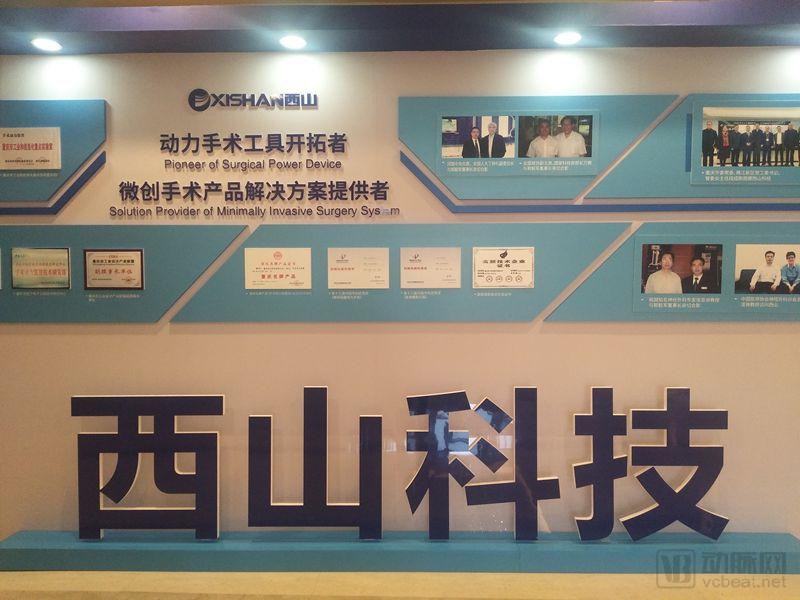
Currently, Chongqing Xishan Science&Technology Co.,Ltd. has independently developed more than 30 types of surgical medical device products, which are gradually achieving industrialization. Its products not only cover all 31 provinces in China and serve over 3,000 large and medium-sized hospitals, including Beijing Tiantan Hospital, the 301 Hospital, Xiangya Hospital, Tongren Hospital, Southwest Hospital, Xinqiao Hospital, and the First Affiliated Hospital of Chongqing Medical University, but are also exported to more than ten countries, including the United States, South Korea, India, Turkey, Chile, Indonesia, Bangladesh, Thailand, Vietnam, Kenya, Ethiopia, and Papua New Guinea.
It is worth noting that Xishan Technology has cumulatively saved Chinese hospitals RMB 500 million in costs and reduced patients’ annual medical expenditures by RMB 1.5 billion. “Xishan Technology’s R&D team has grown to 140 members, with annual R&D investment accounting for no less than 10% of its sales revenue; in 2018, R&D spending reached RMB 25 million. Xishan Technology is striving to promote the enhancement and improvement of clinical surgical procedures through the research and development of surgical medical devices and key technologies,” founder Guo Yijun told VCBeat.
He further stated, “The company has currently mapped out the development directions for six major product categories: surgical guidance products, surgical instrument products, implantable products, ancillary products, therapeutic products, and tissue replacement products. Global sales revenue is projected to reach RMB 1 billion by 2020, RMB 10 billion by 2025, and RMB 100 billion by 2035.”
How did Chongqing Xishan Science&Technology Co.,Ltd. achieve these accomplishments through its step-by-step development? Amid the growing trend of domestic substitution for imported products, can Xishan Technology continue to earn the recognition and support of major hospitals as before, and emerge as a leader in China’s medical device industry?
Although policies promoting the substitution of imported products with domestically produced ones have only been gradually implemented over the past one to two years, their content demonstrates support for enhancing the innovation capabilities of Chinese enterprises.
In 2012, China issued the “12th Five-Year” Special Plan for the Medical Device Technology Industry, proposing to prioritize the development of a batch of high-end domestically produced medical devices to achieve import substitution, thereby ushering in the era of localization for China’s medical device industry.
The “Outline of the National Healthcare Service System Plan (2015–2020),” issued by the State Council in 2015, explicitly called for reducing healthcare costs and gradually increasing the deployment level of domestically produced medical equipment.
In the same year (2015), the State Council issued the “Opinions on Reforming the Drug and Medical Device Review and Approval System.” The China Food and Drug Administration (CFDA) comprehensively deployed reforms to the medical device review and approval system, with a focus on improving the quality and efficiency of reviews and approvals. Key measures included establishing new pathways for the review of innovative devices, publishing a catalog of medical devices exempt from clinical trials, vigorously reforming technical review processes, and conducting supervisory spot checks on clinical trials.
As also mentioned in “Made in China 2025” and the “Anti-Monopoly Law,” the market for laparoscopic staplers and ultrasonic scalpels is dominated by foreign companies, with domestic firms playing a supplementary role, presenting significant opportunities for high-quality domestically produced products.
Furthermore, the national implementation of tiered diagnosis and treatment has promoted the increase in surgical volume at prefecture- and county-level hospitals, reduced the proportion of consumables costs, and lowered per-disease charges. Even tendering processes by provinces, municipalities, and hospitals have begun to mandate the inclusion of domestic brands, all of which are accelerating the process of import substitution. For instance, Zhejiang Province’s “Unified Argumentation List for Government Procurement of Imported Products (Medical Equipment Category) for 2018–2019” and Sichuan Province’s “Notice of the Sichuan Provincial Department of Finance on Publishing the List of Imported Products for Provincial Government Procurement in 2018–2019” explicitly require the procurement of domestic brands, while the use of imported brands is subject to review, thereby creating greater opportunities for domestic products.
China’s medical device industry is expected to experience rapid growth, with the domestic substitution of high-end medical devices gradually accelerating. The market size is projected to continue expanding, reaching approximately RMB 890 billion by 2024.
While rapid growth and significant import substitution opportunities appear promising, China’s medical device market has already surpassed RMB 300 billion, making it the second-largest globally. However, medical devices account for only 17% of China’s total pharmaceutical market—merely 40% of the proportion seen in developed countries. With population aging and rising healthcare insurance reimbursement levels, the sector is expected to gain at least an additional 5 percentage points in market share over the next five years, corresponding to a market expansion exceeding RMB 300 billion.
From a micro perspective, China's medical device manufacturers are characterized as "small and fragmented," with over 90% being small and medium-sized enterprises (SMEs) with annual revenues below RMB 20 million. High-end and mid-to-high-end medical devices still rely heavily on imports, while domestic companies primarily engage in relatively low value-added segments of the industry chain. Consequently, there is substantial potential for import substitution.
Currently, policy support continues to drive growth and unlock dividends. Import substitution is primarily concentrated in the following four areas:
First, chemiluminescence in the IVD field holds the greatest value for import substitution. With higher sensitivity and automation levels, chemiluminescence is clearly trending toward replacing enzyme-linked immunosorbent assay (ELISA) technology.
Second, in the field of medical imaging, Digital Radiography (DR) systems are seeing opportunities for domestic high-end models to replace imported ones, driven by rising equipment procurement demand from primary-care markets and private hospitals, as well as intensified anti-corruption campaigns and cost-containment pressures at tertiary hospitals.
Third, cardiovascular and surgical devices: Import substitution for pacemakers and laparoscopic staplers is imminent. Staplers constitute the largest category of surgical instruments. Due to their high technical requirements, laparoscopic staplers have formed a competitive landscape dominated by foreign companies, with domestic firms playing a supplementary role. Currently, in the Chongqing region, companies represented by Chongqing Xishan Science&Technology Co.,Ltd. have rapidly initiated import substitution following technological breakthroughs.
Fourth, in the field of hemodialysis, which represents the next blue ocean for chronic disease management, the expansion of chain hemodialysis centers is accelerating. China has approximately 2 million patients with end-stage renal disease (ESRD), yet the hemodialysis penetration rate stands at only 15%. With the advancement of critical illness insurance and the accelerated construction of hemodialysis centers, a market demand worth hundreds of billions of yuan is expected to be unleashed.
Among the aforementioned four categories of medical device applications, visible staplers represent an important niche segment within the medical device industry.
Staplers are the world’s first suturing devices, serving as medical equipment that replaces manual suturing. They are generally categorized into disposable or reusable staplers, and imported or domestically produced (Chinese-made) staplers. Their primary working principle involves using titanium staples to transect or anastomose tissue, functioning similarly to a stapler.
Based on the scope of application, they are mainly classified into skin staplers, circular gastrointestinal (esophageal, gastric, intestinal, etc.) staplers, rectal staplers, circular hemorrhoid staplers, circumcision staplers, vascular anastomosis devices, hernia repair staplers, and pulmonary cutting staplers.
Staplers have been used for gastrointestinal anastomosis for nearly a century, but circular staplers did not become widely used in gastrointestinal surgery until 1978.
Compared with traditional manual suturing, instrument-assisted suturing offers the following advantages:
1. Simple and convenient operation, saving surgical time; single-use to avoid cross-infection.
2. Suture tightly with titanium or stainless steel staples (skin staplers), ensuring appropriate tension.
3. Minimal side effects and effective reduction of surgical complications, etc.
Thanks to advancements in modern technology and improvements in manufacturing techniques, surgical staplers currently used in clinical practice are reliable in quality, easy to use, and provide secure anastomoses with appropriate tension. Their advantages—including rapid suturing, ease of operation, and minimal side effects and surgical complications—have enabled the resection of tumors that were previously considered unresectable. As a result, they are highly favored and recommended by clinical surgeons both domestically and internationally.
Guo Yijun stated that, prior to this, these products were largely dependent on imports. Surgical staplers can be categorized into open surgical staplers and laparoscopic surgical staplers. According to a survey report by China Industry Information Network, in 2017, the market share of domestically produced laparoscopic surgical staplers in hospitals was only 16%. Although the market share of domestically produced open surgical staplers was rising, it still accounted for only 51%. Among more than 60 domestic brands in China, only a handful have achieved annual revenues exceeding RMB 100 million.
“This is the current state of the industry, which we aim to disrupt.” Guo Yijun expressed strong confidence in this endeavor. The eight independently developed stapler products launched this time, such as disposable endoscopic linear cutting staplers, disposable wound protectors, and disposable laparoscopic trocars, all demonstrate significant advantages in terms of safety, convenience, and cost-effectiveness.
Among these eight products, six are high-frequency clinical stapler devices that meet the majority of clinicians’ needs. These include disposable endoscopic linear cutting staplers, disposable wound protectors, disposable laparoscopic trocars, disposable circular staplers, disposable anorectal staplers, and disposable circumcision staplers—all of which are widely used in clinical practice and satisfy most clinical requirements.
For patients, surgical procedures using this product series result in narrower anastomotic stomas and faster healing; they offer superior hemostasis and enhanced safety. The products feature a minimum anastomotic gap to prevent tissue damage caused by excessive compression, thereby minimizing safety risks and significantly reducing surgical costs. For surgeons, the series utilizes imported titanium staples with higher strength and tensile properties, while the high-rigidity, matte-finished device body facilitates easier operation.
Guo Yijun stated that although import substitution is underway, the Chinese market for surgical staplers has reached a scale of tens of billions of yuan. This lucrative economic pie is currently dominated by two American companies, Johnson & Johnson and Medtronic. Despite the considerable number of domestic surgical stapler manufacturers, they remain fragmented, small-scale, and weak, lacking the competitiveness to challenge their American counterparts. There is an urgent need in China for one or more such enterprises to emerge and represent national competitive interests in the field of surgical staplers; this aspiration has been the dream sustaining him through the arduous process of entrepreneurship.
Cast back to 1999. It was the eve of China’s new economic takeoff and social transformation. Amidst a chaotic social reality and ideals forged through circuitous trials, everyone—consciously or unconsciously—sought their new positioning, goals, and paths for personal development.
By this time, Guo Yijun had undergone several career transitions, serving as a teacher, an employee of a state-owned enterprise (SOE), and later working for a private enterprise converted from an SOE. Each change in identity contributed to his accumulation of life experience. Eventually, he could no longer resist the urge to fully venture into the business world. “Since they are all private companies anyway, I might as well start my own business rather than work for someone else.”
Therefore, he invested his entire savings into the medical device industry and founded Chongqing Xishan Science&Technology Co.,Ltd. The company focuses on surgical power tools, such as cranial drills and electric drills, which create bone channels and remove obstacles for surgical procedures.
“At that time, we recruited seven or eight people from the job market to get the company off the ground, while I shouldered multiple responsibilities, serving as an R&D specialist, manager, and sales representative,” recalled Guo Yijun. “Working day and night to accelerate R&D efficiency, we brought the surgical power device, which was still at the laboratory stage, to market in just six months.”
“At that time, the company mainly relied on income from medical device trading to sustain its operations.” Recalling the events, Guo Yijun noted that in September 2000, the company successfully developed its first surgical power tool product—the “DK-2000 Electric Craniotome”—and quickly secured its first order from Shaanxi Province. “The sale amounted to over RMB 10,000.”
In 2002, Xishan Technology received RMB 1 million in equity investment as innovation funding from the Chongqing High-Tech Industrial Development Zone. “In fact, when we first started our business, our strategic direction was not entirely clear. We successively initiated the research and development of more than ten products, including electric craniotomes, hemorheology analyzers, and sperm analyzers. We hoped that if one area did not succeed, another might, and that we would eventually develop a ‘flagship’ product.”
However, the market ultimately played a mild trick on Guo Yijun: due to the company’s small scale and limited working capital, its products spanned disparate application areas, resulting in a lack of focus and specialization, as well as low customer acceptance.
In 2004, Guo Yijun finally finalized the strategic transformation decision: to concentrate all resources into a single basket—retaining electric craniotomes and positioning itself as a “pioneer in powered surgical tools.”
As a high-tech medical device enterprise in Liangjiang New Area, Xishan Technology was authorized by the National Medical Products Administration to formulate the world’s first national industry standard in the field of surgical power systems, and has independently developed more than 30 types of surgical medical devices.
In 2015, Guo Yijun once again introduced an upgraded strategic positioning: Provider of Minimally Invasive Surgical Product Solutions.
After more than 20 years of development, Chongqing Xishan Science&Technology Co.,Ltd. has grown into a national high-tech enterprise integrating the R&D, manufacturing, sales, and service of digital minimally invasive surgical equipment and consumables. The company is recognized as a “National Intellectual Property Demonstration Enterprise,” a “Leading Enterprise in the National Bio-industry Base,” and a recipient of the “China Patent Excellence Award.” It served as the drafting unit for the national industry standard “Electric Bone Tissue Surgical Equipment” (Standard No.: YY/T0752-2016). The company has established provincial and ministerial-level research platforms, including the “Chongqing Medical Electronic Engineering Technology Research Center,” the “Chongqing Engineering Research Center for Surgical Power Devices,” the “Engineering Technology Research Center for Powered Surgical Instruments,” and the “Chongqing Enterprise Technology Center.” It has successively undertaken dozens of national and provincial/ministerial-level scientific research and industrialization projects, such as projects under the National Science and Technology Support Program during the 12th Five-Year Plan period, the National High-Tech Industrialization Demonstration Project, and the Torch Program.
Guided by its positioning as a “pioneer in powered surgical instruments” and a “provider of minimally invasive surgical product solutions,” Guo Yijun has successively spearheaded the research and development of various new minimally invasive medical devices, including surgery navigation products and surgical instrument products. Currently, the company’s portfolio of surgical power systems continues to expand, with new offerings such as endoscopy systems, energy-based surgical devices, and single-use consumables being introduced to the market.
Furthermore, Xishan Technology has filed over 600 patent applications for its products. Its main product portfolio includes surgical power systems, endoscopy systems, energy-based surgical devices, and staplers, covering surgical procedures across multiple specialties such as neurosurgery, otolaryngology, orthopedics, breast surgery, gynecology, urology, general surgery, and cardiothoracic surgery.
In recent years, the number of registered medical device products in Chongqing has maintained an annual growth rate of over 20%. The product chain has become increasingly complete, corporate innovation capabilities have continued to strengthen, and high-tech products with global competitiveness are constantly emerging. These achievements stem from the persistence and dedication of our high-tech enterprises over many years. Ensuring sustained R&D investment is, in essence, maintaining corporate innovation vitality and solidifying core competitive advantages.
After three years of dedicated development, Chongqing Xishan Science&Technology Co.,Ltd. has launched its new series of surgical staplers. These devices, also known as suturing instruments, utilize mechanical anastomosis to replace manual suturing in clinical practice. For clinical applications, they effectively enhance surgical efficiency, reduce the risk of surgical infections and complications, and enable minimally invasive or highly complex procedures. For patients, these staplers offer smaller anastomotic diameters, effective hemostasis, and minimized tissue damage by avoiding excessive compression, all at an affordable price with high cost-effectiveness. For surgeons, the products provide greater operational convenience and a diverse portfolio that meets 90% of clinical needs. For the industry, their high quality and reasonable pricing are expected to increase the market share of domestic products and reduce surgical costs.
According to a survey report ranking the top ten hospitals in Chongqing by expenditure, the total annual spending on surgical staplers at these institutions amounted to RMB 125 million. Of this, Johnson & Johnson and Medtronic accounted for RMB 80 million (64%), while more than 60 domestic brands collectively accounted for RMB 45 million (36%). Effectively promoting the substitution of imported products with domestically produced alternatives in Chongqing is projected to increase revenue for domestic enterprises by RMB 40 million and reduce costs by RMB 40 million. Furthermore, the price advantage of domestic brands will play a tangible and effective role in lowering medical expenses for patients.
In December 2018, with the support of the municipal government and the Healthcare Security Administration, three projects comprising 12 product varieties from Chongqing Xishan Science&Technology Co.,Ltd. were officially included in the National Reimbursement Drug List. This expansion has broadened patients’ access to high-quality domestically produced medical devices while also helping to reduce their medical expenses.
According to Guo Yijun, leveraging nearly two decades of exploration and accumulation in the power field, Xishan has established a robust R&D team and formed a comprehensive system integrating research and development, manufacturing, and market promotion. Compared with other stapler companies in China, Xishan’s R&D and industrialization capabilities, along with its pursuit of superior quality, are more competitive.
Chongqing already has a group of clinical experts with extensive practical experience in minimally invasive anastomosis surgery, as well as innovative awareness and capabilities. This constitutes a valuable resource and favorable condition for Xishan’s development of the stapler industry. Additionally, Chongqing boasts substantial experience in “medical-engineering collaboration” and a relatively mature cooperation mechanism.
Given the large existing inventory and readily available supply in the stapler market, with the total Chinese market size exceeding RMB 10 billion, it is feasible for Chongqing’s surgical stapler industry to achieve an annual scale of RMB 1–3 billion when exports are included. It is also possible for a single enterprise to increase its volume by more than RMB 1 billion through surgical staplers. If an annual revenue of RMB 1–3 billion from surgical staplers is achieved, it would contribute RMB 100–300 million in annual tax revenue and create 1,000–3,000 jobs for Chongqing.
The widespread adoption of Xishan staplers by major hospitals will significantly reduce patients' medical costs and effectively lower health insurance expenditures:
First, significantly reduce patients' medical costs. If imported staplers are priced at RMB 6,000 per unit, and Xishan staplers are priced 30–40% lower than imported products, the cost per stapler would be reduced by RMB 1,800–2,400. Assuming an average of two staplers are used per patient, the use of Xishan staplers could save each patient RMB 3,600–4,800. With an annual citywide consumption of 50,000 units, the total medical cost savings for the entire city would amount to RMB 90–120 million.
Second, medical insurance expenditures have decreased significantly as a result.
Although the technical level of domestically produced medical devices has reached the standard for import substitution, and even surpassed imported products in certain aspects, the market share of domestic brands in the Chinese market remains relatively low. The reasons are as follows:
From the perspective of front-end technological R&D, enterprises are already sparing no effort to catch up with international advanced standards and become world leaders;
However, from the perspective of backend utilization, for domestic brands and enterprises to truly thrive, hospitals and physicians must place sufficient trust in these domestic brands, thereby providing high-quality Chinese-made medical devices with ample room for growth.
In other words, domestically produced medical devices can help achieve this goal and vision by minimizing patients’ medical costs to the greatest extent possible while ensuring surgical quality.
Zhou Longhai, Director of the Chongqing Municipal Medical Products Administration, stated that Chongqing Xishan Science&Technology Co.,Ltd. has launched advanced, innovative, and high-performance stapler products, leveraging its profound technical expertise accumulated over many years and its high-level quality management capabilities. After rigorous review by our medical products regulatory authorities, these products have been deemed safe and effective, and are approved for market release. We believe that in the near future, “Xishan” brand staplers will become another renowned product from Chongqing and a significant driving force in the development of Chongqing’s medical device industry.
In recent years, the number of registered medical device products in Chongqing has maintained an annual growth rate of over 20%. The product chain has become increasingly complete, corporate innovation capabilities have continued to strengthen, and high-tech products with global competitiveness are constantly emerging.
Zhong Yinbao, Chairman of the Chongqing Medical Device Society, stated that Xishan Technology’s products are currently in use at Xinqiao Hospital, with eight sets of equipment deployed across departments including neurosurgery, orthopedics, spinal surgery, and otolaryngology. The performance has been excellent, showing no gap compared to imported products and even offering distinct advantages, such as lower prices and better service.
Of course, behind the recognitions and achievements attained by Chongqing Xishan Science&Technology Co.,Ltd. lies Guo Yijun’s years of perseverance. Multiple senior executives of the company stated to reporters:
“He is a born workaholic, possessing seemingly inexhaustible energy and stamina each day, working for over ten hours consecutively without ever knowing the meaning of fatigue.”
Guo Yijun himself said, “Aside from sleep, I spend all my remaining time working.” In his view, work is life.
“I originally thought that once the company was on the right track and operations were streamlined, I would have some downtime. However, I ended up busier than before. During the growth phase, one is accountable to oneself and the enterprise; after the enterprise has grown and expanded, one becomes accountable to employees and society.”
“In particular, on the day of the Chinese New Year holiday, I am always the last person to leave the office,” said Guo Yijun. He explained that after everyone had worked hard throughout the year, he would wait until all his colleagues had finished their work before leaving himself.
It is unclear whether Guo Yijun has turned staying the latest into a personal ritual—personally extinguishing the last light in the office, then stepping out of the “Xishan Empire” he built from scratch—as the finest year-end summary of his nearly two decades of entrepreneurship.