

Eight Major Prescription Sharing Platform Models Unveiled, Unlocking Trillion-Yuan Opportunities in Prescription Diversion
Recently, the Fuzhou Municipal Healthcare Security Administration and the Municipal Health Commission issued the “Notice on the Pilot Work Plan for Electronic Prescription Circulation in Fuzhou City.” The notice states that a citywide unified information-sharing platform for electronic prescription circulation will be established to improve tripartite sharing of prescription information from medical institutions, health insurance settlement information, and pharmacy consumption data. Patients, relying on prescriptions circulated from hospitals and intelligent prompts, may independently choose to purchase medications at outpatient pharmacies, with drug costs paid through their personal health insurance accounts or in cash. The electronic prescription circulation and prescription-sharing platform has once again become a focal point of industry attention, marking that the outward flow of prescriptions is gradually entering a stage of substantive progress.
Due to historical reasons, China’s public healthcare system has been heavily reliant on drug revenues, leading to high drug-to-revenue ratios, inflated drug prices, illicit benefit transfers, and pharmaceutical bribery. In this context, a core task of healthcare reform is to abolish the “drug-subsidized medical practice” model. Key measures include strict control of drug-to-revenue ratios in public hospitals, implementation of zero-markup policies, and rectification of the pharmaceutical distribution chain. The recently launched “4+7” volume-based procurement initiative, spearheaded by the National Healthcare Security Administration, represents another significant step in this direction.
Prescription outflow is an effective solution to break the dilemma of "funding healthcare with drug profits" and achieve the separation of prescribing from dispensing. It has received policy support and encouragement, with both national and local policies laying the foundation for its smooth implementation. With the development of medical information technology and internet-based healthcare, prescription outflow has found more avenues for realization, which not only facilitates prescription circulation and improves medication accessibility for patients but also brings substantial incremental growth to chain pharmacies and pharmaceutical e-commerce platforms.
The Time Is Ripe for the Surge in Outflow of Prescriptions. This article provides a detailed explanation of the business logic and processes involved in prescription circulation, and reviews the operational models of eight major prescription-sharing platforms. Companies including Ali Health, Tencent WeChat, Shanghai Pharmaceuticals Cloud Health, Winning Health, Donghua Software, WeDoctor, Wei Wenzhen, and Yi Fuzhen are all actively expanding their presence in the prescription-sharing sector.
The separation of pharmaceuticals from medical services is a long-standing topic. In 2000, the State Council’s Office for Healthcare Reform issued the “Guiding Opinions on the Reform of the Urban Medical and Healthcare System,” which stipulated that pharmaceuticals and medical services should be “accounted for separately, managed independently, with revenues uniformly remitted and reasonably returned,” thereby initiating efforts to dismantle the mechanism of subsidizing healthcare through drug sales.
The 2009 “New Healthcare Reform” proposed promoting the separation of pharmaceuticals from medical services and actively exploring various effective approaches to gradually reform the mechanism of subsidizing healthcare with drug profits. The report of the 19th National Congress of the Communist Party of China further called for the complete elimination of the practice of funding healthcare through drug markups and for improving the drug supply and assurance system.
Regarding the specific mechanism for handling outpatient prescriptions, policy guidance primarily directs prescription outflow toward retail pharmacies. For instance, the 2016 Healthcare Reform Task List explicitly prohibited hospitals from restricting prescription outflow, allowing patients to freely choose between purchasing medications at hospital outpatient pharmacies or at retail pharmacies with a valid prescription.
The “Internet + Human Resources and Social Security” policy released at the end of 2017 stated that the Ministry of Human Resources and Social Security would open payment and settlement interfaces for social security cards, supporting application integration with various social payment channels. A unified and open medical insurance settlement interface will be established to support relevant institutions in developing applications such as online medication purchases. This means that pharmaceutical e-commerce has also become one of the alternative options for prescription outflow.
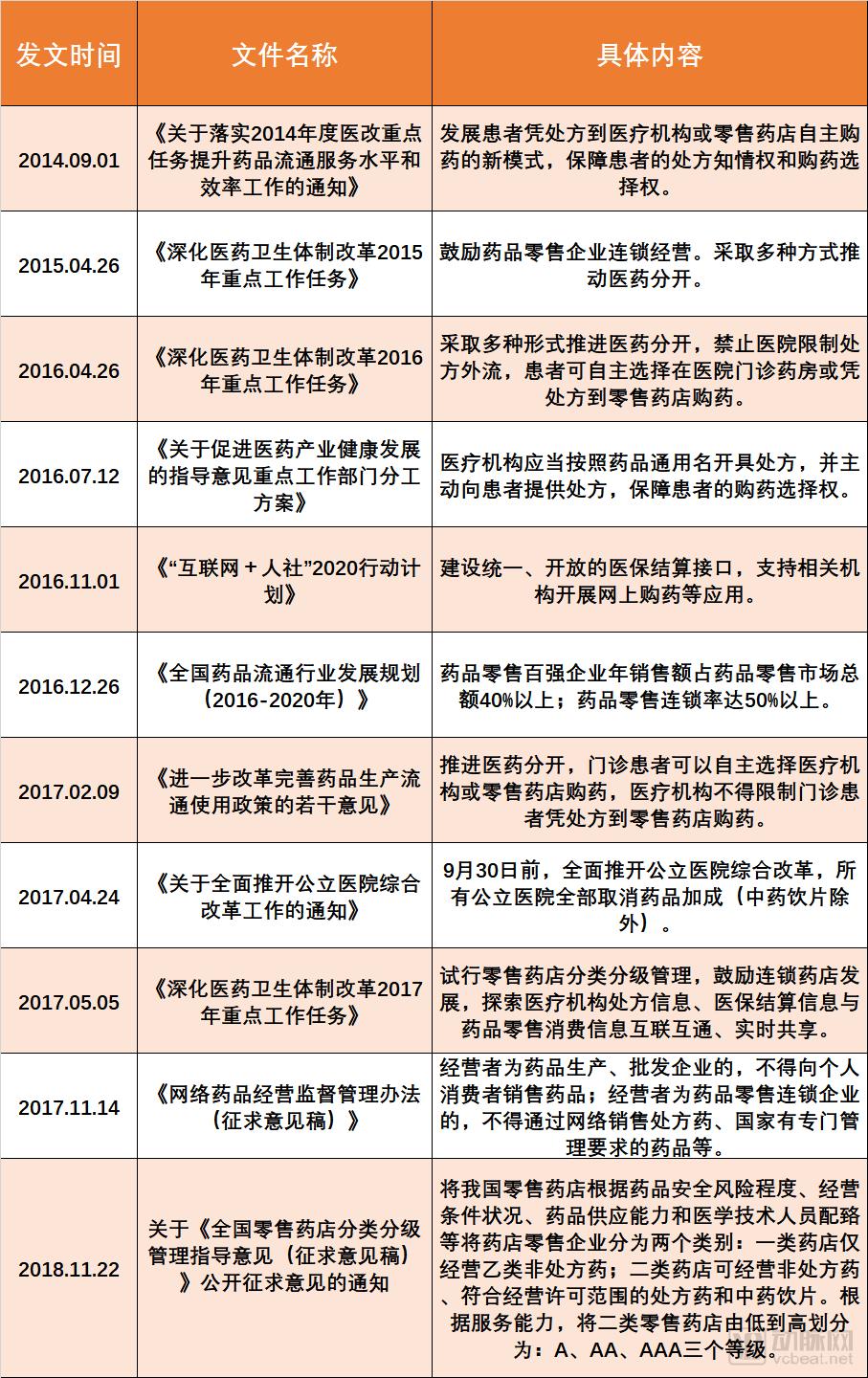
The shifts in the wording of the “Healthcare Reform” policy series reveal the changing priorities of separating medical services from pharmaceutical sales across different periods.
2014: Develop a new model allowing patients to independently purchase medications at medical institutions or retail pharmacies with a prescription, safeguarding patients’ right to be informed about prescriptions and their right to choose where to purchase medications;
In 2016, medical institutions shall prescribe medications by their generic names, proactively provide prescriptions to patients, and safeguard patients’ right to choose where to purchase their medications;
2017: Pilot the classified and tiered management of retail pharmacies, encourage the development of chain pharmacies, and explore the interconnectivity and real-time sharing of prescription information from medical institutions, medical insurance settlement information, and drug retail consumption information.
In general, the policy framework for the separation of prescribing and dispensing is becoming increasingly clear, with more refined constraints, gradually improved supporting policies, and enhanced enforceability.
Figure 1: National-level Policies on the Separation of Prescribing and Dispensing
Source: Official websites of various ministries and commissions; compiled by VCBeat.
2017 marked a watershed year for the outflow of prescriptions from hospitals. By that time, public medical institutions had achieved mature health information technology infrastructure, and the widespread adoption of electronic prescriptions laid the foundation for prescription circulation. Furthermore, with the development of online hospitals, internet hospitals, and smart hospitals, the prescription-sharing workflow was streamlined, thereby eliminating technical barriers.
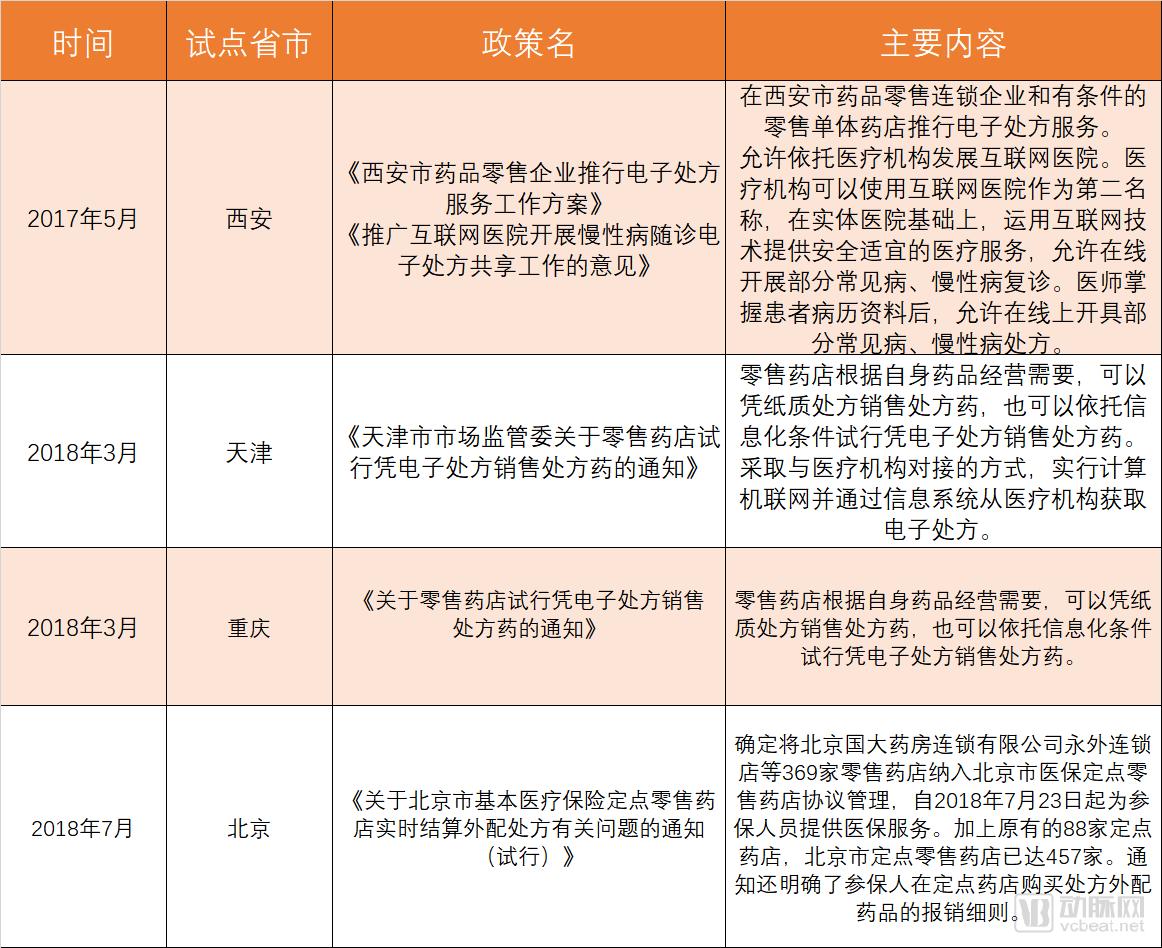
Since 2017, cities such as Xi’an, Tianjin, Tangshan, and Chongqing have successively issued policies to promote electronic prescriptions, facilitating information interoperability between public medical institutions and retail pharmacies, and piloting the sale of prescription drugs in retail pharmacies based on electronic prescriptions.
Figure 2: Prescription Sharing Policies by Region
The "Measures for the Administration of Prescriptions" stipulates regulations on the issuance and use of electronic prescriptions: When physicians use computers to issue and transmit ordinary prescriptions, they shall simultaneously print out paper prescriptions, whose format must be consistent with that of handwritten prescriptions. The printed paper prescriptions become valid only after being signed or stamped with a seal. When dispensing medications, pharmacists shall verify the printed paper prescriptions; upon confirmation of accuracy, they shall dispense the medications and retain both the printed paper prescriptions and the electronically transmitted prescriptions for future reference. This also serves as the foundation for information interconnectivity between medical institutions and retail pharmacies.
The logic for online prescriptions differs slightly. The General Office of the State Council’s Opinions on Promoting the Development of “Internet + Healthcare” clearly stipulates that follow-up consultations for certain common and chronic diseases are permitted online. Once physicians have reviewed patients’ medical records, they are allowed to issue online prescriptions for certain common and chronic diseases. Subsequently, administrative measures for remote diagnosis and treatment, internet-based diagnosis and treatment, and internet hospitals have adopted this same logical framework.
This means that both scenarios—where patients visit offline hospitals and have their prescriptions transmitted electronically to retail pharmacies, and where patients consult online and receive prescriptions simultaneously—are compliant with relevant administrative measures. This constitutes the policy foundation for prescription-sharing platforms.
Prior to the emergence of the prescription-sharing model, the process for medical consultation and medication dispensing required patients to obtain a paper prescription from a hospital and then choose to fill it at either the hospital pharmacy or an external retail pharmacy. However, paper prescriptions are susceptible to forgery, damage, and loss, making archival backup and statistical analysis difficult, thereby hindering effective regulatory oversight. In contrast, electronic prescriptions feature physicians’ electronic signatures, offering higher credibility and facilitating easier record-keeping and supervision.
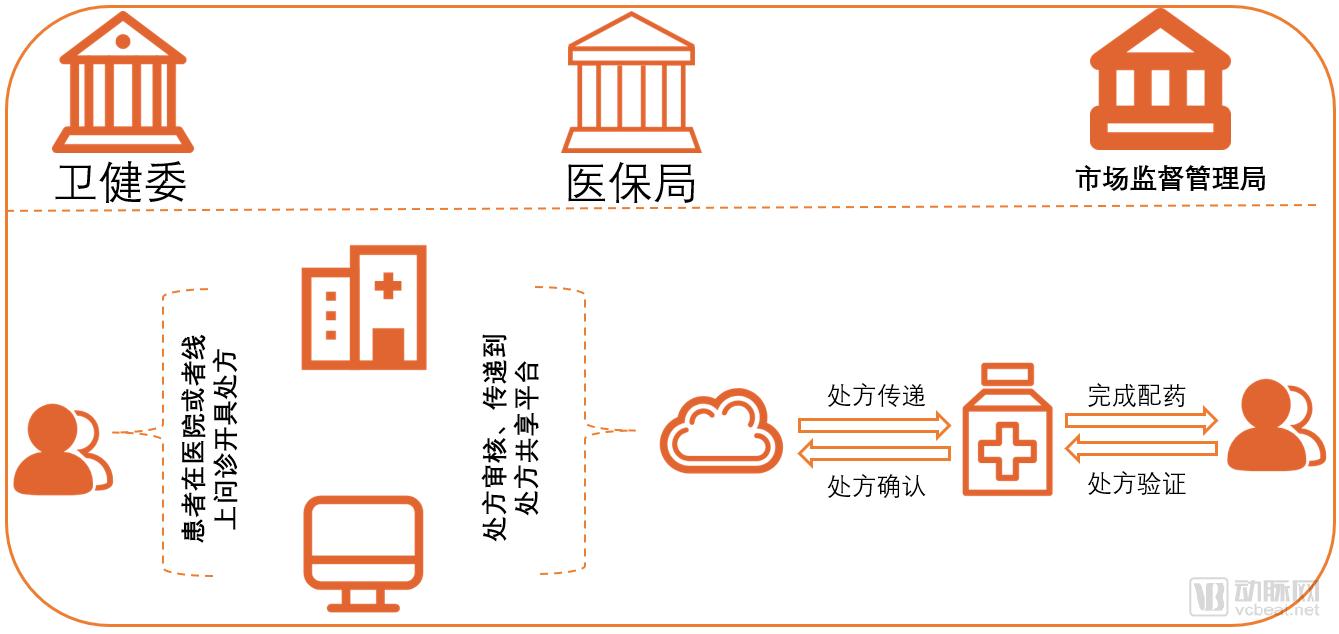
The prescription sharing process generally consists of six steps: ① The patient completes a consultation either at an offline medical institution or online, and an electronic prescription is issued; ② The prescription is uploaded to the prescription sharing platform for preliminary review; ③ Upon approval of the prescription, the platform searches inventory information from central pharmacies or partner pharmacies to determine which pharmacies can fulfill the prescribed medications; ④ The prescription sharing platform synchronizes to the patient a list of qualified pharmacies capable of providing the medications, along with the prescription bearing the physician’s electronic signature; ⑤ The patient visits the pharmacy, presents the electronic prescription for verification by the pharmacy, and the pharmacy confirms acceptance of the prescription to the prescription sharing platform; ⑥ The patient pays via medical insurance or out-of-pocket, the pharmacy dispenses the medication, and the patient collects it. If the patient opts for home delivery, payment is completed online, and the central pharmacy is responsible for dispensing and delivering the medication.
Figure 3: Schematic Diagram of the Prescription Sharing System
Source: Public information; graphic by VCBeat
Industry insiders pointed out to VCBeat that, from a technical perspective, the construction of prescription-sharing platforms and the achievement of information interoperability are not complex. For instance, managing prescriptions diverted from hospitals merely requires adding relevant modules to the Hospital Information System (HIS), while pharmacy inventory information can be integrated by connecting to the pharmacies’ inventory management systems. The real challenge lies in the willingness of various institutions to participate—for example, whether hospitals are willing to share prescriptions and whether pharmacies can achieve incremental growth through such shared prescriptions.
Regulatory approval is the decisive factor enabling the prescription-sharing model to operate effectively. Authorities such as the National Health Commission, the National Healthcare Security Administration, and the National Medical Products Administration will evaluate these models from the perspectives of safety, compliance, and regulatory oversight. Prescription-sharing models endorsed by local regulators have seen rapid development, exemplified by Shanghai’s Comprehensive Community Reform Project and the Wuzhou Regional Prescription-Sharing Platform in Guangxi.
Alibaba Health & Alipay Create the “Future Hospital”
The “Future Hospital,” jointly launched by AliHealth, Alipay, and Wuhan Central Hospital, officially went live in late March this year. Built on AliHealth’s core technologies, the “Future Hospital” provides services and technical solutions including real-name identity verification with live-person authentication, a financial payment system, mobile medical insurance payment functionality, a transaction platform, and logistics distribution.
“The Future Hospital” is built upon the medical consultation assistant on Alipay. When seeking medical care, patients not only enjoy card-free access but also benefit from a suite of services including appointment registration, waiting for consultation, in-clinic payment, and online access to test reports. After a physician issues a prescription, patients can select medical insurance payment and proceed directly to the pharmacy window to collect their medications. Additionally, leveraging features such as “video follow-up consultations” and “home medication delivery” provided by Alibaba Health, Wuhan Central Hospital has extended its reach to serve more citizens, offering long-term rehabilitation and treatment services for patients with chronic diseases.
“Future Hospital” InitiativeThe “Future Hospital” initiative actually got an early start. As early as 2014, Alipay launched this plan, which was rolled out in three phases: The first phase focused on helping hospitals establish mobile healthcare systems and collaborating with them to build patient-centric smart medical service platforms. The second phase aimed to deliver services such as electronic prescriptions, nearby medication delivery, referrals, and real-time medical insurance reimbursement through online internet-based channels. The third phase involved jointly building a big data-driven health management platform.
Alibaba Health and Alipay are both key platforms in Alibaba’s healthcare strategy. The former has established a strong foothold in pharmaceutical e-commerce and is actively expanding its smart healthcare services, while the latter serves as a traffic and payment platform capable of reaching a broader patient base. By integrating these two platforms, Alibaba combines technological capabilities with high-traffic entry points, making it more feasible to penetrate hospital systems.
In addition, Alibaba Health operates an internet hospital platform that has integrated institutions such as Wuhan Central Hospital, Southwest Hospital, and the Second Traditional Chinese Medicine Hospital of Jiangsu Province. Currently, the platform has not yet undergone large-scale expansion to include more hospitals. If the “Future Hospital” model proves successful, it may further expand its network of partner hospitals and establish a prescription-sharing platform. Combined with Alibaba Health’s “New Retail” operations in pharmaceutical e-commerce and offline pharmacies, this would position the company as a key participant in the prescription-sharing ecosystem.
Tencent WeChat Smart Hospital
Tencent WeChat Smart Hospital provides solutions for the construction and management of medical informatization, specifically including: WeChat medical insurance payment, New Rural Cooperative Medical Scheme (NRCMS) payment, registration and consultation, electronic prescriptions, real-name authentication, and commercial insurance.
In the electronic prescription and prescription circulation solution, we observe that it leverages WeChat Official Accounts, real-name verification on WeChat, and medical insurance payment capabilities to connect hospitals with pharmacies, thereby enabling secure circulation of electronic prescriptions and full-process traceability. Specifically, Tencent exports these capabilities through standardized interfaces, supporting various scenarios such as in-hospital pharmacy management, circulation of in-hospital prescriptions to community pharmacies, and circulation of prescriptions from online consultations.
In May 2017, Tencent partnered with Liuzhou Workers’ Hospital to launch an “out-of-hospital prescription circulation” service, covering eight pharmacies under the Liuzhou Pharmaceutical Group. After receiving medical care at the hospital, patients could freely choose to pick up their medications either within the hospital or at designated out-of-hospital pharmacies.
It can be said that Tencent plays more of an “infrastructure” role in the construction of prescription-sharing platforms, rather than directly building a universal prescription-sharing platform. Leveraging WeChat, a nationwide super-app, Tencent enjoys entry-point advantages; both hospitals and other vendors can independently develop prescription circulation platforms through WeChat’s APIs. After investing in Donghua Software, Tencent further gained access to high-quality medical resources, which has significantly benefited its smart hospital initiatives.
Shanghai Pharma Cloud Health: “Internet + New Retail of Prescription Drugs”
Shanghai Pharma Cloud Health, established in 2015, is the “Internet+” development platform for prescription drug new retail under Shanghai Pharmaceuticals Holding. Its “Yiyao • E-Prescription” platform offers comprehensive functionalities, including e-prescription management, patient data management and analytics, pharmaceutical data management and distribution, PBM cost containment, and medical insurance/commercial insurance payment processing. The e-prescription circulation system can integrate with various medical institutions to enable interoperability of prescription information.
Shanghai Pharmaceuticals Cloud Health aims to pioneer “Internet + New Retail of Prescription Drugs” under the “Yiyao” brand series. It supports government agencies in implementing the policy of separating prescribing from dispensing and facilitates healthcare reform by addressing multiple aspects of prescription circulation, including prescription acquisition and management, payment and rationality control, fulfillment and medication delivery, and value-added patient services. In short, Shanghai Pharmaceuticals Cloud Health’s prescription circulation model is the “Cloud Pharmacy,” where multiple community hospitals share a central pharmacy. Patients can either pick up their medications at the central pharmacy or opt for home delivery services. Its primary target population includes community patients and those requiring chronic disease prescription refills.
Annual report data shows that by the end of 2018, Shanghai Pharmaceuticals Cloud Health had facilitated the electronic circulation of 8.4887 million prescriptions nationwide, demonstrating explosive growth. The company had integrated with 340 medical institutions and served over 3.6 million patients. Notably, the volume of extended prescriptions from Shanghai’s community health centers doubled, achieving a market share of nearly 70% and covering 160 out of 242 community hospitals in Shanghai.
Winning Health: Traditional Healthcare IT Vendors Expand into “Internet + Big Health”
Winning Health is a leading enterprise in the field of healthcare information technology, serving more than 5,000 medical institutions, including over 200 tertiary hospitals. In 2017, it reported revenue of RMB 1.2 billion, a year-on-year increase of 26.12%, and an operating profit of RMB 258 million. Building on its strong foundation in Healthcare Information Technology (HIT), Winning Health has actively strategically positioned itself and transitioned toward the development of health services, establishing a “4+1” cloud service system comprising Cloud Medicine, Cloud Pharmacy, Cloud Wellness, Cloud Insurance, and an Innovation Service Platform.
Winning Health’s “Cloud Medicine” initiative is built upon the Nali Health Cloud Platform, which assists hospitals in establishing cloud hospital platforms and delivering cloud-based medical services. Key components include chronic disease long-term prescriptions and integrated pharmaceutical services. In accordance with policies on long-term prescriptions for chronic conditions, electronic prescription data are automatically uploaded to the cloud platform after physicians issue long-term prescriptions. Patients requiring follow-up care or those with chronic diseases can consult physicians remotely via the platform. Physicians then provide online prescription renewals or confirm continued medication based on the patient’s clinical progression. After remote payment (made to the prescribing institution), patients may choose to pick up their medications at a nearby pharmacy or have them delivered through pharmaceutical logistics.
Donghua Software: Joins Forces with Tencent Cloud and Jointown Pharmaceutical to Enter the Prescription Outflow Market
Donghua Software is a comprehensive provider of industry-specific application software development, computer information system integration, and IT services. In 2017, it generated approximately RMB 730 million in revenue, representing a year-on-year increase of 12.56%. Revenue from the healthcare sector accounted for about 60% of its total income, with over 500 hospital clients, predominantly Grade III hospitals. Its product portfolio covers business operations, process management, knowledge management, decision analytics, community healthcare, and regional healthcare. The company demonstrates strong capabilities in Hospital Enterprise Resource Planning (HERP), regional healthcare, and Diagnosis-Related Groups (DRGs).
On July 26, 2018, a wholly-owned subsidiary of DHC Software entered into a strategic framework cooperation agreement with Tencent Cloud and Jointown Pharmaceutical Group to collaborate on an information-sharing platform for hospital prescription outflow and pharmaceutical distribution solutions. The key components include: developing an information platform that interfaces with hospital HIS (Hospital Information Systems) and prescription outflow systems; providing integration solutions between internal hospital systems and external pharmacies that fulfill prescriptions; and offering intelligent audit solutions for rational drug use based on prescriptions.
and provide information platform solutions to ensure the safe, fast, and accurate delivery of medications to patients; provide operational management and emergency response plans for the entire process of hospital prescription outflow and medication distribution; provide solutions for integrating hospital prescription outflow and medication distribution systems with the regulatory systems of national medical insurance agencies, health regulatory authorities, and drug supervision and administration departments; provide solutions for applying the aforementioned content to fields such as internet hospitals, smart medical consortia, telemedicine, regional HMOs, and health management.
Previously, on May 28, 2018, Tencent injected RMB 1.266 billion into Donghua Chengxin, the controlling shareholder of Donghua Software, thereby indirectly acquiring a 5% stake in Donghua Software. The two parties will also engage in deep cooperation across four specialized areas: medical cloud, medical internet, medical artificial intelligence, and video technology services; smart city case development; energy internet of things (IoT); and financial big data.
WeDoctor: Pharmacy-Clinic Integration and the “Prescription Sharing Alliance”
Internet healthcare “unicorn” WeDoctor launched the Pharmacy-Clinic-Store project in 2016, leveraging the Wuzhen Internet Hospital as its core to provide pharmacies with services such as precise appointment scheduling, remote diagnosis and treatment, and electronic prescriptions. By 2018, it had helped more than 20,000 pharmacies across China upgrade into medical service and health management centers located right in consumers’ neighborhoods.
In February 2018, the “Prescription Sharing Platform,” technologically supported and operated by WeDoctor, was launched. This is the first prescription sharing platform in China to serve the entire industry on a national scale. The alliance’s initial phase aims to comprehensively promote the integration of hospital systems nationwide and facilitate prescription circulation; explore connections with medical insurance systems in three to five provinces; cultivate 100 blockbuster products each generating RMB 100 million in revenue; and help 10,000 designated pharmacies upgrade into “Community HMOs (Health Maintenance Organizations).” The alliance plans to connect 200 hospitals and 10,000 designated pharmacies within 2018, processing an average of 500,000 prescriptions per day.
WeDoctor’s “Pharmacy-Clinic” project and prescription-sharing platform differ from the aforementioned types of platforms in that they not only enable remote prescribing for common and chronic diseases at pharmacies through WeDoctor’s Internet Hospital, but also integrate offline hospital prescriptions with pharmacies, thereby achieving broader coverage. The platform’s reach can expand gradually alongside WeDoctor’s Internet Medical Consortium, ultimately forming a nationwide prescription-sharing network.
Micro-Consultation: Remote Pharmaceutical and Medical Services
Wei Wenzhen is a brand under Sichuan Junyi Fudun Technology Co., Ltd. Founded in 2014, Junyi Fudun provides “Internet + Healthcare,” remote pharmaceutical services, medical services, and electronic prescription circulation services. According to official information, the company ranks first in market share for Internet + healthcare services in retail pharmacies, with over 100,000 remote consultation transactions daily. Following the completion of its Series A+ financing round, the company’s valuation exceeded RMB 1.5 billion.
Wei Wenzhen provides remote prescription review and e-prescription services to retail pharmacies through in-store terminals. These terminals, installed within pharmacy locations, are integrated telemedicine units comprising touch-screen all-in-one devices, high-definition capture instruments, cameras, and IP phone communication equipment. Backed by a professional team of licensed pharmacists and physicians—who hold national certification and possess extensive experience in both pharmacy and hospital settings—the service ensures that qualified pharmacists and doctors are available online for real-time consultations during all business hours. This enables the provision of remote prescription reviews, electronic prescription circulation, and responses to medication and health-related inquiries for the general public.
Easy Follow-up Visits: Deeply Rooted in Wuzhou, Integrated with Medical Insurance
The Yifuzhen Prescription Sharing Platform has collaborated closely with the government, hospitals, and chain pharmacies to pioneer the “Wuzhou Model,” characterized by regional widespread adoption and integration with medical insurance. Chronologically, the platform was launched in May 2017. Six months later, Wuzhou City hosted a seminar on the implementation of the prescription information sharing platform, announcing the joint initiation of the citywide prescription information sharing system in partnership with Baiyang Smart Technology’s Yifuzhen platform. More than 20 secondary and higher-level hospitals and over 100 pharmacies across the city were integrated into the prescription information sharing platform, making Wuzhou the first city in China to fully implement the national policy on prescription information sharing.
In June 2018, the Yifuzhen third-party prescription sharing platform established collaborations with multiple chain pharmacies, including listed chains such as Dashenlin, Yixintang, Laobaixing, and Yifeng, as well as regional leaders such as Gansu Zhongyou, Shuyu Pingmin, and Xi'an Yikang.
In July 2018, the Wuzhou Human Resources and Social Security Bureau of Guangxi Zhuang Autonomous Region issued a document announcing that direct settlement for special chronic diseases under outpatient medical insurance would be piloted at prescription-sharing pharmacies starting from July 1, 2018. At prescription-sharing pharmacies affiliated with designated medical institutions that have signed medical insurance service agreements with Wuzhou City, patients with special chronic diseases covered by outpatient medical insurance can settle their expenses directly. The portion payable by the insured individual shall be settled directly between the patient and the pharmacy, while the portion covered by the pooled fund shall be settled between the medical insurance agency and the pharmacy.
Currently, Yi Fuzhen is positioned as a comprehensive and professional platform linking and serving enterprises, physicians, patients, pharmacies, insurers, and distributors, offering services such as prescription information sharing, internet hospitals, centralized pharmacy settlement platforms, and smart pharmacy platforms.
In addition to the platforms mentioned above, numerous companies are positioning themselves in the prescription outflow sector, including healthcare IT vendors such as Neusoft Group, B-Soft, and Wanda Information, as well as pharmaceutical e-commerce players like 111 Group, Jianke, and Qilekang. Prescription outflow is stirring a vast market, with participants spanning healthcare IT, pharmaceutical distribution, retail pharmacies, and pharmaceutical e-commerce. In terms of information infrastructure development, the focus is primarily on prescription information-sharing platforms; at the level of pharmaceutical distribution and retail, key formats include hospital-adjacent pharmacies and Direct-to-Patient (DTP) pharmacies.
Returning to the prescription-sharing platform model, regardless of the specific model or type of vendor, sustained operations will inevitably face commercialization challenges. Revenue must be generated either directly from the information system or, as the saying goes, “what is lost at sunrise is gained at sunset,” by deriving income from value-added services.
Applying the logic of healthcare informatics products, prescription-sharing platforms will have two direct business models: one is licensing fees, where a certain system authorization fee is collected for each newly added hospital or pharmacy; the other is pay-per-use, with free access but a commission charged as a percentage for each prescription circulated.
However, prescription-sharing platforms differ from general healthcare IT products in that willingness to pay does not align with usage demand. Hospitals will serve as the primary users and central hubs of these platforms, while pharmacies and distributors, benefiting from sales growth, exhibit a willingness to pay. This represents a typical model of serving upstream partners and charging downstream entities.
Furthermore, prescription-sharing platforms offer significant value to pharmaceutical companies by leveraging their procurement capabilities and data for collaboration. For instance, centralized platform procurement can represent retail pharmacies in price negotiations with pharmaceutical manufacturers, while market data can be utilized to provide research reports and decision-support services. Prescription-sharing platforms exhibit the nascent form of Pharmacy Benefit Management (PBM) operations and hold substantial growth potential in areas such as medical insurance cost containment, pharmacy benefit management, chronic disease management, and personalized pharmaceutical care services.
In the coming period, prescription-sharing platforms led by local governments and those driven by commercial companies will emerge as two major forces in the field of prescription outflow, facilitating its gradual implementation and unlocking a trillion-yuan market.