

AORTIST 3.0: Global Launch of the First AI-Powered Precision Diagnosis and Treatment Platform for Aortic Diseases

HY Medical
Provider of Medical Imaging and Oncology Radiotherapy Platforms
VCBeat (WeChat ID: vcbeat) has learned that the AORTIST (Artificial intelligence Online Research platform Targeting Individualized aortic Stent-grafting Therapy) 3.0, an AI-powered precision diagnosis and treatment system for the aorta, was globally launched at the 2019 Vascular Innovation Forum held in Beijing on April 12. Jointly developed and upgraded by HY Medical and the Department of Vascular Surgery of the Chinese PLA General Hospital (Beijing 301 Hospital), the system leverages AI to empower the entire clinical diagnosis and treatment workflow for multiple conditions. It addresses three core challenges in surgeries for infrarenal abdominal aortic aneurysm combined with Type B aortic dissection, ushering in a new era of AI-centric, data-driven precision medicine.
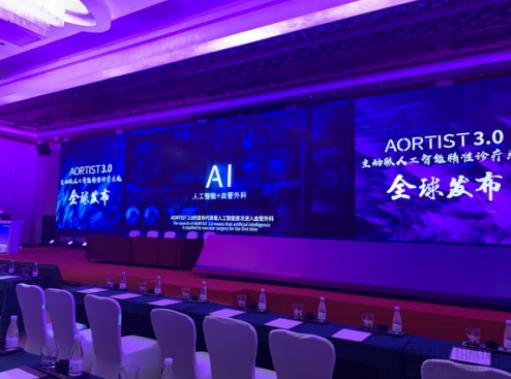
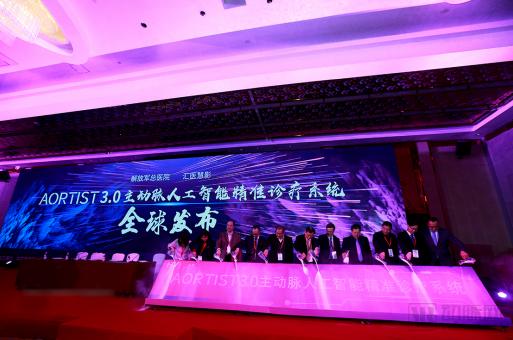
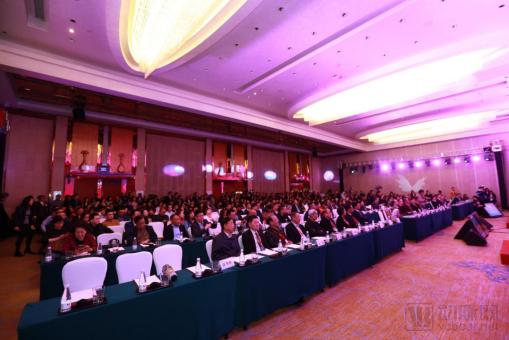
Academician Zhang Qin, former Vice Chairman of the China Association for Science and Technology and Standing Committee Member of the National Committee of the Chinese People's Political Consultative Conference; Professor Wang Faqiang, President of the China Hospital Research Association; Professor Wang Yuqi and Professor Wang Shenming, Honorary Leaders of the Vascular Surgery Group under the Surgical Branch of the Chinese Medical Association; Professor Golden Saul, Director of the Stanford Innovation Center; Senior Colonel Yu Qilin, Director of the First Medical Center of the PLA General Hospital; Director Guo Wei, Department of Vascular Surgery, PLA General Hospital; and Chai Xiangfei, Founder and CEO of HY Medical, among other experts and professors, attended the press conference and launched the unveiling ceremony. Together with over a thousand attendees at the 2019 Vascular Innovation Forum, they witnessed the cross-disciplinary innovation achievements.
AORTIST 3.0: Born to Break the Mold
From the State Council’s issuance of the “Development Plan for New-Generation Artificial Intelligence” to the publication of the “White Paper on AI in Chinese Medical Imaging,” policies have continuously provided favorable momentum for the development of AI in medical imaging, while the industry has been actively establishing conventions to chart its course. Industry experts point out that “2019 is a pivotal year for the clinical implementation of medical AI. Breaking through the current state of homogenization, creating full-chain products that empower complete medical scenarios, and further unleashing the potential of AI in medical imaging represent an inevitable trend.” Indeed, although China’s medical AI sector appears to be on a steady upward trajectory, it is, like other areas of artificial intelligence, facing severe challenges due to product homogenization.
The dilemma of homogeneous implementation is a challenge faced by the entire medical imaging AI industry. With the official launch of AORTIST 3.0, HY Medical, daring to innovate and disrupt, has once again emerged as an industry-leading “game-changer.”
Director Guo Wei remarked, “Unlike smartphones or automobiles, the launch of an AI product is more akin to the birth of an infant, requiring gradual growth. This is precisely how AORTIST has evolved from version 1.0 to 3.0.”
Built upon the technological foundation of AORTIST 2.0, the world’s first AI-based automatic segmentation method for Type B aortic dissection, and refined through clinical implementation feedback over 360 days, AORTIST 3.0 continues to drive in-depth innovation in vascular surgery. Building on version 2.0, it introduces three key enhancements: speed, precision, and decision support. The system supports both Chinese and English interfaces, launches a new AI-powered product for the precise diagnosis and treatment of infrarenal abdominal aortic aneurysms (AAA), and achieves breakthroughs in prognosis prediction. By empowering the entire diagnostic and therapeutic workflow for infrarenal AAA and Type B aortic dissection with AI technology, AORTIST 3.0 emerges as a game-changer. It stands as the world’s first medical imaging AI product deeply integrated into clinical practice, covering the full spectrum of multidisciplinary disease management, thereby enabling data-driven intervention and patient-centered precision medicine.
Taking infrarenal abdominal aortic aneurysm as an example, AORTIST 3.0 targets three core challenges specific to this condition—difficulties in precise clinical measurement, prognosis prediction, and follow-up management—and addresses them individually. It provides an AI-powered medical imaging solution covering the entire clinical workflow, highlighting three key features.

Rapid—Complete vascular segmentation in 30 seconds and generate a surgical plan within 10 minutes. AORTIST 3.0 applies artificial intelligence deep learning technologies to processes such as three-dimensional reconstruction, segmentation, and centerline extraction of the aorta. It achieves automatic segmentation and measurement of the entire aorta and iliac arteries, including the aneurysm sac, thrombus, calcifications, and visceral arteries, within 30 seconds, and generates a surgical plan document within 10 minutes.
Precision—Error within 1 mm, with up to 98% consistency with expert manual segmentation. Based on continuous in-depth collaboration with the Department of Vascular Surgery at the Chinese PLA General Hospital, AORTIST 3.0 optimizes its deep learning algorithms using years of clinical follow-up and imaging data from the department. Measurement error is controlled within 1 mm (an improvement of over 33% compared to version 2.0), representing approximately a 70% increase in precision over conventional manual measurements. The accuracy of automatic segmentation reaches 95%, with an intersection-over-union (IoU) score as high as 98% compared to expert measurements.
Clinical Decision Support – Automatically outputs multi-dimensional measurements ranging from diameter to distance, thereby assisting clinical decision-making. During the surgical planning phase, AORTIST calculates the vertical arterial diameter of the landing zone based on its location; automatically outputs the maximum, minimum, and average arterial diameters for each aortic segment, as well as the curved planar reformation (CPR) distances from the proximal landing zone to various aortic branches; and automatically generates surgical planning references to facilitate procedure formulation. In the prognosis prediction phase, radiomics methods from the Radcloud Big Data Intelligent Analysis Cloud Platform are employed to construct and optimize prognosis prediction models. The model achieves an accuracy rate of 86% in predicting the probability of thoracic aortic dilation, abdominal aortic dilation, and composite endpoint events at 6, 12, and 24 months post-operatively. In the follow-up management phase, AORTIST 3.0 provides a personalized follow-up management system. Leveraging big data, AI, and omics analysis results, it generates personalized follow-up plans for patients and offers automated management tools to support clinical follow-up, thereby improving long-term patient outcomes.
Furthermore, the AORTIST 3.0 system provides technical support for visualization features, including 3D mask fusion, simultaneous output of curved planar reconstruction views of bilateral iliac arteries, and trend charts depicting pre- to post-operative changes in total aortic volume.
An attending expert stated, “If AORTIST 2.0 in 2018 marked the first deep integration of medical imaging AI into clinical practice, fundamentally transforming the diagnosis and treatment pathway for Type B aortic dissection, then AORTIST 3.0’s support for the diagnosis and treatment of infrarenal abdominal aortic aneurysms represents a breakthrough in the multi-disease, cross-disciplinary application of medical imaging AI. This signifies that cloud-based, systematic medical imaging AI technologies hold vast potential for clinical application.”
The Vascular Innovation Forum was initiated by Director Guo Wei of the Department of Vascular Surgery at the Chinese PLA General Hospital. The event has grown from an initial attendance of three to four hundred participants to over a thousand today, demonstrating its strong appeal and the high level of enthusiasm for innovation among attendees. Innovation has also become a national development strategy.
At the Big Data and Artificial Intelligence Thematic Forum of the 2019 Vascular Innovation Forum held on the afternoon of the 12th, Zhu Yongke, Technical Director of Huawei’s Intelligent Computing Solutions Development Department; Yang Jijiang, Director of the Digital Medical Health Engineering Research Center at Tsinghua University; Chai Xiangfei, Founder and CEO of HY Medical; and Professor Guo Wei, Director of the Department of Vascular Surgery at the Chinese PLA General Hospital, delivered keynote presentations focusing on big data and artificial intelligence, as well as breakthrough innovations in “AI + Vascular Surgery.”
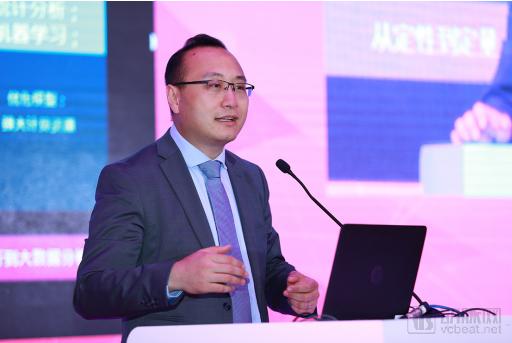
Chai Xiangfei: "Intelligent Computing-Driven Precision Diagnosis and Treatment of Vascular Diseases"
“From the perspective of disciplinary development, vascular surgery will place greater emphasis on evidence-based medical research for vascular diseases in the future,” pointed out Professor Guo Wei, Director of the Department of Vascular Surgery at the Chinese PLA General Hospital. “The volume of imaging data for aortic diseases is enormous. The integration of cloud computing, big data, and AI into the field of vascular medicine holds significant importance for expanding both the breadth and depth of this discipline in China.”
“Deep learning methods are applied across the entire healthcare sector, with vascular medicine representing a particularly important area,” pointed out Chai Xiangfei. “The initial focus has been on leveraging AI-assisted imaging screening and diagnosis to improve diagnostic efficiency and reduce missed or incorrect diagnoses. With the advent of radiomics, current research in the vascular field is increasingly oriented toward supporting clinical decision-making and personalized treatment. By enabling precise measurements, these technologies aim to accelerate and aid clinical decisions, thereby reducing postoperative risks.”
AORTIST 3.0 has achieved algorithmic breakthroughs by leveraging deep learning and radiomics to enable precise aortic segmentation, comprehensive anatomical parameter measurement, and prognostic prediction, thereby significantly accelerating and assisting clinicians in their clinical decision-making.
Director Guo Wei stated, “In terms of disciplinary depth, AORTIST will enhance surgical precision, provide personalized follow-up plans for patients, and help improve long-term patient outcomes. In terms of disciplinary breadth, AI will empower primary care physicians with improved diagnostic and therapeutic capabilities, thereby raising the overall medical and academic standards at the primary care level in China and promoting the development of vascular surgery as a discipline. In the future, greater efforts should be made to advance the integration of industry, academia, research, and clinical practice in medical innovation. As relevant national policies continue to be implemented and technologies mature, China’s vascular surgery discipline will benefit from these trends and enter a new stage of development.”