

Wearable Biosensors for Multiplexed Detection of Glucose, Lactate, and pH: Advancements, Applications, and Remaining Challenges
Wearable biosensors can be attached to the skin surface to monitor the wearer’s health status and surrounding environment in real time. The sensor chip is equipped with data readout and signal conditioning circuits, as well as a wireless communication module for transmitting data to computing devices.
VCBeat (WeChat ID: vcbeat) has compiled a relevant research report that highlights the latest advancements in wearable sensors, including advanced nanomaterials, manufacturing processes, substrates, sensor types, sensing mechanisms, readout circuits, and wireless data transmission, as well as future applications of wearable technology and the challenges it may face.
In this article, sensors are categorized into biofluid sensors (which can directly contact the human body) and physiological sensors (which need to be integrated into wearable devices or substrates), used for monitoring various bodily indicators and external stimuli. Wearable sensors are primarily employed to identify various biomarkers in epidermal interstitial fluid, such as glucose, lactate, pH, and cholesterol. They can also monitor heart rate, respiration, acetone, ethanol, hydration levels, temperature, motion/activity, pressure/strain, and gases.
Developing sensors and electronic devices by designing cost-effective manufacturing processes and selecting appropriate non-planar substrates will diversify their application fields. Compared with bulk materials, various nanomaterials exhibit enhanced sensitivity and processability, which has significantly promoted the development and utilization of sensors.
In recent years, wearable sensors and electronic devices have begun to be used for real-time monitoring of human health status. Figure 1 shows the number of papers on applications of wearable electronics in recent years.
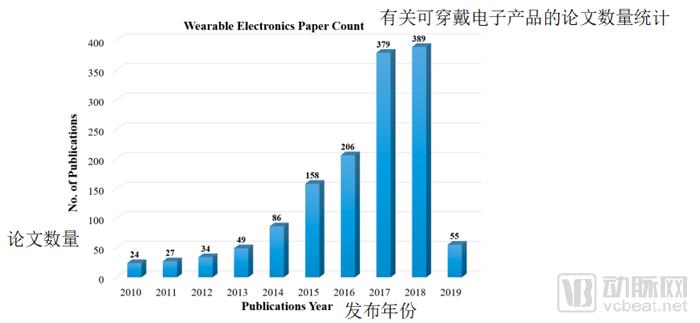
Figure 1: Number of papers published annually with titles including “wearable electronics” (Source: NCBI National Center for Biotechnology Information)
A variety of chemical, physical, and optical sensors can be individually embedded or integrated in combination onto flexible substrates equipped with data readout and signal conditioning circuits.
Furthermore, data can be wirelessly transmitted to nearby computing devices or uploaded to the cloud for analysis by medical experts, who will provide corresponding instructions based on the health status reflected in the data. The polymer substrate is lightweight, low-cost, and highly flexible, featuring bendability, foldability, and stretchability. It can conform to uneven surfaces while causing negligible data loss. Due to these characteristics, it is well-suited for the fabrication of sensing devices and circuits.
Based on current developments, the application trend of wearable electronic devices lies in utilizing biosensors to monitor human body fluids, physiological activities, and gaseous analytes in the surrounding environment that directly affect human health. Figure 2 shows some representative examples.
In the healthcare sector, the development of wearable sensors faces numerous challenges, including the need to select appropriate substrates, fabrication techniques, and biocompatible materials, as well as ensuring simultaneous monitoring of multiple analytes, wash durability of materials, and uninterrupted signal transmission from readout circuits. Recently, advances in fully organic biocompatible or hybrid sensors based on wearable substrates have made wearable sensing systems for in vivo monitoring feasible.
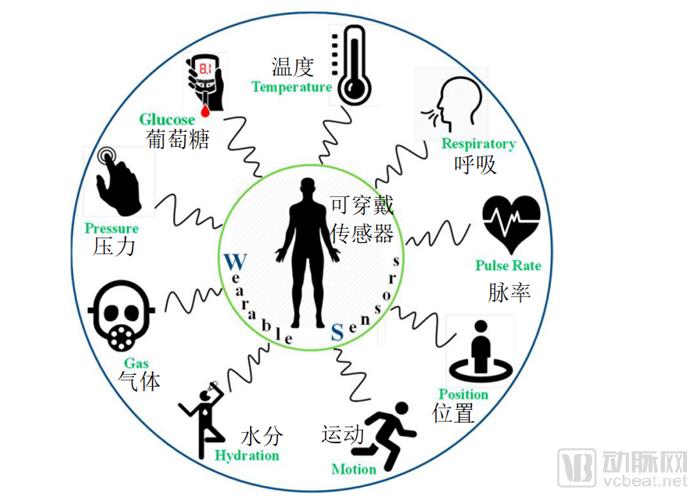
Figure 2: Representative Wearable Medical Sensing Devices
If wearable sensors are to be developed on polymer substrates, corresponding manufacturing processes are required. The technology should take into account the chemical characteristics and thermal properties of the substrate, while enabling cost-effective large-scale production.
Printing technology is the most promising manufacturing method, enabling the deposition of liquid-phase synthesized functional materials at desired locations with minimal processing steps. Its competitiveness is further enhanced by the efficient utilization of materials during development and its on-demand printing capabilities. Compared to traditional silicon substrates, this approach allows various materials to be deposited on diverse substrates, covering larger areas.
The primary advantages of printing technology include lower material costs, reduced industrial waste, and cost-effective manufacturing processes. The ink materials used for printing are typically nano-dispersants dissolved in suitable solvents, with their rheological properties adjusted by technicians to meet the processing requirements of different printing technologies.
Due to their higher specific surface area, nanomaterials are highly suitable for fabricating sensors. Printing electronic components on flexible substrates has expanded the application scope of sensing systems, particularly for wearable biosensors, which can be used for real-time monitoring of biofluids and physiological activities.
On this basis, printed wearable electronics have emerged as a major development trend. New technologies are being adopted to either directly implant sensors into the human body or integrate them into wearable devices for monitoring various health-related biomarkers.
Wearable sensors and electronics are developing rapidly, particularly in the fields of health monitoring, entertainment, and fashion, attracting significant attention. Among these advancements, research efforts are primarily focused on developing biosensors that can be easily integrated into wearable devices or substrates for continuous health monitoring.
Researchers anticipate that wearable sensors will improve healthcare systems, particularly for the elderly and patients with chronic diseases who require continuous monitoring. Figure 3 illustrates the sensing mechanism, in which wearable systems are connected via wireless transmission devices to process raw data generated by body-worn sensors and transmit it remotely to medical experts.
Most of these sensors are used to monitor biological fluids, particularly sweat, and can also selectively monitor analytes such as glucose, lactate, cholesterol, and pH. Sweat sensors can further detect various biomolecules and salt concentrations. Monitoring human physiological activities—such as pulse, hydration/dehydration status, temperature, motion, and pressure—is also noteworthy.
By analyzing respiratory status, biomarkers can also be monitored, as they are associated with respiratory rate, core body temperature, alcohol content, and exhaled volatile organic compounds. Most wearable biosensors feature a single detection component capable of simultaneously monitoring these diverse biomarkers without the need for physician diagnosis.
By employing biocompatible materials and substrates, sensors can be directly implanted into the superficial layers of human skin or integrated into substrates woven into textile fibers or incorporated as part of wearable devices. The sensing and interconnect components are primarily fabricated from functional materials synthesized via liquid-phase processes, which are readily formable during printing, representing a highly cost-effective manufacturing approach. These sensors are connected to data readout and signal conditioning circuits, enabling the final transmission of data to computing centers or data analysis experts through wireless communication technologies.
In most cases, researchers opt for handheld mobile devices as computational tools for monitoring individual subjects. When data from multiple users need to be analyzed, the data are uploaded to the cloud, where expert opinions are generated and then transmitted back to the users.
Currently, heterogeneous integration technology for printing sensors on polymer substrates has attracted the attention of researchers. Existing electronic devices enable faster data processing and communication, while recent advances in nanomaterials have made it possible to print multifunctional sensors on similar substrates.
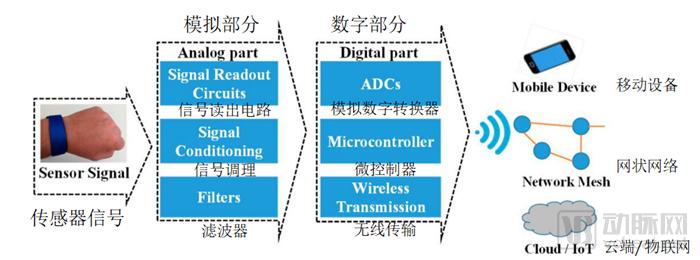
Figure 3: Signal flowchart for monitoring human health status via wearable sensors and data transmission.
Printing technologies can be used to fabricate sensors and electronic devices on non-planar substrates. This process involves depositing functional materials from colloidal or chemical solutions onto specific locations. The entire procedure requires significantly fewer steps than standard microfabrication techniques.
Printing is a “bottom-up” manufacturing method, in which materials are added layer by layer during the production process. Compared with traditional microfabrication techniques, this characteristic makes printing a simple and cost-effective approach. Based on whether the printing medium contacts the target substrate, printing technologies can be broadly classified into two categories (Figure 4).
In contact printing, the operator inks the printing medium with a pre-designed surface structure and brings it into physical contact with the target substrate. This technique is applicable to screen printing, gravure printing, flexographic printing, pad printing, and transfer printing.
In non-contact printing, the print head ejects material in the form of microdroplets or continuous jets. This is a digital manufacturing technology, as droplets are ejected on demand according to their respective driving mechanisms. This technology is primarily used in piezoelectric inkjet printing, electrohydrodynamic (EHD) inkjet printing, and aerosol jet printing. Non-contact printing offers distinct advantages because it leverages computer software to rapidly modify design structures, thereby enabling broader applications.
Furthermore, this technology is expected to improve roll-to-roll (R2R) printing processes. As a universal platform, R2R can be used for the rapid, high-volume production of electronic components by installing different printing and curing/sintering systems. However, for fully printed or semi-printed sensing devices and systems, each of the aforementioned technologies or processes is crucial.

Figure 4: Representative Contact and Non-Contact Printing Technologies
The substrate influences the physical, mechanical, and electrical properties of sensors. The degree of flexibility, foldability, and stretchability determines whether the substrate can conform to non-planar surfaces, which is a core requirement for wearable electronic systems. Polymer thin films with minimal thickness serve as an ideal choice.
Polyimide, polyurethane, polyethylene terephthalate, polyethylene naphthalate, and polydimethylsiloxane are common polymer substrate materials. Their chemical inertness, thermal insulation, and electrical insulation make these polymer substrates ideal materials for manufacturing sensors and electronic devices.
The materials used to fabricate skin sensors and substrates must be biocompatible. Recently, researchers have been developing polymer substrates using polydimethylsiloxane (PDMS), polyurethane, polylactic acid, and cellulose. Furthermore, unconventional substrates made from certain textile materials are beginning to be applied in wearable electronic devices.
Wearable sensors are categorized into two major classes: the first comprises sensors directly attached to the skin for detecting biomarkers in body fluids (such as sweat); the second consists of wearable sensors that monitor physiological activities. Figure 5 illustrates representative types of wearable sensors covered in this report. Each subsection provides a brief overview of the geometry, materials, fabrication techniques, and sensing mechanisms of the respective sensors.
Biofluid sensors can be used to identify various biomarkers in human epidermal interstitial fluid, such as glucose, lactate, pH, and cholesterol, as well as to monitor physiological parameters including pulse, temperature, respiratory rate, and blood alcohol concentration, holding promising potential for applications in medical diagnostics and health monitoring.
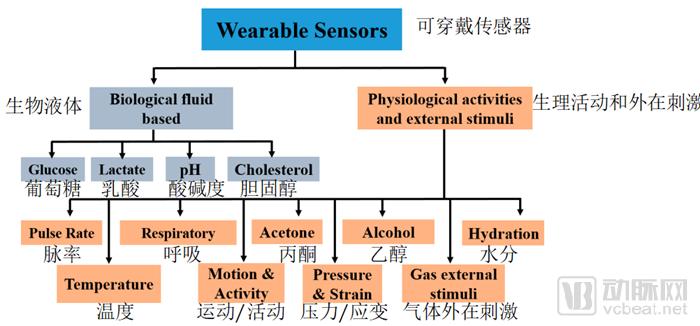
Figure 5: Representative Types of Wearable Sensors Covered in This Report
In wearable electronics, sweat sensors can be used to detect the concentrations of various analytes associated with human health risks. Sweat is a bodily fluid excreted under specific conditions and contains several analytes related to human health status, such as sodium, chloride, potassium, carbonate, ammonia, calcium, glucose, and lactate. The levels of these analytes in blood, saliva, tears, and sweat can serve as key biomarkers for assessing human health status.
Sweat sensors can be adhered to the skin, and disposable sensor patches can be replaced. These non-invasive sensors, which are simple to operate, are well-suited for wearable products. Most existing wearable sensors are functionalized with specific enzymes to enhance selectivity and sensitivity toward particular analytes. In the wearable sector, various biosensors for bodily fluids are widely used, primarily including glucose sensors, pH sensors, lactate sensors, and cholesterol sensors. Physiological activity sensors are employed to monitor heart rate, respiration, acetone, ethanol, hydration levels, temperature, motion/activity, pressure/strain, and gases.
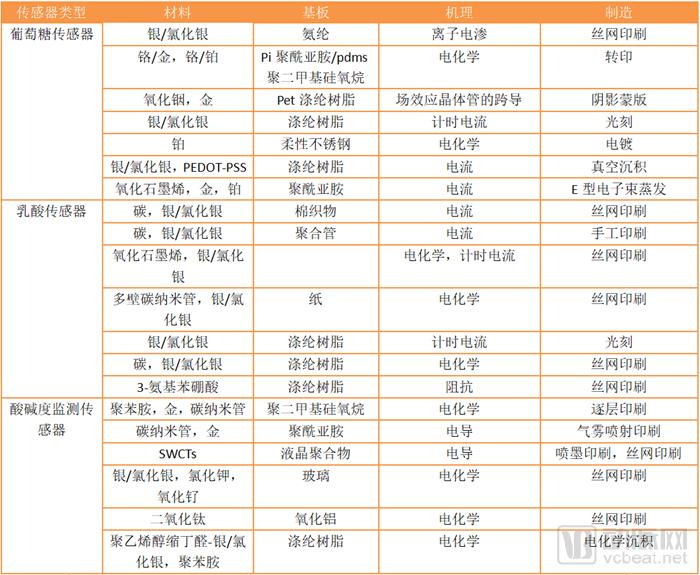
Below are the sensing types, materials, substrates, and sensing mechanisms of different bodily fluid sensors.
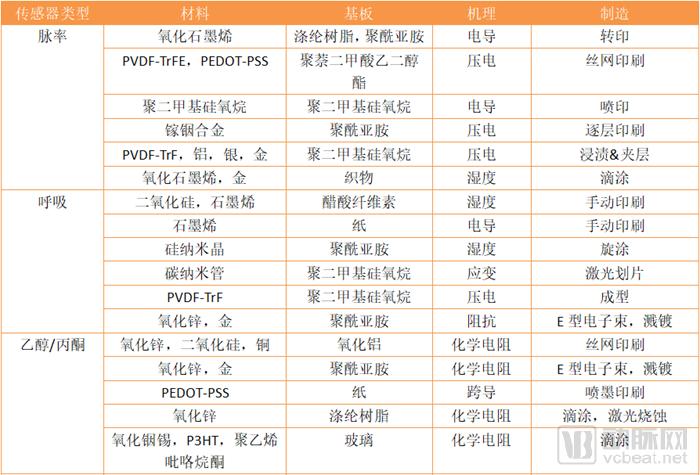
The following is based on the materials, substrates, sensing mechanisms, and manufacturing processes of physiological activity sensing devices.

Currently, the field of wearable sensors is developing rapidly and has achieved significant results. This non-invasive approach can be used to continuously monitor human health conditions, not only limited to patients with chronic diseases, but also widely applied in fields such as fitness, entertainment, and fashion.
By leveraging printing technologies to process solution-synthesized nanomaterials, various biosensors with flexible substrates can be fabricated, making the manufacturing process more cost-effective. The growing use of wearable sensors for identifying biomarkers in body fluids secreted by the skin and for continuous monitoring of physiological activities highlights their promising application prospects in the biomedical field.
Wearable sensors and systems hold the promise of disrupting the field of medical diagnostics. However, their development still faces a variety of challenges, ranging from fabrication processes, materials, substrates, and signal readout circuits to selectivity, multifunctionality, simultaneous monitoring capabilities, and human adaptability to these sensors—all of which are issues that need to be addressed in the future. Integrating advanced nanomaterials with polymer substrates is key to the development of conformal electronic devices.
The low glass transition temperature of polymer substrates hinders the development of densely integrated devices featuring sensing films made from inorganic semiconductor materials. Therefore, liquid-phase synthesis methods are employed in sensor development to fabricate larger-scale devices at lower transition temperatures. Furthermore, since the integration of different materials requires distinct manufacturing processes, how to integrate diverse materials into multilayer device structures is also a critical consideration.
Biocompatibility of materials and substrates is crucial for wearable electronics, particularly for sensors implanted in or on the skin/epidermis. The physical, mechanical, and chemical properties of the materials must match those of the substrates to avoid issues related to thermal management, electrical performance, and multilayer integration. Bioresorbable materials and substrates hold promise for the development of implantable electronic devices.
The practical implementation of wearable electronics also faces certain challenges, namely the need for special conditions and sensor pretreatment to enhance sensitivity, selectivity, stability, and detection limits. Some of these methods, such as using microheaters for localized heating in gas sensors or employing chemical treatments to restore the initial state, are ineffective when sensors are integrated into wearable devices.
Simultaneous monitoring of multiple analytes also presents challenges, as crosstalk between different sensors can compromise selective detection. Furthermore, increasing the density of sensors, data processing units, and wireless channels while maintaining consistent operational performance over extended periods will require greater power support. In this context, selecting durable and long-lasting power sources—such as wearable batteries, supercapacitors, high-efficiency solar cells, and fuel cells—can ensure the smooth operation of the entire system. Additionally, it is necessary to develop convenient and efficient communication tools/channels and establish relevant network protocols to guarantee seamless data transmission between sensor nodes and computing devices.
Researchers must also address data security concerns, as the entire process involves substantial amounts of wearers’ personal information. Security breaches resulting from cyberattacks or improper operations could lead to erroneous analyses of individual health conditions, with serious consequences. Therefore, an inclusive research strategy is needed to tackle the challenges in this interdisciplinary field, and active collaborative research will play a crucial role in the commercial application of these novel sensors.
[Original Report]
https://www.mdpi.com/1424-8220/19/5/1230