

Nature Breakthrough: Single Study Unveils 628 High-Priority Anticancer Drug Targets with Comprehensive Catalog
Editor’s Note: This article is republished from PharmaCube PRO, authored by Man Hua. VCBeat has been authorized to republish it.
Field: Cancer
Journal: Nature
Highlights:
1) UK scientists reported more than 600 of the most promising anticancer drug targets in a Nature paper
2) This article lists the detailed names of 628 targets.
3) Two simultaneous Nature papers confirm that WRN is a highly promising drug target
Targeted therapy can selectively kill cancer cells without affecting healthy tissues. Identifying optimal drug targets is a critical step in the successful development of such therapies. In recent years, CRISPR has emerged as a unique tool for discovering oncology drug targets, enabling the mutation, inhibition, or activation of any target human gene.
Image source: Nature
On April 10, scientists from the Wellcome Sanger Institute in the United Kingdom and other institutions reported a major breakthrough in Nature [1]: Using this “magic scissors,” researchers disrupted every gene in more than 300 cancer models spanning 30 cancer types, ultimately identifying thousands of genes essential for cancer cell survival. Subsequently, they prioritized over 600 of the most promising drug targets using a newly developed proprietary system.
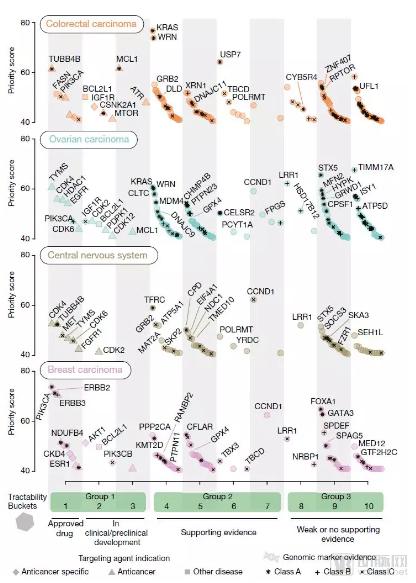
Priority Targets for Four Specific Cancer Types (Image source: Nature)
In the study, Dr. Mathew Garnett and colleagues conducted one of the largest CRISPR screens of cancer genes to date, encompassing 324 human cancer cell lines across various cancer types, including lung, colorectal, breast, ovarian, and pancreatic cancers, and analyzed nearly 20,000 genes.
They categorized the 628 most promising targets into three groups based on tractability.
Group 1 comprises targets of approved anticancer drugs or those of candidate drugs in clinical or preclinical development, totaling 40 targets (see figure below). Examples include ERBB2, ERBB3, CDK4, AKT1, ESR1, TYMS, and PIK3CB in breast cancer, as well as PIK3CA, IGF1R, MTOR, and ATR in colorectal cancer. (Priority scores for Group 1 targets across different cancer types are provided at the end of the article.)
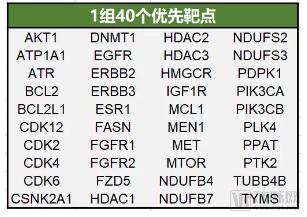
Data source: Nature; Chart by: PharmaCube
Group 2 comprises 277 priority targets (see figure below). Although no drugs targeting these candidates are currently in clinical development, there is evidence supporting their druggability.
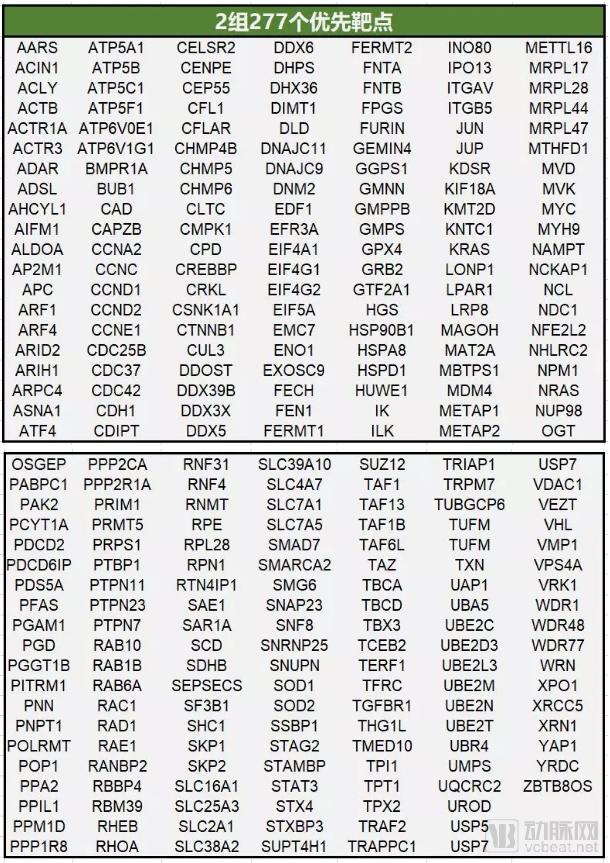
Data source: Nature; Chart by: PharmaCube
Group 3 comprises 311 priority targets (see figure below), for which there is currently no or insufficient information to support their druggability.
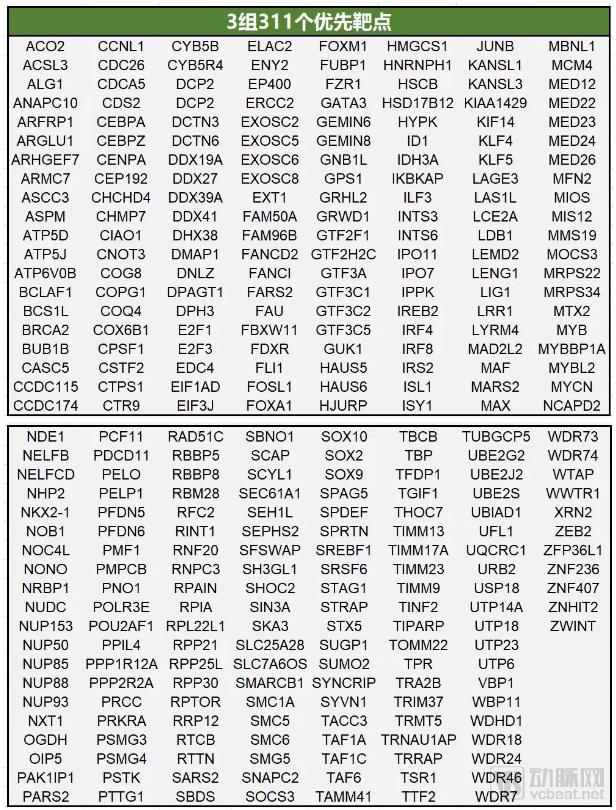
Data source: Nature; Chart by: PharmaCube
Among these targets, WRN (Werner syndrome RecQ helicase, a helicase that assists cells in replicating or reading DNA by unwinding the double-helix structure of the genome) exhibits high druggability scores across multiple cancer types.
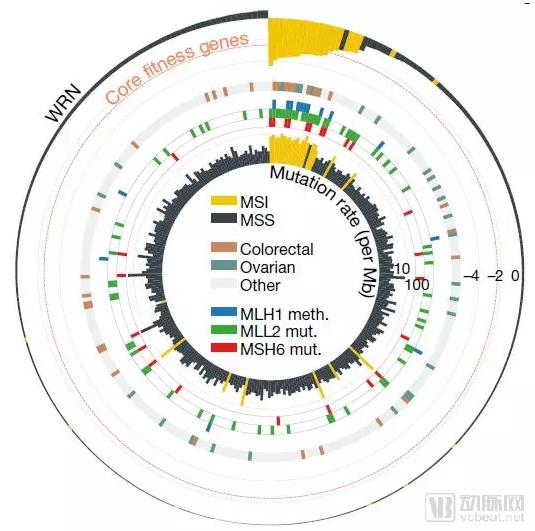
WRN is a target in MSI cancer cells (Image source: Nature)
Researchers have found that cancer cells with defective DNA mismatch repair mechanisms, known as microsatellite instability (MSI) cancers, require WRN for survival. MSI is associated with a high tumor mutational burden and occurs in more than 20 different types of cancer, being particularly common in colorectal cancer (15%), ovarian cancer (12%), endometrial cancer (20%-30%), and gastric cancer (22%).
Dr. Garnett and colleagues consider WRN to be a highly promising drug target. This conclusion aligns with the findings reported in another paper published in Nature on the same day [2].
Image source: Nature
This study, led by scientists at the Broad Institute, utilized CRISPR and RNAi technologies to investigate nearly a thousand cancer cell lines. The results revealed that 73% of microsatellite instability (MSI) cancer cell lines are dependent on WRN; in contrast, WRN deficiency had a relatively minor impact on non-MSI cancer cell lines. The study further found that inhibiting WRN expression significantly delayed the growth of MSI cancers in mice.
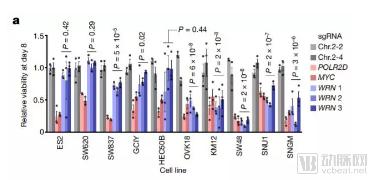
Image source: Nature
It remains unclear why cancer cells that have lost mismatch repair (MMR) function become dependent on WRN. However, studies indicate that the loss of the MMR mechanism alone appears insufficient to cause WRN dependency in cancer cells. When the research team reactivated this mechanism in microsatellite instability (MSI) cancer cells, although their dependence on WRN was reduced, these cells did not completely lose their reliance on WRN.
Scientists have stated that healthy, genetically stable cells can tolerate the absence of this enzyme, suggesting that drugs blocking WRN should primarily affect WRN-dependent cancer cells while being relatively harmless to normal cells. Furthermore, although hereditary WRN deficiency leads to a condition known as Werner syndrome, symptoms take decades to manifest. This also indicates that targeting WRN for cancer therapy is feasible. On the other hand, MSI (for which clinically available tests already exist to assess this feature) can clearly serve as a biomarker for WRN-targeted therapies. Since there are currently no drugs that directly target WRN, researchers hope that these findings will accelerate the development of WRN inhibitors for the treatment of MSI-positive tumors.
In summary, these two studies, particularly the work by Dr. Mathew Garnett and colleagues, have brought scientists one step closer to mapping the “Cancer Dependency Map,” accelerating the discovery of cancer-targeted therapies and ultimately facilitating precise targeted treatment for cancer.
[Appendix] Priority Scores for Tier 1 Targets Across Different Cancer Types
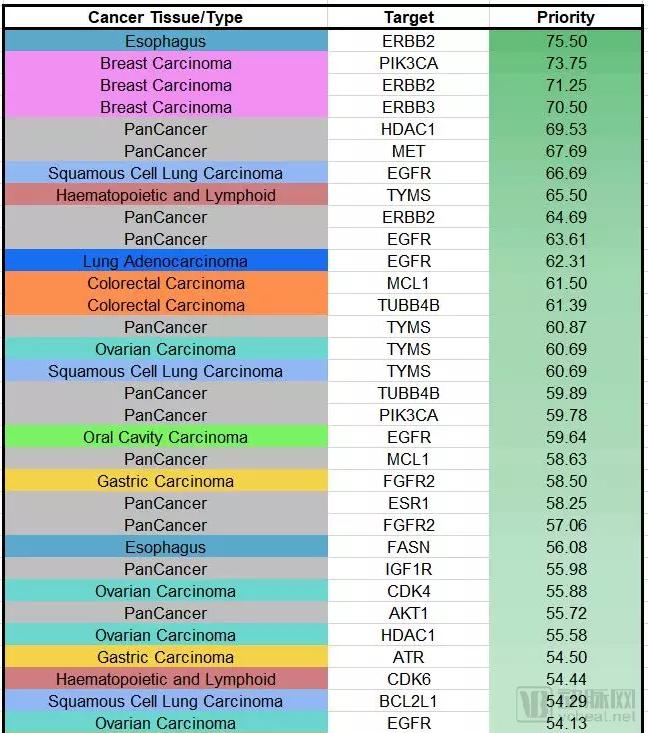
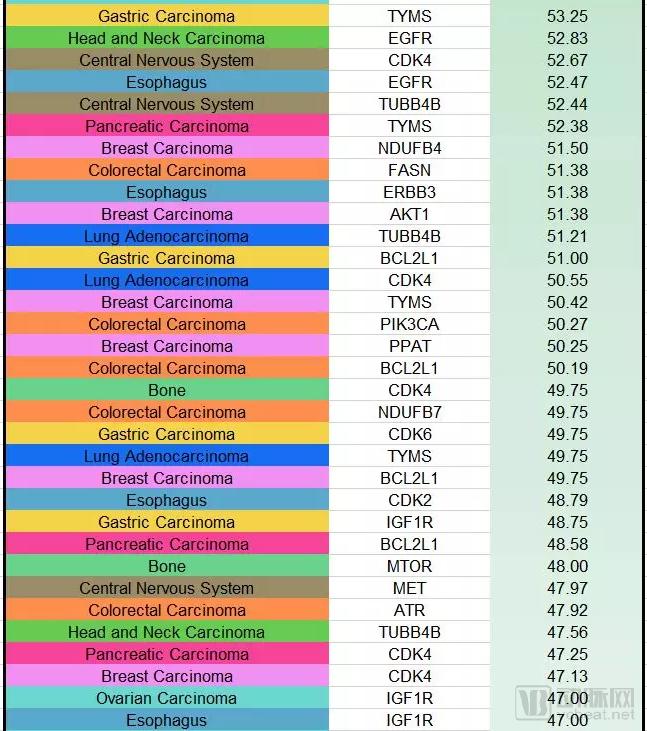
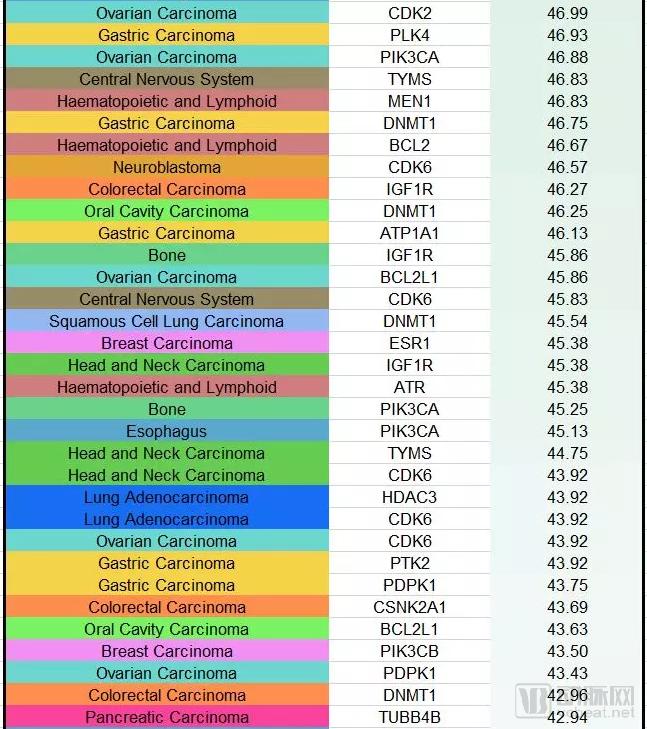
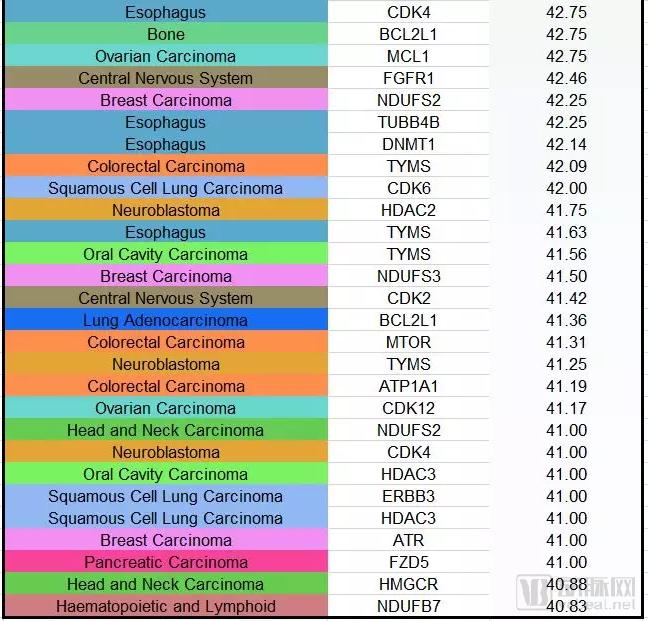
Data source: Nature
Related Papers:
[1]Fiona M. Beha et al. Prioritization of cancer therapeutic targets using CRISPR–Cas9 screens. Nature(2019).
[2]Edmond M. Chan et al. WRN helicase is asynthetic lethal target in microsatellite unstable cancers. Nature(2019)
References:
1# New cancer drug targets accelerate path to precision medicine
2# Lossof a DNA repair system creates a unique vulnerability in many cancer types
3# Lethal clues tocancer-cell vulnerability