

Digital Health Meets Cancer Prevention: Xiaoyusan Insurance Launches Super Mary Critical Illness Insurance Amid Rising Global Cancer Burden
On April 12, 2019, the Innovation and Integration Development Forum, themed “Digital Integration for Health, Financial Empowerment,” alongside the 2019 Chengdu Wuhou District “Western Greater Health Financial Center” Promotion Conference, was held in Beijing. The event was hosted by the People’s Government of Wuhou District, Chengdu, and Tasly Capital Holdings, with Xiaoyusan Insurance Brokerage Co., Ltd. as the organizer, and co-organized by the State-owned Assets Supervision and Administration Bureau and Financial Bureau of Wuhou District, Chengdu, and the Digital Health Innovation Center (DHIC). Experts from the greater health and financial sectors gathered in Beijing to address the comprehensive financial needs of the greater health industry, focusing on exploring new models of financial innovation that integrate technological synergy and industry-finance collaboration.
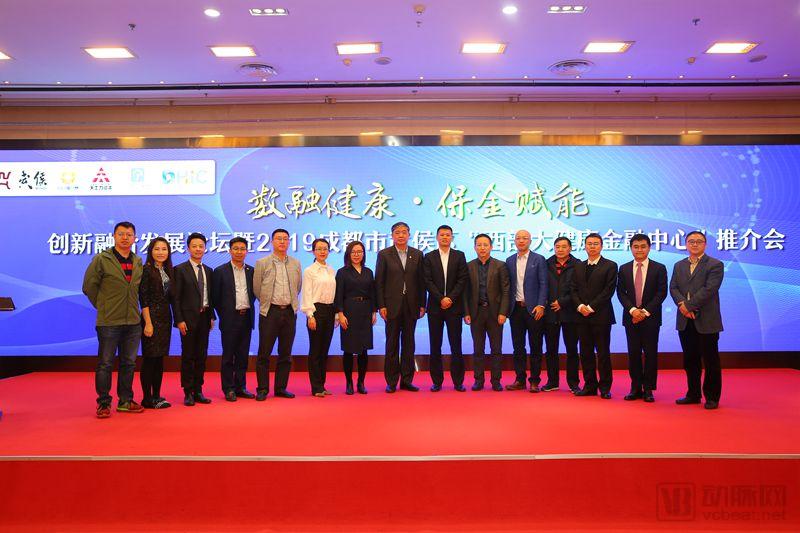
Attendees included executives from the Wuhou District of Chengdu, Tasly Capital, the Digital Health Innovation Center (DHIC), Xiaoyusan Insurance, Trust Mutual Life Insurance, SDIC Innovation, PwC, Wanhu Liangfang, the CEC Health Industry Fund, and the Tencent Digital Security Innovation Center. Participants centered their discussions on financial concepts in the broader health sector, exploring integrated development and financial innovation to jointly build a win-win platform for the convergence of finance and the health industry.
According to the latest report from the National Cancer Center, malignant tumors accounted for 23.91% of all causes of death among residents. In 2015, there were approximately 3.929 million new cases of malignant tumors and about 2.338 million deaths in China, with an average of more than 10,000 people diagnosed with cancer each day.
In 2018, there were an estimated 18.1 million new cancer cases and 9.6 million cancer deaths worldwide (projected data for all cancers across all age groups and both sexes, including non-melanoma skin cancer).
Among the 18.1 million new cancer cases, Asia accounted for nearly 50%; among the 9.6 million cancer deaths, Asia accounted for nearly 70%. Of the 18.1 million new cancer cases, 9.5 million were male; Asian males represented 50% of the total incidence and 60% of the mortality rate. Among the remaining 8.6 million new female cancer cases, Asian females accounted for 47.5% of the incidence, with a mortality rate slightly exceeding half.
It is evident that the number of cancer patients continues to rise each year. “In terms of individual diseases, if cardiovascular and cerebrovascular diseases are considered separately, cancer ranks first in mortality. The Healthy China Strategy is a national strategy that requires key breakthrough areas. Given the significant importance of cancer prevention and control, we advocate for its designation as a strategic priority for breakthroughs,” said He Wei. Elevating the strategic priority of cancer prevention and control can yield comprehensive benefits, including safeguarding public welfare, driving industrial development, achieving technological breakthroughs, enhancing international influence, and improving the public’s sense of gain.
In addition to proactive health screenings for prevention, another key aspect of cancer control is early detection and timely treatment.
More than 90% of cancers may present no obvious symptoms during the latent period. However, by the time noticeable symptoms appear and patients seek medical attention, the disease has often progressed to an intermediate or advanced stage. This is one of the key reasons why China’s cancer mortality rate is 17% higher than the global average! The cure rate for early-stage cervical cancer and lung cancer is 100%; for early-stage breast cancer and rectal cancer, it is 90%; for early-stage gastric cancer, it is 85%; and for early-stage liver cancer, it is 70%.
As is well known, cancer treatment is a long-term process, during which recurrence and metastasis may occur. Early detection, prompt treatment, and proper recovery are key factors in fighting cancer. However, successful treatment, effective rehabilitation, and prevention of recurrence inevitably rely on the leverage provided by commercial insurance.In Hong Kong, insurance policies often include provisions for multiple cancer payouts. While many multi-payout products are also available in mainland China, their premiums differ significantly from those of standard critical illness insurance, making them less affordable and accessible to the general public. Is there a product that can mitigate more risks associated with cancer treatment while remaining affordable for average households?
Recently, Xiaoyusan Insurance partnered with Ruitai Life Insurance to launch the “Super Mary Critical Illness Insurance” policy. This product offers comprehensive, multi-dimensional coverage addressing issues such as cancer recurrence, metastasis, and prolonged treatment cycles, while maintaining affordable pricing to enable more families to access protection.
Xiaoyusan Insurance, established in 2015, is dedicated to leveraging technology to deliver high-quality health insurance products and related services to users. From the early-stage research and development of insurance products to AI-powered insurance advisory, intelligent underwriting and policy administration, disease-specific underwriting recommendations, and AICS-enabled smart claims processing, Xiaoyusan Insurance has built a comprehensive, closed-loop service ecosystem driven by technology.
Furthermore, its Super Mario Critical Illness Insurance adopts the coverage model of Hong Kong insurance policies, with a stipulated waiting period of only three years for cancer recurrence and metastasis—shorter than the five-year window typically used in medical definitions to assess cancer recurrence rates. Upon initial diagnosis of cancer, a claim can be filed once; after three years, a second payout is provided for new occurrences, recurrences, metastases, or ongoing treatment of high-incidence cancers. In terms of pricing, taking a 30-year-old male insured up to age 70 with a sum assured of RMB 300,000 and an additional rider covering 50 types of minor illnesses as an example, the annual premium amounts to just over RMB 2,700, making it highly competitive within the critical illness insurance market.
In terms of covered conditions, the policy includes 100 critical illnesses, 50 minor illnesses, and 16 gender-specific conditions, providing comprehensive coverage for high-incidence critical and minor illnesses. This represents the highest level of coverage currently available in critical illness insurance products. In addition to covering high-incidence thyroid cancer, it also covers other common cancers. Furthermore, carcinoma in situ is eligible for two separate claims, offering substantial protection. Regarding sum insured benefits, minor illnesses are payable up to three times without grouping, and subsequent premiums are waived. Since the probability of multiple occurrences of minor illnesses is low, the sum insured for critical illnesses increases by 30% in a lump sum after a minor illness claim is paid, enabling you to face more significant health crises with greater confidence.
With no occupational or weight restrictions, five flexible premium payment terms, and a maximum sum insured of RMB 600,000, Super Mary demonstrates notable strengths in its detailed design. It is particularly friendly to individuals in high-risk occupations and those with higher body weight. This aligns with the original mission of Xiaoyusan Insurance: to enable more people to access better insurance products and deliver more comprehensive services to users through technological innovation.
As of now, Xiaoyusan Insurance has established strategic partnerships with more than 50 insurance companies, including Ping An Insurance, China Life Insurance, People's Insurance Company of China (PICC), China Pacific Insurance, and Sunshine Insurance Group. Together, they have co-developed over 500 insurance products, serving more than 10 million users.
Guests from diverse fields shared insights on financial innovation in the broader health sector, ranging from practical explorations of products and services within the industry to unique perspectives and outlooks from health-focused financial institutions on “how digital technology empowers financial development.”