

Enjoyor Health Strengthens Data Operations to Propel the New Era of Smart Healthcare
From April 12 to 14, the highly anticipated 2019 China Hospital Information Network Conference (CHINC) was held as scheduled in Chongqing. As an exhibitor, ENJOYOR CO.,LTD showcased its key solutions in smart health, including smart hospitals, medical Internet of Things (IoT), regional healthcare, and “Internet+” medical health, attracting widespread attention.
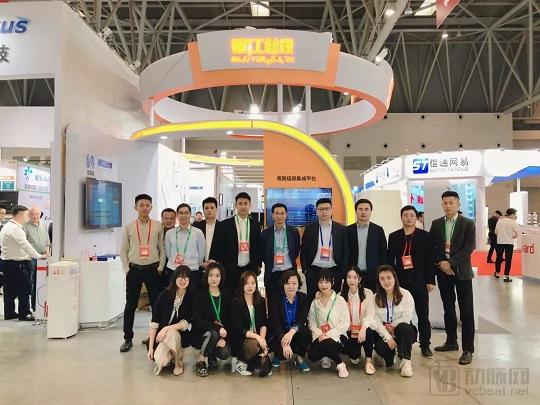
“The eras of hospital informationization 1.0, 2.0, and 3.0 correspond to traditional project-based, platform-based, and data operation-oriented models, respectively. At this moment, we are fully committed to the strategic transformation into the third phase,” Qin Lang, Chairman of Enjoyor Health Group, told VCBeat.
Since its establishment in 1992, Enjoyor Co., Ltd. (stock code: 300020), one of the first companies listed on China’s ChiNext board, has undergone more than two decades of refinement. Enjoyor Smart Health Group Co., Ltd. (hereinafter referred to as “Enjoyor Health”), a wholly-owned subsidiary of Enjoyor Co., Ltd., shoulders the critical responsibility of advancing Enjoyor’s medical and healthcare infrastructure initiatives. Today, Enjoyor Health firmly occupies a leading position in the first tier of China’s healthcare informatization sector, alongside industry peers such as Winning Health, Neusoft Medical, and B-Soft.
From the G-side (government), B-side (medical institutions) to the C-side (patients), Yinjiang Health has formed its own unique ecosystem. City-level comprehensive healthcare solutions and data operations have become Yinjiang Health's main focus in recent years.

Qin Lang, Vice President of ENJOYOR CO.,LTD / Chairman of Enjoyor Health Group
Shifting from Project-Based and Platform-Based Models to Data-Operations-Driven Models
To achieve its transformation, Yinjiang Health implemented the integration of internal and external resources.
Internally, Enjoyor Health has divided its business into four major segments: Smart Hospitals, Medical Internet of Things (IoT), Regional Healthcare, and Internet+ Healthcare.
Among these, Smart Hospital integrates its information technology systems (HIS, LIS, EMR, PACS) and medical imaging cloud services; Medical IoT integrates smart health wearables, infant safety systems, infusion monitoring, and asset management; Regional Healthcare integrates its population health platform, public health emergency response system, disease prevention and control, rational drug use, and medical consortium platforms; and Internet+ Healthcare integrates healthcare payment solutions, mobile healthcare, telemedicine, and smart elderly care services.
Externally, Yinjiang Health is gradually transitioning from a project-based and platform-based model to a data operations-driven model.
Phase I Project-Based Model: Since its establishment, Yinjiang Health has collaborated with over 1,000 hospitals on various projects, including 326 Grade III Class A hospitals.
Phase II: Platform-Based Model—Taking Shenyang’s Regional Population Health Information Platform as an Example, this is an interconnected health information service system covering 13 districts (counties) and a permanent population of 8 million in Shenyang. It is also China’s first ultra-large-scale regional health platform in a sub-provincial capital city.
Phase 3: Data-Driven Operations. After the platform is established, it generates vast amounts of data. To better leverage this data in serving the government, medical institutions, and the public, Enjoyor Health has proposed the concept of the “Health Brain.” The four major business segments under Enjoyor Health—Smart Hospitals, Medical Internet of Things (IoT), Regional Healthcare, and Internet Plus Healthcare—serve as the neural pivot points and neurons of the Health Brain.
According to Qin Lang, the “Health Brain” is a value-added service platform built on the city-level medical and health data platform, providing services based on health data to governments, medical institutions, the general public, and various commercial entities.
“In layman’s terms, we can understand it as each individual’s health ID. This ID represents a personal health profile, similar to Alipay’s Sesame Credit score. With residents’ authorization, our technical methods and core algorithms help people gain a clearer understanding of their health status,” said Qin Lang.
According to Yinjiang Health, they can leverage big data to predict users’ future disease risks and identify their current healthcare service needs. For instance, when a user decides to engage in physical exercise, the “Health Brain” system generates a personalized exercise plan based on the individual’s medical history, sleep patterns, recent health check-up results, and local temperature and humidity levels. This plan is then shared with the user’s family doctor and family members. Upon successful completion of the exercise, the system automatically calculates the user’s “Health Sesame Score.”
It is reported that the core elements of a "Healthy Brain" initiative, implemented at the institutional or district/county level, include: first, the development of platforms for medical resources; second, the accumulation of resources on pharmaceutical platforms; and third, the buildup of resources on medical insurance platforms. Through the coordinated integration of healthcare, pharmaceuticals, and health insurance (the "Three-Medical Linkage"), a massive regional data resource pool is established.
The data resource pool empowers and recycles data through artificial intelligence, cloud computing, blockchain, and other technologies. From data collection to data feedback, Yinjiang Health leverages data to provide better services for the government, medical institutions, and the public.
The Health Brain serves the people by leveraging data from the people. By utilizing this data, patients can monitor their own and their family members’ health status, enabling timely intervention, treatment, and prevention. Furthermore, the Health Brain not only facilitates better reallocation of medical resources for regional administrators but also provides healthcare professionals and managers with rapid and effective data insights. This helps reduce disease incidence among the public and minimizes redundant medical expenses during healthcare visits.
Qin Lang stated, “Over the past decade or so, we have continuously explored and innovated. Ultimately, Enjoyor Health has established a transition from traditional project construction and platform development to current data-driven operational services. This represents the optimal resource integration model we have derived through summarizing our trial-and-error experiences.”
From Buyers and Sellers to Hospital Partners
Why Transform?
Qin Lang stated, “The future trend is for hospitals to form deep strategic alliances with specialized health IT companies. These partners will not only participate in platform development but also engage in operations and data integration. The traditional client-vendor relationship will evolve into a partnership. Hospitals are eager to find such long-term partners who can grow alongside them, forming a community of shared destiny.”
Currently, there is no significant technological disparity among mainstream hospital informatics enterprises in China. The distinctions between these companies lie more in their philosophies and the post-deployment services they provide for hospital systems.
Yinjiang Health’s strengths lie more in its services, rather than executing projects for their own sake. Therefore, Qin Lang hopes that the company can break away from traditional buyer-seller relationships and transition into a partnership model, where the enterprise and hospitals jointly bear the costs of platform construction and maintenance, and collaboratively engage in digital operations.
This represents a shift in role, with enterprises transitioning from traditional project contractors (Party B) to clients (Party A). Consequently, ENJOYOR Health has begun exploring the establishment of joint ventures with certain hospitals, whereby these joint ventures operate hospital data. Given that hospitals often lack specialized teams for informatization, enterprises and hospitals can collaboratively develop and build various scenario-based applications, continuously leveraging big data to help patients achieve more efficient prevention, treatment, and rehabilitation.
As partners, they inevitably share the risks.
In response, Qin Lang stated, “Yinjiang Health’s plan for the next three to five years is to transition from short-term projects to in-depth, long-term development, assisting hospitals with their future long-term planning. Therefore, the company’s short-term financial gains may be limited, but this is a steady and sustained process. In the face of volatility associated with long-term investments, we possess sufficient risk management capabilities.”
Strategic Partnership to Jointly Advance Data Empowerment
Among Yinjiang Health’s partners are tech giants such as Alibaba Cloud, Chutian Cloud, and Huawei. These companies are key partners in Yinjiang Health’s Phase III data operations.
Qin Lang stated, “Yinjiang Health needs to collaborate with these enterprises to jointly promote data empowerment and realize the value of data. We value Alibaba’s core algorithms, Huawei’s 5G capabilities in IoT medical modules, and Chutian Cloud’s competencies in data acquisition, project development, and operations.”
As the saying goes, “strength begets strength.” Tech giants have recognized Yinjiang Health’s capabilities in specific areas such as platforms, data, and services, thereby collaborating to continuously standardize, democratize, and mainstream their products. These efforts ultimately serve to explore and pave the way for Yinjiang Health’s 3.0 strategy.
Currently, Yinjiang Health’s primary focus is on China’s most numerous tier—over 200 prefecture-level cities and more than 1,300 counties, including regions such as the three northeastern provinces, Guizhou, Chongqing, Yunnan, Anhui, and Guangxi. Building on this foundation, Yinjiang Health continues to advance the development of its “Health Brain.”
In the future, Enjoyor Health will be a healthcare service provider, with all its subsidiaries offering distinct service scenarios within their respective niche sectors. The company serves both consumer (C-end) and business (B-end) clients. On one hand, Enjoyor Health is strengthening R&D and investment in its existing product portfolio. On the other hand, it is leveraging application scenarios to conduct data operations. These two systems form the dual drivers of Enjoyor Health’s growth.
At the end of the interview, Qin Lang told VCBeat, “The second wave of healthcare informatization has arrived. A company’s past size does not guarantee its future dominance; it is today’s innovators that will determine future outcomes. Within the next three to five years, China’s healthcare industry will certainly see the emergence of a major health and big data service enterprise akin to Alibaba, making medical resources ubiquitous and readily accessible to the general public.”
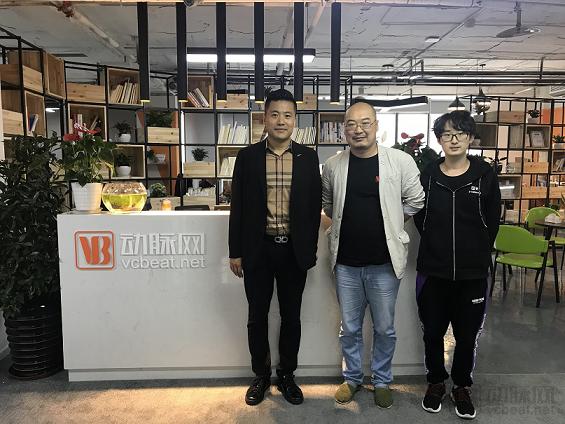
Qin Lang (first from the left), Chairman of Enjoyor Health Group, poses for a photo with VCBeat.