

Infervision's AI Research Platform Powers Over 300 RSNA Submissions from Collaborating Hospitals, Bolstering Clinical Validation Efforts Ahead of IPO Filing

Infervision
Artificial Intelligence Product Developer
In the minds of radiologists worldwide, the RSNA (Radiological Society of North America) annual meeting is undoubtedly a sacred stage.
This is the world’s largest radiology conference, featuring exhibitions of the latest technologies and products from imaging equipment companies around the globe, as well as presentations of cutting-edge research findings by radiologists worldwide. For any radiologist seeking to present their scientific achievements at RSNA, submitting an abstract to RSNA is the first step toward entering the global stage of radiology.
Recently, VCBeat learned exclusively from Infervision that2019 Infervision AI Scholar Research Platform InferScholar®The Center and its team of scientists have assisted multiple clinical partner hospitals in completing over 300 submissions to the RSNA.(The RSNA submission deadline was April 10, Chicago time, and has now passed.) Just one year ago, this figure stood at only six.
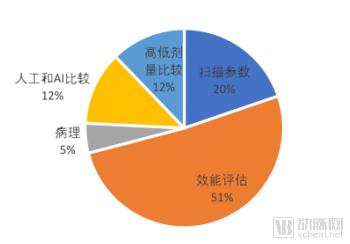
Distribution of User Submissions to Infervision
According to the statistics from RSNA 2017, a total of 340 abstracts were accepted that year, with submissions from Chinese scholars reaching a record high. This figure was less than 40 abstracts away from the combined submission count of Infervision and its partner hospitals.
AI Research Urgently Needs Clinical Validation
From the time researchers revived the long-forgotten convolutional neural network algorithm in 2012 to the present day, when various artificial intelligence products have been deployed in hospitals, less than eight years have passed. Perhaps everything has developed too quickly; scientific research still requires time for validation, and products likewise need the support of rigorous research.
During the 2019 Spring Festival, Dr. Charles, Editor-in-Chief of RSNA’s newest flagship journal, Radiology: Artificial Intelligence, wrote: “In this era of a hundred schools of thought contending, various companies claim to possess AI systems with specific capabilities; however, whether these systems can deliver on their promotional promises must be subjected to rigorous clinical validation.”
In fact, the vast majority of the 200 abstracts selected for the Artificial Intelligence (AI) track at RSNA 2018 (including oral presentations and poster sessions) were technical feasibility studies based on certain AI algorithms. These studies typically involved fine-tuning a model and testing it with small-sample datasets, focusing more on preliminary explorations for proof-of-concept purposes. In contrast, there were very few articles presenting clinical research validation based on mature commercial AI products.
As early as the summer of 2018, Chen Kuan, Founder and CEO of Infervision, began to consider the development of AI disciplines and the layout of large-scale clinical validation research. A few months later, he established Infervision iCR, which is dedicated to collaborating with physicians on clinical validation research using AI deep learning technologies. Within a short period, he rapidly assembled an iCR team comprising postdoctoral researchers returning from overseas, equipment experts from top-tier hospitals in China, and AI deep learning scientists. He also invited Dr. Shen Yun, former Director and Chief Scientist of the GE Healthcare China CT Imaging Research Center (CTRC), to serve as the Dean of iCR.
Dr. Shen Yun immediately devoted himself to InferScholar-based®among the Center’s innovations: “Currently, the majority of research projects in medical AI focus on proof-of-concept using AI algorithms, while studies that are truly clinically centered and validated through clinical trials remain exceedingly rare. As the most rigorous and evidence-based discipline, medicine demands the same from medical AI: any innovation must undergo rigorous investigation, have its results published in peer-reviewed journals, and be validated in real-world clinical settings before being applied to patients.”

Dean of Infervision Global Clinical Research Collaboration Institute (iCR), Chief Clinical Research Collaboration Scientist
Dr. Yun Shen
Therefore, the development of medical AI urgently requires greater involvement from clinicians in related research to accelerate clinical validation in real-world settings and provide empirical evidence from scientific findings to support the advancement of existing AI technologies. InferScholar® Center is driving this process forward.
The surge in submission volume stems from InferScholar, an AI research platform designed by Infervision using deep learning technology.®Center, this platform has pioneered large-scale clinical validation research, providing a user-friendly data analysis platform for any clinician interested in conducting research on various medical topics.
According to Dr. Shen Yun, the abstracts of more than 300 submissions to the RSNA all included clinical validation studies conducted by hospital users based on Infervision’s AI products and technologies. These studies covered various conditions in areas such as CT of the lung, CT of bone diseases, CT of brain diseases, and DR-based bone age assessment. For example, a submission from a tertiary Grade A hospital in western China on non-sedated pediatric CT examinations is a typical validation study.
InferScholar: An Integrated Hardware-Software AI Research Platform from Infervision, Featuring Deep Learning, Radiomics, and More® The Center provided platform and technical support for this RSNA submission, significantly accelerating the utilization rate and speed of large-scale research data, thereby making large-scale clinical validation possible.
Specifically, by allowing medical experts to autonomously select the data, models, logic, parameters, and other elements for AI incubation, AI systems can be better aligned with the specific characteristics of healthcare operations, thereby yielding more scientific research outcomes from a clinical perspective.
The launch of this product aligns with the current needs of healthcare professionals: an increasing number of medical researchers not only wish to utilize AI products but also aim to leverage their advantages in large-scale medical data and clinical experience to conduct independent AI-driven clinical research.
Regarding the phased success of the 300 submissions to RSNA this year, Dr. Shen Yun stated, “This marks the starting point for large-scale validation research using AI deep learning technology. Every hospital and every radiologist collaborating with Infervision has been a participant and witness in this journey. We hope that more radiologists will join us in the future to jointly usher in a new era of large-scale clinical validation research in AI!”
About Shen Yun
Dr. Shen Yun is the former Director and Chief Scientist of the GE Healthcare China CT Research Center (CTRC). Holding both a Ph.D. in Engineering and an M.D., he serves as a Visiting Lecturer at Tokyo Women’s Medical University and as a Tenured Research Professor at Shaanxi University of Chinese Medicine. Dr. Shen has pioneered unique models and theories for scientific collaboration, establishing standards for CT research. He holds a prominent position and wields significant influence within the medical imaging communities in both Japan and China.