

Yixuanqi Medical Aesthetics Files IPO Prospectus: A Boutique Approach to Light Aesthetic Medicine Led by Dr. Huang Gaomin, Allergan's Juvederm Injection Champion
Light Medical Aesthetics Chains: Not a Good Business for ManyFor many people, operating a chain of light medical aesthetic clinics is not considered a lucrative business. Although the industry is booming, with leading institutions receiving substantial capital injections and a continuous influx of hot money, waves of clinic transfers and acquisitions continue to emerge.
In contrast to the volatile biopharmaceutical and innovative medical device sectors, the healthcare services landscape—particularly aesthetic medicine clinics on the consumer-facing end—exhibits a stark dichotomy. On one hand, there is a vast consumer base and growing acceptance; on the other, challenges such as the pitfalls of chain-store models and soaring customer acquisition costs persist. Whether to strengthen internal capabilities or pursue external expansion poses a significant test of a team’s competence.
How to Build a Boutique Light Medical Aesthetics Brand and Target Precise Customer Segments? VCBeat (WeChat: vcbeat) conducted an exclusive interview with Huang Gaomin, Co-Founder and Director of Hangzhou Yixuanqi Medical Aesthetic Clinic Co., Ltd. (hereinafter referred to as “Yixuanqi”). With multiple identities including Juvederm China’s Monthly Injection Champion, physician, entrepreneur, and Allergan Global Senior Speaker, she shares her insights on operational strategies.
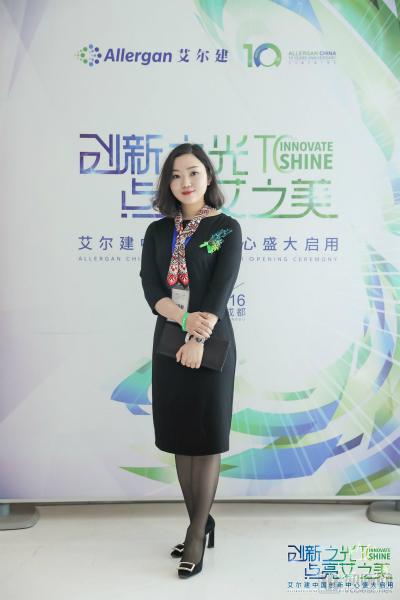
Dean Huang Gaomin
Focus on Single Products
In recent years, an increasing number of light medical aesthetics brands have emerged. This trend is driven on one hand by the influx of speculative capital from outside the industry, such as real estate companies pivoting their business models and industrial capital entering the market. On the other hand, spurred by supportive policies, physicians have begun to embrace freelance practice. Whether they are deans or department heads at large traditional private institutions or specialists at public hospitals, many are transitioning to independent practice. As a result, the sector has seen a flourishing diversity, with some regions even exhibiting signs of overheating.
Broadly speaking, medical aesthetic institutions currently on the market can be categorized into three types. The first type consists of established medical aesthetic institutions, such as Mylike and Union Lige, which focus primarily on plastic surgery and place strong emphasis on brand reputation. The second type comprises emerging regional chains specializing in non-surgical medical aesthetics, such as Yanshu and PhiSkin, which offer comprehensive services with distinct characteristics. The third type includes single-service clinics that currently concentrate on specific procedures or target demographics; for instance, ShareKey focuses on skin rejuvenation and minimally invasive anti-aging treatments.
One of the challenges facing the industry is that, as the entry barriers for practitioners and capital requirements in the non-surgical medical aesthetics sector appear relatively low, there is a surge of participants leading to homogeneous competition. Many institutions lack a distinct core identity, resulting in an industry that appears attractive and prosperous on the surface, yet few entities are genuinely profitable. A positive trend is emerging: after navigating these challenges, some institutions are shifting their focus from corporate branding to physician branding, gradually returning to the essence of medicine and aesthetics. Although the proficiency levels of physicians vary, the vast majority of medical aesthetics practitioners in China are currently qualified professionals.
Compared with other regional markets, such as those in Europe and the United States, clinics are generally small in scale and highly specialized. Both their medical practices and management models offer valuable lessons. However, significant differences remain in terms of market size, maturity, the balance between public and private sectors, and public trust in private healthcare. Moreover, the primary consumers of high-value aesthetic treatments abroad are mature women aged 30 and above. These individuals, being more mentally mature, seek anti-aging and rejuvenation for their face and body rather than drastic changes in appearance. Consequently, they are more receptive to high-frequency, repeated non-invasive and minimally invasive treatments.
“Unlike the ‘internet celebrity’ look heavily promoted in China, which often focuses on double eyelid surgery, rhinoplasty, and facial contouring, consumers with genuine purchasing power in developed Western countries tend to have their own value propositions. They seek rejuvenation rather than drastic alterations to their appearance,” Huang Gaomin told reporters. Since officially launching her venture in 2016, ShareKey has been committed to helping beauty-conscious women achieve a natural, elegant, and harmonious aesthetic—beautiful in both stillness and motion—through non-invasive and minimally invasive techniques.
To some extent, the medical aesthetics industry has moved past its period of rapid growth and easy profits. After years of consumer education, customers are becoming increasingly rational. Now, success requires a focused commitment to delivering high-quality medical aesthetic services centered on customer value. This approach is likely to create more opportunities, and dedicated medical aesthetic practitioners are becoming the mainstream in the industry. I believe that future medical aesthetics consumers will follow an 80/20 distribution: 20% of large, comprehensive institutions will exert a siphon effect, serving 80% of ordinary clients, while the remaining 20% of high-end clients will seek treatment and services from more boutique, specialized brands. Clearly, at this stage, ShareKey is a typical representative of such boutique brands.
Partnering with Allergan
As a boutique brand, ShareKey emphasizes specialization and excellence in niche markets, focusing on facial aesthetics, anti-aging, and body contouring. It continuously screens for and introduces new devices and treatment modalities to serve consumers. Currently, its primary partner is Allergan, with Juvederm and Botox as strategic cooperative products. Additionally, it has established CoolSculpting studios dedicated to body sculpting.
“Since our institution was established, we have exclusively selected material suppliers with FDA certification. Allergan’s Botox boasts over 30 years of global experience and more than ten million cases, while Juvederm and CoolSculpting each have over a decade of global experience and millions of cases. Although their presence in China has been relatively short, my years of overseas study and exchange experience, backed by professional literature, have provided a solid foundation of trust for our collaboration,” Huang Gaomin stated frankly. She emphasized that ShareKey has been actively building trust with its employees, suppliers, and customers.
Currently, ShareKey’s flagship offerings include Juvederm, Botox, and CoolSculpting. Juvederm and Botox are used for facial anti-aging, while Juvederm, Botox, and CoolSculpting are employed for body contouring. The classic treatment regimen consists of three Botox sessions per year for wrinkle reduction and lifting, one session of patented skin booster therapy, and one Juvederm treatment. “I consider this a relatively optimal and acceptable treatment frequency. To date, I have personally undergone two CoolSculpting sessions targeting ten areas in total—six on the abdomen and four on the arms—resulting in a significant transformation in my body shape. I only recommend to our team and clients the treatments I personally favor and do not advocate for frequent interventions.”
In terms of average transaction value, ShareKey’s clients are all Juvederm users, resulting in a relatively high per-customer spending. For instance, the initial transaction amount for Juvederm treatments typically exceeds RMB 100,000. Regarding such high average transaction values, Huang Gaomin explained: “For mature clients aged 35 and above, early signs of aging emerge, making them appear aged, fatigued, lax, and unhappy. Tear troughs, nasolabial folds, and marionette lines are merely the outcomes; the underlying causes lie in periorbital aging, characterized by volume loss and laxity or displacement of the skin, subcutaneous tissue, fat, muscles, and bones. If we do not leverage Juvederm’s lifting effect to achieve tissue repositioning, strengthen ligamentous and muscular support, restore volume, or use Botox to balance facial muscle dynamics—but instead simply fill wherever there is depression—it will result in an artificial ‘silicone face.’ Therefore, the determination of cost does not rest with me; rather, it is based on each client’s individual facial condition. Our role is solely to help realize the desired outcomes.”
In Huang Gaomin’s view, treatment efficacy is the most critical factor in retaining clients and building their trust. Efficacy is strategy; service is tactics. Currently, the repurchase rate has reached 95%. “If you care about customer lifetime value, you will build your approach strategically, not just tactically. In project selection, we never follow trends blindly. If Juvederm and Botox can effectively achieve lifting results, we would never recommend thread lifts to our clients. There is excessive overtreatment in the medical aesthetics industry.”
Allergan not only provides highly effective products but also offers extensive academic support. The Allergan Medical Institute (AMI) delivers comprehensive training in academics, technology, and marketing communication for facility directors, consultants, physicians, and operational staff. As a Star Speaker for the Allergan Medical Institute, Huang Gaomin has gained numerous opportunities for domestic and international study and exchange, continuously enhancing her injection techniques, business philosophy, and client communication skills.
Huang Gaomin also shared with reporters a real-world case of collaboration with CoolSculpting: “For a project to be successfully implemented in a medical aesthetic institution, having the product alone is not enough; it requires comprehensive process design and management. After CoolSculpting was acquired by Allergan, we promptly purchased the equipment and, with Allergan’s support, developed our institution’s standard operating procedures (SOPs). The project has been running for over three months now, yielding favorable economic and social benefits. Allergan not only provides the ‘flour’ but also the ‘cooking techniques,’ transforming institutions into ‘bakeries’ in the minds of consumers.”
Targeting high-net-worth clientele
In terms of revenue, ShareKey’s primary income streams are injectables (Botox and Juvederm) and CoolSculpting, with approximately 3,000 active high-value clients. For key accounts, the clinic has dedicated service teams that provide comprehensive support ranging from treatment and post-procedure swelling management to advice on makeup, attire, and fitness. As long as the client’s goal is aesthetic enhancement, ShareKey tailors its offerings, services, or recommendations to meet this need.
“Since our project requires in-depth consumer education, our marketing strategy primarily focuses on value-based marketing. Platforms such as SoYoung, Gengmei, Meituan-Dianping, and Ali Health serve as channels for showcasing our institution, but they are not our primary marketing battlegrounds. Our customer base is mainly driven by treatment outcomes, word-of-mouth, and trust—specifically, returning customers and referrals from existing clients—resulting in minimal external operational expenses. Nevertheless, we remain committed to embracing e-commerce and new distribution channels.”
During last year’s Double 11 shopping festival and this year’s International Women’s Day promotions, ShareKey achieved the second-best performance nationwide on the Alibaba Health platform. This is a notable accomplishment given that the benchmark includes thousands of medical institutions across China. “However, as a project requiring in-depth consumer education, we have currently only focused on guiding offline customers to complete transactions online. Future collaboration models need further exploration; for instance, customers could purchase products (such as Juvederm) on the platform and then pay for services based on the physician’s level of expertise upon visiting the clinic.”
Focusing on high-net-worth circles, Huang Gaomin believes that in the next 3–5 years, there will be more medical aesthetic institutions with distinct value propositions. Circle-based marketing will become the mainstream trend; however, how to deeply penetrate target circles remains a subject worthy of learning and exploration. It is already quite challenging to turn a single SKU into a blockbuster product.
“Our clients are all Juvederm clients. With five cases a day, that’s RMB 500,000; over seven days a week, it amounts to RMB 3.5 million. Currently, I work eight days a month, and our profit margin is around 15%. So, if I could work 26 days a month, what would our profit margin be?” Huang Gaomin believes that ShareKey’s high average transaction value and robust internal circulation can sustain the clinic’s current operations.
Both Hospital Director and Product Manager
In terms of specific operations, ShareKey adopts a dual-track responsibility system led by both the Medical Director and the General Manager. The Medical Director is responsible for project selection and implementation, while the General Manager formulates marketing strategies and collaborates on establishing medical and sales processes. “As the Medical Director, I also serve as the product manager. I select suppliers’ products based on professional expertise, then organize sales scripts and processes to convey to the team. My current focus is on translating professional knowledge into accessible language and simplifying complex concepts. Our team operates on a ‘1+N’ model, where ‘1’ refers to myself, and ‘N’ represents the operations, sales, and after-sales customer service teams.”
Huang Gaomin stated that the current 1.0 version of ShareKey’s development is a boutique clinic, having spent two years refining its team and perfecting the single-store business model. The future 2.0 version will be a boutique chain. To this end, Huang Gaomin has launched the “New Generation Medical Aesthetics Club” to recruit like-minded physicians, benchmarking against the operational model of the Doris Day Clinic.
“The purpose of the New Generation Medical Aesthetics Club is to select a group of doctors born between 1975 and 1985. These physicians are more energetic, have a deeper understanding of consumers, and are more willing to embrace the market and capital. They must possess both ideals and ethical boundaries. Building on a strong foundation of professional expertise, they will receive systematic training in consumer psychology, marketing, and aesthetics. Finally, with comprehensive support in funding and operations, they will quickly become key players in the industry. These doctors are currently scattered across China. I have already begun conducting regular training sessions, from which I will select outstanding individuals for partnership and incubation.”
Regarding the current challenges of the chain model, Huang Gaomin believes: “Physicians are technical professionals. Although they have strong learning capabilities, tasks such as finance, marketing, and external affairs are relatively specialized and time-consuming. Members of the new generation in the medical aesthetics industry seek to balance work and life. Therefore, it is crucial to delegate professional management tasks to chain managers, allowing physicians to focus on clinical care within the clinic. I consider this very important. Physicians are a group that relatively requires a sense of security; if the issues of trust and security between chain organizations and physicians can be resolved, I believe the chain model will not pose a significant problem.”
As a clinician specializing in minimally invasive dermatology, Huang Gaomin has a profound understanding of the necessity for integrated clinic operations. “At the end of the month, when I review some experts’ schedules, describing their workload as a ‘997’ system is no exaggeration. Once you open your own practice independently, it demands 365/24 dedication. However, medical professionals are often not adept at handling non-clinical matters such as social affairs, government relations, marketing, human resources, and finance. The original intention behind starting a private practice was to achieve freedom in time and wealth, but under the daily pressure of financial reporting, many find themselves unable to realize their ideals as physicians, instead becoming bogged down by mundane operational concerns. Therefore, I believe that platforms, collaboration, and integration represent the future trend.”
ShareKey spent more than two years refining its operations and integrating its team, achieving systematic frameworks for both clinical and operational functions. Moving forward, the company plans to replicate its model by cultivating in-house IP physicians, with management empowerment provided at the corporate level. “I have always placed strong emphasis on trust and shared values. I believe that only through mutual trust and alignment of values can we sustain long-term success.”
Regarding the label of “internet celebrity,” President Huang believes that the term “internet celebrity doctor” is not derogatory; rather, it represents the highest commendation for physicians who possess a deep understanding of human nature, psychology, and sociology, as well as greater expertise in aesthetics and medicine, while being sought after by patients, respected by peers, and committed to their own inner peace.
For 2019, Huang Gaomin outlined the following targets: open one new clinic, cultivate three IP physicians, continue to strengthen core competencies, and embrace change.